A Deed of Trust is a crucial document in real estate transactions, serving as a security agreement between a borrower, a lender, and a neutral third party known as the trustee. When a borrower takes out a loan to purchase property, this form comes into play, outlining the terms of the loan and the responsibilities of each party involved. It typically includes important details such as the loan amount, interest rate, and repayment schedule. Additionally, the Deed of Trust establishes the property as collateral for the loan, meaning that if the borrower fails to repay, the lender can initiate foreclosure proceedings to recover the owed amount. This form also clarifies the rights and obligations of the parties, ensuring that everyone understands their role in the transaction. By providing a clear framework, the Deed of Trust helps protect both the lender's investment and the borrower's rights, making it a fundamental component of real estate financing.
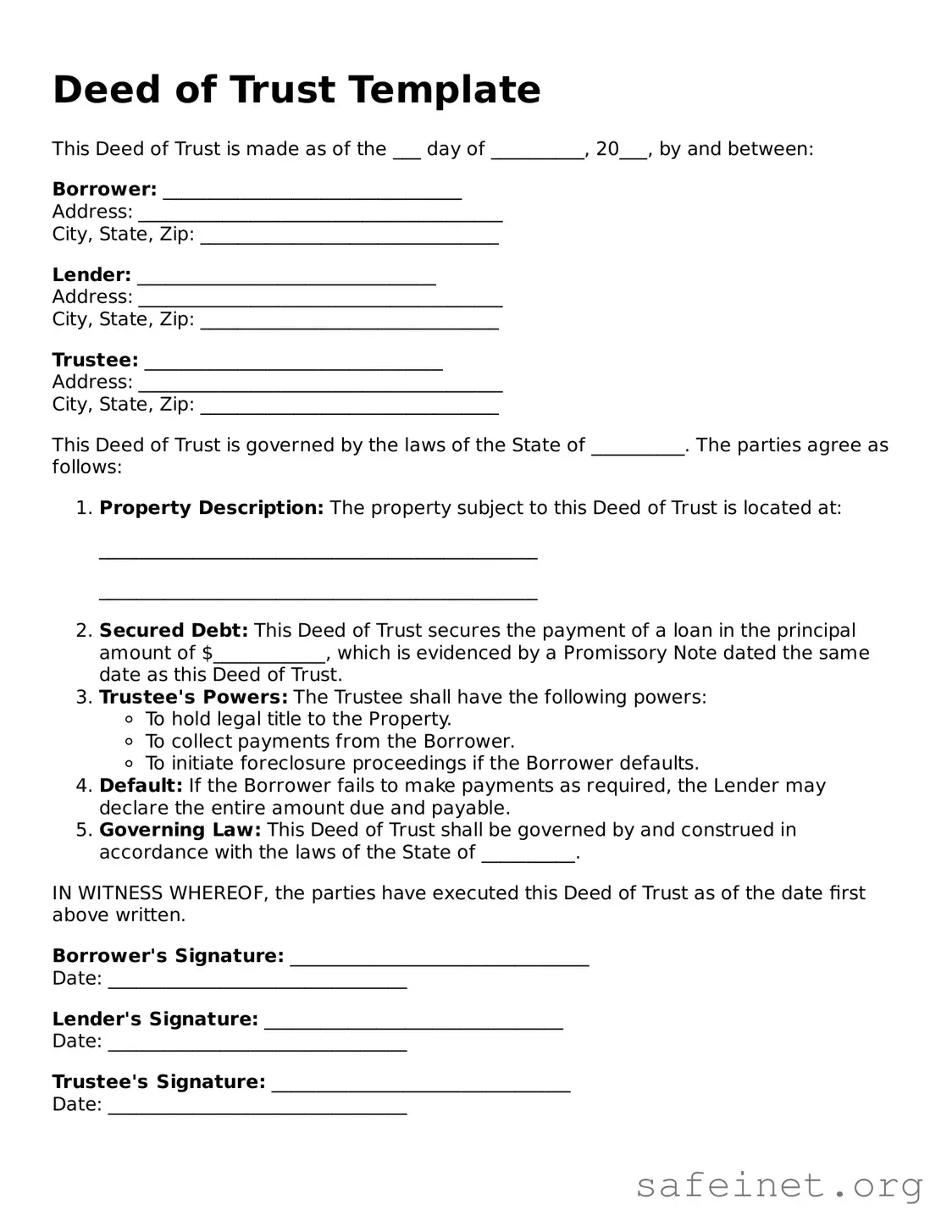
Deed of Trust Template
This Deed of Trust is made as of the ___ day of __________, 20___, by and between:
Borrower: ________________________________
Address: _______________________________________
City, State, Zip: ________________________________
Lender: ________________________________
Address: _______________________________________
City, State, Zip: ________________________________
Trustee: ________________________________
Address: _______________________________________
City, State, Zip: ________________________________
This Deed of Trust is governed by the laws of the State of __________. The parties agree as follows:
_______________________________________________
_______________________________________________
IN WITNESS WHEREOF, the parties have executed this Deed of Trust as of the date first above written.
Borrower's Signature: ________________________________
Date: ________________________________
Lender's Signature: ________________________________
Date: ________________________________
Trustee's Signature: ________________________________
Date: ________________________________
| Fact Name | Description |
|---|---|
| Definition | A Deed of Trust is a legal document that secures a loan by transferring the title of the property to a trustee until the loan is paid off. |
| Parties Involved | The Deed of Trust involves three parties: the borrower (trustor), the lender (beneficiary), and the trustee who holds the title. |
| Governing Law | In states like California, the Deed of Trust is governed by the California Civil Code, specifically sections 2920-2924. |
| Foreclosure Process | If the borrower defaults, the trustee can initiate a non-judicial foreclosure process, which is typically faster than judicial foreclosure. |
| Release of Deed | Once the loan is fully paid, the lender must provide a release of the Deed of Trust, returning the title to the borrower. |
After you have gathered the necessary information and documents, you are ready to fill out the Deed of Trust form. This form is crucial for securing a loan against real property. Completing it accurately is essential for protecting your rights and interests.
What is a Deed of Trust?
A Deed of Trust is a legal document used in real estate transactions. It involves three parties: the borrower, the lender, and a third-party trustee. This document secures a loan by transferring the legal title of the property to the trustee until the borrower pays off the loan. Once the loan is fully repaid, the trustee will transfer the title back to the borrower.
How does a Deed of Trust differ from a mortgage?
While both a Deed of Trust and a mortgage serve to secure a loan, they differ in structure and parties involved. In a mortgage, there are only two parties: the borrower and the lender. A Deed of Trust, however, includes a third party—the trustee. This trustee holds the title to the property until the loan is repaid, providing an additional layer of security for the lender.
What are the key components of a Deed of Trust?
A typical Deed of Trust includes several essential components: the names of the parties involved, a description of the property, the amount of the loan, the terms of repayment, and the responsibilities of the borrower. It also outlines what happens if the borrower defaults on the loan, including the process for foreclosure.
What happens if the borrower defaults on the loan?
If the borrower fails to make payments as agreed, the lender can initiate foreclosure proceedings. The trustee, acting on behalf of the lender, will sell the property to recover the outstanding loan amount. This process is typically quicker than foreclosure under a mortgage because the trustee can act without going through the court system in many states.
Is a Deed of Trust required for all real estate transactions?
No, a Deed of Trust is not required for all real estate transactions. It is primarily used in states that follow the Deed of Trust system. In some states, mortgages are more common. The choice between a Deed of Trust and a mortgage often depends on local laws and the preferences of the parties involved.
Can a Deed of Trust be modified after it is signed?
Yes, a Deed of Trust can be modified, but both parties must agree to the changes. This often requires a formal amendment or a new document. It's essential to ensure that any modifications are documented properly to avoid future disputes.
How can one obtain a copy of a Deed of Trust?
A copy of a Deed of Trust can usually be obtained from the county recorder's office where the property is located. Many counties also provide online access to public records, allowing individuals to search for and download copies of recorded documents. If you are the borrower or lender, you may also have a copy in your personal records.
Incorrect Property Description: One common mistake is failing to provide an accurate and complete description of the property. It is crucial to include the correct address, parcel number, and any other identifying details. Without this information, the deed may not be valid.
Missing Signatures: All parties involved must sign the Deed of Trust. Omitting a signature can lead to complications. Ensure that everyone who has a stake in the property is present to sign the document.
Improper Notarization: A Deed of Trust typically requires notarization to be legally binding. Failing to have the document notarized, or having it notarized incorrectly, can invalidate the deed.
Incorrectly Stating Loan Amount: It is vital to accurately state the loan amount secured by the Deed of Trust. An incorrect figure can create confusion and legal issues down the line.
Neglecting to Review Local Laws: Different states have varying requirements for Deeds of Trust. Not familiarizing oneself with local laws can lead to mistakes. Always check the specific regulations in your state to ensure compliance.
A Deed of Trust is an important document used in real estate transactions, particularly when securing a loan. However, several other forms and documents often accompany it to ensure the process is smooth and legally sound. Below is a list of five commonly used documents that work alongside the Deed of Trust.
These documents are essential in the lending process, providing clarity and protection for all parties involved. Understanding each one can help borrowers navigate their real estate transactions more effectively.
The Deed of Trust form shares similarities with a Mortgage Agreement. Both documents serve to secure a loan with real property as collateral. In a Mortgage Agreement, the borrower gives the lender a lien on the property, ensuring that if the borrower defaults, the lender can take possession of the property. Like a Deed of Trust, it outlines the terms of the loan, including the repayment schedule and interest rate. However, a key difference lies in how the foreclosure process works, with Mortgages typically involving judicial foreclosure while Deeds of Trust often use non-judicial methods.
Another document similar to the Deed of Trust is the Promissory Note. This document outlines the borrower's promise to repay the loan amount. While the Deed of Trust secures the loan with the property, the Promissory Note details the specific terms of the loan, such as the interest rate and repayment schedule. Together, these documents form a complete picture of the borrowing agreement, with the Deed of Trust providing security and the Promissory Note establishing the borrower's obligation.
Lastly, the Security Agreement is another document that resembles the Deed of Trust. A Security Agreement is used to secure a loan with personal property instead of real estate. It outlines the collateral and the rights of both parties in case of default. While the Deed of Trust specifically pertains to real property, both documents aim to protect the lender’s interests. They establish the terms under which the lender can claim the collateral if the borrower fails to meet their obligations.
When filling out the Deed of Trust form, attention to detail is crucial. Here’s a list of things to do and avoid:
Understanding a Deed of Trust can be tricky, and there are several misconceptions that often lead to confusion. Here’s a breakdown of six common myths about this important document.
This is a common misunderstanding. While both documents serve similar purposes in securing a loan, they are not identical. A mortgage is a two-party agreement between the borrower and the lender, while a Deed of Trust involves three parties: the borrower, the lender, and a trustee who holds the title until the loan is paid off.
This is not true. Homeowners can sell their property even if there is a Deed of Trust in place. However, the loan must be paid off or transferred to the new buyer as part of the sale process.
While a Deed of Trust secures a loan, it does not guarantee homeownership. If the borrower defaults on the loan, the lender can initiate foreclosure proceedings, which could result in the loss of the home.
This is incorrect. Not every state in the U.S. uses Deeds of Trust; some states primarily use mortgages. The choice between the two often depends on state law and local practices.
Many people believe this, but Deeds of Trust can also be used for commercial properties. They serve the same purpose of securing a loan, regardless of the type of property involved.
Good credit may help you secure a loan, but it doesn’t eliminate the need for a Deed of Trust. This document is still necessary to protect the lender’s interest, regardless of your credit score.
By clearing up these misconceptions, you can better understand the role of a Deed of Trust in real estate transactions and make more informed decisions.
When dealing with a Deed of Trust form, there are several important points to keep in mind. These takeaways will help ensure that the process goes smoothly and that all necessary steps are followed.
By keeping these key points in mind, you can navigate the process of filling out and using a Deed of Trust form with confidence. Each step is important for ensuring that the interests of all parties are protected and that the document serves its intended purpose.