Homepage > Blank Dd 137 5 Template
Article Structure

The DD Form 137-5, also known as the Dependency Statement for an Incapacitated Child Over Age 21, is a critical document for military families navigating the complexities of dependent entitlements. This form is essential for establishing the relationship and dependency status of a child who is incapacitated and over the age of 21, ensuring that the service member can access the benefits they are entitled to. It requires detailed information about the member, the child, and the child's living situation, including their financial support and any relevant medical or educational needs. The form must be completed in its entirety, signed, and notarized, with specific instructions for various circumstances, such as if the member is deceased or if the child lives with someone other than the member. Additionally, the form includes provisions for privacy and outlines the legal authority under which the information is collected. Compliance is crucial; failure to provide complete and accurate information can lead to a suspension of benefits. By understanding the DD Form 137-5 and its requirements, service members can better advocate for their dependents and ensure they receive necessary support.
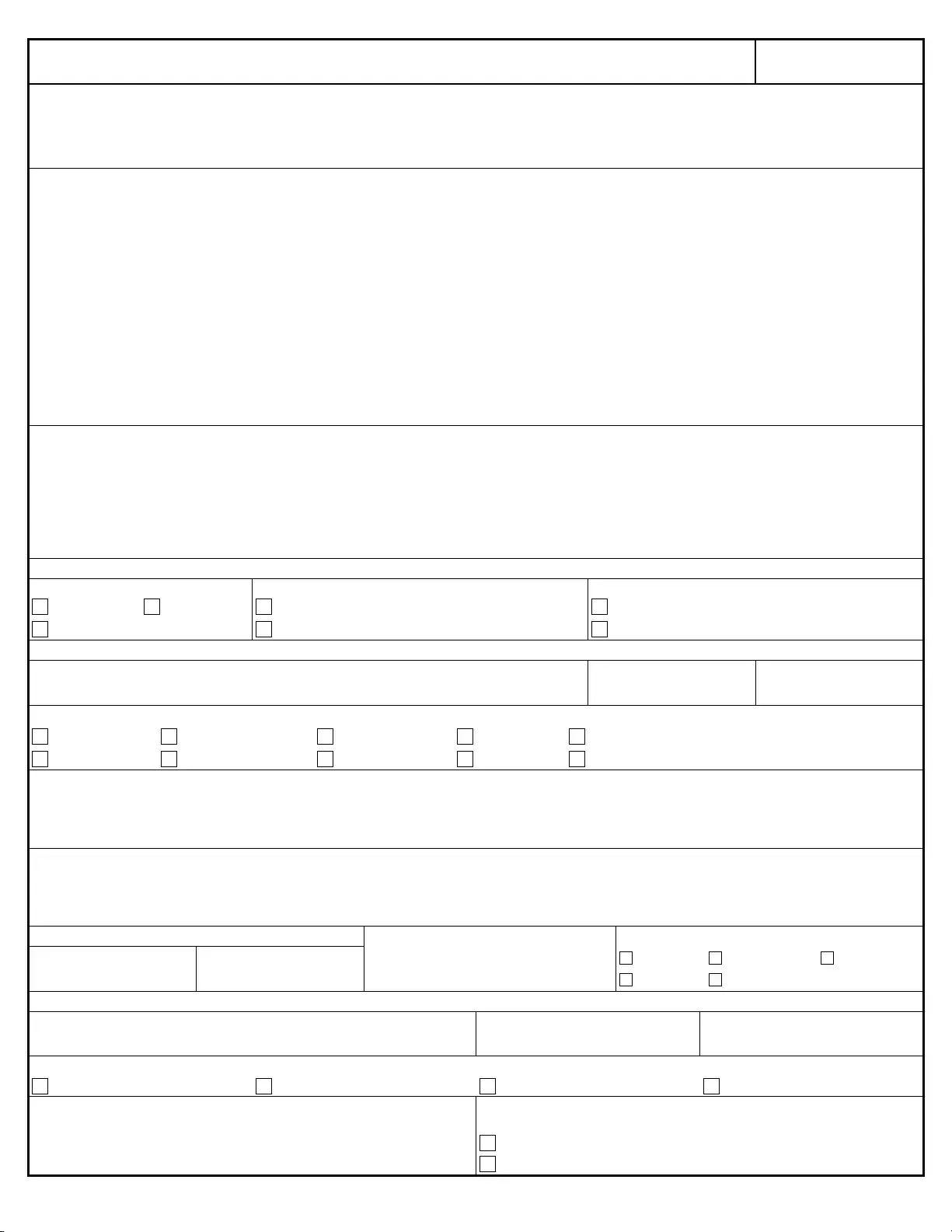
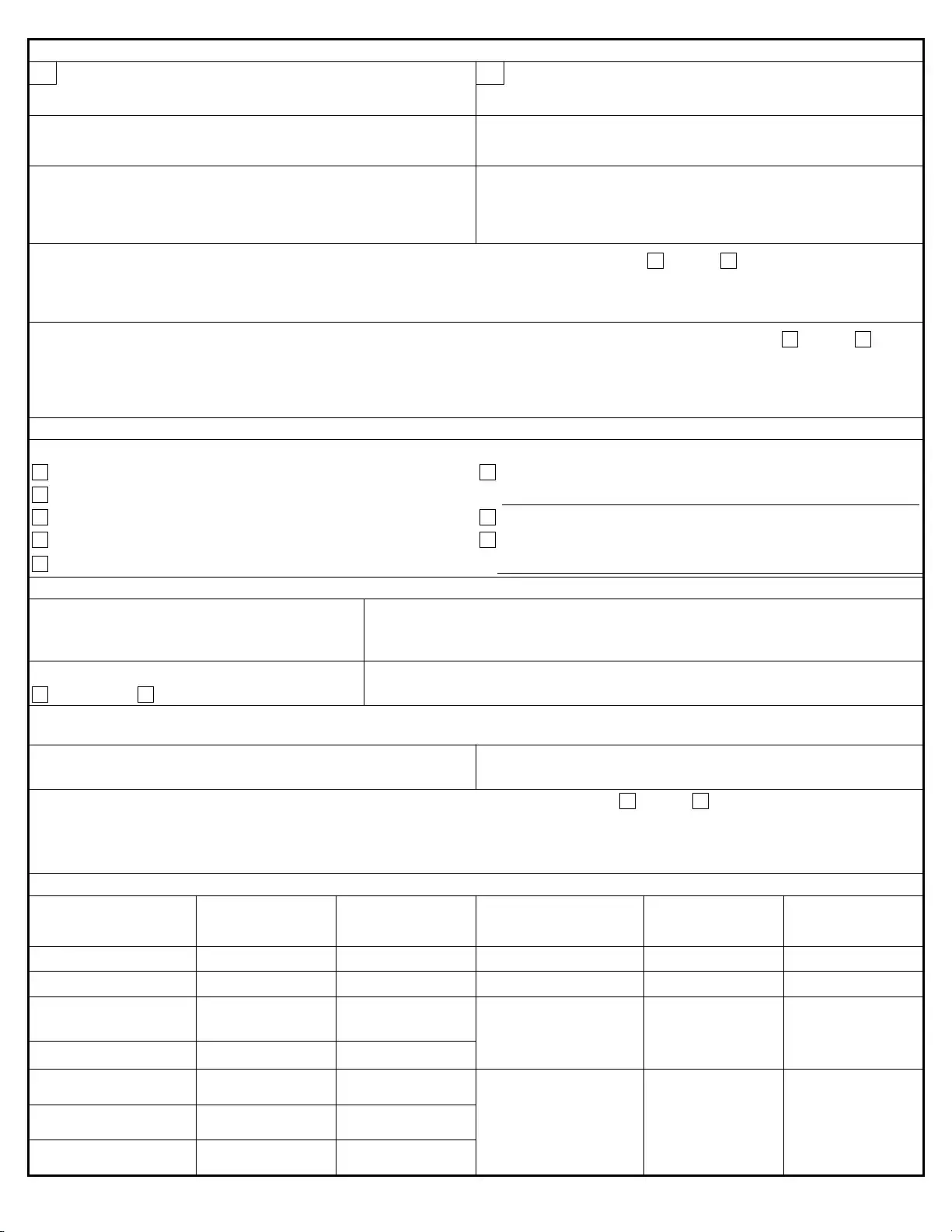
Form Sample

Page 1 of 5
CUI (when filled in)
PREVIOUS EDITION IS OBSOLETE.
Controlled by: DFAS
Category: PRVCY
Distribution/DISTRO: FEDCON
POC: (888) 332-7411
DD FORM 137-5, MAR 2018
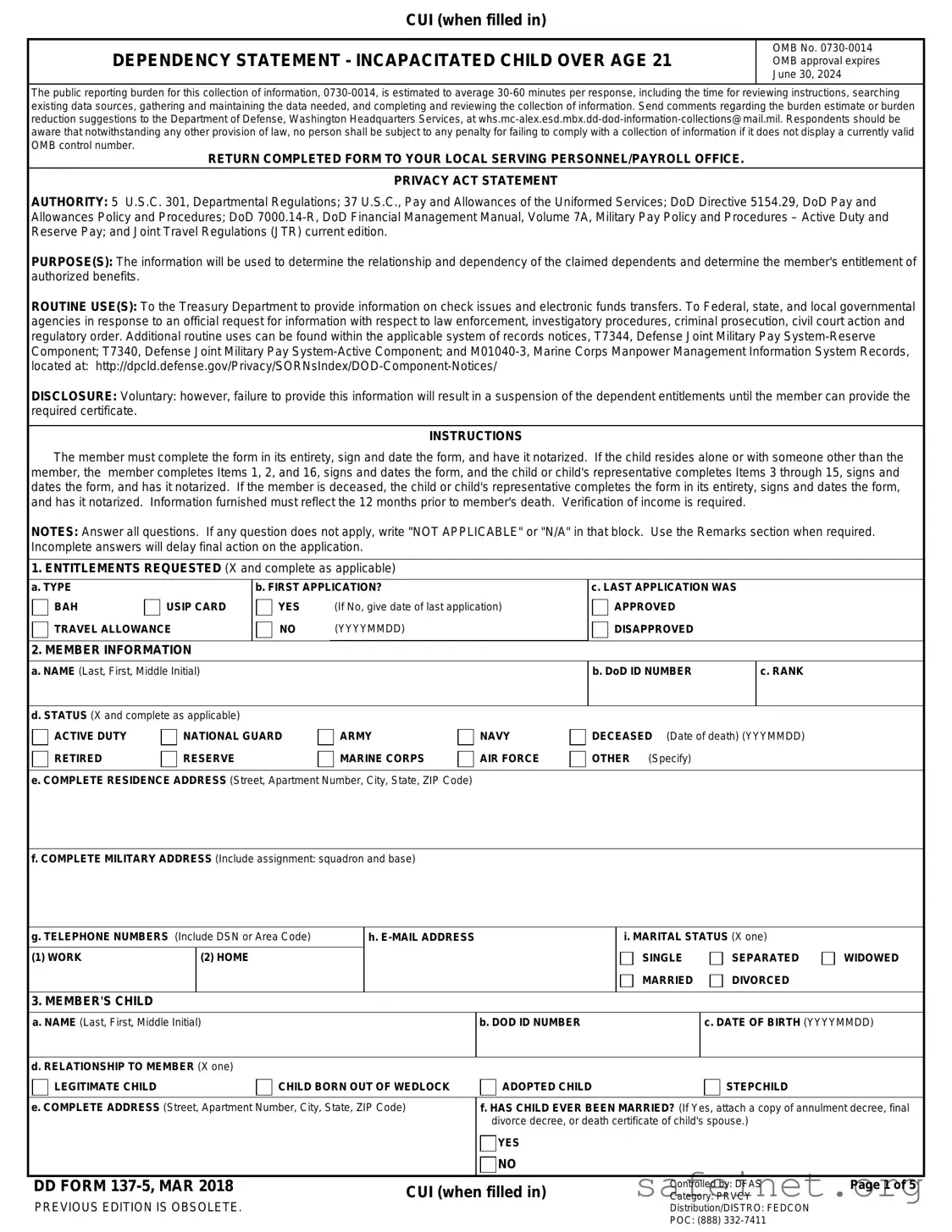
DEPENDENCY STATEMENT - INCAPACITATED CHILD OVER AGE 21
OMB No. 0730-0014
OMB approval expires
June 30, 2024
The public reporting burden for this collection of information, 0730-0014, is estimated to average 30-60 minutes per response, including the time for reviewing instructions, searching
existing data sources, gathering and maintaining the data needed, and completing and reviewing the collection of information. Send comments regarding the burden estimate or burden
reduction suggestions to the Department of Defense, Washington Headquarters Services, at [email protected]. Respondents should be
aware that notwithstanding any other provision of law, no person shall be subject to any penalty for failing to comply with a collection of information if it does not display a currently valid
OMB control number.
RETURN COMPLETED FORM TO YOUR LOCAL SERVING PERSONNEL/PAYROLL OFFICE.
PRIVACY ACT STATEMENT
AUTHORITY: 5 U.S.C. 301, Departmental Regulations; 37 U.S.C., Pay and Allowances of the Uniformed Services; DoD Directive 5154.29, DoD Pay and
Allowances Policy and Procedures; DoD 7000.14-R, DoD Financial Management Manual, Volume 7A, Military Pay Policy and Procedures – Active Duty and
Reserve Pay; and Joint Travel Regulations (JTR) current edition.
PURPOSE(S): The information will be used to determine the relationship and dependency of the claimed dependents and determine the member's entitlement of
authorized benefits.
ROUTINE USE(S): To the Treasury Department to provide information on check issues and electronic funds transfers. To Federal, state, and local governmental
agencies in response to an official request for information with respect to law enforcement, investigatory procedures, criminal prosecution, civil court action and
regulatory order. Additional routine uses can be found within the applicable system of records notices, T7344, Defense Joint Military Pay System-Reserve
Component; T7340, Defense Joint Military Pay System-Active Component; and M01040-3, Marine Corps Manpower Management Information System Records,
located at: http://dpcld.defense.gov/Privacy/SORNsIndex/DOD-Component-Notices/
DISCLOSURE: Voluntary: however, failure to provide this information will result in a suspension of the dependent entitlements until the member can provide the
required certificate.
INSTRUCTIONS
The member must complete the form in its entirety, sign and date the form, and have it notarized. If the child resides alone or with someone other than the
member, the member completes Items 1, 2, and 16, signs and dates the form, and the child or child's representative completes Items 3 through 15, signs and
dates the form, and has it notarized. If the member is deceased, the child or child's representative completes the form in its entirety, signs and dates the form,
and has it notarized. Information furnished must reflect the 12 months prior to member's death. Verification of income is required.
NOTES: Answer all questions. If any question does not apply, write "NOT APPLICABLE" or "N/A" in that block. Use the Remarks section when required.
Incomplete answers will delay final action on the application.
1. ENTITLEMENTS REQUESTED (X and complete as applicable)
a. TYPE
BAH USIP CARD
TRAVEL ALLOWANCE
b. FIRST APPLICATION?
YES (If No, give date of last application)
NO
(YYYYMMDD)
c. LAST APPLICATION WAS
APPROVED
DISAPPROVED
2. MEMBER INFORMATION
a. NAME (Last, First, Middle Initial)
b. DoD ID NUMBER c. RANK
d. STATUS (X and complete as applicable)
ACTIVE DUTY NATIONAL GUARD ARMY NAVY DECEASED
(Date of death) (YYYMMDD)
RETIRED RESERVE MARINE CORPS AIR FORCE OTHER
(Specify)
e. COMPLETE RESIDENCE ADDRESS (Street, Apartment Number, City, State, ZIP Code)
f. COMPLETE MILITARY ADDRESS (Include assignment: squadron and base)
g. TELEPHONE NUMBERS (Include DSN or Area Code)
(1) WORK (2) HOME
h. E-MAIL ADDRESS
i. MARITAL STATUS (X one)
SINGLE SEPARATED WIDOWED
MARRIED DIVORCED
3. MEMBER'S CHILD
a. NAME (Last, First, Middle Initial)
b. DOD ID NUMBER
c. DATE OF BIRTH (YYYYMMDD)
d. RELATIONSHIP TO MEMBER (X one)
LEGITIMATE CHILD CHILD BORN OUT OF WEDLOCK ADOPTED CHILD STEPCHILD
e. COMPLETE ADDRESS (Street, Apartment Number, City, State, ZIP Code)
f. HAS CHILD EVER BEEN MARRIED? (If Yes, attach a copy of annulment decree, final
divorce decree, or death certificate of child's spouse.)
YES
NO
PREVIOUS EDITION IS OBSOLETE.
Page 2 of 5
CUI (when filled in)
DD FORM 137-5, MAR 2018
4. CHILD'S OTHER PARENT(S)
a.
(1) NAME (Last, First, Middle Initial)
(2) RELATIONSHIP TO CHILD
(3) COMPLETE ADDRESS (Street, Apartment Number, City, State, ZIP Code)
b.
(1) NAME (Last, First, Middle Initial)
(2) RELATIONSHIP TO CHILD
(3) COMPLETE ADDRESS (Street, Apartment Number, City, State, ZIP Code)
c. IS/ARE OTHER PARENT(S) IN ANY BRANCH OF SERVICE, INCLUDING RESERVE OR NATIONAL GUARD (X one)
(If Yes, show rank, name, SSN, and military address.)
YES
NO
d. DOES OTHER PARENT CLAIM CHILD FOR BASIC ALLOWANCE FOR HOUSING (BAH), TRAVEL ALLOWANCE, OR USIP CARD (X one)
(If Yes, explain.)
YES
NO
5. CHILD'S RESIDENCE
a. TYPE OF RESIDENCE (X and complete as applicable)
HOME OR APARTMENT OF OTHER PARENT
HOME OR APARTMENT OF MEMBER
HOME OR APARTMENT OF CHILD
HOME OR APARTMENT OF FORMER SPOUSE OF MEMBER
STUDENT DORMITORY OR OTHER ON-CAMPUS FACILITY
HOME OR APARTMENT OF FRIEND OR RELATIVE (State relationship)
HOSPITAL OR INSTITUTION
OTHER (Explain)
b. OWNER OF RESIDENCE
(1) NAME (Last, First, Middle Initial) (2) ADDRESS (Street, Apartment Number, City, State, ZIP Code)
c. IS RESIDENCE SUBSIDIZED HOUSING?
YES NO
d. DATE CHILD STARTED LIVING AT CURRENT ADDRESS (YYYYMMDD)
6. IF CHILD IS IN HOSPITAL OR INSTITUTION
If child is in a hospital or institution, all of the following information must be furnished. Obtain this information from the hospital or institution.
a. DATE CHILD ENTERED HOSPITAL/INSTITUTION (YYYYMMDD) b. ANTICIPATED DATE OF DISCHARGE (If known) (YYYYMMDD)
c. WILL CHILD RETURN TO MEMBER'S HOME AFTER DISCHARGE? (If "NO," explain where child will reside)
YES
NO
d. CHILD'S EXPENSES IN HOSPITAL OR INSTITUTION
ITEM
(1)
PRESENT MONTHLY
EXPENSE
(2)
TOTAL EXPENSE FOR
PAST 12 MONTHS
(1) ROOM
(2) FOOD
(3) REHABILITATION CLASSES
OR SERVICES
(4) SPECIALIZED EQUIPMENT
(5) MEDICAL CARE
(6) CLOTHING
(7) LAUNDRY/DRY CLEANING
ITEM
(1)
PRESENT MONTHLY
EXPENSE
(2)
TOTAL EXPENSE FOR
PAST 12 MONTHS
(8) EDUCATION
(9) TRANSPORTATION
(10) PERSONAL INSURANCE
(Specify)
(11) OTHER (Specify)
PREVIOUS EDITION IS OBSOLETE.
Page 3 of 5
CUI (when filled in)
DD FORM 137-5, MAR 2018
6. IF CHILD IS IN HOSPITAL OR INSTITUTION (Continued)
e. CHILD'S EXPENSES IN HOSPITAL OR INSTITUTION ARE PAID BY:
SOURCE
(1)
PRESENT MONTHLY
EXPENSE
(2)
TOTAL EXPENSE FOR
PAST 12 MONTHS
(1)
U
S
I
P
C
A
R
D
(a) CIVILIAN MEDICAL
TREATMENT FACILITY
(CHAMPUS)
(b) MILITARY MEDICAL
TREATMENT FACILITY
(2) PRIVATE INSURANCE
(Give name and address
in Remarks section)
SOURCE
(1)
PRESENT MONTHLY
EXPENSE
(2)
TOTAL EXPENSE FOR
PAST 12 MONTHS
(3) STATE OR LOCAL AGENCY
(Give name and address
in Remarks section)
(4) MEMBER
(5) OTHER (Explain and give
name and address in
Remarks section)
7. PERSONS LIVING IN HOUSEHOLD WITH CHILD
When child resides in a hospital or institution and Item 6 is completed, do not complete this item. List all persons who live in the household, including claimed child. If
employed, show hours per week worked. Continue in Remarks if more space is needed.
a. NAME (Last, First, Middle Initial)
b. RELATIONSHIP
TO CHILD
c. AGE
d. MARRIED (X)
YES NO
e. EMPLOYED
HOURS PER WEEK
NO (X)
8. HOUSEHOLD EXPENSES
When child resides in a hospital or institution and Item 6 is completed, do not complete this item. List the household expenses for all persons living in the home. If expense
was one-time only, such as purchase of a new chair, do not show this as a monthly expense; list it as an expense for the past 12 months. If child resides in the member's household or
in a dwelling owned by the member, use Fair Rental Value (FRV) for dwelling. If child does not reside in member's household or in a dwelling owned by member, list actual mortgage,
rent, or FRV if dwelling is mortgage-free. If FRV is used, give a brief explanation of how Fair Rental Value was obtained using the Remarks section.
FAIR RENTAL VALUE (FRV): FRV is a single monthly sum for the entire dwelling where the child lives. This sum is an amount the owner can reasonably expect to receive from a
stranger to rent the dwelling. FRV will not include food, utilities, furniture, and home repairs, which are listed separately.
ITEM
(1)
PRESENT MONTHLY
EXPENSE
(2)
TOTAL EXPENSE FOR
PAST 12 MONTHS
a. (X one)
RENT FRV
MORTGAGE (Specify
amount of tax and
insurance if applicable)
TAX
INSURANCE
b. FOOD
c. UTILITIES (Heat, power,
water, and telephone)
ITEM
(1)
PRESENT MONTHLY
EXPENSE
(2)
TOTAL EXPENSE FOR
PAST 12 MONTHS
d. FURNITURE AND
APPLIANCES
e. REPAIRS ON HOME
f. OTHER (Itemize in Remarks
section)
9. CHILD'S PERSONAL EXPENSES
When child resides in a hospital or institution and Item 6 is completed, do not complete this item. List all of the child's personal expenses regardless of who is paying for
them.
ITEM
(1)
PRESENT MONTHLY
EXPENSE
(2)
TOTAL EXPENSE FOR
PAST 12 MONTHS
a. CLOTHING
b. LAUNDRY AND DRY
CLEANING
c. MEDICAL (Do not include
expenses paid by insurance,
welfare, or Medicare)
d. VALUE OF USIP CARD
(Verification of amount is
required)
e. PERSONAL INSURANCE
(Specify)
f. PERSONAL TAXES (Specify)
ITEM
(1)
PRESENT MONTHLY
EXPENSE
(2)
TOTAL EXPENSE FOR
PAST 12 MONTHS
g. PRIVATE AUTO PAYMENTS
(If auto is registered in
child's name)
h. MONTHLY TRANSPORTA-
TION PAYMENTS (Specify
type)
i. SCHOOL EXPENSES
j. OTHER (Specify)
PREVIOUS EDITION IS OBSOLETE.
Page 4 of 5
CUI (when filled in)
DD FORM 137-5, MAR 2018
10. CHILD'S INCOME
All gross income received by or in behalf of the child, whether taxable or nontaxable, and whether received monthly, quarterly, or yearly, must be listed. This
includes any income you receive as custodian or administrator for the child. If any income received during the past 12 months was a lump-sum (one-time)
payment, be sure to state this. Verification documents are required.
SOURCE
(1)
PRESENT
MONTHLY
INCOME
(2)
TOTAL INCOME
FOR PAST 12
MONTHS
a. WAGES, SALARIES, TIPS, OR
OTHER CASH GRATUITIES
b. INTEREST ON INVESTMENTS,
BONDS, SAVINGS, TRUST
FUNDS, ETC.
c. INSURANCE OR PUBLIC/
GOVERNMENT PENSION
PAYMENTS,UNEMPLOYMENT
OR DISABILITY COMPENSATION
(Specify type)
d. CONTRIBUTIONS FROM
PERSONS OTHER THAN
MEMBER
e. SCHOLARSHIPS OR
EDUCATIONAL GRANTS
f. TAX REFUNDS (Specify)
SOURCE
(1)
PRESENT
MONTHLY
INCOME
(2)
TOTAL INCOME
FOR PAST 12
MONTHS
g. SOCIAL SECURITY PAYMENTS,
DISABILITY OR REGULAR
(Specify)
h. SUPPLEMENTAL
SECURITY INCOME (SSI)
i. VETERANS ADMINISTRATION
PAYMENTS (Specify type)
j. STATE OR LOCAL WELFARE AID,
INCLUDING AID TO DEPENDENT
CHILDREN (Include agency and
address in Remarks section)
k. OTHER (Specify)
11. CHILD'S EMPLOYMENT (Show additional periods of work in the Remarks section.)
HAS CHILD BEEN EMPLOYED DURING THE PAST 12 MONTHS? YES
NO (If Yes, furnish the following:)
a.
(1) NAME OF EMPLOYER
(2) DATE EMPLOYMENT
STARTED (YYYYMMDD)
(3) DATE EMPLOYMENT
ENDED (YYYYMMDD)
(4) MONTHLY SALARY
(Gross)
(5) TYPE OF WORK PERFORMED (6) REASON EMPLOYMENT ENDED
b.
(1) NAME OF EMPLOYER
(2) DATE EMPLOYMENT
STARTED (YYYYMMDD)
(3) DATE EMPLOYMENT
ENDED (YYYYMMDD)
(4) MONTHLY SALARY
(Gross)
(5) TYPE OF WORK PERFORMED (6) REASON EMPLOYMENT ENDED
c.
(1) NAME OF EMPLOYER
(2) DATE EMPLOYMENT
STARTED (YYYYMMDD)
(3) DATE EMPLOYMENT
ENDED (YYYYMMDD)
(4) MONTHLY SALARY
(Gross)
(5) TYPE OF WORK PERFORMED (6) REASON EMPLOYMENT ENDED
d. IS OR WAS CHILD'S JOB CONSIDERED AS BEING A "SHELTERED WORKSHOP" - THAT IS, OPEN ONLY TO DISABLED OR HANDICAPPED PEOPLE?
YES
NO (If Yes, and child is currently working, attach a statement from the employer verifying this information.)
12. CHILD'S SCHOOL ATTENDANCE
HAS CHILD ATTENDED COLLEGE SINCE AGE 21? YES
NO (If Yes, furnish the following:)
a.
(1) NAME AND ADDRESS OF SCHOOL
(2) (X as applicable)
VOCATIONAL
FOR RECEIVING DEGREE
(3) DATES ATTENDED
(4) (X)
FULL-TIME
PART-TIME
(5) CHILD'S MAJOR
b.
(1) NAME AND ADDRESS OF SCHOOL
(2) (X as applicable)
VOCATIONAL
FOR RECEIVING DEGREE
(3) DATES ATTENDED
(4) (X)
FULL-TIME
PART-TIME
(5) CHILD'S MAJOR
PREVIOUS EDITION IS OBSOLETE.
Page 5 of 5
CUI (when filled in)
DD FORM 137-5, MAR 2018
13. MEMBER'S CONTRIBUTION
a. SHOW THE TOTAL AMOUNT THE MEMBER HAS CONTRIBUTED TO THE CHILD'S SUPPORT FOR EACH OF THE PAST 12 MONTHS.
(1) MONTH AND YEAR (2) AMOUNT (1) MONTH AND YEAR (2) AMOUNT (1) MONTH AND YEAR (2) AMOUNT
b. MEMBER PROVIDES SUPPORT BY (X one)
ALLOTMENT PERSONAL CHECK MONEY ORDER
OTHER
(Explain)
11. REMARKS (Use back if necessary)
READ THE PENALTY PROVISIONS, SIGN AND DATE THE FORM, AND HAVE IT NOTARIZED.
NOTE: Whoever, in any matter within the jurisdiction of any department or agency of the United States, knowingly and willfully falsifies, conceals, or covers up by
any trick, scheme, or device, a material fact, or makes any false, fictitious, or fraudulent statements or representations, or makes or uses any false writing or
document knowing the same to contain any false, fictitious, or fraudulent statement or entry, shall be fined as provided in Title 18, or imprisoned not more than 5
years, or both (U.S. Code, title 18, section 1001). The information provided in this form may be referred to the appropriate Military Service investigative agency.
I make the foregoing claim with full knowledge of the penalties involved for willfully making a false claim. (U.S. Code, title 18, section 287,
formerly section 80, provides a penalty as follows: Imprisonment for not more than five years and subject to a fine in the amount provided in this
title.)
15. SIGNATURES
a. CUSTODIAN
I/we
(print name(s)) will immediately notify
the service concerned of any change in child's financial circumstances, marital status, physical custody, or change in dependency upon the service member as shown in this form.
(1) SIGNATURE OF PERSON WHO HAS PHYSICAL CUSTODY OF THE CHILD (Can be member
or other than member)
(2) RELATIONSHIP TO CHILD
(3) DATE SIGNED
(YYYYMMDD)
b. NOTARY PUBLIC
Subscribed and duly sworn (or affirmed) to before me according to law by the above named affiant(s).
This
day of , , at city (or town) of , county of
,
and state (or territory) of
.
(Notary)
(Official Seal)
(Official Title)
c. MEMBER
(1) SIGNATURE
(2) DATE SIGNED (YYYYMMDD)

Document Specifications

Fact Name Fact Description
Form Title The form is titled "Dependency Statement - Incapacitated Child Over Age 21." It serves to establish dependency for benefits.
OMB Number This form is associated with OMB No. 0730-0014, which is crucial for tracking and compliance purposes.
Estimated Completion Time It is estimated that completing the form will take between 30 to 60 minutes. This includes time for gathering necessary information.
Return Instructions Completed forms should be returned to the local serving personnel or payroll office. This ensures proper processing of claims.
Privacy Act Statement The form is governed by the Privacy Act, specifically under 5 U.S.C. 301, which protects the personal information of the individuals involved.
Voluntary Disclosure Providing information on this form is voluntary. However, failure to do so may result in a suspension of dependent entitlements.
Notarization Requirement Signatures on the form must be notarized. This adds an extra layer of verification to the information provided.
Dependent Verification The information collected will be used to verify the dependency status of the child and the member's entitlement to benefits.
State-Specific Forms Some states may have specific requirements or forms that align with their local laws regarding dependency and benefits.

Steps to Filling Out Dd 137 5

Completing the DD Form 137-5 is an important step in documenting dependency status for an incapacitated child over the age of 21. Once the form is filled out, it should be submitted to your local personnel or payroll office for processing. Ensure that all information is accurate and complete to avoid delays in processing.

  1. Begin by marking the entitlements requested in Section 1. Indicate the type of entitlement and whether this is the first application.
  2. Fill out the member information in Section 2. Include your full name, DoD ID number, rank, status, complete residence address, military address, telephone numbers, email address, and marital status.
  3. Provide details about the member's child in Section 3. Include the child's name, DoD ID number, date of birth, relationship to the member, complete address, and marital status of the child.
  4. In Section 4, list the child's other parent(s) information. Include names, relationships, and addresses. Indicate if they are in any branch of service and if they claim the child for any benefits.
  5. Complete Section 5 regarding the child's residence. Specify the type of residence and provide the owner's name and address. Indicate if the residence is subsidized housing and the date the child started living there.
  6. If applicable, fill out Section 6 for children in a hospital or institution. Provide the date of entry, anticipated discharge date, and details about the child's expenses.
  7. In Section 7, list all persons living in the household with the child, including their relationships, ages, and employment status.
  8. Complete Section 8 by detailing household expenses for all persons living in the home. Include items like rent, food, utilities, and any other relevant expenses.
  9. In Section 9, list the child's personal expenses, detailing clothing, medical costs, and any other relevant expenses.
  10. Fill out Section 10 regarding the child's income. List all sources of income received by or on behalf of the child.
  11. In Section 11, indicate if the child has been employed in the past 12 months and provide details about the employment history.
  12. Complete Section 12 regarding the child's school attendance, including any college attended since age 21.
  13. In Section 13, show the total amount the member has contributed to the child's support over the past 12 months.
  14. Use the Remarks section for any additional information or clarifications required.
  15. Finally, sign and date the form, and have it notarized. Ensure that all required signatures are obtained.

More About Dd 137 5

What is the purpose of the DD Form 137-5?

The DD Form 137-5, also known as the Dependency Statement for an Incapacitated Child Over Age 21, is primarily used to establish the relationship and dependency of a child who is incapacitated and over the age of 21. This form helps determine a service member's eligibility for certain benefits related to their dependent child. By providing necessary information about the child's living situation, financial status, and the member's contribution to their support, the form aids in assessing the member's entitlements.

Who is required to fill out the DD Form 137-5?

The form must be completed by the service member who is claiming the dependent child. If the child lives independently or with someone else, the member fills out specific sections, while the child or their representative completes the remaining parts. In cases where the member is deceased, the child or their representative is responsible for completing the entire form. It’s important that the form is filled out accurately and completely to avoid delays in processing.

What information is needed to complete the DD Form 137-5?

Completing the DD Form 137-5 requires a variety of information. This includes personal details about the member, such as their name, military status, and contact information. Additionally, details about the child, including their name, date of birth, and relationship to the member, must be provided. The form also asks for information regarding the child’s residence, income, and any expenses incurred for their care. Verification of income and support provided by the member is also necessary to substantiate the claims made on the form.

What happens if the form is not filled out correctly?

If the DD Form 137-5 is not completed correctly or is submitted with missing information, it can lead to delays in processing the application for benefits. Incomplete answers may require additional follow-up, which can prolong the time it takes to establish dependency status. It’s crucial to answer all questions fully, marking "N/A" for any that do not apply, and to provide any required documentation to support the claims made on the form.

Where should the completed DD Form 137-5 be submitted?

Once the DD Form 137-5 is completed, it must be submitted to the local personnel or payroll office that serves the member. This ensures that the information is processed correctly and that the member's benefits can be updated accordingly. It's advisable to keep a copy of the completed form for personal records before submission.

Common mistakes

  1. Failing to complete the form in its entirety. Every section must be filled out to avoid delays.

  2. Not signing and dating the form. Both the member and the child’s representative must provide signatures.

  3. Neglecting to have the form notarized. A notary public must verify the signatures.

  4. Leaving questions unanswered. If a question does not apply, write "NOT APPLICABLE" or "N/A".

  5. Forgetting to provide verification of income. This documentation is necessary for processing.

  6. Not including the child’s complete address. Ensure that the address is accurate and detailed.

  7. Failing to explain circumstances in the Remarks section when necessary. Use this section to clarify any unusual situations.

  8. Providing incomplete or inaccurate information about the child’s other parent(s). All relevant details must be included.

  9. Not listing all sources of income for the child. Include every form of income received in the past 12 months.

  10. Submitting the form to the wrong office. Return the completed form to the local serving personnel or payroll office.

Documents used along the form

The DD Form 137-5 is essential for determining the dependency status of an incapacitated child over the age of 21. Along with this form, several other documents may be required to support the application. Here’s a list of related forms and documents that are often used in conjunction with the DD Form 137-5.

  • DD Form 214: This form provides a summary of a service member's military service. It includes details such as the member's discharge status, which may be necessary to establish eligibility for benefits.
  • DD Form 1172: This form is used to apply for a Uniformed Services Identification Card. It verifies the identity of dependents and is essential for accessing military benefits.
  • VA Form 21-534EZ: This application is for Dependency and Indemnity Compensation (DIC) for surviving spouses and children. It is relevant for determining benefits for dependents of deceased veterans.
  • Financial Statements: These documents detail the income and expenses of the child or custodial parent. They help assess financial need and support claims for benefits.
  • Proof of Residency: Documentation that confirms where the child resides. This may include utility bills or lease agreements and is necessary for verifying the child's living situation.
  • Medical Records: These records provide information about the child's incapacitating condition. They are crucial for establishing the dependency claim based on medical needs.

Gathering these documents can streamline the process of submitting the DD Form 137-5 and ensure that all necessary information is available for review. Proper documentation helps in making informed decisions regarding benefits and entitlements.

Similar forms

The DD Form 137-3 is another document that serves a similar purpose to the DD Form 137-5. This form is used to verify the dependency status of a child who is under the age of 21. Like the DD Form 137-5, it collects information about the child’s living situation, financial support, and relationship to the service member. The primary difference lies in the age of the child; the DD Form 137-3 is specifically for dependents who are still minors or young adults, while the DD Form 137-5 addresses those who are incapacitated and over 21.

The DD Form 1172-2 is also comparable to the DD Form 137-5. This form is used to apply for a Uniformed Services Identification Card, which grants access to various military benefits. Both forms require personal information about the service member and the dependent, including verification of the dependent's status. However, the DD Form 1172-2 focuses more on identity verification and eligibility for ID cards, while the DD Form 137-5 emphasizes financial dependency and support.

The SF 1179, known as the "Direct Deposit Sign-Up Form," shares similarities with the DD Form 137-5 in that it involves financial information related to the service member and their dependents. This form is used to set up direct deposit for payments, including those related to dependent benefits. Both forms require detailed information about the service member’s financial obligations and the dependents’ needs, but the SF 1179 specifically addresses payment methods rather than dependency verification.

The VA Form 21-674 is another document that resembles the DD Form 137-5. This form is used to apply for benefits for a child who is over 18 but still in school or otherwise dependent due to incapacity. Like the DD Form 137-5, the VA Form 21-674 requires information about the child’s living situation and financial support. The key distinction is that the VA form is specifically for benefits administered by the Department of Veterans Affairs, while the DD Form 137-5 is focused on military benefits.

The Form 7500 is a dependency application form that is used for various military benefits. It is similar to the DD Form 137-5 in that it collects information about the service member's dependents. Both forms require proof of the relationship and financial dependency, but the Form 7500 is often utilized for specific programs within different branches of the military, making it more specialized than the DD Form 137-5.

The DD Form 1300, known as the Report of Casualty, can also be compared to the DD Form 137-5. This form is used to report the death of a service member and includes information about their dependents. Both forms require details about the family structure and financial obligations, but the DD Form 1300 is focused on reporting a casualty event, whereas the DD Form 137-5 is about verifying dependency for benefits.

The DA Form 3946, which is the Army’s version of a dependency application, is another document similar to the DD Form 137-5. This form is used to establish a dependent's eligibility for benefits in the Army. Both forms collect detailed information about the dependent’s relationship to the service member and their financial needs. However, the DA Form 3946 is specific to the Army, while the DD Form 137-5 is applicable across all branches of the military.

The Form 10-10EZ, which is the application for the Civilian Health and Medical Program of the Department of Veterans Affairs (CHAMPVA), shares some similarities with the DD Form 137-5. Both forms require information about the dependent’s medical needs and the service member’s financial support. However, the Form 10-10EZ is specifically for healthcare benefits, while the DD Form 137-5 focuses on establishing dependency for a broader range of military benefits.

The Form 21-526EZ is used for disability compensation claims and has some overlap with the DD Form 137-5. Both forms collect information about the service member’s dependents and financial situation. However, the Form 21-526EZ is primarily focused on claims for disability benefits, whereas the DD Form 137-5 is concerned with verifying dependency status for various military entitlements.

Lastly, the DD Form 2656 is used for retirement benefits and can be compared to the DD Form 137-5. Both forms require personal and financial information about the service member and their dependents. However, the DD Form 2656 is specifically for retirement processing, while the DD Form 137-5 is focused on establishing dependency for ongoing benefits.

Dos and Don'ts

When filling out the DD Form 137-5, it is important to follow specific guidelines to ensure accuracy and compliance. Below is a list of things you should and shouldn't do:

  • Do read the instructions carefully before starting the form.
  • Do complete all sections of the form, providing all required information.
  • Do sign and date the form before submission.
  • Do have the form notarized if required.
  • Don't leave any questions unanswered; use "N/A" if a question does not apply.
  • Don't submit incomplete forms, as this will delay processing.
  • Don't provide false information, as this can lead to penalties.

Misconceptions

Understanding the DD Form 137-5 can be challenging, and several misconceptions often arise. Below is a list of common misunderstandings regarding this form.

  • It is only for active-duty members. Many believe that only active-duty service members need to fill out the DD Form 137-5. In reality, this form is applicable to retired, reserve, and deceased members as well.
  • It is mandatory to complete every section. While it is important to provide as much information as possible, if a question does not apply, the form allows respondents to indicate "N/A" or "NOT APPLICABLE."
  • Notarization is optional. Some individuals think that notarization is not necessary for this form. However, it is explicitly required for the form to be considered valid.
  • Only the member can complete the form. This misconception suggests that only the service member can fill out the form. In fact, if the member is deceased, a representative or the child can complete it.
  • Submitting the form guarantees benefits. Many assume that submitting the DD Form 137-5 automatically ensures that benefits will be granted. The form is only a part of the process to determine eligibility.
  • It is a quick process. Some people believe that completing the form is a simple task that takes little time. In reality, it can take 30-60 minutes to gather the necessary information and complete the form accurately.
  • Income verification is not necessary. There is a common belief that income verification is optional. However, the form requires verification of income to assess dependency status accurately.

Key takeaways

  • The DD Form 137-5 is a crucial document used to establish dependency for an incapacitated child over the age of 21, particularly for military members seeking benefits.

  • Completing the form requires careful attention to detail. All questions must be answered, and if a question does not apply, it is essential to indicate "NOT APPLICABLE" or "N/A."

  • Members must sign, date, and notarize the form. This step is vital for ensuring that the application is considered valid and complete.

  • If the member is deceased, the child or their representative is responsible for completing the form and must provide information reflecting the 12 months prior to the member's death.

  • Failure to provide accurate information may lead to a suspension of dependent entitlements. Therefore, it is crucial to verify all details before submission.

  • The form requires information about the child’s living situation, including the type of residence and any other individuals living in the household.

  • In addition to personal details, the form asks for financial information, such as the child's income and the member's contributions to their support over the past 12 months.

  • Finally, the completed form should be returned to the local serving personnel or payroll office to initiate the review process for benefits.