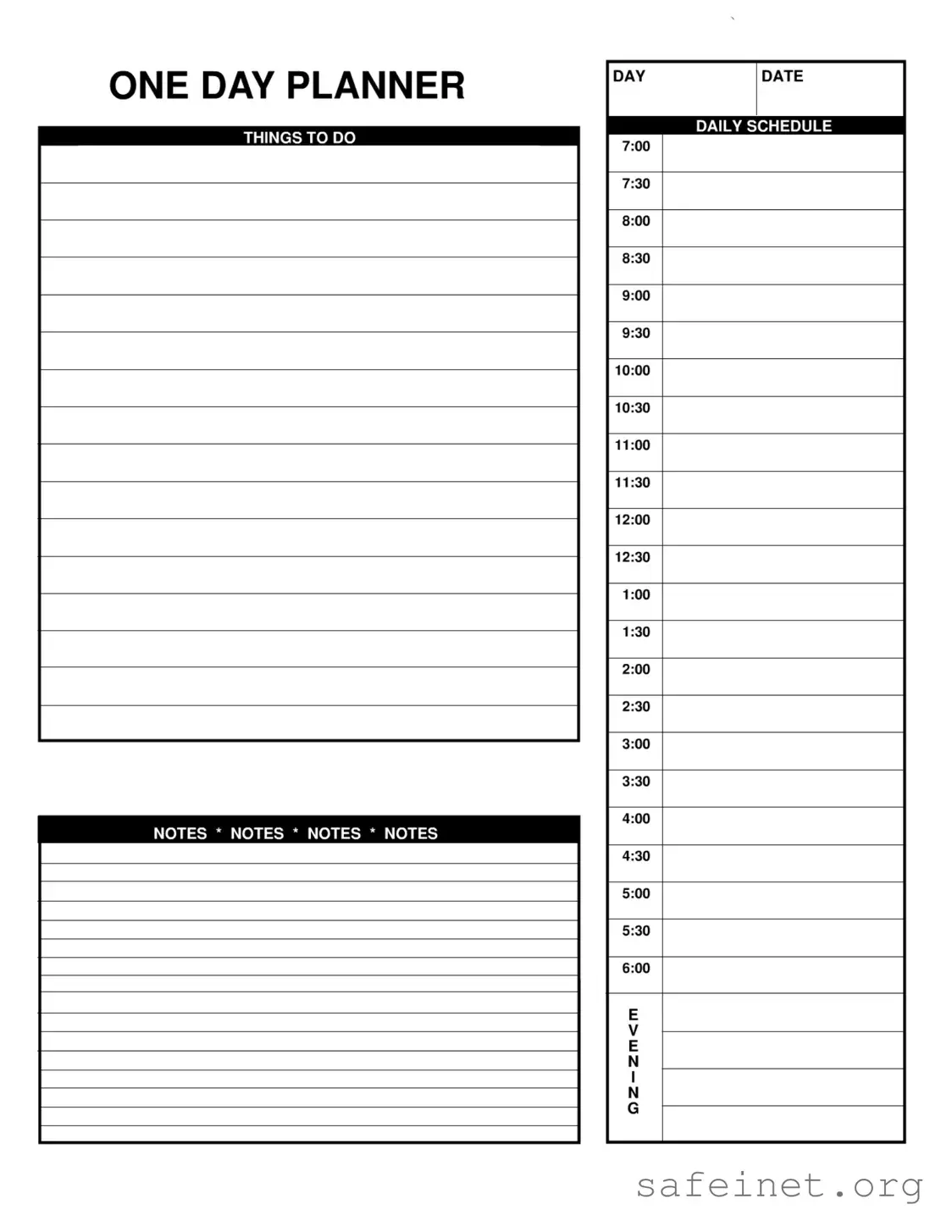
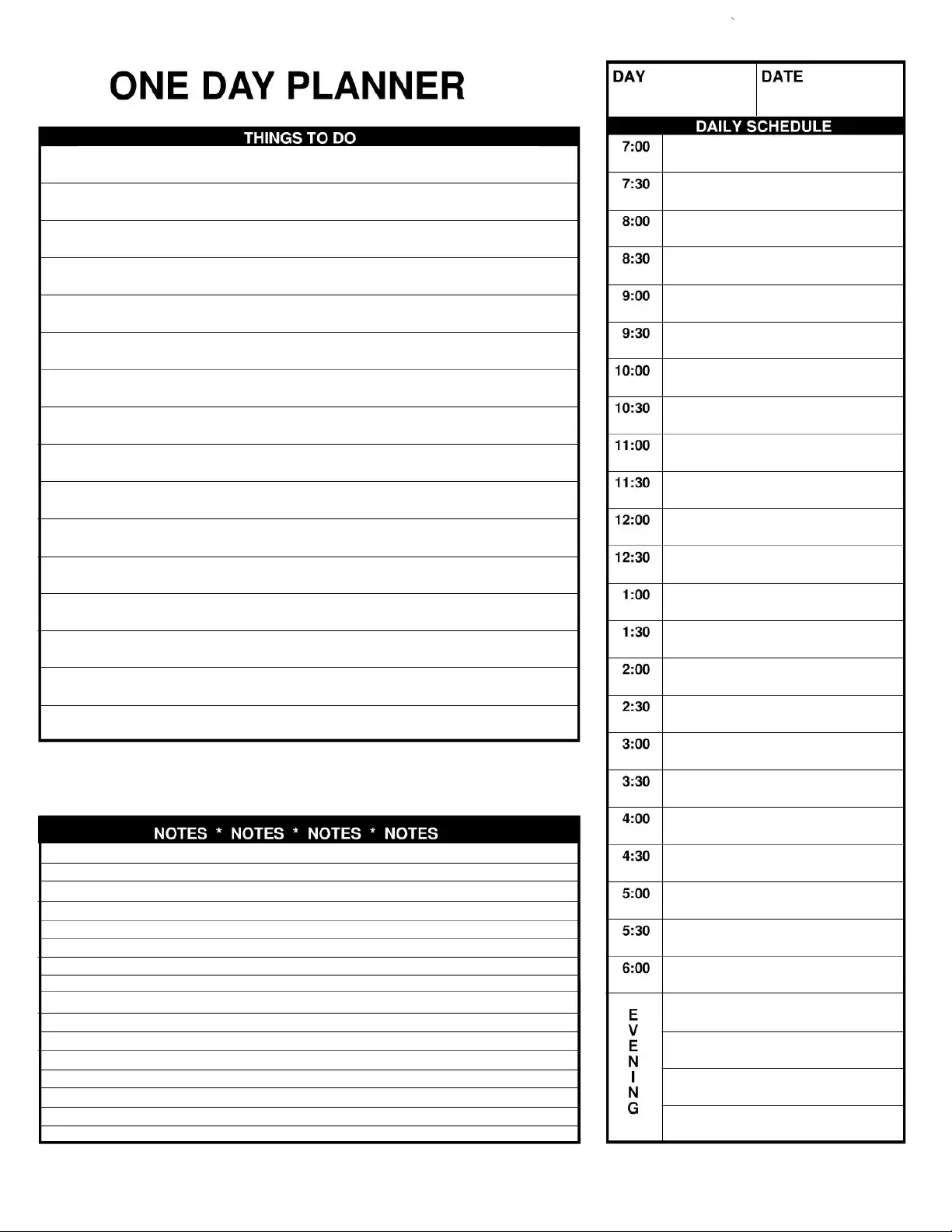
The Daily Planner form is a versatile tool designed to help individuals organize their day effectively. It offers a structured layout that includes sections for listing tasks, scheduling activities, and jotting down important notes. Users can easily identify what needs to be accomplished by filling in the "Things to Do" section, ensuring that no task is overlooked. The form also features a detailed daily schedule, divided into half-hour increments from 7:00 AM to 6:00 PM, allowing for precise time management. This time-blocking approach helps individuals allocate their hours efficiently, making it easier to stay on track throughout the day. Additionally, the notes section provides ample space for reminders or reflections, enhancing the planner's functionality. With this form, planning your day becomes a straightforward process, promoting productivity and clarity in daily activities.
| Fact Name | Description |
|---|---|
| Form Purpose | The Daily Planner form helps individuals organize their daily tasks and schedule efficiently. |
| Sections | The form includes sections for things to do, a daily schedule, and notes. |
| Time Slots | Time slots are provided in half-hour increments from 7:00 AM to 6:00 PM. |
| Notes Section | There are multiple notes sections, allowing for additional thoughts or reminders. |
| Date Entry | A designated area for entering the date is included to keep the planner organized. |
| State-Specific Forms | Some states may have specific versions of the Daily Planner, governed by local regulations. |
| Governing Laws | For example, California's version may be governed by the California Family Code. |
| User-Friendly Design | The layout is designed for easy navigation and quick access to necessary information. |
| Customizable | Users can adapt the planner to fit their personal needs and preferences. |
Filling out the Daily Planner form helps organize your day effectively. Follow these steps to ensure all necessary information is captured clearly.
What is the purpose of the Daily Planner form?
The Daily Planner form is designed to help individuals organize their daily tasks and schedule. It provides a structured layout for planning out the day, ensuring that important tasks are noted and time is allocated effectively. By using this form, users can enhance their productivity and maintain focus on their daily objectives.
How do I fill out the Daily Planner form?
To fill out the Daily Planner form, start by entering the date at the top. Next, list the tasks you need to accomplish in the "THINGS TO DO" section. Then, allocate specific times to each task in the "DAILY SCHEDULE" area, which is divided into half-hour increments. Finally, use the "NOTES" section for any additional information or reminders that may help you throughout the day.
Can I customize the Daily Planner form?
While the Daily Planner form comes in a standard format, users are encouraged to modify it to suit their personal needs. This could include adding extra lines for notes, adjusting the time slots, or even incorporating color coding for different types of tasks. The goal is to create a planner that works best for you.
Is there a specific time of day when I should use the Daily Planner form?
The Daily Planner form can be used at any time of day, but many find it most effective when filled out in the morning. This allows for a fresh start and a clear focus on the day's objectives. Alternatively, some individuals prefer to plan the night before, enabling them to wake up with a clear agenda in mind.
How can the Daily Planner form help with time management?
By breaking the day into half-hour increments, the Daily Planner form encourages users to allocate specific times for each task. This method helps in prioritizing tasks and ensures that time is not wasted. It also allows for better tracking of how long tasks actually take, which can lead to improved time management skills over time.
What should I do if I don’t complete all my tasks for the day?
If you find that you haven’t completed all the tasks you planned for the day, don’t be discouraged. It’s common for plans to change. You can either move unfinished tasks to the next day’s planner or adjust your schedule to accommodate them. Reflecting on why tasks were not completed can also help in improving future planning.
Can I use the Daily Planner form for multiple days?
The Daily Planner form is intended for one day at a time, allowing for focused planning. However, you can print or create multiple copies for each day of the week. This way, you can maintain a consistent planning routine while still having the flexibility to adapt to daily changes.
Is there a recommended way to prioritize tasks on the Daily Planner form?
Prioritizing tasks can be achieved by labeling them based on urgency or importance. Some users find it helpful to categorize tasks into "must do," "should do," and "could do." By identifying which tasks are critical, you can ensure that they are scheduled first, allowing for a more efficient use of your time.
How can I ensure I remember to use the Daily Planner form regularly?
Establishing a routine is key to consistently using the Daily Planner form. Setting a specific time each day to fill it out, perhaps as part of your morning or evening routine, can help reinforce this habit. Additionally, placing the planner in a visible location can serve as a reminder to use it.
Can I share my Daily Planner form with others?
Yes, sharing your Daily Planner form can be beneficial, especially in collaborative environments. You might consider sharing it with coworkers or family members to keep everyone informed about your schedule. This can enhance communication and coordination, making it easier to work together on shared tasks or responsibilities.
When filling out the Daily Planner form, many individuals inadvertently make mistakes that can hinder their productivity. Here are seven common errors to avoid:
By being mindful of these common pitfalls, individuals can enhance their planning process and improve overall productivity. Take a moment to review your Daily Planner form and ensure it’s set up for success!
The Daily Planner form is a vital tool for organizing your day effectively. However, it often works best in conjunction with other documents that enhance planning and productivity. Below are six commonly used forms that can complement the Daily Planner.
Using these documents alongside the Daily Planner can significantly improve organization and productivity. Each form serves a unique purpose, contributing to a more structured and fulfilling daily routine.
The Weekly Planner is similar to the Daily Planner but covers a broader time frame. It allows users to outline tasks and appointments for an entire week. Like the Daily Planner, it includes sections for notes and specific time slots, but instead of hourly breakdowns, it typically features a more general overview for each day. This helps individuals see their week at a glance while still providing space for detailed planning.
The Monthly Planner serves a similar purpose, focusing on a longer time span. Users can jot down important dates, deadlines, and events for the entire month. While the Daily Planner is more detailed in terms of hourly scheduling, the Monthly Planner provides a high-level view, allowing users to track recurring tasks and significant appointments without getting bogged down in daily minutiae.
The To-Do List is another document that shares similarities with the Daily Planner. It focuses primarily on tasks that need to be completed rather than scheduling specific times for each task. Like the Daily Planner, a To-Do List can include notes and priorities, helping individuals keep track of what needs to be done. However, it is generally less structured in terms of time management.
The Agenda is closely related to the Daily Planner, often used in meetings or events. It outlines the topics to be discussed and the time allocated for each item. While the Daily Planner is more personal and day-focused, the Agenda serves a similar organizational purpose in a professional context, ensuring that time is managed effectively during discussions.
The Time Blocking Template is another document that aligns with the Daily Planner's intent to manage time efficiently. This template divides the day into blocks, allowing users to assign specific tasks to each time slot. Like the Daily Planner, it emphasizes structure and time management but focuses more on productivity techniques rather than daily scheduling.
The Project Planner helps users organize tasks related to specific projects. It shares the Daily Planner's emphasis on task management but is more focused on the overall project timeline. Sections for notes and deadlines are common in both documents, making it easier to track progress and stay on schedule for project milestones.
The Goal Setting Worksheet is similar in that it encourages individuals to plan their time effectively to achieve specific goals. This document often includes sections for short-term and long-term objectives. While the Daily Planner focuses on daily tasks, the Goal Setting Worksheet helps users align their daily activities with broader aspirations.
The Meal Planner is a specialized document that organizes daily meals and grocery lists. While it may not focus on tasks or appointments like the Daily Planner, it serves a similar purpose in planning out specific time slots for meals. Both documents help individuals manage their time and resources more effectively.
The Fitness Tracker is another document that aligns with the Daily Planner's goal of organization. It allows users to log workouts, meal plans, and health goals. Like the Daily Planner, it emphasizes structure and accountability, helping individuals stay on track with their fitness objectives while managing their daily schedules.
When filling out the Daily Planner form, keep these important tips in mind:
Many people have misconceptions about the Daily Planner form. Understanding these can help you use it more effectively. Here are eight common misunderstandings:
By addressing these misconceptions, you can maximize the benefits of using the Daily Planner and improve your daily productivity.
Using a Daily Planner can enhance your productivity and help you stay organized. Here are some key takeaways to consider when filling out and utilizing the Daily Planner form:
By following these tips, you can make the most of your Daily Planner, turning it into a powerful tool for effective time management.