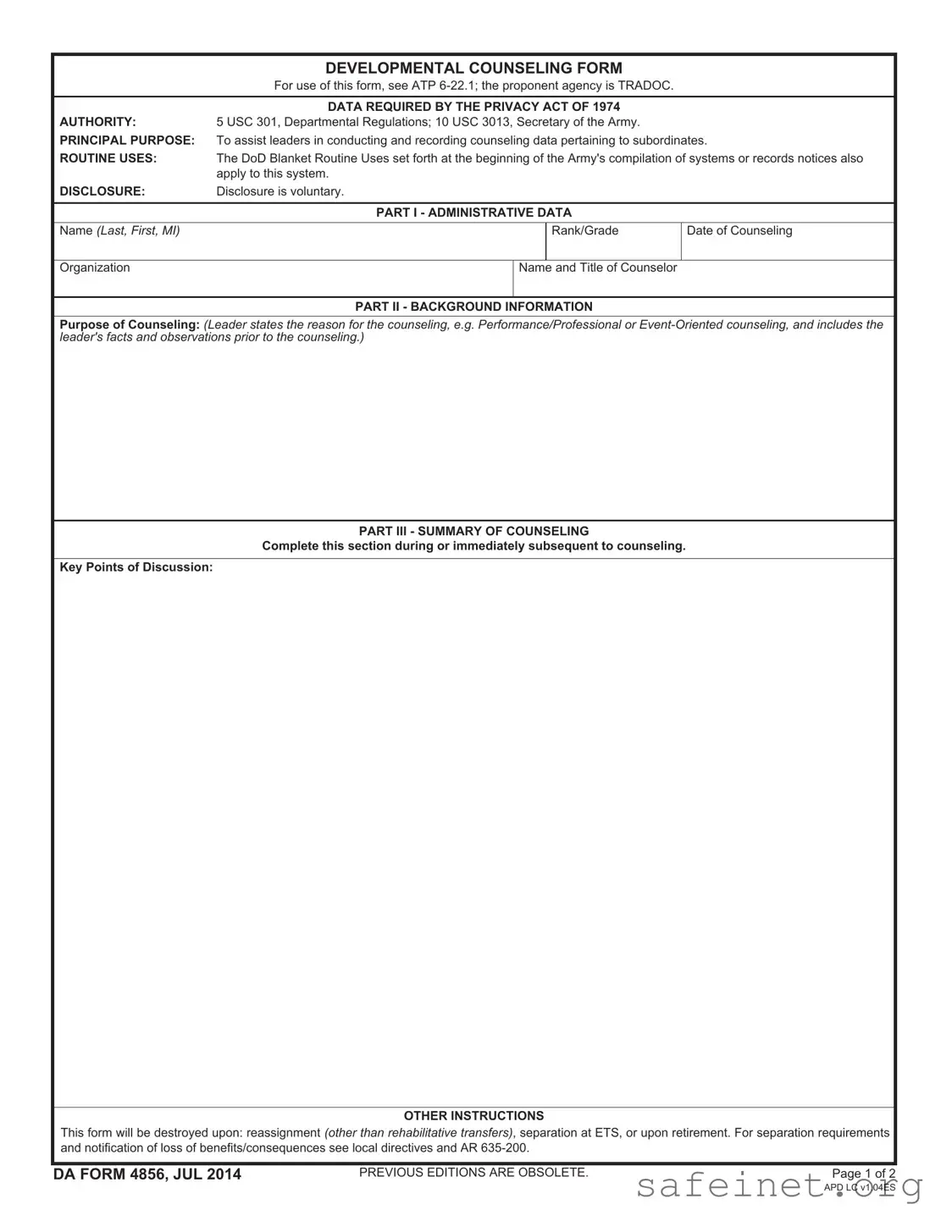
The DA 4856 form plays a crucial role in the Army's developmental process, serving as a key tool for leaders and soldiers alike. This form is primarily used for counseling sessions, providing a structured framework for discussing performance, potential, and areas for improvement. By documenting these conversations, the DA 4856 helps ensure that both the counselor and the counseled have a clear understanding of expectations and goals. It facilitates feedback, allowing leaders to guide their subordinates effectively while also empowering soldiers to take ownership of their personal and professional growth. With sections dedicated to outlining specific objectives, recording achievements, and identifying developmental needs, the DA 4856 form is not just a bureaucratic requirement; it is a vital instrument for fostering communication and accountability within the ranks. Ultimately, this form embodies the Army's commitment to developing its personnel and enhancing overall mission readiness.
| Fact Name | Description |
|---|---|
| Purpose | The DA 4856 form is used for developmental counseling within the military. |
| Usage | This form is primarily utilized by leaders to provide feedback to soldiers on their performance and behavior. |
| Format | The form is structured to include sections for both the counselor and the counseled soldier. |
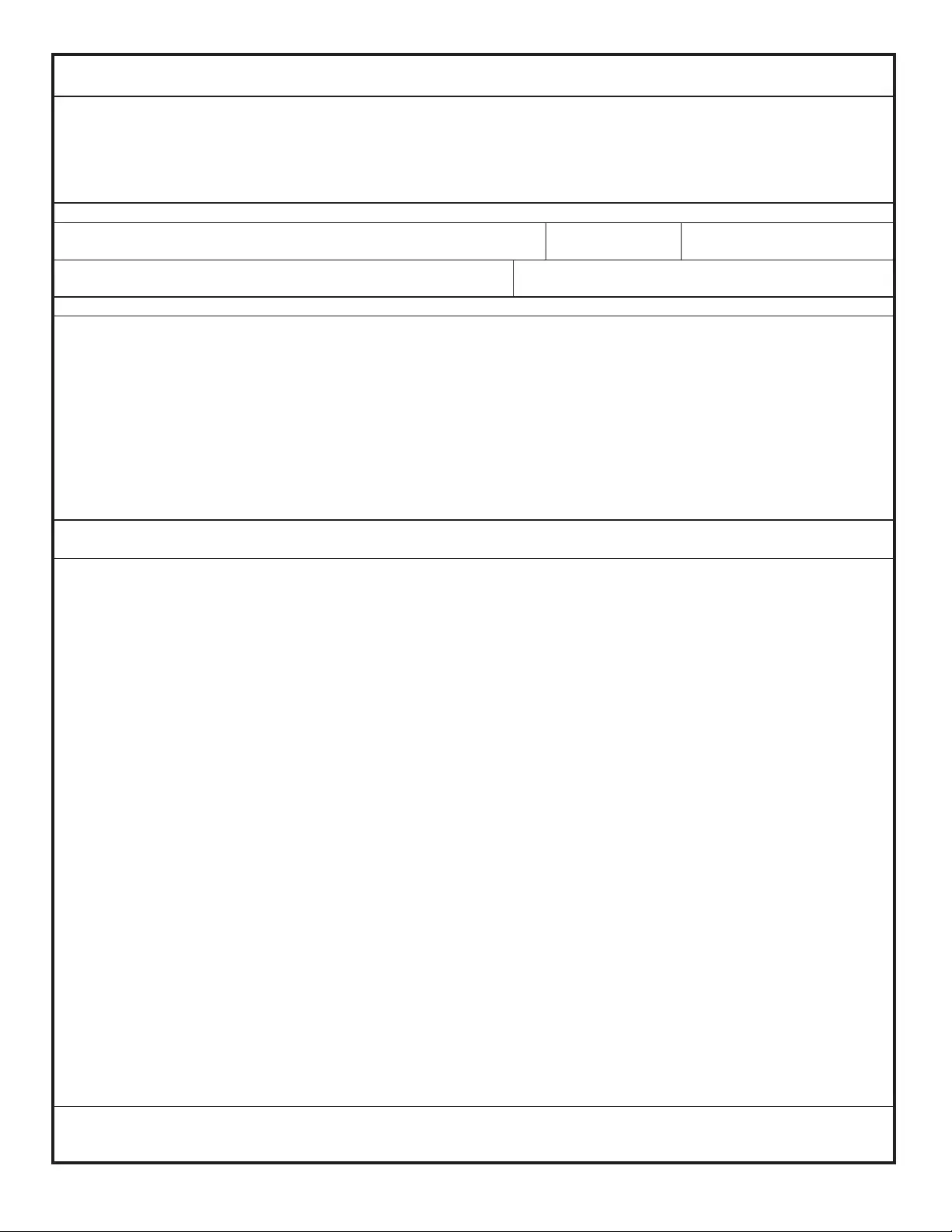
| Components | It includes sections for the purpose of counseling, assessment, and a plan of action. |
| Confidentiality | Information on the DA 4856 is considered confidential and should be handled with care. |
| Record Keeping | Completed forms are typically kept in the soldier's personnel file for future reference. |
| Review Process | The form should be reviewed by both the counselor and the soldier to ensure understanding. |
| State-Specific Forms | Some states may have their own versions or requirements for counseling forms, governed by state military laws. |
| Legal Compliance | Using the DA 4856 form complies with Army Regulation 623-3, which outlines the evaluation process. |
| Training | Leaders are often trained on how to effectively use the DA 4856 form for counseling sessions. |
Filling out the DA 4856 form is a straightforward process. This form is typically used for counseling purposes within the military. After completing the form, it is essential to ensure that all sections are filled out accurately before submission.
What is the DA 4856 form?
The DA 4856 form, also known as the Developmental Counseling Form, is used by the United States Army to document counseling sessions between leaders and soldiers. It serves as a tool for providing feedback, addressing performance issues, and facilitating professional development. The form captures essential information about the counseling session, including the purpose, key points discussed, and any agreed-upon actions or goals.
When should the DA 4856 form be used?
This form should be utilized in various situations, such as during initial counseling, performance evaluations, and when addressing behavioral or performance issues. It can also be used for developmental counseling to help soldiers achieve their personal and professional goals. Essentially, any time a leader feels that a counseling session is necessary, the DA 4856 can be an effective tool.
Who can fill out the DA 4856 form?
The form is primarily completed by leaders, such as non-commissioned officers (NCOs) or officers, who are responsible for the soldier’s development. However, soldiers can also contribute to the discussion and provide input during the counseling session. This collaborative approach ensures that both parties are on the same page regarding expectations and goals.
What information is included on the DA 4856 form?
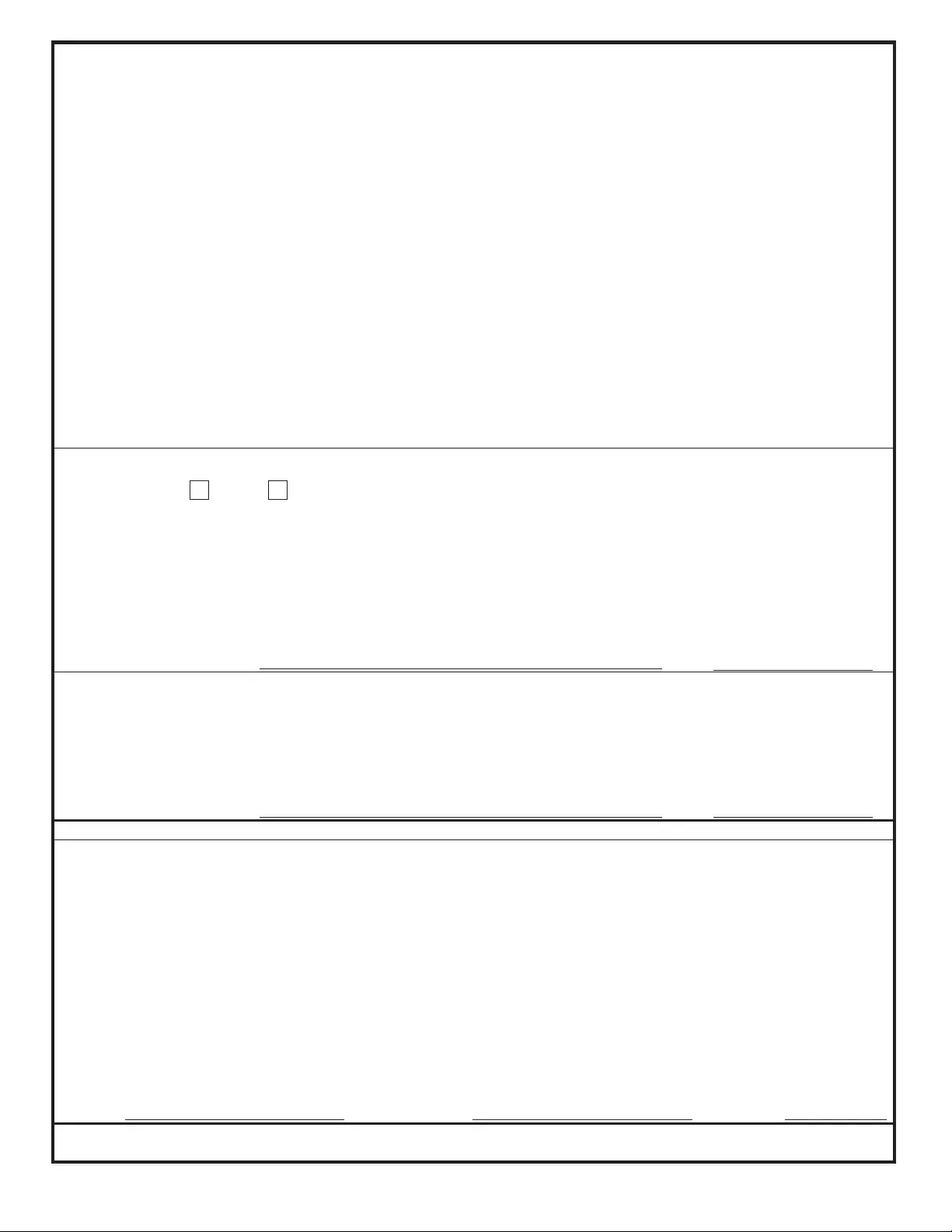
The DA 4856 form includes sections for personal information, the purpose of counseling, a summary of the discussion, and a plan of action. It also has areas for both the counselor and the soldier to sign, indicating that both parties have participated in the counseling session. This documentation is crucial for maintaining transparency and accountability.
Is the DA 4856 form mandatory?
While the use of the DA 4856 form is not always mandatory, it is highly recommended for effective communication and documentation. Many leaders choose to use it to ensure that counseling sessions are structured and comprehensive. Following Army regulations, using the form can also help in maintaining a record of a soldier’s development and performance over time.
How does the DA 4856 form benefit soldiers?
The DA 4856 form offers numerous benefits to soldiers. It provides a clear record of their strengths and areas for improvement, which can guide their professional development. Additionally, it fosters open communication between soldiers and their leaders, allowing for constructive feedback and support. This process can ultimately enhance a soldier's performance and career trajectory.
Can the DA 4856 form be used for disciplinary actions?
Yes, the DA 4856 form can be used in disciplinary contexts. When a soldier's performance or behavior requires correction, the form can document the counseling session addressing these issues. This ensures that there is a formal record of the conversation, the issues discussed, and the steps taken to rectify the situation. It is important to approach these sessions with a focus on improvement rather than punishment.
How long should the DA 4856 form be retained?
The retention period for the DA 4856 form typically aligns with the Army's record-keeping policies. Generally, completed forms should be retained for a minimum of one year. However, if they pertain to ongoing performance issues or significant developmental milestones, it may be prudent to keep them for a longer duration. This helps in tracking a soldier's progress over time.
Incomplete Information: One of the most common mistakes is not filling out all required fields. Leaving sections blank can lead to delays or even rejection of the form. Always double-check that every necessary piece of information is included.
Incorrect Dates: Failing to provide accurate dates can create confusion. Ensure that all dates related to the evaluation or counseling session are correct. This includes the date of the counseling session and the date of the report.
Missing Signatures: Remember that signatures are essential! Both the counselor and the service member must sign the form. Omitting a signature can render the document invalid.
Using Inappropriate Language: It’s important to use clear and professional language. Avoid slang or overly casual phrases. The tone should reflect the seriousness of the evaluation.
Not Keeping a Copy: Always make a copy of the completed form for your records. This is a crucial step that many overlook. Having a copy can help if there are any questions or issues later on.
The DA Form 4856, also known as the Developmental Counseling Form, is a critical tool used in the U.S. Army for documenting counseling sessions between leaders and soldiers. However, it is often used in conjunction with several other forms and documents that serve complementary purposes. Below is a list of some of these documents, each with a brief description.
Understanding these forms and how they relate to the DA Form 4856 can enhance the effectiveness of counseling sessions. Utilizing these documents ensures that leaders have a comprehensive view of a soldier's performance, development, and well-being.
The DA 4856 form, often referred to as the Developmental Counseling Form, is similar to the Performance Improvement Plan (PIP) used in many organizations. Both documents serve as tools for documenting an individual's performance issues and outlining a plan for improvement. While the DA 4856 focuses on military personnel, the PIP is typically utilized in civilian workplaces. Each form provides a structured approach to feedback, allowing the individual to understand expectations and the steps needed to enhance their performance.
Another document comparable to the DA 4856 is the Employee Counseling Form. This form is used in various employment settings to address behavioral or performance-related concerns. Like the DA 4856, it includes sections for identifying issues, setting goals, and tracking progress over time. Both forms aim to foster communication between the individual and their supervisor, ensuring that everyone is on the same page regarding expectations and improvement strategies.
The Individual Development Plan (IDP) also shares similarities with the DA 4856. An IDP is designed to help employees set career goals and identify the skills they need to develop. While the DA 4856 is more focused on immediate performance issues, both documents emphasize the importance of personal growth and development. They encourage individuals to take ownership of their progress and seek out resources to achieve their goals.
The Performance Appraisal form is another document that aligns with the DA 4856. Performance appraisals are typically conducted annually to evaluate an employee's overall performance. Both forms provide a framework for assessing strengths and weaknesses, but the DA 4856 is often used for more immediate feedback. They both aim to enhance communication and set clear expectations for future performance.
In addition, the Corrective Action Plan (CAP) bears resemblance to the DA 4856. A CAP is used when an employee's performance does not meet established standards, similar to the purpose of the DA 4856. Both documents outline specific issues, corrective actions, and timelines for improvement. They serve as formal records that can help ensure accountability and provide a roadmap for success.
The Coaching Plan is another document that can be compared to the DA 4856. Coaching plans focus on developing skills and competencies through guidance and support. While the DA 4856 addresses performance issues more directly, both documents emphasize the importance of feedback and ongoing development. They encourage individuals to engage in constructive conversations about their performance and aspirations.
Lastly, the Feedback Form is akin to the DA 4856 in that it provides a structured way to offer feedback on an individual’s performance. Feedback forms can be used in various contexts, whether in the military or civilian workplaces. Both documents promote open dialogue and help individuals understand how their actions impact their performance and the organization as a whole.
When filling out the DA 4856 form, it’s important to follow certain guidelines to ensure accuracy and compliance. Here’s a helpful list of things you should and shouldn’t do:
By following these guidelines, you can help ensure that your DA 4856 form is filled out correctly and submitted without issues.
The DA 4856 form, also known as the Developmental Counseling Form, is an essential tool used in the U.S. Army for counseling soldiers. However, several misconceptions surround its purpose and use. Here are nine common misunderstandings:
This form is often perceived as a tool solely for documenting negative behavior. In reality, it is used for both positive and negative counseling, helping to recognize achievements and guide improvement.
While leaders typically initiate the counseling process, soldiers can also contribute to the form. Their input is valuable for a comprehensive discussion.
The DA 4856 is not a disciplinary action. Instead, it serves as a developmental tool aimed at helping soldiers grow and succeed in their roles.
There is no requirement to complete the form in one session. Counseling can be an ongoing conversation, allowing for reflection and adjustments over time.
The form can address a wide range of topics, including career development, personal issues, and professional goals, making it a versatile resource.
While the form is a record of the counseling session, it can be updated or amended if new information arises or if circumstances change.
Officers can also use the DA 4856 for counseling. It is applicable to all ranks within the Army, promoting a culture of feedback and development.
While the DA 4856 is not a legal document in the traditional sense, it can be used as evidence in administrative proceedings, making accurate documentation important.
Regular use of the DA 4856 can enhance communication and understanding between soldiers and leaders, fostering a supportive environment.
Understanding these misconceptions can help soldiers and leaders utilize the DA 4856 effectively, ensuring it serves its intended purpose of fostering development and improvement.
The DA 4856 form, also known as the Developmental Counseling Form, is an essential tool used in the U.S. Army for documenting counseling sessions. Here are some key takeaways to consider when filling out and using this form:
Utilizing the DA 4856 form effectively can foster growth and development within the ranks. Properly documenting counseling sessions ensures that all parties understand expectations and responsibilities.