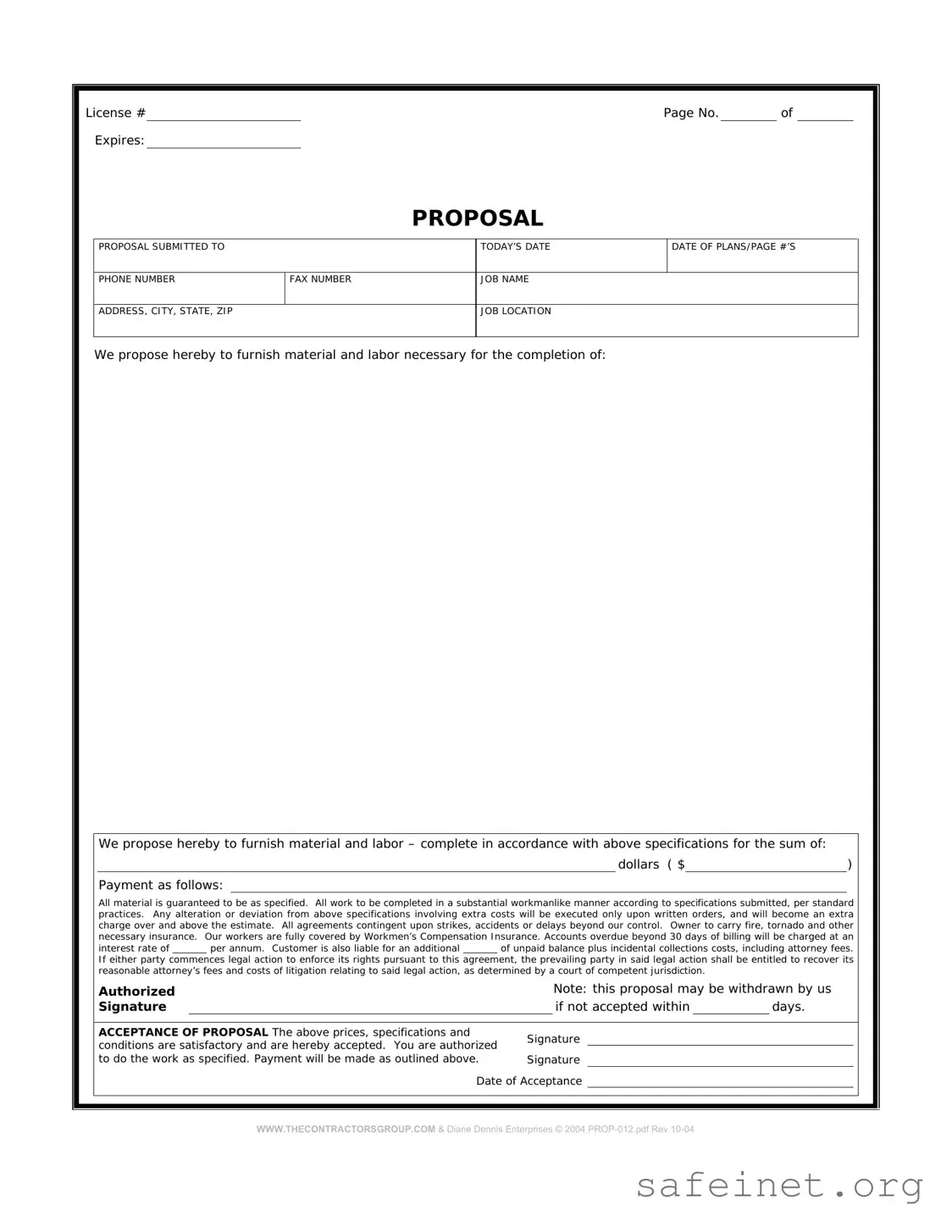
When embarking on a construction project, clear communication and detailed planning are essential. A construction proposal form serves as a vital tool in this process, outlining the specifics of the project and ensuring that all parties are on the same page. This form typically includes key components such as project scope, timelines, costs, and payment terms. It allows contractors to present their qualifications and experience while detailing the materials and methods they plan to use. Additionally, the form often addresses any required permits and regulatory considerations, providing a comprehensive overview of the project's framework. By utilizing a construction proposal form, stakeholders can minimize misunderstandings, set realistic expectations, and foster a collaborative environment from the outset.
License # |
|
Page No. |
|
of |
Expires: |
|
|
|
|
PROPOSAL
PROPOSAL SUBMITTED TO |
TODAY’S DATE |
DATE OF PLANS/PAGE #’S
PHONE NUMBER
FAX NUMBER
JOB NAME
ADDRESS, CITY, STATE, ZIP
JOB LOCATION
We propose hereby to furnish material and labor necessary for the completion of:
We propose hereby to furnish material and labor – complete in accordance with above specifications for the sum of: |
|
|||
|
|
dollars ( $ |
|
) |
Payment as follows: |
|
|
||
All material is guaranteed to be as specified. All work to be completed in a substantial workmanlike manner according to specifications submitted, per standard practices. Any alteration or deviation from above specifications involving extra costs will be executed only upon written orders, and will become an extra charge over and above the estimate. All agreements contingent upon strikes, accidents or delays beyond our control. Owner to carry fire, tornado and other necessary insurance. Our workers are fully covered by Workmen’s Compensation Insurance. Accounts overdue beyond 30 days of billing will be charged at an
interest rate of per annum. Customer is also liable for an additional of unpaid balance plus incidental collections costs, including attorney fees. If either party commences legal action to enforce its rights pursuant to this agreement, the prevailing party in said legal action shall be entitled to recover its reasonable attorney’s fees and costs of litigation relating to said legal action, as determined by a court of competent jurisdiction.
Authorized |
|
Note: this proposal may be withdrawn by us |
|||||
Signature |
|
|
if not accepted within |
|
days. |
||
|
|
|
|
|
|
|
|
ACCEPTANCE OF PROPOSAL The above prices, specifications and |
Signature |
|
|
|
|||
conditions are satisfactory and are hereby accepted. You are authorized |
|
|
|
||||
|
|
|
|
|
|
||
to do the work as specified. Payment will be made as outlined above. |
Signature |
|
|
|
|
||
Date of Acceptance
WWW.THECONTRACTORSGROUP.COM & Diane Dennis Enterprises © 2004
| Fact Name | Description |
|---|---|
| Purpose | The construction proposal form is used to outline the details of a proposed construction project, including scope, costs, and timelines. |
| Components | Typically includes project description, estimated budget, timeline, and contractor information. |
| State-Specific Forms | Some states require specific forms that adhere to local regulations and standards. |
| Governing Laws | Construction proposals may be governed by state construction laws, including contract law and licensing requirements. |
| Submission Process | Completed forms are usually submitted to the client or project owner for review and approval. |
| Importance of Accuracy | Accurate information on the form is crucial, as it can affect project funding and legal compliance. |
Filling out the Construction proposal form is an important step in the process of initiating a construction project. This form helps outline the specifics of the project and ensures that all parties are on the same page. Follow the steps below to complete the form accurately.
After completing the form, review all the information for accuracy. Ensure that everything is clear and understandable before submitting it to the relevant parties.
What is a Construction Proposal Form?
A Construction Proposal Form is a document used by contractors to outline the details of a construction project. It includes information such as project scope, materials to be used, timelines, and costs. This form serves as a formal proposal to clients, allowing them to understand the specifics of the project and make informed decisions.
Who should use a Construction Proposal Form?
This form is primarily used by contractors, builders, and construction companies. However, homeowners and property owners can also utilize it when seeking bids from multiple contractors. By requiring a proposal, clients can compare offers and select the best fit for their needs.
What information is typically included in a Construction Proposal Form?
The form usually contains the project description, estimated costs, a breakdown of materials and labor, timelines, and payment terms. It may also include details about permits, warranties, and any contingencies. This comprehensive approach helps ensure that all parties are aligned on expectations and deliverables.
How can I ensure my Construction Proposal Form is clear and effective?
To create a clear and effective proposal, use straightforward language and avoid technical jargon. Be specific about project details, including measurements and materials. Organize the information logically, and consider including visuals or diagrams if applicable. Clarity helps prevent misunderstandings and fosters trust between parties.
Is a Construction Proposal Form legally binding?
A Construction Proposal Form is generally not legally binding until both parties sign a contract based on the proposal. However, it can serve as a basis for negotiations and may hold some weight in legal disputes if it outlines agreed-upon terms. Always consult with a legal professional for specific advice regarding binding agreements.
Can I modify a Construction Proposal Form after it has been submitted?
Yes, modifications can be made to a Construction Proposal Form after submission, but both parties must agree to any changes. It is advisable to document these changes in writing to maintain clarity and avoid potential disputes. Open communication is essential during this process.
How do I submit a Construction Proposal Form?
The submission process can vary depending on the client’s preferences. Typically, the form can be delivered in person, via email, or through a project management platform. Ensure that the submission method aligns with the client's expectations and follow up to confirm receipt.
What should I do if my proposal is rejected?
If your proposal is rejected, seek feedback from the client to understand their concerns. This information can be invaluable for future proposals. Consider revising the proposal based on the feedback and resubmitting it, or explore other potential projects. Persistence and adaptability can lead to future opportunities.
Failing to include contact information. Without complete contact details, it becomes difficult for clients to reach out for follow-up questions.
Not specifying the scope of work. Clearly defining what the project entails is crucial. Vague descriptions can lead to misunderstandings later.
Omitting project timelines. Without a timeline, clients may have unrealistic expectations regarding project completion.
Incorrectly calculating cost estimates. Inaccurate figures can result in budget overruns and dissatisfaction from clients.
Not providing payment terms. Clearly outlining payment schedules helps avoid disputes and ensures smooth financial transactions.
Neglecting to include licenses and insurance information. Clients expect proof of qualifications and protection against potential liabilities.
Using technical jargon that clients may not understand. Clear and simple language fosters better communication and trust.
Forgetting to sign the form. A signature is often required to validate the proposal and initiate the agreement process.
Leaving out references or past project examples. Providing evidence of previous work can enhance credibility and persuade clients.
Not reviewing the form for errors or omissions before submission. A thorough review can prevent costly mistakes and miscommunication.
When embarking on a construction project, a variety of documents accompany the construction proposal form. Each of these forms serves a specific purpose, helping to ensure that the project runs smoothly and meets legal requirements. Below is a list of essential documents often used alongside the construction proposal form.
In summary, these documents play a vital role in the construction process. They help manage expectations, ensure compliance, and protect the interests of all parties involved. Having a clear understanding of each document can greatly enhance the efficiency and success of a construction project.
The Construction Contract is a legally binding agreement between the contractor and the client. It outlines the scope of work, payment terms, and timelines. Like the Construction Proposal Form, it serves as a foundational document that establishes expectations and responsibilities for both parties. The contract is more detailed and formal, but it is built on the preliminary discussions and agreements captured in the proposal form.
The Bid Proposal is another document that shares similarities with the Construction Proposal Form. It is submitted by contractors in response to a client's request for proposals. Both documents aim to provide a clear understanding of the project scope and costs. However, the Bid Proposal is often more competitive, as it includes pricing and terms that are meant to attract clients and secure the project.
The Scope of Work document outlines specific tasks and deliverables for a construction project. Like the Construction Proposal Form, it defines what is included in the project. However, the Scope of Work is typically more detailed and technical, focusing on the exact work to be performed, while the proposal form provides a broader overview and initial pricing.
The Letter of Intent serves as a preliminary agreement between parties before the final contract is executed. It expresses a mutual interest in proceeding with the project, similar to the Construction Proposal Form. While the proposal form details project specifics, the Letter of Intent is more about confirming intent and can lead to further negotiations.
The Change Order is a document that modifies the original construction contract. It is similar to the Construction Proposal Form in that it outlines changes in scope, cost, or schedule. Both documents require clear communication and agreement between parties. However, Change Orders are typically used after the initial proposal has been accepted and the project is underway.
The Request for Proposal (RFP) is a document issued by clients seeking bids from contractors. It is similar to the Construction Proposal Form in that it outlines project requirements and invites contractors to submit proposals. The RFP is often more formal and detailed, setting the stage for contractors to respond with their proposals, which may include the Construction Proposal Form.
The Construction Schedule is a timeline that outlines when specific tasks will be completed. While the Construction Proposal Form provides an overview of the project, the schedule offers a detailed plan for execution. Both documents are essential for project management, ensuring that all parties understand the timeline and deadlines involved.
The Work Order is a document that authorizes work to begin on a project. It is similar to the Construction Proposal Form in that it confirms the details of the work to be done. However, the Work Order is typically used after the proposal has been accepted, serving as a directive for the contractor to commence work based on the agreed-upon terms.
The Final Invoice is a document submitted by the contractor upon project completion. It is similar to the Construction Proposal Form in that it details the costs associated with the project. However, the Final Invoice summarizes the actual expenses incurred, while the proposal form provides an estimate and initial pricing before work begins.
When filling out a construction proposal form, it's important to approach the task with care. Here’s a list of five things you should and shouldn’t do to ensure that your proposal is clear and professional.
By following these guidelines, you can create a strong proposal that effectively communicates your intentions and qualifications.
When it comes to construction proposals, many people hold misconceptions that can lead to confusion or missteps in the process. Understanding these myths can help ensure a smoother experience. Here are eight common misconceptions about the construction proposal form:
By debunking these misconceptions, individuals and businesses can approach the construction proposal process with greater clarity and confidence. Understanding the nuances of proposals can ultimately lead to more successful projects.
When filling out and using the Construction Proposal Form, it is essential to keep several key points in mind to ensure clarity and professionalism. Here are the main takeaways:
By keeping these key points in mind, you can effectively fill out and utilize the Construction Proposal Form, paving the way for a successful project and a positive working relationship with your clients.