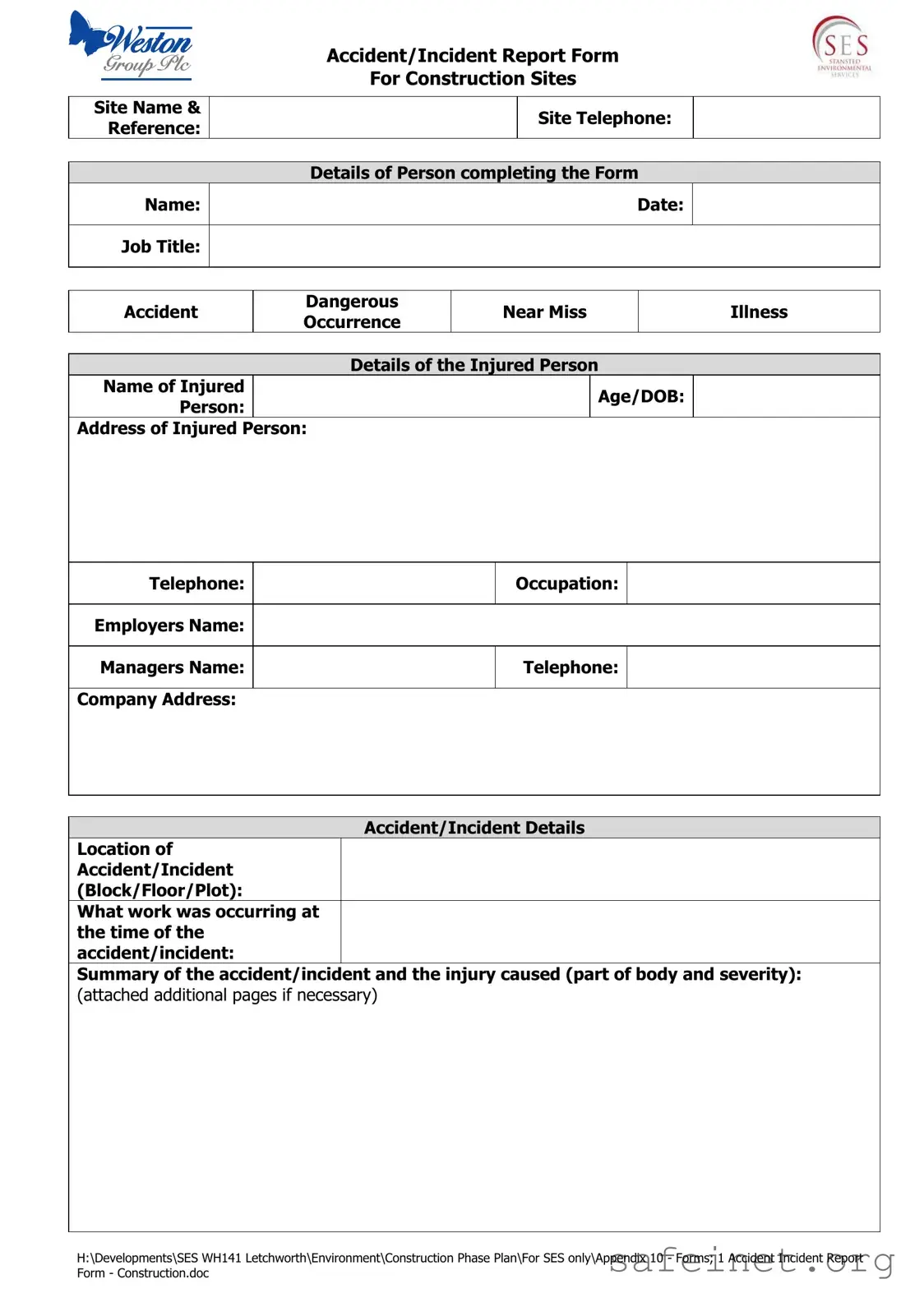
In the dynamic environment of construction sites, safety remains a paramount concern, making the Construction Accident Report form an essential tool for documenting incidents that occur on the job. This comprehensive form captures critical information about accidents, dangerous occurrences, near misses, and illnesses, ensuring that all relevant details are recorded accurately. The form begins by identifying the site and the individual completing it, which fosters accountability. It then delves into specifics about the injured person, including their age, occupation, and contact information, as well as the employer's details. Understanding the context of the incident is crucial; therefore, the form prompts the reporter to describe the location of the accident and the nature of the work being performed at that time. A thorough summary of the incident, including the injuries sustained and their severity, is also required. Furthermore, the form encourages the inclusion of witness information and any first aid measures taken, reflecting the collaborative nature of safety on construction sites. Lastly, it addresses follow-up actions to prevent future occurrences, reinforcing a commitment to continuous improvement in safety practices. By capturing these details, the Construction Accident Report form plays a vital role in enhancing workplace safety and accountability.
| Fact Name | Details |
|---|---|
| Purpose | The Construction Accident Report form is designed to document incidents that occur on construction sites, ensuring accurate record-keeping and compliance with safety regulations. |
| Information Required | The form collects essential information such as the site name, details of the injured person, and specifics about the accident or incident. |
| Types of Incidents | It categorizes incidents into accidents, dangerous occurrences, near misses, and illnesses, allowing for comprehensive reporting. |
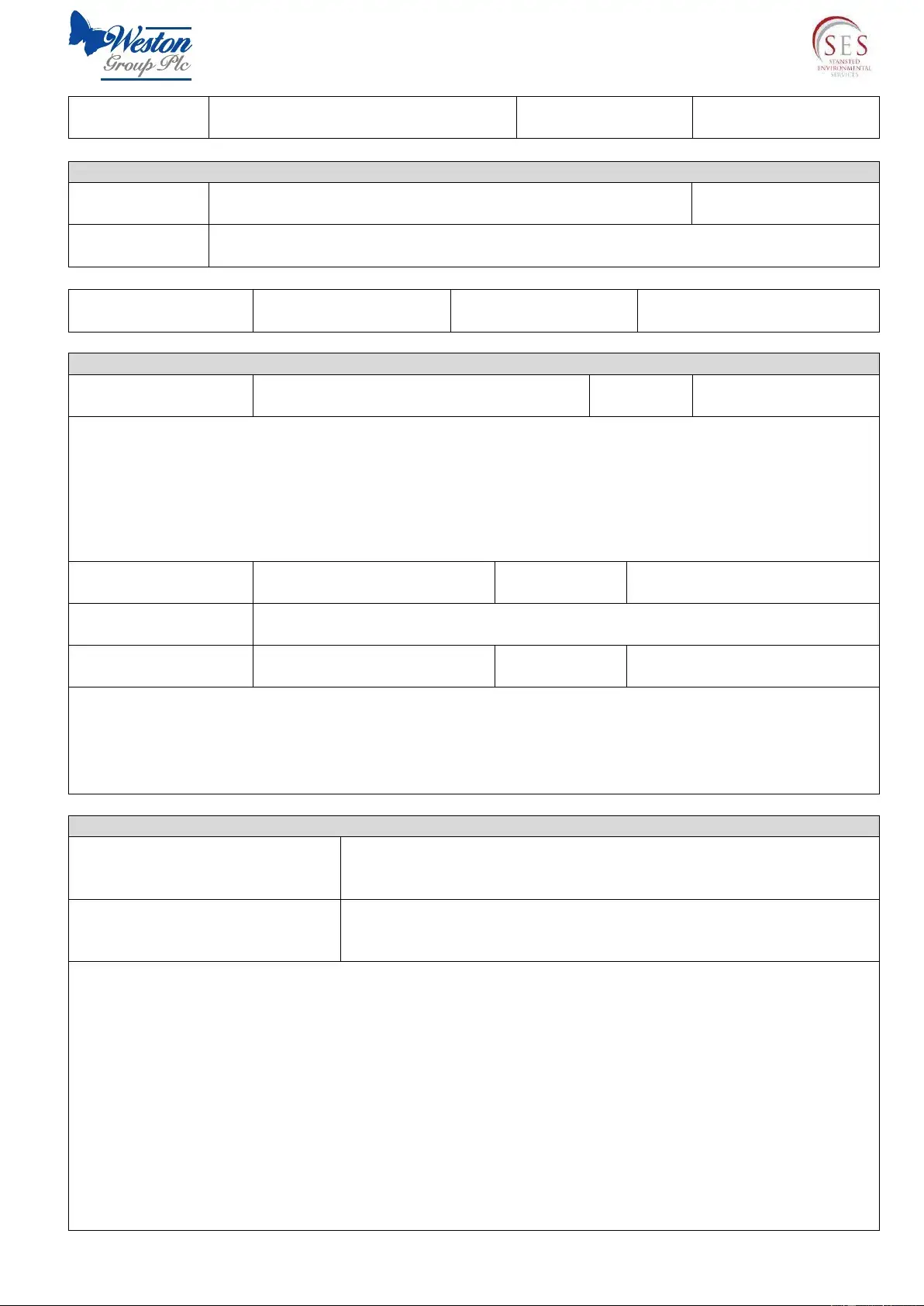
| Witness Information | The form requires details of witnesses, including their names and contact information, to provide additional context regarding the incident. |
| First Aid Details | First aid treatment provided to the injured person must be documented, highlighting the immediate response to the incident. |
| Reporting Authority | It is necessary to indicate to whom the accident or incident was reported, ensuring accountability and follow-up actions are clear. |
| Method Statement Compliance | The form checks if the work was being conducted in accordance with a Method Statement, which is crucial for safety compliance. |
| State-Specific Regulations | Each state may have specific laws governing construction accident reporting, such as OSHA regulations in the United States, which must be adhered to when completing the form. |
Completing the Construction Accident Report form is an important step in documenting any incidents that occur on a construction site. This report helps ensure that all necessary information is captured for review and potential follow-up actions. Below are the steps to fill out the form accurately.
What is the purpose of the Construction Accident Report form?
The Construction Accident Report form is designed to document any accidents, incidents, or near misses that occur on construction sites. It serves as a critical tool for recording details about the event, the individuals involved, and the circumstances surrounding the incident. This information is vital for ensuring safety, preventing future occurrences, and complying with regulatory requirements.
Who should complete the form?
The form should be completed by the person who witnessed or was involved in the accident. This could be a site manager, supervisor, or any employee present at the time of the incident. It is important that the form is filled out as soon as possible after the event to ensure accurate and detailed information is captured.
What information is required on the form?
Key details required include the site name and reference, the person completing the form, and specifics about the injured person such as their name, age, and occupation. Additionally, the form asks for a description of the accident, the location, and any witnesses. It is also important to note any first aid provided and actions taken to prevent future incidents.
How should the form be submitted?
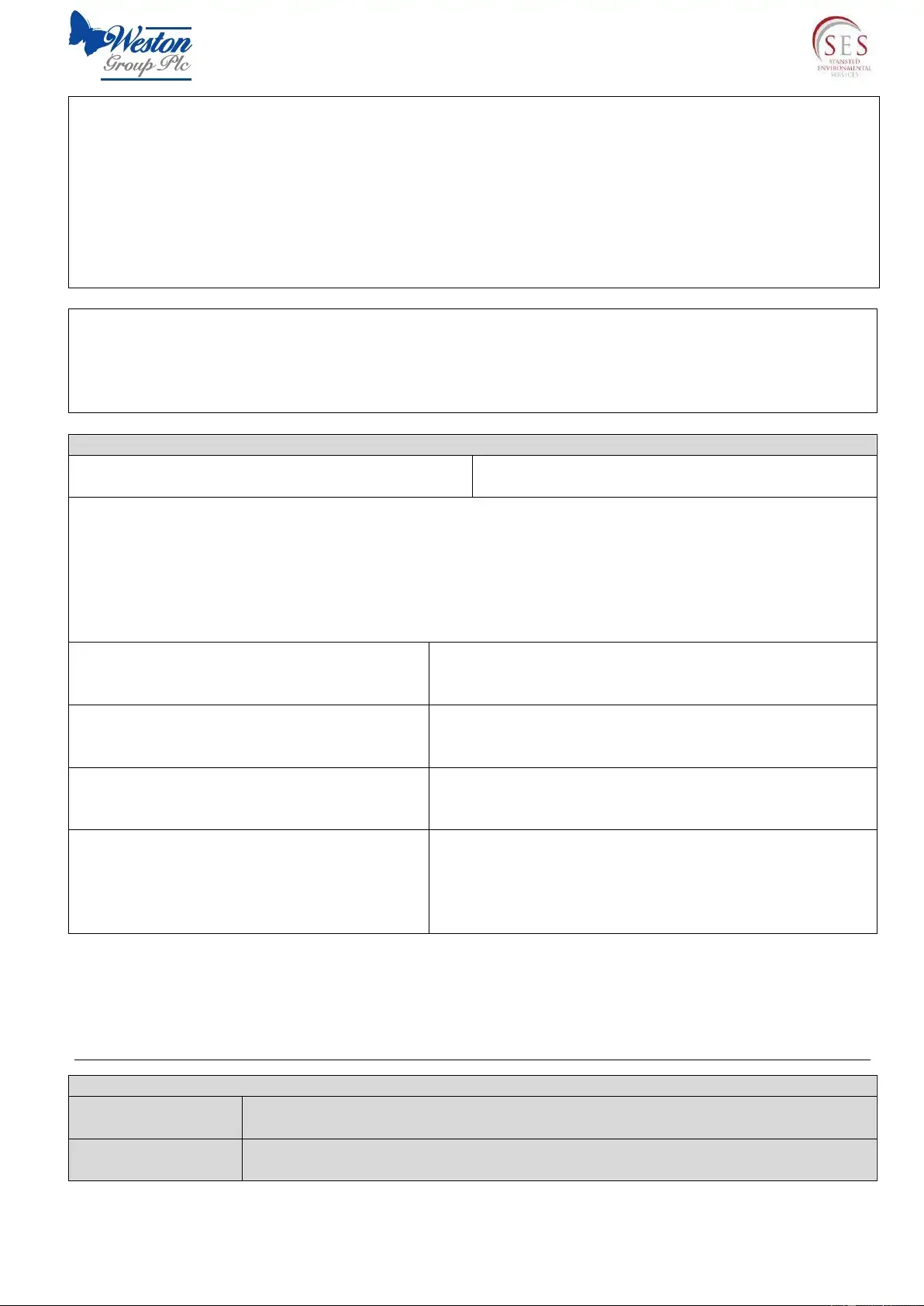
Once completed, the form should be faxed to Stansted Environmental Services Ltd at the designated fax number: 01279 873381. Ensure that all sections are filled out thoroughly to avoid delays in processing the report.
What happens after the form is submitted?
After submission, the report will be reviewed by the appropriate personnel. They will assess the information provided to determine the accident category and any necessary follow-up actions. This process is crucial for maintaining safety standards and improving workplace conditions.
Is there a need for additional documentation?
Yes, if there are relevant Method Statements or additional pages detailing the incident, they should be attached to the report. This supplementary information can provide further context and assist in the investigation of the accident.
Failing to provide complete information about the injured person. This includes their name, age, address, and occupation. Omitting any of these details can hinder the investigation process.
Not specifying the location of the accident clearly. Without accurate details on where the incident occurred, it becomes challenging to assess safety protocols at that specific site.
Neglecting to describe the work being performed at the time of the accident. This information is critical for understanding the context of the incident and identifying potential hazards.
Using vague language in the summary of the accident. Clear and precise descriptions of what happened and the severity of the injuries are essential for effective reporting.
Failing to list witnesses and their contact information. Witness accounts can provide valuable insights into the incident, making it important to document their names and roles.
Not indicating whether the injured person was inducted or had a CSCS card. This information is vital for compliance and safety training verification.
When a construction accident occurs, several forms and documents may be necessary to ensure proper reporting and follow-up. Each of these documents serves a unique purpose and helps provide a comprehensive overview of the incident. Below is a list of commonly used forms alongside the Construction Accident Report form.
Each of these documents plays a vital role in addressing the aftermath of a construction accident. Together, they help ensure that the incident is thoroughly investigated, that proper medical care is documented, and that measures are taken to prevent future occurrences.
The Incident Report Form is a document that captures details about any workplace incident, similar to the Construction Accident Report form. Both forms require information about the site, the individuals involved, and a description of the incident. The Incident Report Form typically includes fields for the date, time, and nature of the incident, making it easy to track trends and identify potential hazards. This helps organizations improve safety protocols and prevent future occurrences.
The Worker’s Compensation Claim Form serves a purpose akin to the Construction Accident Report. It is designed for employees to report injuries sustained on the job and seek compensation for medical expenses and lost wages. Like the Construction Accident Report, it requires detailed information about the injured party, the circumstances surrounding the injury, and any witnesses. Both forms aim to ensure that proper procedures are followed and that injured workers receive the necessary support.
The OSHA 300 Log is another document that aligns with the Construction Accident Report. This log is used to record workplace injuries and illnesses, ensuring compliance with Occupational Safety and Health Administration regulations. Similar to the Construction Accident Report, the OSHA 300 Log includes details about the nature of the injury, the affected employee, and the incident's location. It serves as a comprehensive record for employers to monitor safety performance and identify areas for improvement.
The Safety Incident Report is also comparable to the Construction Accident Report form. It focuses on documenting safety-related incidents, whether they result in injury or not. This report often includes information about near misses, which can help organizations identify risks before they lead to accidents. Both forms emphasize the importance of thorough documentation and proactive safety measures.
The Near Miss Report Form is designed to capture incidents that could have resulted in injury but did not. This document is similar to the Construction Accident Report in its focus on preventing future accidents. By analyzing near misses, organizations can implement safety improvements. Both forms encourage a culture of safety awareness and reporting within the workplace.
The First Aid Treatment Record is another relevant document. It tracks any first aid administered to employees following an incident. Like the Construction Accident Report, it includes details about the injured party and the nature of the injury. This record helps ensure that all injuries are documented and that appropriate care is provided, reinforcing the importance of workplace safety.
The Accident Investigation Report is a more detailed document that follows an incident. It examines the causes and contributing factors of an accident, similar to the Construction Accident Report's focus on incident details. This report typically includes recommendations for preventing future accidents, making it an essential tool for improving workplace safety practices.
The Risk Assessment Form is closely related to the Construction Accident Report. While the latter documents incidents after they occur, the Risk Assessment Form proactively identifies potential hazards before accidents happen. Both forms are crucial for fostering a safe working environment, as they highlight the need for ongoing safety evaluations and improvements.
Lastly, the Employee Injury Report Form serves a similar purpose to the Construction Accident Report. It allows employees to formally document injuries sustained while working. This form captures essential details about the incident, the injured employee, and any witnesses, ensuring that all necessary information is available for follow-up actions and claims. Both forms play a vital role in maintaining workplace safety and accountability.
When filling out the Construction Accident Report form, certain practices can enhance clarity and accuracy. Here is a list of dos and don'ts to consider:
Following these guidelines can help ensure that the report is effective and meets the necessary requirements.
Here are five common misconceptions about the Construction Accident Report form:
Filling out and utilizing the Construction Accident Report form is crucial for ensuring safety and accountability on construction sites. Here are some key takeaways to consider:
By following these guidelines, you can ensure that the Construction Accident Report form is filled out correctly and used effectively to enhance safety on construction sites.