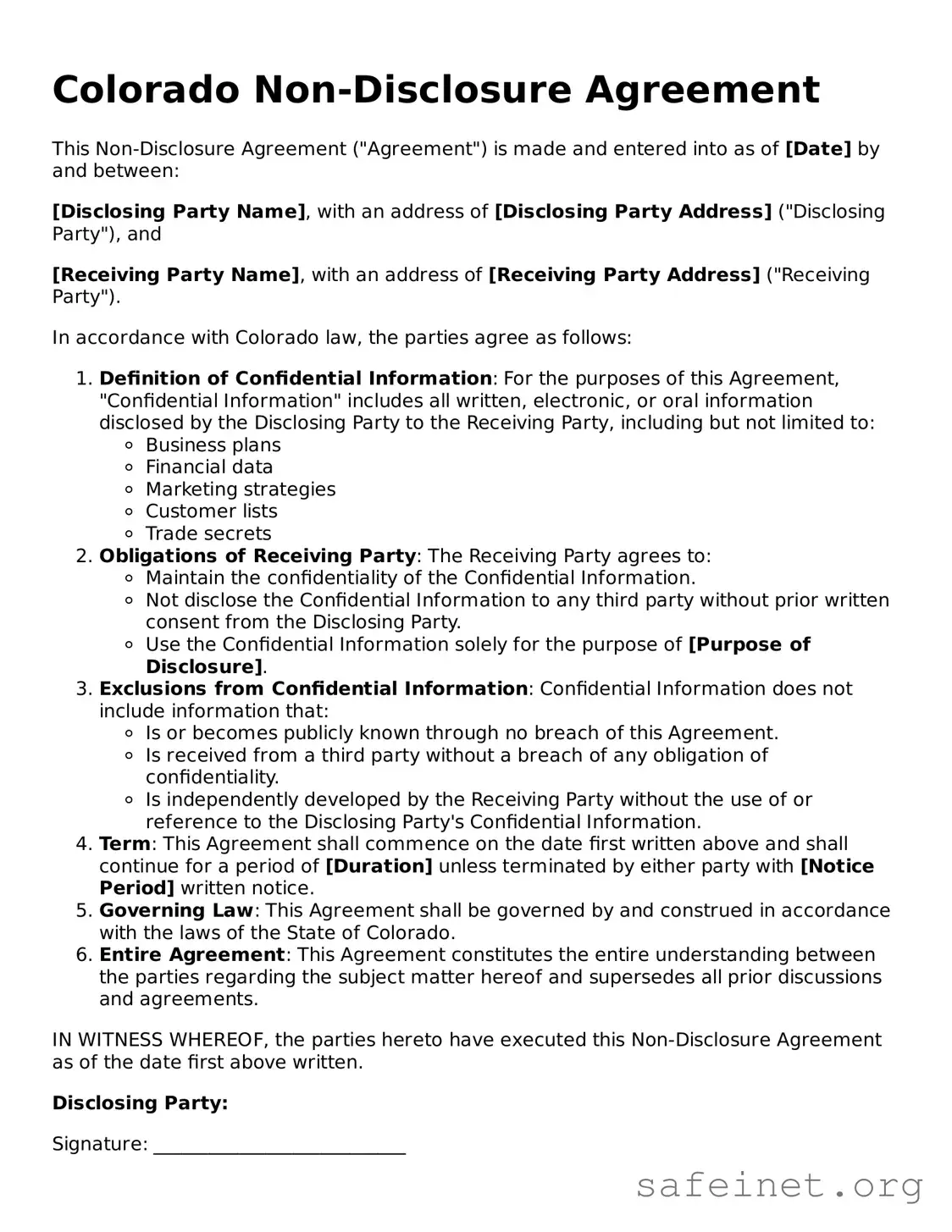
In the realm of business transactions and professional relationships, the Colorado Non-disclosure Agreement (NDA) form serves as a crucial tool for safeguarding sensitive information. This legally binding document establishes a mutual understanding between parties regarding the confidentiality of shared information, ensuring that proprietary data, trade secrets, and other confidential materials remain protected from unauthorized disclosure. The NDA outlines the specific types of information deemed confidential, the obligations of each party to maintain secrecy, and the duration of the confidentiality commitment. Moreover, it delineates the consequences of breaching the agreement, which can range from financial penalties to legal action. By fostering trust and encouraging open communication, the Colorado NDA not only empowers businesses to share innovative ideas and strategies but also plays a vital role in maintaining a competitive edge in today's dynamic market landscape.
Colorado Non-Disclosure Agreement
This Non-Disclosure Agreement ("Agreement") is made and entered into as of [Date] by and between:
[Disclosing Party Name], with an address of [Disclosing Party Address] ("Disclosing Party"), and
[Receiving Party Name], with an address of [Receiving Party Address] ("Receiving Party").
In accordance with Colorado law, the parties agree as follows:
IN WITNESS WHEREOF, the parties hereto have executed this Non-Disclosure Agreement as of the date first above written.
Disclosing Party:
Signature: ___________________________
Name: [Disclosing Party Name]
Title: [Title]
Date: [Date]
Receiving Party:
Signature: ___________________________
Name: [Receiving Party Name]
Title: [Title]
Date: [Date]
| Fact Name | Description |
|---|---|
| Definition | A Non-disclosure Agreement (NDA) is a legal contract to protect confidential information shared between parties. |
| Purpose | The primary purpose of an NDA is to prevent unauthorized disclosure of sensitive information. |
| Parties Involved | Typically, an NDA involves at least two parties: the disclosing party and the receiving party. |
| Governing Law | The NDA is governed by Colorado state law, which outlines the enforceability of the agreement. |
| Duration | NDAs can specify a duration for confidentiality, often ranging from 1 to 5 years, depending on the nature of the information. |
| Exclusions | Common exclusions include information that is public knowledge or already known to the receiving party. |
| Enforcement | If a breach occurs, the injured party may seek legal remedies, including damages or injunctive relief. |
Once you have the Colorado Non-disclosure Agreement form in hand, it’s time to fill it out accurately. Completing this form is a straightforward process, and following the steps below will help ensure that all necessary information is included.
After completing the form, review it for accuracy before sharing it with the other party. Both parties should keep a copy for their records once signed. This ensures that everyone is on the same page regarding the confidentiality terms outlined in the agreement.
What is a Non-disclosure Agreement (NDA) in Colorado?
A Non-disclosure Agreement, commonly known as an NDA, is a legal contract that establishes a confidential relationship between parties. In Colorado, this agreement is often used to protect sensitive information from being disclosed to unauthorized individuals or entities. NDAs can be employed in various situations, such as business partnerships, employment relationships, or when sharing proprietary information. By signing an NDA, parties agree not to share or use the confidential information for any purpose other than what is specified in the agreement.
When should I use a Non-disclosure Agreement?
You should consider using an NDA whenever you plan to share confidential information with another party. This can include trade secrets, business plans, financial data, or client lists. For example, if you are discussing a potential partnership with another business and need to share sensitive information, an NDA can help protect that information. Additionally, if you are hiring an employee who will have access to proprietary information, having them sign an NDA can safeguard your business interests.
What are the key components of a Colorado Non-disclosure Agreement?
A well-drafted NDA typically includes several important components. First, it should clearly define what constitutes "confidential information." This ensures both parties understand what information is protected. Next, the agreement should specify the obligations of the receiving party, including how they must handle the confidential information. Additionally, the duration of confidentiality should be outlined, indicating how long the information must remain confidential. Finally, the agreement should include terms regarding the consequences of a breach, which can help deter unauthorized disclosures.
Can I enforce a Non-disclosure Agreement in Colorado?
Yes, you can enforce an NDA in Colorado as long as it is properly drafted and meets legal requirements. If a party breaches the agreement, the non-breaching party may seek legal remedies, which can include monetary damages or injunctive relief to prevent further disclosures. It's important to ensure that the NDA is clear, reasonable, and not overly restrictive, as courts may refuse to enforce agreements that are deemed too broad or unfair. Consulting with a legal professional can help ensure that your NDA is enforceable and tailored to your specific needs.
Inaccurate Information: One common mistake is providing incorrect or incomplete information. This can include misspellings of names, incorrect addresses, or outdated contact information. It is crucial to double-check all entries to ensure they are accurate and up-to-date.
Neglecting to Define Confidential Information: Another frequent error is failing to clearly define what constitutes confidential information. Without a precise definition, it can lead to misunderstandings about what information is protected under the agreement.
Omitting Signatures: Some individuals forget to sign the document or neglect to obtain the necessary signatures from all parties involved. A non-disclosure agreement is not legally binding unless it is signed by all relevant parties.
Ignoring the Duration of Confidentiality: Many people overlook specifying how long the confidentiality obligation lasts. It is essential to include a clear timeframe to avoid future disputes about the duration of the agreement.
When dealing with sensitive information, a Colorado Non-disclosure Agreement (NDA) is often just one part of the larger picture. Several other forms and documents may be necessary to ensure comprehensive protection and clarity in business dealings. Below is a list of commonly used documents that complement an NDA.
Each of these documents plays a crucial role in safeguarding sensitive information and establishing clear expectations in various business relationships. By utilizing them alongside a Colorado Non-disclosure Agreement, parties can create a more secure and transparent environment for their dealings.
The Colorado Non-disclosure Agreement (NDA) is similar to the Mutual Non-disclosure Agreement (MNDA). Both documents protect confidential information shared between parties. In an MNDA, both parties agree not to disclose each other's proprietary information, making it a balanced approach. This is particularly useful in partnerships where both sides have valuable information to safeguard. The MNDA fosters trust and encourages open communication, as both parties know their secrets are protected.
The Confidentiality Agreement shares similarities with the Colorado NDA. It serves the same primary purpose: to keep sensitive information private. However, a Confidentiality Agreement may not always involve a mutual exchange of information. Often, one party discloses information to another, such as in employment situations or vendor relationships. This document ensures that the receiving party does not share the information with outsiders, thus preserving the confidentiality of the disclosing party's data.
When filling out the Colorado Non-disclosure Agreement form, it is essential to approach the task with care. Here are seven important dos and don'ts to keep in mind:
By following these guidelines, you can ensure that the Non-disclosure Agreement is filled out correctly and effectively protects your interests.
Non-disclosure agreements (NDAs) are essential tools in protecting sensitive information in various contexts, including business dealings and employment relationships. However, several misconceptions about the Colorado Non-disclosure Agreement form can lead to misunderstandings and misuse. Below are some common misconceptions clarified.
Understanding these misconceptions can help individuals and businesses navigate the complexities of non-disclosure agreements more effectively. Properly crafted NDAs can provide essential protection without unnecessarily restricting communication or collaboration.
When filling out and using the Colorado Non-disclosure Agreement (NDA) form, it is essential to understand several key aspects to ensure its effectiveness and compliance. Here are some important takeaways:
Understanding these elements will help ensure that the NDA serves its intended purpose, protecting sensitive information while fostering trust between parties.