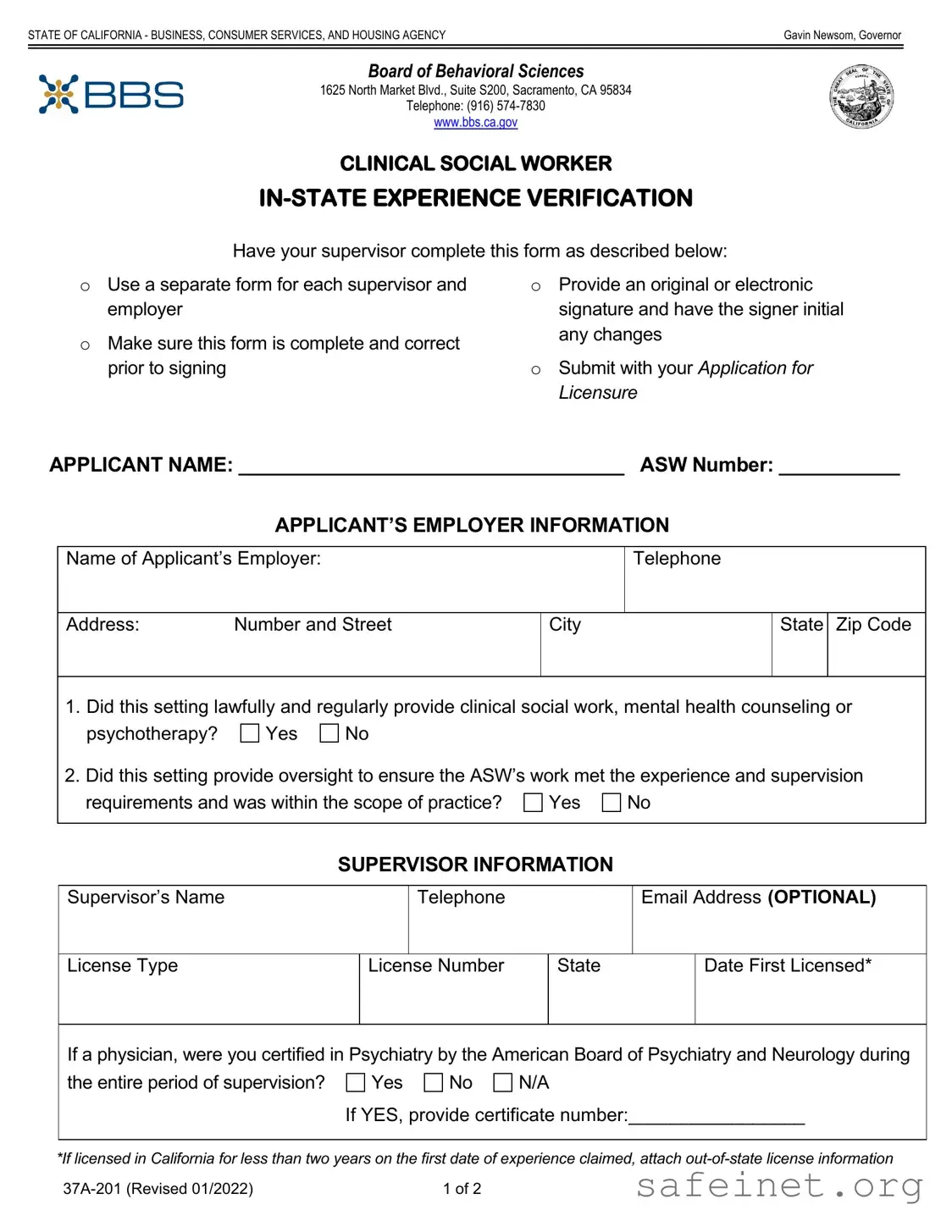
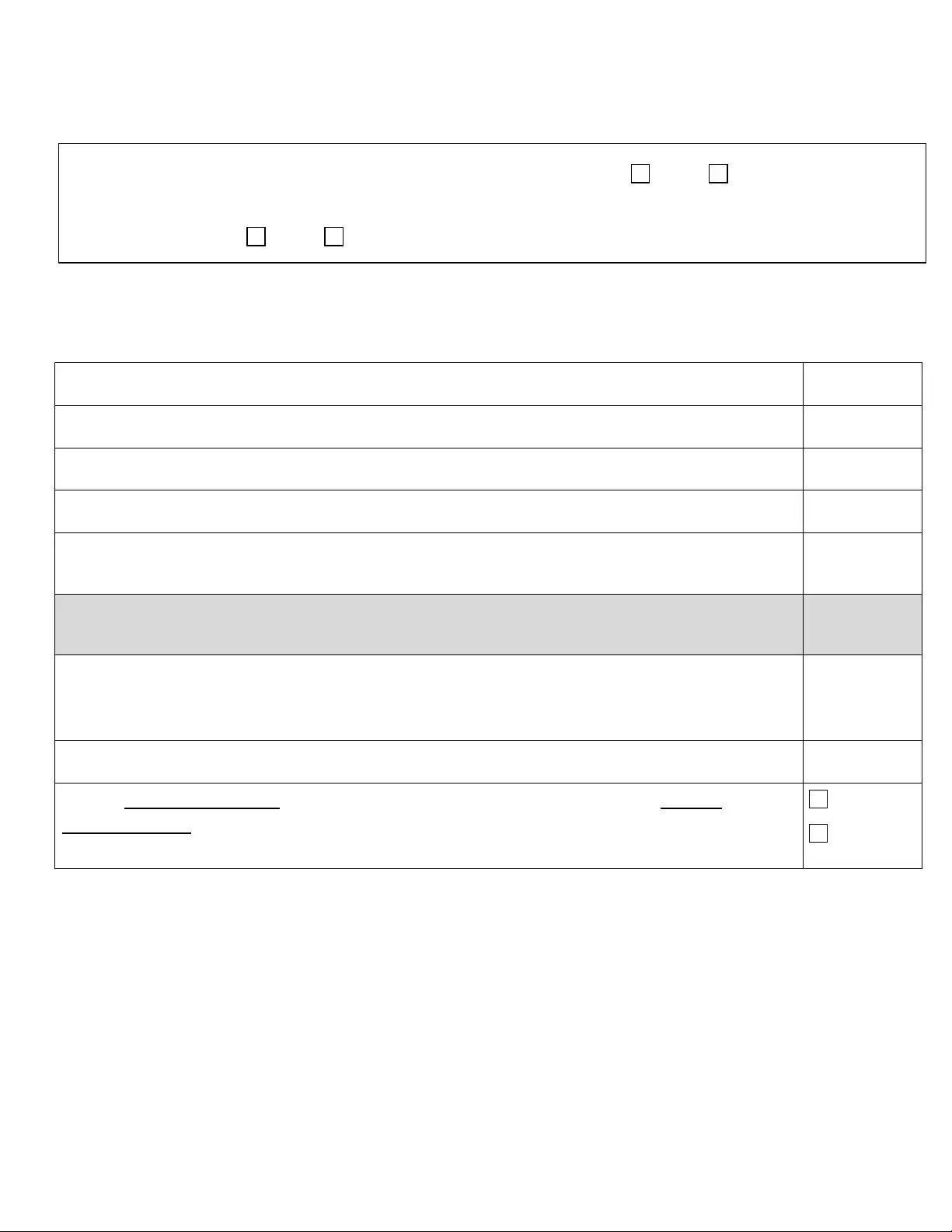
The Clinical Social Experience Verification form plays a crucial role in the licensure process for aspiring clinical social workers in California. This form must be completed by the applicant's supervisor, ensuring that all necessary details are accurately provided. Each supervisor and employer requires a separate form, emphasizing the need for thoroughness. The applicant's name and ASW number must be clearly indicated, along with the employer's information, including the name, address, and contact details. Key questions assess whether the setting lawfully provided clinical social work services and if proper oversight was maintained during the applicant's experience. Supervisors must provide their credentials, including license type and number, while also confirming their employment status in relation to the supervisee. The experience section requires specific data on the duration of supervision, total hours spent in various types of supervision, and the clinical hours accrued. Accurate reporting of these metrics is essential, as they must meet minimum requirements set forth by the Board of Behavioral Sciences. The form concludes with a signature from the supervisor, underscoring the importance of integrity in the application process, as any discrepancies or omissions may lead to serious consequences for the applicant.

| Fact Name | Detail |
|---|---|
| Governing Agency | The form is managed by the California Board of Behavioral Sciences. |
| Purpose | This form verifies clinical social work experience for Associate Social Workers (ASWs) in California. |
| Submission Requirement | Applicants must submit this form along with their Application for Licensure. |
| Supervision Details | Supervisors must complete a separate form for each supervisee and employer. |
| Experience Hours | A minimum of 3,000 hours of supervised experience is required for licensure. |
| Signature Requirement | The supervisor's original or electronic signature is mandatory on the form. |
| False Information Penalty | Providing false information may lead to application denial or disciplinary action. |
Completing the Clinical Social Experience Verification form is a crucial step in the licensure process for social workers. Ensuring accuracy and completeness is vital, as any errors may delay your application. Follow these steps carefully to fill out the form correctly.
What is the purpose of the Clinical Social Experience Verification form?
The Clinical Social Experience Verification form is used to confirm the clinical experience of an Associate Social Worker (ASW) under the supervision of a licensed professional. It ensures that the applicant has met the necessary requirements for licensure in California.
Who needs to complete this form?
The form must be completed by the applicant's supervisor. Each supervisor and employer requires a separate form to ensure accurate verification of the ASW’s experience.
What information is needed from the supervisor?
The supervisor must provide their name, contact information, license type, license number, and the date they were first licensed. If applicable, they must also indicate if they were certified in Psychiatry during the supervision period.
What are the experience requirements outlined in the form?
The applicant must document a minimum of 3,000 hours of clinical experience, including at least 2,000 hours of clinical psychosocial diagnosis, assessment, and treatment. Additionally, 750 hours must be in face-to-face individual or group psychotherapy or counseling.
How should the form be submitted?
The completed form should be submitted along with the Application for Licensure. Ensure that it is signed by the supervisor and that any changes are initialed. Both original and electronic signatures are acceptable.
What happens if false information is provided?
Providing false information or omitting important details may lead to denial of the application. The Board of Behavioral Sciences can take disciplinary action against any licensee involved in fraudulent practices related to the application.
Is there a deadline for submitting this form?
While the form does not specify a deadline, it is crucial to submit it promptly with your application to avoid delays in the licensure process. Timely submission ensures that your experience is verified and considered in a timely manner.
Not using separate forms for each supervisor and employer: It's essential to fill out a distinct form for every supervisor and employer to ensure clarity and accuracy in your experience verification.
Failing to check for completeness: Before signing, double-check that all sections of the form are filled out completely and accurately. Incomplete forms can lead to delays or denials.
Not providing original or electronic signatures: Ensure that the supervisor provides a valid signature. Any changes made to the form must also be initialed by the signer.
Incorrectly reporting experience dates: Be precise when entering the dates of experience. The format should be mm/dd/yyyy, and any errors can result in issues with your application.
Miscalculating total hours: It's crucial to accurately calculate and report total hours for supervision and clinical work. Double-check your math to avoid discrepancies.
Omitting supervisor information: Provide complete details about the supervisor, including name, contact information, and license type. Missing information can hinder the verification process.
Not adhering to minimum and maximum hour requirements: Familiarize yourself with the minimum and maximum hours required for various categories of supervision and experience. Ensure your reported hours meet these criteria.
Ignoring the need for additional supervision hours: If you worked more than 10 hours of direct clinical counseling in a week, remember to account for the required additional supervision hours.
Providing false or misleading information: It's crucial to be honest and transparent when filling out the form. Providing incorrect information can lead to serious consequences, including application denial.
When applying for licensure as a Clinical Social Worker, several important documents accompany the Clinical Social Experience Verification form. Each of these documents plays a crucial role in ensuring that your application is complete and meets the necessary requirements. Below are some commonly used forms that you may need to submit along with your verification form.
Submitting all necessary forms accurately and promptly is essential to avoid delays in the licensure process. Ensure that each document is complete and signed where required to facilitate a smooth review of your application.
The Clinical Social Experience Verification form shares similarities with the Supervised Experience Verification form used by various professional licensing boards. Both documents require a supervisor to validate the experience of the applicant in a clinical setting. They typically include sections for the supervisor's information, the applicant's details, and specific questions regarding the nature of the supervision and the clinical work performed. The goal of both forms is to ensure that the applicant has met the necessary requirements for licensure, confirming that they have received adequate oversight and training during their supervised experience.
Another document that resembles the Clinical Social Experience Verification form is the Internship Verification form commonly used in educational settings. This form is designed to confirm that students have completed their required internships under appropriate supervision. Similar to the Clinical Social Experience Verification form, it asks for details about the supervisor, the nature of the internship, and the hours worked. Both documents serve to ensure that the experiences gained are relevant and meet the standards set by the respective licensing or educational bodies.
The Experience Verification form for Marriage and Family Therapists (MFT) is also comparable to the Clinical Social Experience Verification form. This document requires supervisors to attest to the clinical experience of MFT applicants. Like the Clinical Social Experience Verification form, it includes sections for supervisor and applicant information, as well as questions about the type of clinical work performed. Both forms emphasize the importance of supervision in developing the skills necessary for effective practice in the mental health field.
Lastly, the Professional Experience Verification form used for Licensed Professional Clinical Counselors (LPCC) is similar in structure and purpose. This form requires documentation of the applicant's supervised clinical experience and is completed by a qualified supervisor. Both forms contain sections for essential details such as the duration of supervision, hours of clinical work, and the nature of the counseling provided. The purpose of these forms is to ensure that applicants have met the required standards for licensure and have received appropriate guidance during their training.
When completing the Clinical Social Experience Verification form, attention to detail is crucial. Here are four important do's and don'ts to consider:
By adhering to these guidelines, you can help ensure a smoother verification process and avoid potential issues with your application.
Misconception 1: The Clinical Social Experience Verification form is optional.
This form is a crucial part of the application for licensure. It verifies the supervised experience that applicants have gained, ensuring they meet the necessary requirements to practice legally.
Misconception 2: Only one form is needed for multiple supervisors.
Each supervisor must complete a separate form. This ensures that the experience from each supervisor is accurately documented and verified.
Misconception 3: The supervisor does not need to be licensed.
The supervisor must hold a valid license relevant to the field. This is essential to ensure that the guidance and oversight provided meet professional standards.
Misconception 4: The applicant can submit a form without a supervisor's signature.
An original or electronic signature from the supervisor is required. This signature confirms the accuracy of the information provided and the supervisor's agreement with the applicant's claimed experience.
Misconception 5: All hours of experience count equally.
Not all hours are treated the same. Specific minimums exist for different types of supervision and clinical work, ensuring a well-rounded experience in various aspects of social work.
Misconception 6: The form can be submitted after the application.
The verification form must accompany the application for licensure. Submitting it separately can lead to delays or complications in the application process.
When completing the Clinical Social Experience Verification form, it is essential to follow specific guidelines to ensure accuracy and compliance. Here are six key takeaways:
By adhering to these guidelines, applicants can facilitate a smoother verification process for their clinical social work experience.