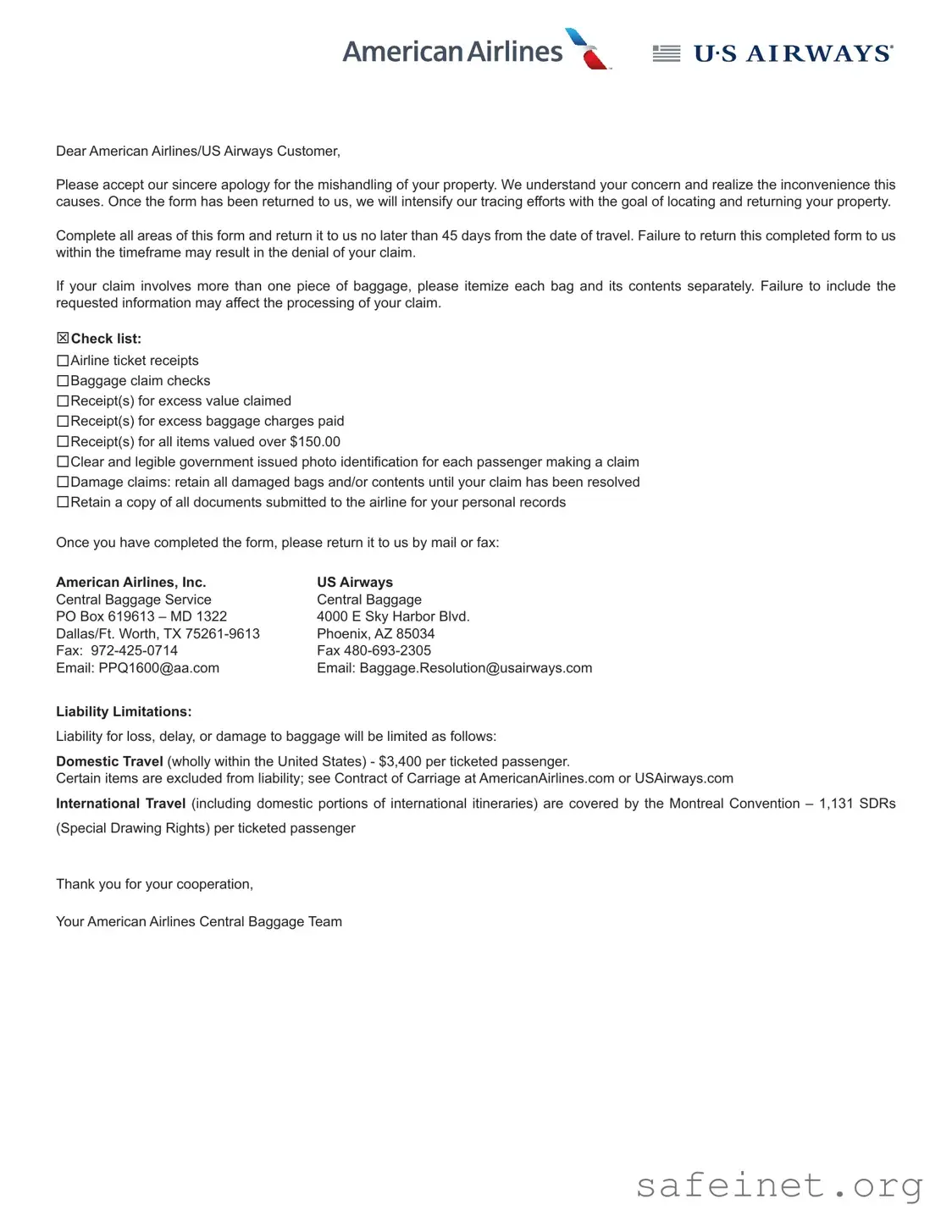
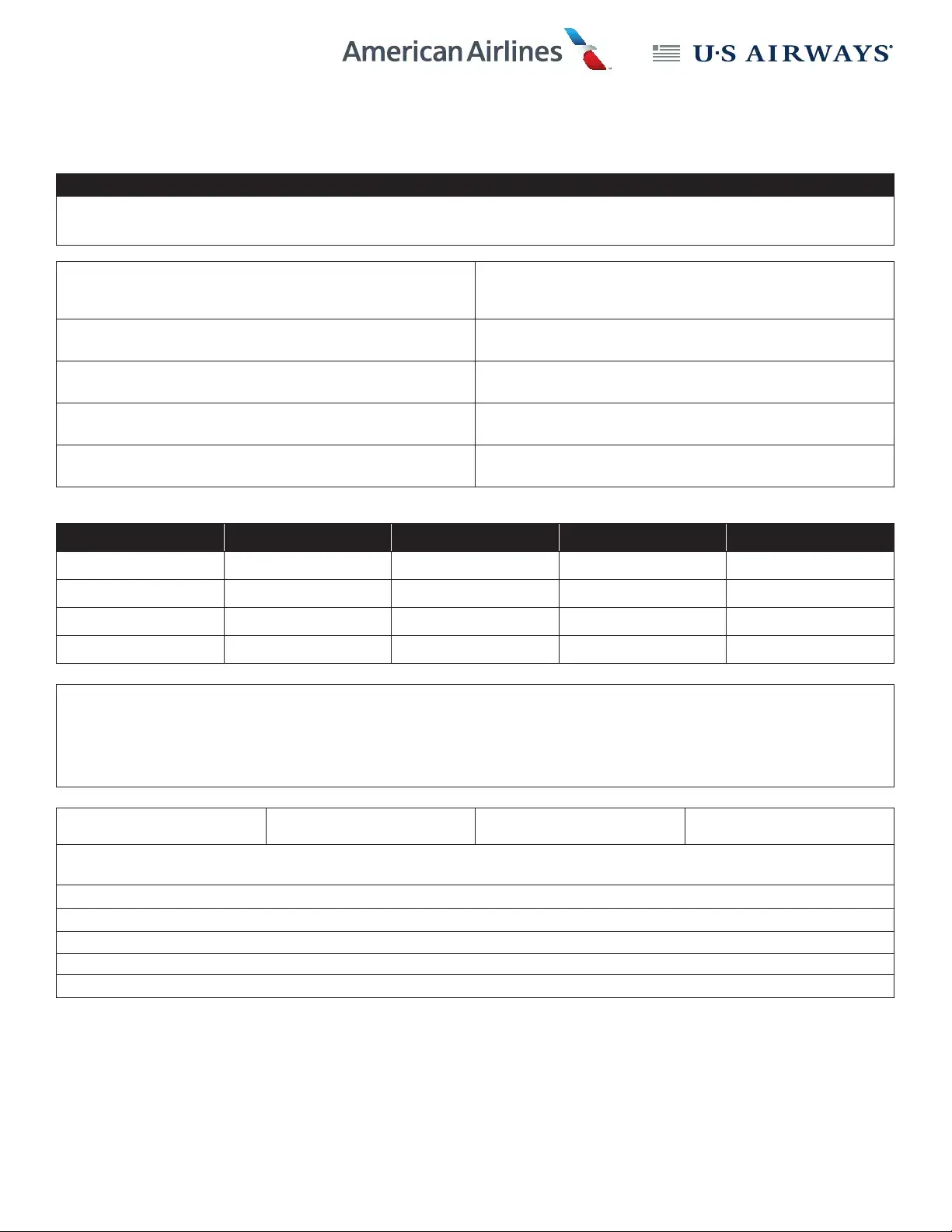
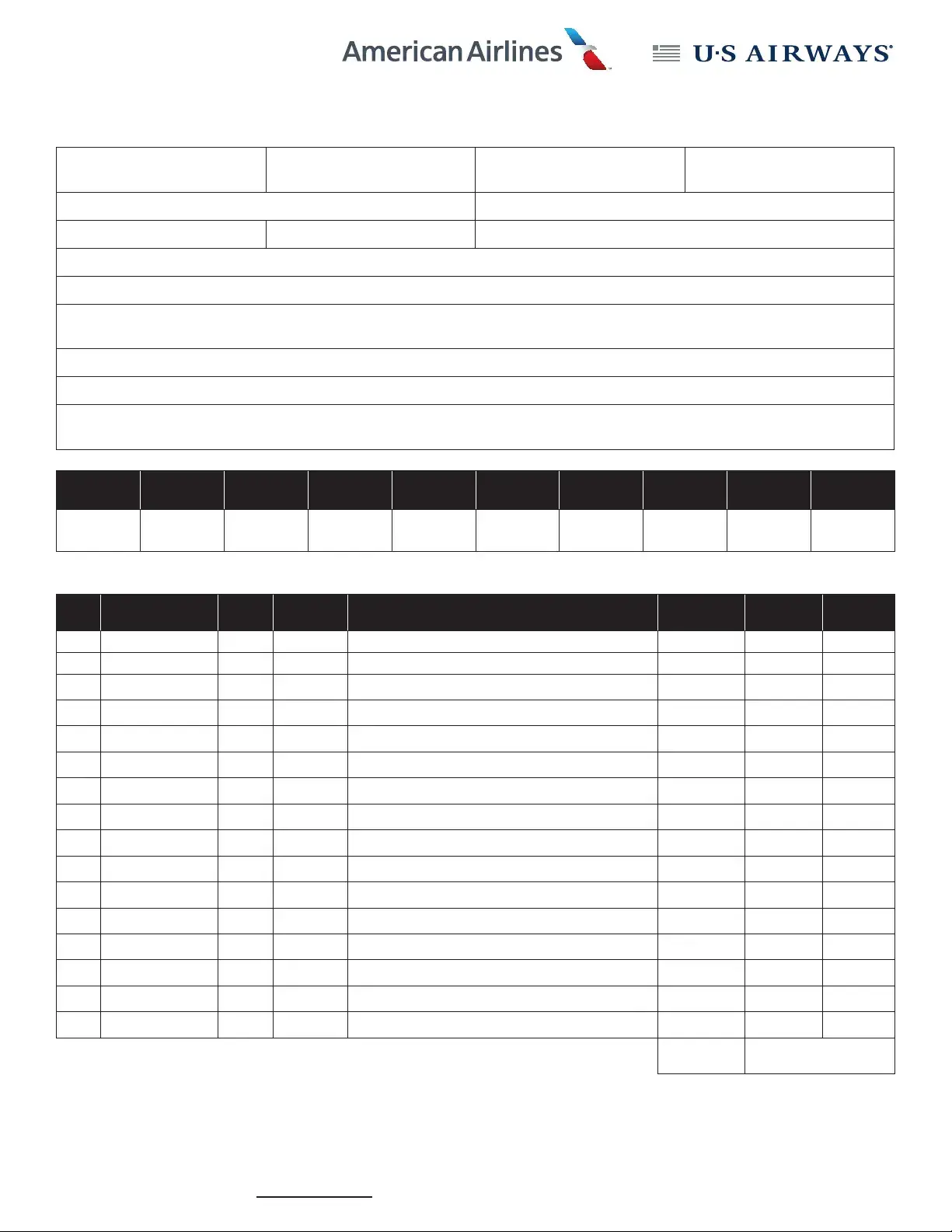
The Claim Passenger Property form serves as a vital tool for travelers who have experienced issues with their baggage while flying with American Airlines or US Airways. This form is designed to facilitate the reporting of lost, damaged, or delayed luggage, ensuring that passengers can efficiently communicate their claims to the airline. Key elements of the form include a comprehensive questionnaire that gathers essential details such as the passenger's contact information, flight itinerary, and the specific nature of the claim. Passengers are instructed to provide a complete list of all items contained within the baggage, particularly for claims involving multiple pieces of luggage. Additionally, the form outlines important deadlines, requiring submission within 45 days of travel to avoid potential denial of claims. A checklist is also included to guide passengers in gathering necessary documentation, such as receipts for excess baggage charges and proof of value for items over $150. Furthermore, the form emphasizes the importance of retaining damaged items until the claim is resolved, as well as keeping copies of all submitted documents for personal records. Overall, the Claim Passenger Property form is structured to streamline the claims process, while also providing clear instructions to help passengers navigate the complexities of reporting baggage issues.

| Fact Name | Fact Description |
|---|---|
| Purpose of the Form | The Claim Passenger Property form is designed for customers to report lost, damaged, or delayed baggage and to seek compensation from American Airlines or US Airways. |
| Submission Deadline | Customers must submit the completed form within 45 days from the date of travel to ensure their claim is processed. |
| Required Documentation | To support a claim, customers should include airline ticket receipts, baggage claim checks, and receipts for any items valued over $150.00. |
| Liability Limit for Domestic Travel | For domestic travel within the United States, the liability limit is set at $3,400 per ticketed passenger for lost or damaged baggage. |
| International Travel Coverage | Claims for international travel are governed by the Montreal Convention, which provides coverage of 1,131 Special Drawing Rights (SDRs) per ticketed passenger. |
| Information Sharing | The information provided on the form may be shared with other airlines and law enforcement agencies to assist in resolving the claim. |
| Itemization Requirement | If a claim involves multiple pieces of baggage, each item must be itemized separately to facilitate processing. |
| Claimant Signature | Each passenger making a claim must sign the form. Parents may sign on behalf of children under 18 years of age. |
| Retention of Damaged Items | Customers must retain all damaged bags and their contents until the claim is fully resolved to ensure proper assessment. |
| Legal Jurisdiction | This form is applicable under U.S. law, with oversight from federal agencies for any fraudulent claims submitted through the mail. |
Filling out the Claim Passenger Property form is an important step in addressing the mishandling of your luggage. Once you have submitted the completed form, the airline will begin its efforts to locate and return your property. It’s essential to provide accurate information to avoid delays in processing your claim.
After completing these steps, send the form along with any required documentation to the appropriate address provided by the airline. Keeping a copy of everything you submit is a good practice for your records.
What is the Claim Passenger Property form used for?
The Claim Passenger Property form is designed for customers who have experienced issues with their baggage, such as loss, damage, or missing contents. By completing this form, you initiate the process for American Airlines or US Airways to locate your property and address your claim.
How do I submit the Claim Passenger Property form?
You can submit the completed form by mail or fax. The mailing address for American Airlines is PO Box 619613, MD 1322, Dallas/Ft. Worth, TX 75261-9613. For US Airways, send it to 4000 E Sky Harbor Blvd, Phoenix, AZ 85034. If you prefer faxing, use 972-425-0714 for American Airlines and 480-693-2305 for US Airways.
What is the deadline for submitting the form?
You must return the completed form within 45 days from your date of travel. If you miss this deadline, your claim may be denied, so it's essential to act quickly.
What information do I need to include on the form?
Make sure to complete all sections of the form. If your claim involves multiple bags, list each bag and its contents separately. Include details like your contact information, flight itinerary, and any previous claims with other airlines. Also, provide receipts for any items valued over $150 and any excess baggage charges paid.
What should I do if my baggage was damaged?
If your baggage was damaged, keep all damaged items until your claim is resolved. You will need to provide details about the damage on the form. This information helps the airline assess your claim accurately.
What documents should I attach to my claim?
Attach any relevant documents, including airline ticket receipts, baggage claim checks, and receipts for items valued over $150. These documents support your claim and help expedite the process.
What are the liability limits for lost or damaged baggage?
For domestic travel within the United States, the liability limit is $3,400 per ticketed passenger. For international travel, the coverage is based on the Montreal Convention, which is 1,131 Special Drawing Rights (SDRs) per ticketed passenger. Some items may be excluded from liability, so review the airline's Contract of Carriage for details.
Can I track the status of my claim?
Missing Information: Failing to fill out all required fields can lead to delays or denial of your claim. Ensure every section of the form is completed accurately.
Late Submission: Submitting the form after the 45-day deadline can result in automatic denial. Mark your calendar and send it promptly.
Inadequate Documentation: Not including necessary receipts and documents can hinder the processing of your claim. Gather all relevant paperwork before submission.
Incomplete Itemization: If your claim involves multiple pieces of baggage, ensure each bag and its contents are itemized separately. This clarity is crucial for claim assessment.
Incorrect Contact Information: Providing outdated or incorrect phone numbers and addresses can impede communication. Double-check your contact details before sending the form.
Neglecting to Retain Damaged Property: If claiming for damaged items, keep all damaged bags and contents until your claim is resolved. Disposing of them prematurely can affect your claim.
The Claim Passenger Property form is a crucial document for travelers seeking compensation for lost, damaged, or delayed baggage. However, several other forms and documents may be necessary to support the claim process effectively. Below is a list of additional documents that are often required or helpful when submitting a claim for passenger property.
Providing these additional documents can significantly enhance the chances of a successful claim. Each piece of information helps establish a clearer picture of the situation and supports the traveler’s request for compensation.
The Claim Passenger Property form shares similarities with a Lost Property Report, often used by various organizations, including hotels and public transportation services. Both documents serve the primary purpose of reporting lost items and initiating a recovery process. They typically require details about the lost item, including descriptions and the circumstances surrounding its loss. Additionally, both forms often ask for personal identification information to verify the claimant's identity and ensure that the item is returned to the rightful owner.
Another document that resembles the Claim Passenger Property form is the Damage Report. This report is commonly used in various industries, including shipping and retail, to document items that have been damaged. Like the Claim Passenger Property form, a Damage Report requires a detailed description of the item, the nature of the damage, and any evidence such as photographs. Both forms aim to facilitate a claims process, ensuring that the claimant receives compensation or a replacement for the damaged item.
Similarly, a Baggage Claim Form is used by airlines and travel companies to report issues related to lost or damaged luggage. This form often includes sections for personal details, flight information, and a description of the baggage. Just like the Claim Passenger Property form, the Baggage Claim Form emphasizes the importance of providing accurate and detailed information to expedite the claims process. Both forms serve as essential tools for travelers seeking resolution for their luggage issues.
The Rental Car Damage Report is another document that mirrors the Claim Passenger Property form. When renting a vehicle, customers may encounter situations where damage occurs. This report outlines the specifics of the damage and requires the renter to provide personal information and details about the rental agreement. Both documents share a common goal: to document the issue and facilitate a resolution, whether it be repair or compensation.
Similarly, an Insurance Claim Form is often used when individuals seek reimbursement for lost or damaged property. This form typically requires detailed information about the item, the circumstances of the loss, and supporting documentation such as receipts. Like the Claim Passenger Property form, the Insurance Claim Form is designed to streamline the claims process, ensuring that claimants receive the compensation they are entitled to in a timely manner.
The Incident Report, frequently used in workplaces and public venues, is another document that aligns with the Claim Passenger Property form. This report captures details about an event, such as a theft or accident, and includes information about the individuals involved and any witnesses. Both forms require comprehensive details to support the claims process, highlighting the importance of accurate reporting to facilitate resolution.
A Warranty Claim Form is also similar to the Claim Passenger Property form in that it allows consumers to report issues with a purchased product. This form typically requests information about the product, the nature of the defect, and proof of purchase. Both documents aim to resolve issues efficiently, ensuring that customers receive either repairs, replacements, or refunds for their claims.
In the realm of e-commerce, a Return Merchandise Authorization (RMA) Form serves a similar function. This document is used when customers wish to return a purchased item due to defects or dissatisfaction. Like the Claim Passenger Property form, the RMA Form requires detailed information about the item and the reason for the return, ensuring that the return process is smooth and efficient for both the customer and the retailer.
The Customer Complaint Form is another document that shares characteristics with the Claim Passenger Property form. This form is used by consumers to express dissatisfaction with a product or service. It often requires personal information, details about the complaint, and any relevant documentation. Both forms aim to address customer concerns and facilitate a resolution, highlighting the importance of clear communication in the claims process.
Lastly, a Feedback Form, often used by service providers, is similar in its intent to gather information about customer experiences. While it may not be a claims document per se, it seeks to understand issues that customers face, much like the Claim Passenger Property form. Both forms emphasize the need for detailed responses to improve services and resolve issues effectively.
When filling out the Claim Passenger Property form, attention to detail is crucial. Here are some essential dos and don'ts to keep in mind to ensure your claim is processed smoothly.
By adhering to these guidelines, you can help facilitate a smoother claims process and increase the likelihood of a successful resolution.
There are several misconceptions about the Claim Passenger Property form that can lead to confusion. Here are four common ones:
While it’s important to report the loss as soon as possible, you have up to 45 days from your travel date to submit the completed form. This allows you time to gather necessary information and documents.
To process your claim efficiently, you must include all requested documents. Missing receipts or information can delay your claim or even result in its denial.
There are limits on liability for lost or damaged baggage. For domestic travel, the maximum compensation is $3,400 per passenger, and certain items may not be covered. Always check the airline’s liability policy.
Claims must be filed for items lost during the flight or checked baggage process. If the loss is reported after the flight or outside the designated timeframe, it may not be eligible for compensation.
Filling out and using the Claim Passenger Property form requires careful attention to detail to ensure a smooth claims process. Here are key takeaways to consider: