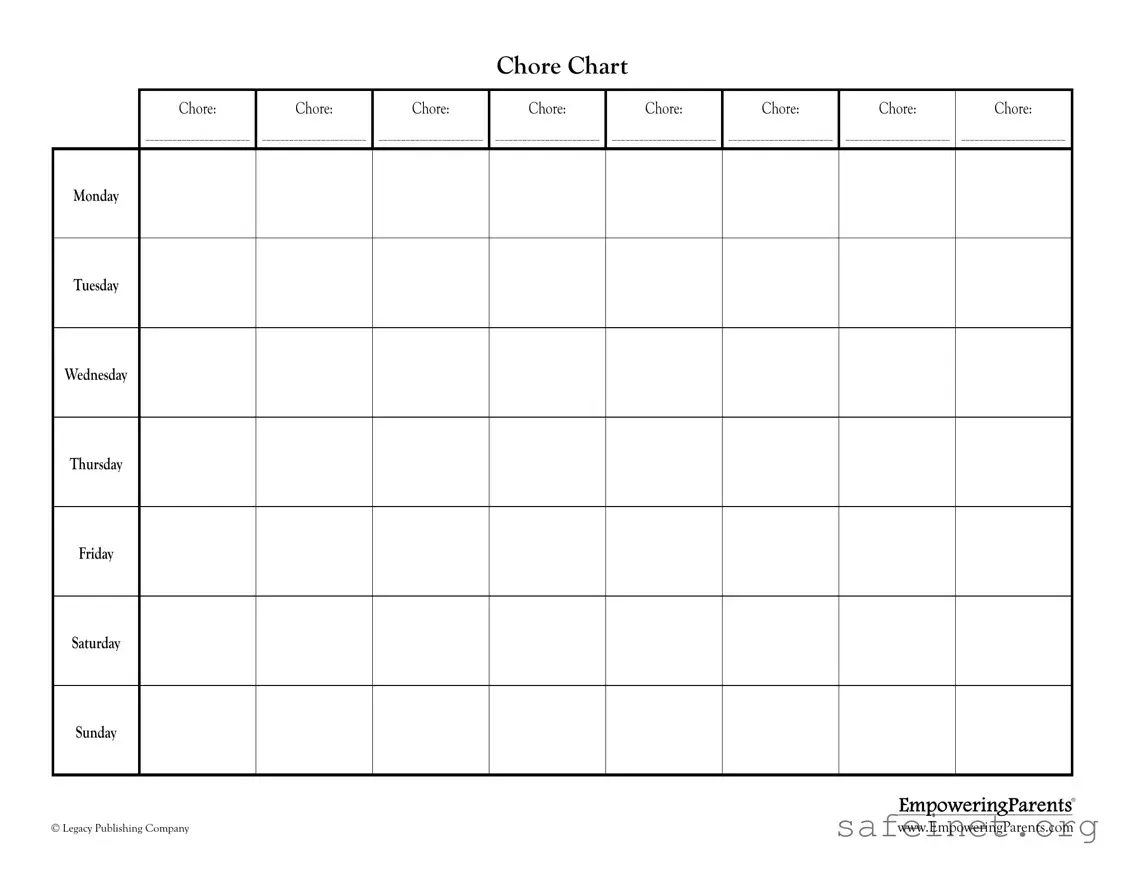
The Chore Chart form serves as an essential tool for parents aiming to instill a sense of responsibility in their children. This chart provides a clear layout where various chores can be listed, allowing children to visualize their tasks for the week. Each day of the week is represented, making it easy for kids to track their progress. For younger children, chores might include simple tasks like making their bed or picking up toys, while older kids can take on more complex responsibilities such as mowing the lawn or cleaning the bathroom. As children complete their chores, they can mark their achievements with stickers, stars, or checkmarks, creating a sense of accomplishment. Setting realistic goals is crucial; children should feel challenged yet capable of earning their rewards. Parents are encouraged to keep the chart visible, perhaps on the refrigerator, to reinforce its importance. Ultimately, the Chore Chart not only helps organize household tasks but also fosters accountability and independence in children.

| Fact Name | Fact Description |
|---|---|
| Purpose | A chore chart helps organize children's responsibilities and makes expectations clear. |
| Age Range | Chore charts can be used for children of all ages, from toddlers to teenagers. |
| Visual Reminder | The chart serves as a visual reminder, helping children remember their tasks. |
| Chore Examples | Examples for younger kids include making the bed and picking up toys. Older kids might mow the lawn or clean the bathroom. |
| Reward System | Children can earn stickers, checkmarks, or stars for completed chores, which can lead to privileges or rewards. |
| Goal Setting | Setting realistic goals is important to ensure children can successfully earn rewards. |
| Trial and Error | It may take some adjustments to find the right balance for goals and rewards. |
| Incentives | Long-term rewards may not be effective for younger children; daily goals can provide immediate motivation. |
| Chart Placement | Keeping the chart in a visible location, like on the refrigerator, helps children remember to follow it. |
| No Consequences | The chart should not be used as a punishment; children should not lose stickers or checkmarks for mistakes. |
Filling out the Chore Chart form is a straightforward process that can help you organize and track your child’s responsibilities effectively. This chart serves as a visual aid to clarify expectations and encourage accountability. Follow the steps below to complete the form and get started on establishing a routine for your child.
What is a Chore Chart?
A Chore Chart is a tool designed to help organize and track a child's responsibilities. It provides a visual reminder of what tasks need to be completed, making expectations clear for both parents and children. The chart can be used for children of various ages, allowing them to take ownership of their chores.
How do I set up a Chore Chart?
To set up a Chore Chart, write your child's chores in the boxes at the top of the chart. Choose age-appropriate tasks. For younger children, consider chores like making their bed or picking up toys. For older children, tasks might include mowing the lawn or cleaning the bathroom. Place the chart in a visible location, such as on the refrigerator, to encourage regular use.
How can I motivate my child to complete their chores?
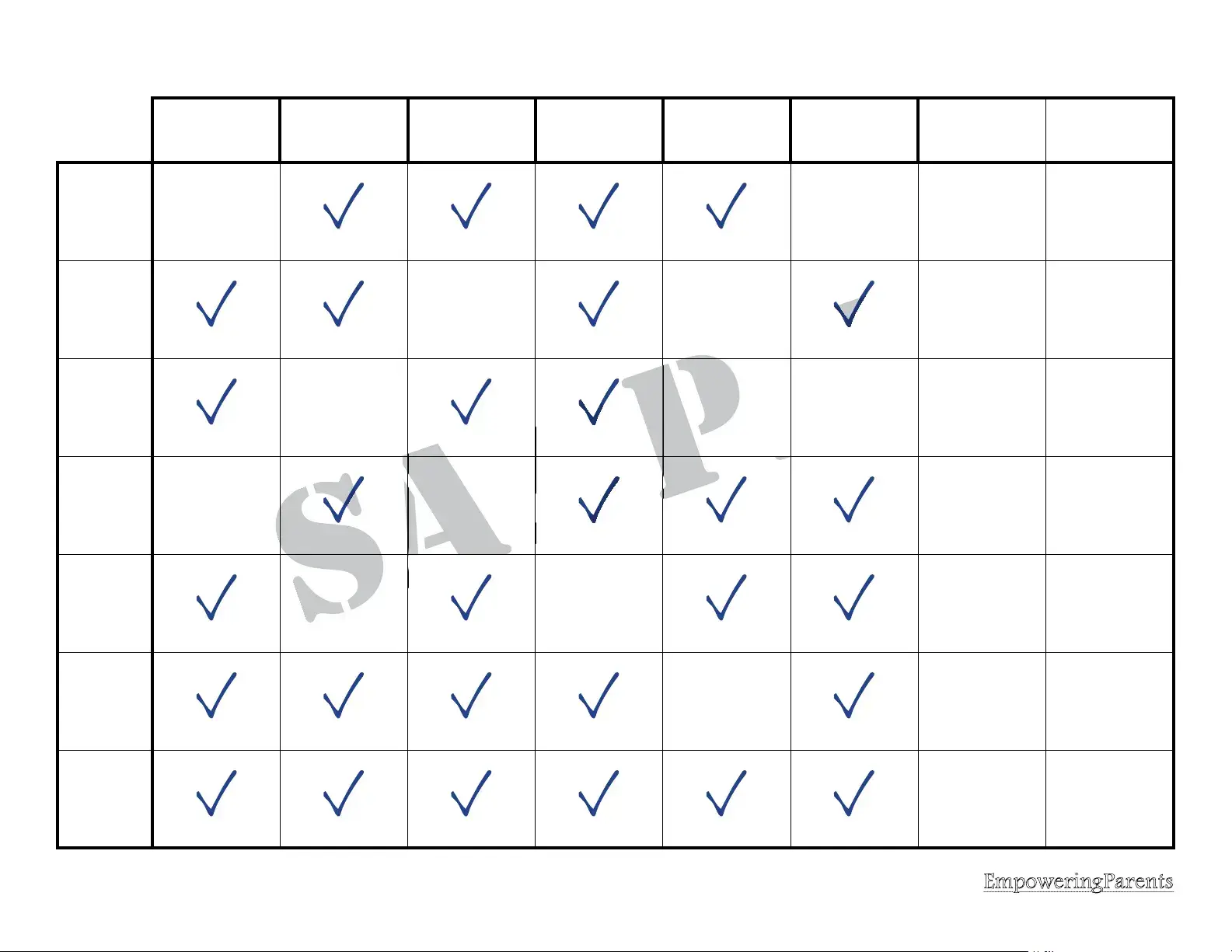
Motivation can be enhanced by allowing your child to place a star, sticker, checkmark, or smiley face in the corresponding box when they complete a chore. Set daily goals for how many stickers or checkmarks they need to earn. Once they reach their goal, offer a privilege or reward, such as extra playtime or a special activity with a parent.
What should I consider when setting goals for my child?
When setting goals, ensure they are realistic and age-appropriate. It may take some trial and error to find the right balance. If your child is consistently unable to earn their privilege, adjust the goals to make them more achievable. The aim is for your child to feel a sense of accomplishment while still being challenged.
Can I use long-term rewards with a Chore Chart?
Yes, long-term rewards can be effective, especially when combined with daily goals. However, younger children may benefit more from immediate rewards, as waiting for a week may feel too long. Consider setting additional incentives for achieving a certain number of good days or stars, which can lead to a reward on the weekend.
Should I use the Chore Chart as a consequence for poor behavior?
No, the Chore Chart should not be used as a punishment. Children should not lose stickers or checkmarks for making poor choices. Instead, if they do not earn a star or sticker, encourage them to try harder the next time. The focus should be on positive reinforcement rather than negative consequences.
Neglecting to write down all chores: It’s important to list every chore your child is responsible for. Leaving some out can lead to confusion.
Using vague descriptions: Be specific about each chore. Instead of writing “clean,” specify “clean the living room” or “clean your room.”
Setting unrealistic goals: Ensure that the chores are age-appropriate. If the tasks are too difficult, your child may become discouraged.
Not keeping the chart visible: Place the chore chart in a location where your child can easily see it. A hidden chart won't serve its purpose.
Failing to update the chart: As your child grows, their responsibilities will change. Regularly update the chart to reflect current chores.
Ignoring rewards: Make sure to celebrate achievements. If your child completes their chores, provide them with the promised rewards or privileges.
Using the chart as punishment: The chore chart should motivate, not punish. If your child doesn’t earn a sticker, encourage them to try harder next time instead of taking away rewards.
Alongside the Chore Chart form, several other documents can enhance the organization and effectiveness of chore management in a household. These documents serve various purposes, from tracking progress to setting expectations. Below is a list of commonly used forms that complement the Chore Chart.
Utilizing these documents in conjunction with the Chore Chart can create a more structured and supportive environment for children as they learn about responsibility and accountability. Together, they contribute to a cohesive approach to managing household tasks.
The Chore Chart form shares similarities with a Behavior Tracking Sheet, which is often used in educational settings to monitor students' actions and progress. Both documents serve as visual aids that help individuals track their responsibilities and achievements over time. A Behavior Tracking Sheet typically includes columns for specific behaviors, dates, and notes on progress or challenges faced. Like a Chore Chart, it provides a clear framework for accountability and encourages positive reinforcement, making it easier for both parents and educators to recognize and reward good behavior.
Another document akin to the Chore Chart is a Daily Planner. Daily Planners are used by individuals of all ages to organize tasks and appointments throughout the day. Both tools emphasize the importance of structure and organization in daily life. While the Chore Chart focuses specifically on household responsibilities, the Daily Planner encompasses a broader range of activities, including personal, academic, and professional commitments. They both serve to enhance time management skills and promote a sense of accomplishment as tasks are completed.
A Family Calendar can also be compared to the Chore Chart. Family Calendars are utilized to keep track of events, appointments, and responsibilities for all family members. Like the Chore Chart, it fosters communication and coordination within the household. Both documents can be displayed prominently in the home to ensure everyone is aware of their commitments. While the Chore Chart focuses specifically on chores, the Family Calendar includes a wider array of activities, reinforcing the importance of teamwork and shared responsibilities in family life.
Similarly, a Reward Chart is another document that aligns closely with the Chore Chart. Reward Charts are designed to motivate children by visually tracking their accomplishments and the rewards they can earn. Both charts use a system of stickers or checkmarks to signify success and encourage continued effort. The Chore Chart highlights daily responsibilities, while the Reward Chart focuses on incentives, making them complementary tools for promoting positive behavior and responsibility in children.
The To-Do List is yet another document that shares characteristics with the Chore Chart. To-Do Lists are commonly used by individuals to prioritize tasks and ensure nothing is overlooked. Both tools allow for the organization of tasks in a clear and manageable format. While the Chore Chart is specifically geared toward household chores for children, the To-Do List can apply to a wider range of tasks, from work projects to personal errands. They both serve to enhance productivity and provide a sense of accomplishment upon completion.
A Homework Tracker can also be likened to the Chore Chart. Homework Trackers help students keep track of assignments, deadlines, and progress in their studies. Both documents provide a structured approach to managing responsibilities and expectations. The Chore Chart focuses on household tasks, while the Homework Tracker emphasizes academic responsibilities, but both serve the same purpose of promoting accountability and encouraging timely completion of tasks.
Another document similar to the Chore Chart is a Meal Planning Sheet. Meal Planning Sheets help families organize their meals for the week, ensuring that everyone knows what to expect each day. Both documents involve planning and organization, making it easier to manage daily routines. While the Chore Chart focuses on household chores, the Meal Planning Sheet addresses nutritional needs and culinary responsibilities, promoting a well-structured family life.
A Goal Setting Worksheet can also be compared to the Chore Chart. Goal Setting Worksheets help individuals outline their objectives and track their progress toward achieving them. Both documents encourage individuals to take ownership of their responsibilities and work toward specific outcomes. While the Chore Chart focuses on daily tasks, the Goal Setting Worksheet can encompass broader life goals, making both tools effective for fostering personal growth and accountability.
Finally, a Progress Report shares similarities with the Chore Chart in that both documents provide a means of tracking accomplishments over time. Progress Reports are often used in educational contexts to inform parents about a student's performance and areas for improvement. Like the Chore Chart, they serve to highlight achievements and motivate individuals to continue working toward their goals. Both documents play a crucial role in fostering communication and encouraging a supportive environment for growth and development.
When filling out the Chore Chart form, keep these important tips in mind:
Misconceptions about the Chore Chart form can lead to ineffective use and misunderstandings. Here are five common misconceptions:
Here are some key takeaways for filling out and using the Chore Chart form: