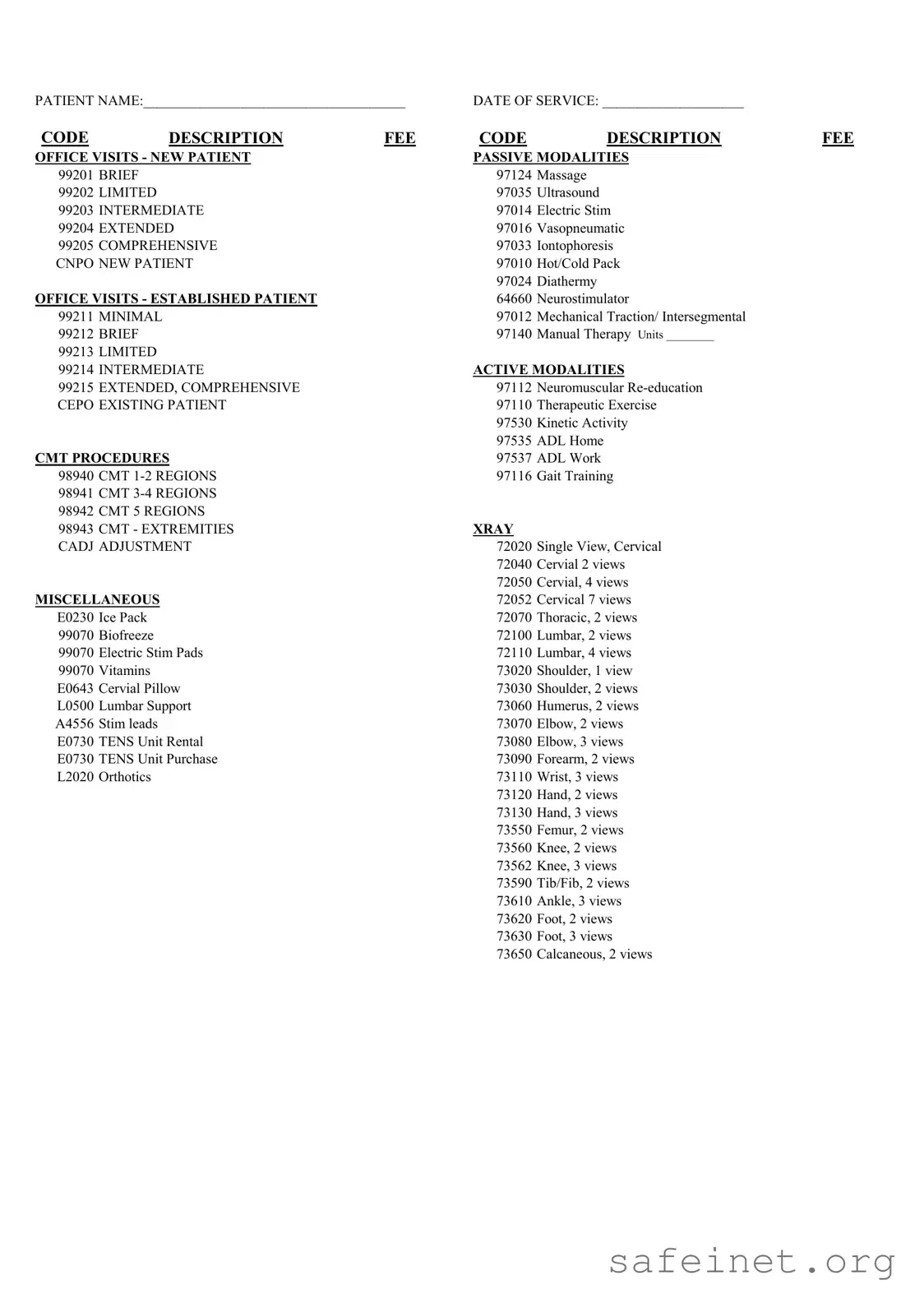
The Chiropractic Superbill form serves as a crucial document for both patients and healthcare providers, streamlining the billing process and ensuring accurate record-keeping. This form captures essential information, such as the patient's name and date of service, while detailing various codes associated with treatments rendered during a visit. It categorizes services into distinct sections, including office visits for new and established patients, passive modalities like massage and ultrasound, and active modalities such as therapeutic exercises. Additionally, the form includes codes for chiropractic manipulative treatment (CMT) procedures and various diagnostic imaging options, such as X-rays. By clearly listing the corresponding fees for each service, the Chiropractic Superbill facilitates transparent communication between patients and their insurance providers, ultimately aiding in the reimbursement process. Furthermore, the inclusion of miscellaneous items, like ice packs and TENS unit rentals, highlights the comprehensive nature of the form, ensuring that all aspects of patient care are accounted for in the billing cycle.

| Fact Name | Details |
|---|---|
| Purpose | The Chiropractic Superbill form is used to itemize services provided during a chiropractic visit, facilitating insurance claims and patient billing. |
| Patient Information | It requires the patient's name and date of service, ensuring accurate identification and record-keeping. |
| Coding System | The form utilizes specific codes for various chiropractic services, including office visits, modalities, and adjustments. |
| New vs. Established Patients | Different codes apply for new patients versus established patients, reflecting the varying complexity of services provided. |
| Active and Passive Modalities | It categorizes treatments into active and passive modalities, aiding in the proper documentation of therapy types. |
| X-Ray Codes | Specific codes for X-ray services are included, which are essential for diagnostic imaging related to chiropractic care. |
| Miscellaneous Items | Additional items such as ice packs and TENS units are listed, allowing for comprehensive billing of supplies used during treatment. |
| Governing Laws | In many states, the use of the Chiropractic Superbill is governed by healthcare regulations, including insurance billing laws and state chiropractic practice acts. |
| Insurance Compatibility | Many insurance companies require a superbill for reimbursement, making it a vital tool for both practitioners and patients. |
Filling out the Chiropractic Superbill form is a straightforward process. This form is essential for documenting the services provided during a chiropractic visit. Below are the steps to ensure you complete the form accurately.
Once you have completed the form, ensure all information is accurate and legible. This will help facilitate the billing process and ensure proper reimbursement for services provided.
What is a Chiropractic Superbill?
A Chiropractic Superbill is a detailed document that outlines the services provided during a chiropractic visit. It includes information such as the patient's name, date of service, the specific codes for treatments performed, and the associated fees. This form is essential for patients seeking reimbursement from their insurance providers.
Why do I need a Superbill?
You need a Superbill to submit a claim to your insurance company for reimbursement. Many insurance plans require this document to process claims for chiropractic care. Having a Superbill helps ensure that you receive the benefits you're entitled to for the services you've received.
What information is included on the Superbill?
The Superbill contains several key pieces of information. It lists the patient's name, the date of service, and the specific codes for each treatment performed, along with their descriptions and fees. This information helps your insurance provider understand what services were rendered and how much they cost.
How do I use the Superbill for insurance claims?
To use the Superbill for insurance claims, you will typically need to submit it along with a claim form to your insurance provider. Make sure to keep a copy for your records. Check with your insurance company for any specific requirements they may have regarding the submission process.
Can I submit a Superbill for services not covered by insurance?
Yes, you can submit a Superbill for services not covered by insurance. Even if your insurance plan does not cover certain treatments, the Superbill serves as a record of the services you received. This can be helpful for tracking your healthcare expenses or for tax purposes.
What should I do if there is an error on my Superbill?
If you notice an error on your Superbill, it’s important to address it as soon as possible. Contact your chiropractic office to discuss the discrepancy. They can help correct the information and provide you with an updated Superbill for your records.
How can I ensure my Superbill is accurate?
To ensure your Superbill is accurate, review it carefully before leaving the office. Make sure all services rendered are listed, and that the codes and fees match what you discussed with your chiropractor. If you have any questions or concerns, don’t hesitate to ask the staff for clarification.
Failing to provide the patient's name clearly. This can lead to confusion and delays in processing.
Not including the date of service. Omitting this information can result in issues with insurance claims and record-keeping.
Incorrectly selecting the code descriptions for services rendered. Each code corresponds to specific treatments, and errors can lead to claim denials.
Leaving the fee section blank or inaccurately filled. This can complicate billing and payment processes.
Using outdated or incorrect codes for procedures. Regular updates to coding systems mean that staying current is essential.
Failing to specify whether the patient is a new or established patient. This distinction affects billing and treatment protocols.
Not signing the form. A signature is necessary to validate the information provided and authorize billing.
Neglecting to include relevant additional information that may be pertinent to the services provided, such as previous treatments or special circumstances.
The Chiropractic Superbill is an essential document that helps healthcare providers and patients manage billing and insurance claims. However, several other forms and documents are commonly used alongside the Superbill to facilitate the chiropractic care process. Understanding these documents can enhance the overall experience for both patients and practitioners.
By familiarizing themselves with these documents, patients can navigate the chiropractic care process more effectively. Each form plays a vital role in ensuring that care is delivered efficiently and that all parties involved understand their rights and responsibilities.
The Chiropractic Superbill form is quite similar to a medical billing statement. Both documents serve the purpose of itemizing services rendered to a patient during a visit. They include details such as the patient's name, date of service, and specific codes that correspond to the treatments provided. Just like a medical billing statement, a Chiropractic Superbill outlines the fees associated with each service, making it easier for patients to understand their financial responsibility and for healthcare providers to submit claims to insurance companies.
Another document that resembles the Chiropractic Superbill is the Explanation of Benefits (EOB) form. An EOB is issued by insurance companies after a claim has been processed. It provides a summary of the services billed, the amount covered by insurance, and any remaining balance owed by the patient. Similar to the Chiropractic Superbill, the EOB includes codes that correspond to specific treatments, helping patients understand how their insurance benefits apply to their chiropractic care.
The Encounter Form, often used in various healthcare settings, shares similarities with the Chiropractic Superbill as well. This form is typically filled out during a patient visit and includes details about the services provided, diagnoses, and any follow-up care needed. Like the Chiropractic Superbill, the Encounter Form is crucial for accurate billing and helps ensure that all necessary information is captured for both patient records and insurance claims.
The CMS-1500 form is another document that parallels the Chiropractic Superbill. This standardized claim form is used by healthcare providers to bill Medicare and many other insurers for services rendered. It includes patient demographics, provider information, and itemized services with corresponding codes. Both forms aim to facilitate the billing process, ensuring that the services provided are clearly documented and can be reimbursed appropriately.
A superbill is also similar to a Receipt for Services Rendered. This document provides a detailed account of the services a patient received during their visit and the associated costs. While a receipt is often used for payment confirmation, it serves a similar purpose to the Chiropractic Superbill in that it outlines the specifics of the care provided, helping patients keep track of their healthcare expenses.
Finally, the Patient Ledger is akin to the Chiropractic Superbill. This internal document is used by healthcare practices to track patient accounts, including services rendered, payments received, and outstanding balances. Like the Chiropractic Superbill, the Patient Ledger provides a comprehensive view of a patient's financial interactions with the practice, ensuring that all transactions are recorded accurately for both the provider and the patient.
When filling out the Chiropractic Superbill form, attention to detail is crucial. This ensures that the information provided is accurate and complete. Here are seven important dos and don’ts to keep in mind:
By adhering to these guidelines, you can help facilitate a smoother billing process and ensure that the patient's insurance claims are processed efficiently. Accuracy and clarity in documentation are essential in providing quality care and maintaining effective communication with insurance providers.
Misunderstandings about the Chiropractic Superbill form can lead to confusion for both patients and providers. Here are some common misconceptions:
Understanding these misconceptions can help both patients and providers navigate the complexities of chiropractic care and billing more effectively.
When filling out and using the Chiropractic Superbill form, several key points should be considered to ensure accuracy and efficiency. Here are the essential takeaways:
By following these guidelines, practitioners can effectively utilize the Chiropractic Superbill form for streamlined billing and improved patient care.