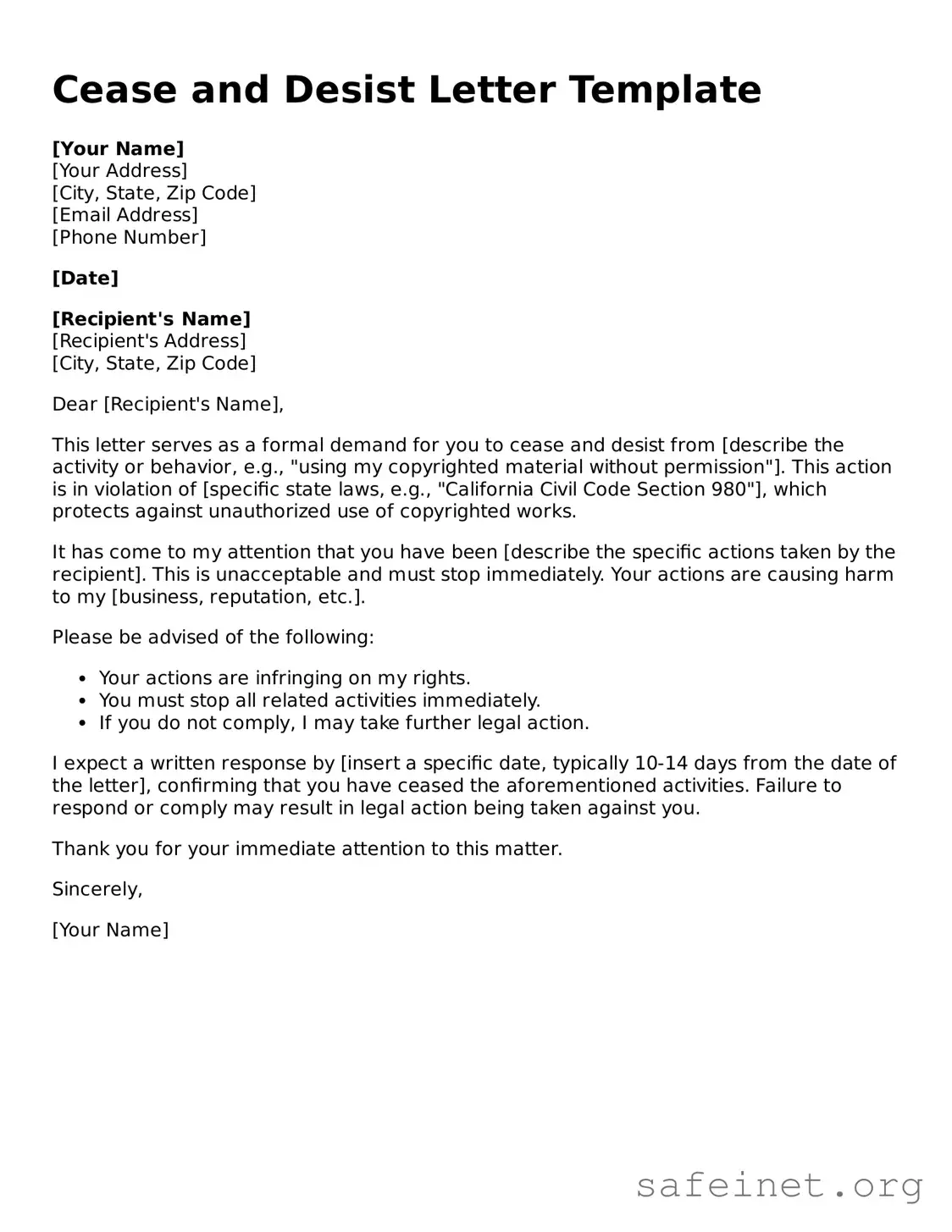
A Cease and Desist Letter is a crucial tool for individuals and businesses seeking to address unauthorized actions or behaviors that infringe upon their rights. This letter serves as a formal request for the recipient to stop a specific activity, which may be harmful or illegal. Key components typically included in the form are the sender's and recipient's contact information, a clear description of the offending behavior, and a request for the recipient to cease such actions immediately. Additionally, the letter may outline the potential consequences of failing to comply, which can range from legal action to financial penalties. By clearly stating the sender's position and intentions, this letter aims to resolve disputes amicably while preserving the sender's rights. Understanding how to properly draft and deliver a Cease and Desist Letter can help protect personal and business interests effectively.
Cease and Desist Letter Template
[Your Name]
[Your Address]
[City, State, Zip Code]
[Email Address]
[Phone Number]
[Date]
[Recipient's Name]
[Recipient's Address]
[City, State, Zip Code]
Dear [Recipient's Name],
This letter serves as a formal demand for you to cease and desist from [describe the activity or behavior, e.g., "using my copyrighted material without permission"]. This action is in violation of [specific state laws, e.g., "California Civil Code Section 980"], which protects against unauthorized use of copyrighted works.
It has come to my attention that you have been [describe the specific actions taken by the recipient]. This is unacceptable and must stop immediately. Your actions are causing harm to my [business, reputation, etc.].
Please be advised of the following:
I expect a written response by [insert a specific date, typically 10-14 days from the date of the letter], confirming that you have ceased the aforementioned activities. Failure to respond or comply may result in legal action being taken against you.
Thank you for your immediate attention to this matter.
Sincerely,
[Your Name]
| Fact Name | Description |
|---|---|
| Purpose | A cease and desist letter is a formal request to stop an activity that is believed to be infringing on someone's rights, such as intellectual property or contractual rights. |
| Legal Basis | The letter often cites specific laws or regulations that support the request, depending on the nature of the dispute, such as copyright law or trademark law. |
| State-Specific Forms | Some states may have specific requirements for cease and desist letters, including the need to reference local laws or provide certain information. |
| Consequences of Ignoring | Failure to comply with a cease and desist letter can lead to legal action, including lawsuits or further claims for damages. |
After obtaining the Cease and Desist Letter form, the next steps involve carefully filling it out to ensure clarity and accuracy. This letter serves as a formal request to stop certain actions, and its effectiveness relies on precise details. Following the steps below will help in completing the form correctly.
What is a Cease and Desist Letter?
A Cease and Desist Letter is a formal document sent to an individual or organization to demand that they stop engaging in a specific activity that is believed to be unlawful or infringing on rights. This letter serves as a warning, outlining the nature of the complaint and the actions that need to be taken to resolve the issue. It is often used in disputes involving intellectual property, harassment, or contract violations.
When should I use a Cease and Desist Letter?
You might consider using a Cease and Desist Letter when you believe that someone is violating your rights or engaging in behavior that is harmful to you or your business. Common situations include copyright infringement, trademark disputes, defamation, or harassment. Before pursuing legal action, sending a Cease and Desist Letter can often resolve the issue amicably.
Do I need a lawyer to send a Cease and Desist Letter?
While it is not legally required to have a lawyer draft a Cease and Desist Letter, seeking legal advice can be beneficial. An attorney can help ensure that the letter is appropriately worded and legally sound, which may strengthen your position. However, many individuals choose to write their own letters, especially in straightforward cases.
What should be included in a Cease and Desist Letter?
A well-crafted Cease and Desist Letter should include several key components. First, clearly identify yourself and the recipient. Next, describe the specific actions that you want them to stop, along with a detailed explanation of why those actions are problematic. It’s also helpful to include a deadline for compliance and mention any potential legal actions that may follow if the behavior does not cease.
What happens if the recipient ignores the Cease and Desist Letter?
If the recipient ignores the letter, you may have several options. You can choose to escalate the matter by pursuing legal action, which may involve filing a lawsuit. Alternatively, you might consider negotiating further or seeking mediation. Ignoring a Cease and Desist Letter does not absolve the recipient of their responsibilities, and legal consequences may still arise.
Can a Cease and Desist Letter be used for harassment cases?
Yes, a Cease and Desist Letter can be an effective tool in harassment cases. If someone is engaging in unwanted or threatening behavior, sending a letter can formally request that they stop. This document serves as a clear record of your request, which may be useful if you need to take further legal action in the future.
Is a Cease and Desist Letter legally binding?
A Cease and Desist Letter itself is not a legally binding document. However, it can serve as evidence of your attempts to resolve a dispute before taking legal action. If the matter escalates to court, the letter may demonstrate that you made a good faith effort to address the issue directly with the other party.
How should I deliver a Cease and Desist Letter?
Delivering a Cease and Desist Letter can be done in several ways. Sending it via certified mail is often recommended, as it provides proof of delivery. You may also choose to deliver it in person or send it via email, depending on the situation. Whichever method you choose, ensure that you keep a copy of the letter and any correspondence for your records.
Failing to clearly identify the sender. It is essential to include your full name and contact information. Without this, the recipient may not know who is requesting the cease and desist.
Not specifying the recipient. Clearly state the name and address of the person or entity you are addressing. Omitting this information can lead to confusion.
Using vague language. Be specific about the actions you want the recipient to stop. General statements can be misinterpreted or ignored.
Neglecting to describe the harmful actions. Explain how the recipient's actions are affecting you. This helps establish the urgency and seriousness of your request.
Not including a deadline. Specify a reasonable timeframe for the recipient to comply with your request. Without a deadline, they may not feel compelled to act.
Overlooking evidence. Attach any relevant documentation or evidence that supports your claims. This adds credibility to your letter.
Failing to state the consequences. Clearly outline what will happen if the recipient does not comply. This can motivate them to take your request seriously.
Using aggressive or threatening language. Maintain a professional tone. Being overly confrontational may escalate the situation instead of resolving it.
Not seeking legal advice. If the situation is complex, consider consulting a lawyer. Their expertise can help ensure your letter is effective.
Forgetting to keep a copy. Always retain a copy of the letter for your records. This is important for any future legal actions.
A Cease and Desist Letter is a formal request to stop an action that is believed to be unlawful or harmful. When dealing with legal matters, several other forms and documents may accompany this letter to provide additional context or support. Understanding these documents can help clarify the situation and ensure that all necessary steps are taken to protect your rights.
Each of these documents plays a crucial role in the legal process surrounding a Cease and Desist Letter. Being familiar with them can help individuals navigate their legal rights and responsibilities more effectively. Seeking professional legal advice is always recommended to ensure that actions taken are appropriate and well-informed.
A Demand Letter serves as a formal request for action. It typically outlines a grievance and demands specific remedies. Like a Cease and Desist Letter, it conveys urgency and a clear expectation for the recipient to respond. The tone is direct, and both documents aim to resolve disputes without resorting to legal action. A Demand Letter may include a deadline for response, emphasizing the seriousness of the situation.
A Notice of Violation is another document that shares similarities with a Cease and Desist Letter. It is often used in regulatory contexts to inform individuals or businesses that they are in breach of laws or regulations. This notice specifies the nature of the violation and requests compliance. Both documents serve to alert the recipient of their actions and the potential consequences of non-compliance.
An Injunction is a court order that requires a party to do or refrain from doing specific acts. While it is a legal remedy rather than a preemptive notice, it shares the goal of stopping harmful behavior. A Cease and Desist Letter may serve as a precursor to seeking an injunction, as it formally requests that the recipient halt their actions before legal intervention becomes necessary.
A Settlement Agreement is a document that outlines the terms of a resolution between parties. It can be similar to a Cease and Desist Letter in that both aim to resolve disputes without litigation. However, a Settlement Agreement typically includes mutual concessions and may involve compensation, while a Cease and Desist Letter focuses on stopping specific actions.
A Release of Liability document releases one party from legal claims by another. While its primary purpose is to protect against future claims, it can be similar to a Cease and Desist Letter in that both seek to limit legal exposure. A Cease and Desist Letter may request that a party refrain from certain actions to avoid liability, while a Release of Liability addresses potential claims that may arise from past actions.
A Non-Disclosure Agreement (NDA) prevents parties from disclosing confidential information. Both an NDA and a Cease and Desist Letter aim to protect interests and maintain confidentiality. An NDA explicitly outlines what information must remain private, while a Cease and Desist Letter may demand the cessation of actions that threaten confidentiality or proprietary information.
A Letter of Intent is a document that outlines the preliminary understanding between parties before formal agreements are made. While not legally binding, it serves as a framework for future negotiations. Similar to a Cease and Desist Letter, it expresses intentions clearly and can set the stage for further legal action if the terms are not honored.
When filling out a Cease and Desist Letter form, it's important to be clear and precise. Here are five things to keep in mind:
Cease and desist letters are often misunderstood. Here are five common misconceptions about them:
They are legally binding documents. Many people believe that a cease and desist letter is a legal order. In reality, it is a request for someone to stop a specific action. While it can serve as a formal notice, it does not have the same legal weight as a court order.
They can only be sent by lawyers. It is a common misconception that only attorneys can draft and send cease and desist letters. In fact, individuals can create and send these letters themselves. However, seeking legal advice can enhance the letter's effectiveness.
Receiving one means you are in legal trouble. Many people panic upon receiving a cease and desist letter, fearing immediate legal consequences. While it indicates that someone wants you to stop a certain behavior, it does not automatically mean you are facing legal action.
They are only used for copyright infringement. While cease and desist letters are often associated with copyright issues, they can address a wide range of disputes. These may include trademark violations, harassment, or breaches of contract.
Ignoring a cease and desist letter has no consequences. Some individuals believe they can disregard a cease and desist letter without repercussions. Ignoring such a letter can lead to further legal action, including lawsuits, so it is advisable to respond appropriately.
When it comes to addressing disputes or stopping unwanted behavior, a Cease and Desist Letter can be a powerful tool. Here are some key takeaways to consider when filling out and using this form:
Using a Cease and Desist Letter effectively can help protect your rights and resolve disputes efficiently.