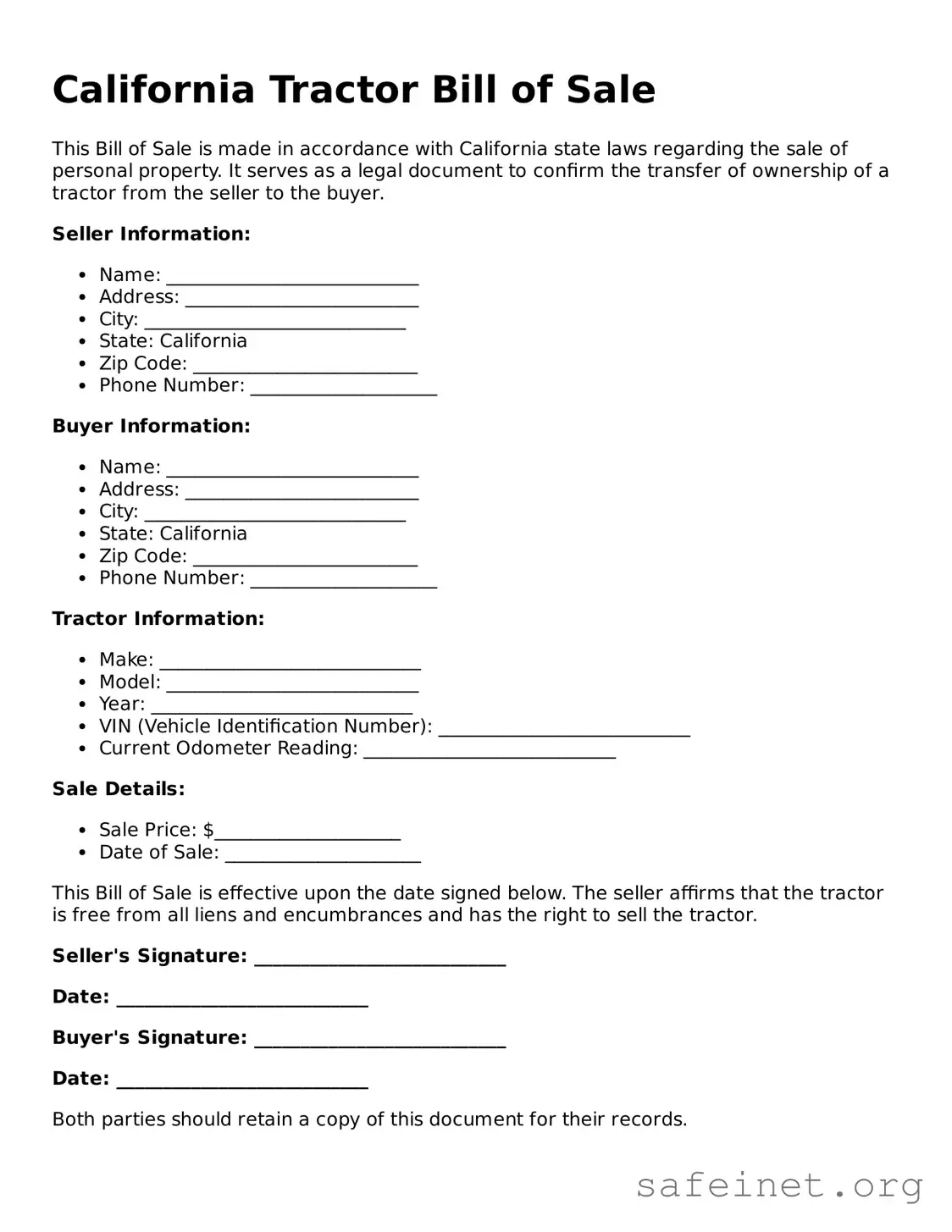
When buying or selling a tractor in California, having the right documentation is crucial for both parties involved in the transaction. The California Tractor Bill of Sale form serves as an essential record that outlines the details of the sale, ensuring a smooth transfer of ownership. This form typically includes important information such as the names and addresses of both the buyer and the seller, a description of the tractor, including its make, model, year, and Vehicle Identification Number (VIN). Additionally, the form may specify the sale price and any terms of the sale, such as whether the tractor is sold "as is" or with warranties. Completing this form not only provides legal protection for both parties but also helps in future registrations and potential disputes. By clearly documenting the transaction, the California Tractor Bill of Sale form plays a vital role in facilitating a transparent and fair exchange between buyers and sellers.
California Tractor Bill of Sale
This Bill of Sale is made in accordance with California state laws regarding the sale of personal property. It serves as a legal document to confirm the transfer of ownership of a tractor from the seller to the buyer.
Seller Information:
Buyer Information:
Tractor Information:
Sale Details:
This Bill of Sale is effective upon the date signed below. The seller affirms that the tractor is free from all liens and encumbrances and has the right to sell the tractor.
Seller's Signature: ___________________________
Date: ___________________________
Buyer's Signature: ___________________________
Date: ___________________________
Both parties should retain a copy of this document for their records.
| Fact Name | Description |
|---|---|
| Purpose | The California Tractor Bill of Sale form is used to document the sale of a tractor between a seller and a buyer. |
| Governing Law | This form is governed by the California Vehicle Code, specifically sections related to the transfer of ownership of vehicles. |
| Information Required | Both parties must provide their names, addresses, and signatures, along with the tractor's details, including make, model, and VIN. |
| Notarization | Notarization is not required for the bill of sale, but it can add an extra layer of authenticity. |
| Record Keeping | It is advisable for both the buyer and seller to keep a copy of the completed bill of sale for their records. |
| Transfer of Ownership | The bill of sale serves as proof of the transfer of ownership and may be required for registration purposes. |
| Sales Tax | Sales tax may apply to the transaction, and the buyer is typically responsible for paying it at the time of registration. |
| Liability | The bill of sale can help clarify liability issues in case of disputes or accidents following the sale. |
| Availability | The California Tractor Bill of Sale form is widely available online and can often be customized to fit specific needs. |
Once you have the California Tractor Bill of Sale form ready, you will need to provide specific information to ensure it is complete and accurate. This will help in the transfer of ownership and make the process smoother for both parties involved.
After completing the form, ensure that both parties keep a copy for their records. This will serve as proof of the transaction and can be useful for future reference.
What is a California Tractor Bill of Sale?
A California Tractor Bill of Sale is a legal document that records the sale of a tractor between a seller and a buyer. It serves as proof of the transaction and includes important details such as the tractor's make, model, year, and vehicle identification number (VIN).
Why do I need a Bill of Sale for my tractor?
A Bill of Sale is essential for several reasons. It protects both the buyer and seller by documenting the sale, establishes ownership, and may be required for registration with the Department of Motor Vehicles (DMV). It also helps to clarify the terms of the sale, including any warranties or conditions.
What information should be included in the Bill of Sale?
The Bill of Sale should include the names and addresses of both the buyer and seller, a description of the tractor (including make, model, year, and VIN), the sale price, and the date of the transaction. Additionally, any terms or conditions of the sale should be noted.
Is a Bill of Sale required by law in California?
While a Bill of Sale is not legally required for every sale, it is highly recommended. For vehicles like tractors, having this document can simplify the registration process with the DMV and provide legal protection in case of disputes.
Can I create my own Bill of Sale?
Yes, you can create your own Bill of Sale. However, it is important to ensure that all necessary information is included and that it complies with California laws. Using a template can help ensure that you cover all required details.
Do I need to have the Bill of Sale notarized?
Notarization is not required for a Bill of Sale in California, but it can add an extra layer of security and authenticity to the document. It may also be beneficial if you plan to register the tractor or if there are any disputes in the future.
What if the tractor has a lien on it?
If the tractor has a lien, it is crucial to disclose this information in the Bill of Sale. The seller should ensure that the lien is satisfied before the sale is completed, as the buyer will assume ownership without any encumbrances.
How do I transfer ownership after the sale?
To transfer ownership, both the buyer and seller should complete the necessary paperwork, including the Bill of Sale and any required DMV forms. The buyer will need to submit these documents to the DMV to register the tractor in their name.
What should I do if I lose my Bill of Sale?
If you lose your Bill of Sale, you can create a new one, but it is essential to include a note stating that it replaces the lost document. Both parties should sign the new Bill of Sale to validate the transaction.
Where can I find a template for a California Tractor Bill of Sale?
Templates for a California Tractor Bill of Sale can be found online through legal document websites, or you may consult with a legal professional. Ensure that any template you use meets California's requirements.
Incomplete Information: One of the most common mistakes is failing to fill out all required fields. This includes the names and addresses of both the buyer and seller, as well as the tractor's details such as make, model, and VIN. Leaving any section blank can lead to issues later on.
Incorrect Vehicle Identification Number (VIN): The VIN is a unique identifier for the tractor. If this number is entered incorrectly, it can cause confusion and potential legal problems. Always double-check the VIN against the actual vehicle.
Omitting the Sale Price: The sale price must be clearly stated in the bill of sale. Not including this information can lead to misunderstandings between the buyer and seller and may also affect tax obligations.
Not Signing the Document: Both parties must sign the bill of sale for it to be valid. Forgetting to sign can invalidate the document, leaving both parties without proof of the transaction.
Failing to Include the Date of Sale: The date on which the transaction takes place is crucial. It helps establish when ownership changes hands and can be important for tax and registration purposes.
Not Keeping Copies: After completing the bill of sale, both the buyer and seller should retain a copy for their records. Not doing so can lead to disputes or confusion in the future regarding ownership.
Ignoring State Requirements: California may have specific requirements for a bill of sale, including additional disclosures or forms. Failing to adhere to these regulations can complicate the registration process and may lead to legal issues.
When buying or selling a tractor in California, several documents may accompany the Tractor Bill of Sale form to ensure a smooth transaction. Each document serves a specific purpose, helping to clarify ownership, protect both parties, and comply with legal requirements.
Having these documents ready can simplify the buying or selling process, providing clarity and security for both parties involved. Being organized and informed will lead to a successful transaction.
The California Vehicle Bill of Sale is similar to the Tractor Bill of Sale in that both documents serve as proof of transfer of ownership for a vehicle. When someone sells or purchases a vehicle, this document provides essential details such as the buyer and seller's information, vehicle description, and the sale price. Both forms protect the interests of both parties by documenting the transaction and can be used for registration purposes with the Department of Motor Vehicles (DMV). A clear and accurate Bill of Sale can help prevent disputes over ownership or terms of the sale.
The Boat Bill of Sale is another document that shares similarities with the Tractor Bill of Sale. Just like the tractor transaction, this form is used to record the sale of a boat. It includes details about the boat, such as its make, model, and hull identification number, along with the buyer and seller's information. This document is crucial for transferring ownership and can also be used to register the boat with the appropriate state authorities. Both documents help ensure that the sale is legally recognized and provide a record of the transaction.
The Motorcycle Bill of Sale functions similarly to the Tractor Bill of Sale by providing a formal record of the sale of a motorcycle. Essential details, such as the motorcycle's VIN, make, model, and sale price, are included in this document. Like the tractor and vehicle bills of sale, it protects both the buyer and seller by documenting the transfer of ownership. This form can be essential for registration and titling purposes, ensuring that the new owner can legally operate the motorcycle on public roads.
The RV Bill of Sale is another document that parallels the Tractor Bill of Sale. When purchasing or selling a recreational vehicle, this document is used to outline the terms of the sale, including the RV's details and the parties involved. It serves as proof of ownership transfer and can be used for registration with the DMV. Both forms emphasize the importance of having a clear record of the transaction, which can help avoid future disputes regarding ownership or the terms of the sale.
The Mobile Home Bill of Sale is comparable to the Tractor Bill of Sale in that it documents the sale of a mobile home. This form includes specific information about the mobile home, such as its make, model, and identification number, along with the buyer and seller’s details. Similar to the other bills of sale, it serves as a legal record of the transaction and is often required for registration or titling purposes. It protects both parties by ensuring that the sale is recognized and documented properly.
The Equipment Bill of Sale is also similar to the Tractor Bill of Sale, particularly when it comes to the sale of heavy machinery or equipment. This document outlines the details of the equipment being sold, including its make, model, and serial number, as well as the sale price and information about the buyer and seller. Both forms serve as proof of ownership transfer and provide a record that can be referenced in case of disputes. Proper documentation is vital for both parties involved in the transaction.
Finally, the General Bill of Sale is a versatile document that can be used for a wide range of personal property transactions, including the sale of tractors. This form captures essential information about the item being sold, the buyer and seller, and the sale price. While it may not be specific to vehicles or equipment, it still serves a similar purpose by providing a record of ownership transfer. Like the Tractor Bill of Sale, it helps protect both parties by ensuring that the terms of the sale are documented and legally recognized.
When filling out the California Tractor Bill of Sale form, it is important to follow specific guidelines to ensure accuracy and compliance. Below are nine recommendations to consider.
When dealing with the California Tractor Bill of Sale form, several misconceptions can lead to confusion. It's important to clarify these to ensure a smooth transaction. Here are six common misunderstandings:
Understanding these misconceptions can help ensure that your transaction goes smoothly and that both parties are protected. Always take the time to fill out the California Tractor Bill of Sale form correctly and keep a copy for your records.
When filling out and using the California Tractor Bill of Sale form, consider the following key takeaways: