In the state of California, individuals and businesses sometimes find themselves in situations where their rights or interests are being threatened or violated. One effective way to address such concerns is through a Cease and Desist Letter. This formal document serves as a clear and direct communication tool, notifying the recipient that their actions are unacceptable and must stop immediately. The letter outlines the specific behavior that is causing harm, whether it be copyright infringement, harassment, or any other unlawful activity. It also emphasizes the legal implications of continuing such behavior, providing a sense of urgency to the situation. By utilizing this letter, the sender can assert their rights while also giving the recipient an opportunity to rectify the issue before further legal action is pursued. Understanding the key components of a Cease and Desist Letter, including the necessary details and tone, is crucial for ensuring that the message is conveyed effectively and respectfully.
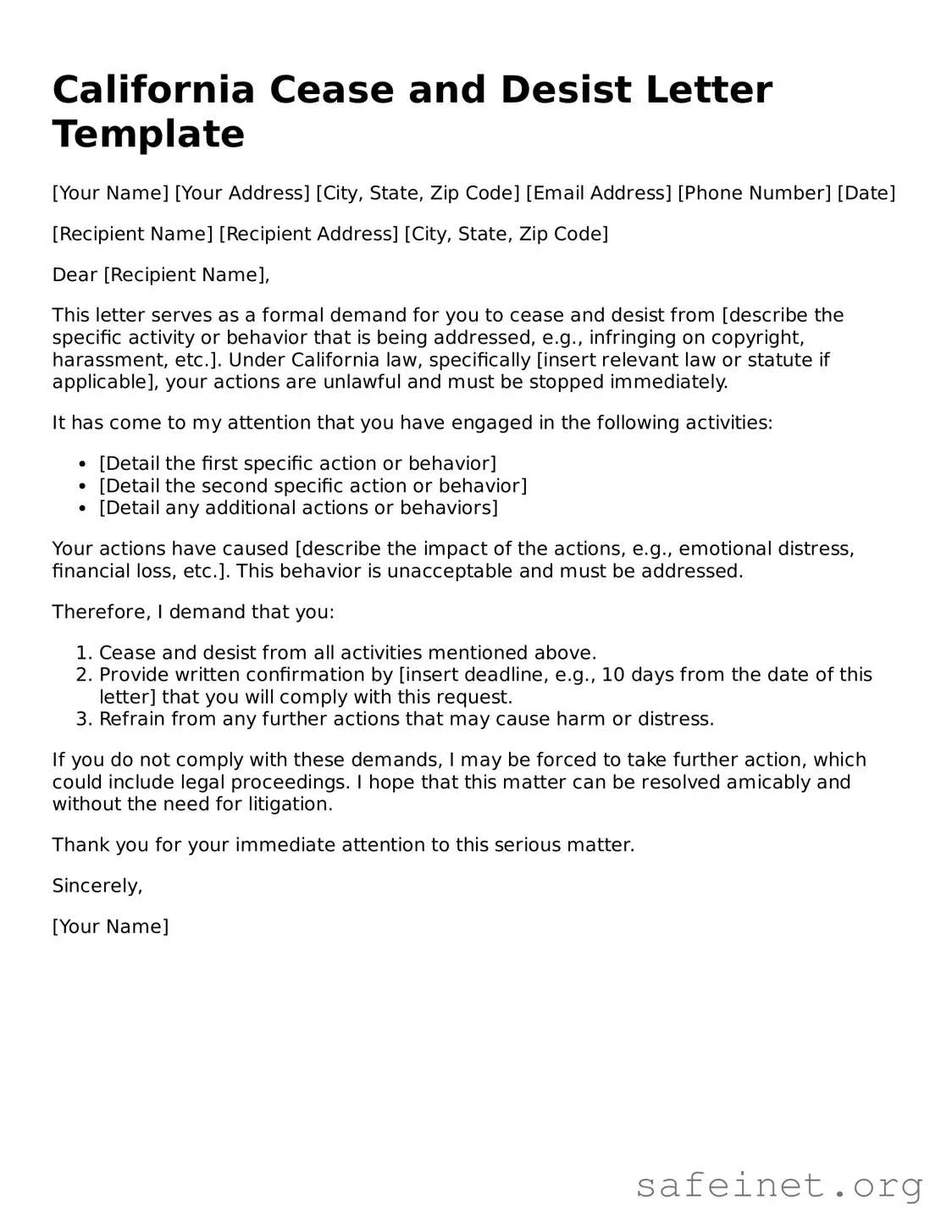
California Cease and Desist Letter Template
[Your Name] [Your Address] [City, State, Zip Code] [Email Address] [Phone Number] [Date]
[Recipient Name] [Recipient Address] [City, State, Zip Code]
Dear [Recipient Name],
This letter serves as a formal demand for you to cease and desist from [describe the specific activity or behavior that is being addressed, e.g., infringing on copyright, harassment, etc.]. Under California law, specifically [insert relevant law or statute if applicable], your actions are unlawful and must be stopped immediately.
It has come to my attention that you have engaged in the following activities:
Your actions have caused [describe the impact of the actions, e.g., emotional distress, financial loss, etc.]. This behavior is unacceptable and must be addressed.
Therefore, I demand that you:
If you do not comply with these demands, I may be forced to take further action, which could include legal proceedings. I hope that this matter can be resolved amicably and without the need for litigation.
Thank you for your immediate attention to this serious matter.
Sincerely,
[Your Name]
| Fact Name | Description |
|---|---|
| Purpose | A Cease and Desist Letter is used to request an individual or organization to stop a specified action. |
| Legality | Cease and Desist Letters are legally recognized documents that can be used in various disputes. |
| Governing Law | The laws governing Cease and Desist Letters in California include California Civil Code Section 3334. |
| Format | The letter should be clear and concise, outlining the specific actions to be ceased. |
| Recipient | The letter must be addressed to the individual or entity whose actions are being challenged. |
| Delivery Method | It is recommended to send the letter via certified mail to ensure receipt. |
| Response Time | The recipient is typically given a reasonable timeframe to respond or comply with the request. |
| Consequences of Non-Compliance | If ignored, the sender may pursue further legal action to enforce their rights. |
| Informal Nature | While serious, a Cease and Desist Letter is often considered a preliminary step before litigation. |
| Documentation | Keep a copy of the letter and any correspondence for future reference or legal proceedings. |
Once you have the California Cease and Desist Letter form in front of you, the next step is to carefully fill it out with accurate information. This letter serves as a formal request to stop specific actions that you believe are harmful or unlawful. Completing the form correctly is essential to ensure your request is taken seriously.
What is a California Cease and Desist Letter?
A California Cease and Desist Letter is a formal document sent to an individual or organization to stop certain activities that are believed to infringe on someone's rights or cause harm. It serves as a warning, indicating that legal action may follow if the recipient does not comply with the request to cease the specified actions.
When should I use a Cease and Desist Letter?
You should consider using a Cease and Desist Letter when you believe someone is violating your rights, such as copyright infringement, trademark violation, harassment, or any other unlawful behavior. This letter can be an effective first step in resolving disputes without resorting to litigation.
Who can send a Cease and Desist Letter?
Anyone can send a Cease and Desist Letter, including individuals, businesses, or organizations. However, it is often advisable to consult with a legal professional to ensure that the letter is appropriately worded and that you have a valid claim.
What should be included in a Cease and Desist Letter?
A well-crafted Cease and Desist Letter should include specific details about the actions you want the recipient to stop, a clear explanation of your rights, and a deadline for compliance. Additionally, it may be helpful to outline the potential consequences if the recipient fails to comply.
Is a Cease and Desist Letter legally binding?
While a Cease and Desist Letter itself is not a legally binding document, it serves as an important notice. If the recipient ignores the letter and continues the infringing behavior, you may have grounds to pursue legal action, which can lead to a court order to enforce your rights.
How do I deliver a Cease and Desist Letter?
You can deliver a Cease and Desist Letter in several ways, including via certified mail, email, or even in person. Using certified mail provides proof of delivery, which can be important if you need to demonstrate that the recipient received the letter.
What happens if the recipient ignores the letter?
If the recipient ignores the Cease and Desist Letter, you may choose to escalate the situation. This could involve pursuing legal action, such as filing a lawsuit, to enforce your rights. Documenting your attempts to resolve the issue amicably can strengthen your case if it goes to court.
Can I create my own Cease and Desist Letter?
Yes, you can create your own Cease and Desist Letter. However, it is crucial to ensure that the letter is clear, professional, and legally sound. Many templates are available online, but consulting with a legal expert can help tailor the letter to your specific situation and increase its effectiveness.
Are there any risks involved in sending a Cease and Desist Letter?
There can be risks associated with sending a Cease and Desist Letter. For instance, the recipient may react negatively, leading to further disputes or even retaliatory actions. It's essential to approach the situation carefully and, if possible, seek legal advice to mitigate potential risks.
Failing to clearly identify the parties involved. It is crucial to provide accurate names and addresses for both the sender and the recipient. This ensures that the letter reaches the intended person and establishes the legitimacy of the claim.
Neglecting to specify the actions that are being disputed. A vague description can lead to confusion. Clearly outlining the behavior or actions that are causing concern helps the recipient understand what they need to cease.
Not including a deadline for compliance. Without a specific timeframe, the recipient may not feel any urgency to respond or comply. Establishing a reasonable deadline encourages prompt action.
Using overly aggressive language. While it’s important to convey seriousness, excessive hostility can backfire. A professional tone is more likely to elicit a positive response.
Failing to keep a copy of the letter. Documentation is essential in any legal matter. Retaining a copy provides proof that the cease and desist request was made, which may be important in future proceedings.
Not providing supporting evidence. Including relevant documentation or examples of the disputed actions can strengthen the case. This evidence helps clarify the situation and supports the claims made in the letter.
Ignoring the option to seek legal advice. Consulting with a legal professional before sending the letter can provide valuable insights. Legal experts can help ensure that the letter is effective and compliant with applicable laws.
A California Cease and Desist Letter is an important document used to address various legal issues. When preparing or responding to such a letter, several other forms and documents may also be relevant. Here are some commonly used documents that accompany a Cease and Desist Letter:
Understanding these additional documents can help ensure that all necessary steps are taken in addressing legal concerns effectively. Each document serves a specific purpose and can contribute to a clearer resolution of disputes.
The California Cease and Desist Letter is similar to a demand letter. A demand letter outlines a request for action or compensation, often before legal action is taken. It serves as a formal notice to the recipient, stating the sender's grievances and what they expect to be done. Like a cease and desist letter, it aims to resolve disputes without resorting to litigation, but it may also include a request for damages or specific actions beyond simply stopping a behavior.
An eviction notice shares similarities with a cease and desist letter in that both are formal communications intended to halt a specific action. An eviction notice is used by landlords to inform tenants that they must vacate the premises due to lease violations or non-payment. Both documents convey urgency and set a timeline for compliance, emphasizing the need for immediate action to avoid further consequences.
A no-contact order is another document that resembles a cease and desist letter. It is typically issued by a court to prohibit one individual from contacting another. While a cease and desist letter may be sent informally, a no-contact order carries legal weight and is enforceable by law. Both documents serve to protect individuals from unwanted interactions, but the no-contact order is more formal and may involve legal proceedings.
A restraining order also parallels a cease and desist letter in its purpose to stop certain behaviors. Restraining orders are issued by courts to prevent individuals from engaging in specific actions that may cause harm or harassment. Both documents seek to safeguard individuals, but restraining orders often require a legal process and can result in criminal charges if violated, while cease and desist letters are typically initial steps taken outside of court.
A trademark infringement notice is similar in that it addresses unauthorized use of a brand or logo. This notice alerts the infringer to the violation and demands that they cease their actions. Like a cease and desist letter, it aims to protect intellectual property rights and can serve as a precursor to legal action if the recipient fails to comply.
A copyright infringement notice also bears resemblance to a cease and desist letter. It is used to inform individuals or organizations that they are using copyrighted material without permission. The notice demands that the infringing party stop using the material. Both documents focus on protecting the rights of creators and can lead to legal action if the infringement continues.
An employment termination letter shares common ground with a cease and desist letter in that both can signal an end to certain behaviors. While a cease and desist letter may demand that someone stop harmful actions, a termination letter formally ends an employee's relationship with a company due to violations of policies or performance issues. Both documents aim to clarify expectations and consequences.
A settlement agreement can also be likened to a cease and desist letter. This document is often the result of negotiations to resolve disputes without going to court. It may include terms that require one party to cease certain actions in exchange for other concessions. Both documents seek to prevent further conflict and provide a clear path forward for the involved parties.
A letter of intent can resemble a cease and desist letter in its purpose of establishing clear communication between parties. While it is often used in business negotiations to outline preliminary agreements, it can also include clauses that require parties to refrain from certain actions until a final agreement is reached. Both documents emphasize clarity and mutual understanding to prevent misunderstandings.
Finally, a letter of complaint is similar to a cease and desist letter in that it expresses dissatisfaction and requests action. A letter of complaint may be sent to a business or organization regarding a product or service issue. Like a cease and desist letter, it aims to prompt a response and resolution, although it may not always demand the cessation of specific actions.
When filling out the California Cease and Desist Letter form, there are certain practices that can help ensure your letter is effective. Below is a list of things you should and shouldn't do:
Many people have misunderstandings about the California Cease and Desist Letter form. Here are eight common misconceptions, along with explanations to clarify them.
This is not true. A Cease and Desist Letter is typically a formal request to stop an action, but it does not have the force of law. It serves as a warning, and further legal action may be necessary if the recipient does not comply.
While the letter may prompt the recipient to stop the behavior, there is no guarantee that they will comply. The effectiveness often depends on the circumstances and the willingness of the recipient to cooperate.
Although anyone can draft and send such a letter, it is advisable to consult a legal professional. They can ensure that the letter is appropriately worded and that it addresses the specific legal issues involved.
This is a misconception. A Cease and Desist Letter is usually sent directly to the individual or organization involved and does not need to be filed with the court unless legal action follows.
Receiving such a letter does not imply guilt. It is merely an assertion by the sender that they believe their rights have been violated. The recipient has the right to respond and defend their actions.
This is incorrect. Each letter should be tailored to the specific situation and legal issues at hand. A generic letter may not effectively address the particular concerns of the sender.
In many cases, further action may be necessary if the recipient does not comply. This could involve filing a lawsuit or seeking mediation, depending on the situation.
This is a misconception as well. Cease and Desist Letters can be used for a variety of legal issues, including trademark infringement, defamation, and other violations of rights.
When dealing with a situation that requires a cease and desist letter in California, understanding how to properly fill out and use the form is essential. Here are ten key takeaways to keep in mind:
By keeping these key points in mind, you can effectively navigate the process of using a cease and desist letter in California.