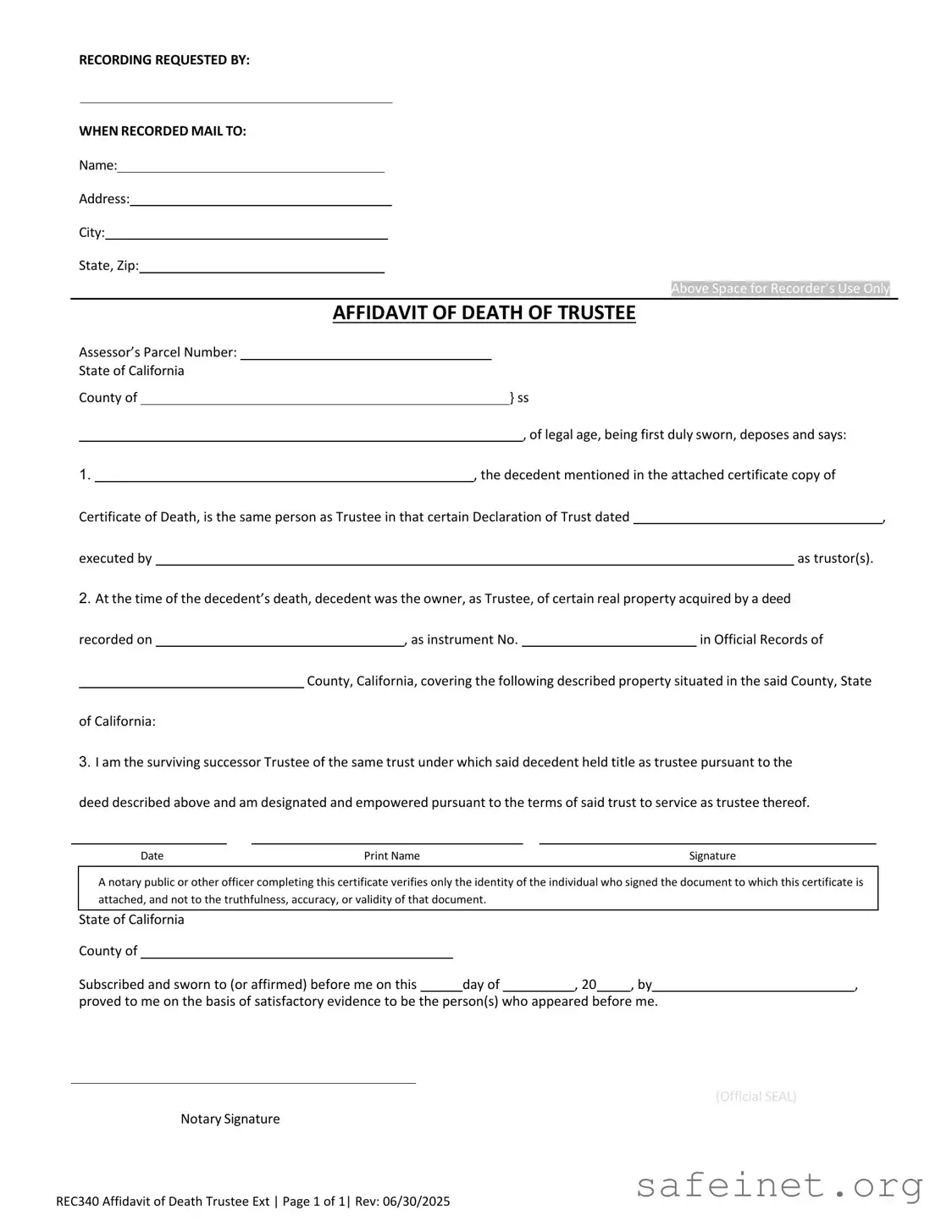
In California, the passing of a trustee can create significant challenges for a trust and its beneficiaries. The California Affidavit of Death of a Trustee form serves as a crucial legal document in this process, allowing the successor trustee or beneficiaries to formally acknowledge the death of the trustee. This affidavit is essential for ensuring the smooth transition of trust management and for protecting the interests of all parties involved. It typically includes key information such as the name of the deceased trustee, the date of their death, and details about the trust itself. By filing this affidavit, the successor trustee can gain access to trust assets, manage ongoing responsibilities, and facilitate the distribution of the trust according to the wishes of the deceased. Understanding the importance of this form can help alleviate some of the stress associated with the loss of a trustee, ensuring that the trust continues to operate effectively during a challenging time.

| Fact Name | Details |
|---|---|
| Purpose | The California Affidavit of Death of a Trustee is used to officially declare the death of a trustee in a trust. |
| Governing Law | This form is governed by the California Probate Code, particularly sections related to trusts and estates. |
| Who Can Use It | Beneficiaries or successor trustees can use this affidavit to manage trust assets after the trustee's death. |
| Filing Requirements | The affidavit may need to be filed with the county recorder's office, depending on the trust's assets. |
| Signature Requirement | The affidavit must be signed by the successor trustee or an interested party who has knowledge of the trust. |
| Importance | This document helps to clarify the trust's administration and ensures proper distribution of assets. |
After gathering the necessary information, you can proceed to fill out the California Affidavit of Death of a Trustee form. This form serves as a formal declaration regarding the death of a trustee, which is an important step in managing the trust's affairs. Follow these steps carefully to ensure accuracy.
Once the form is filled out and notarized, it should be submitted to the appropriate court or office that oversees trusts in your jurisdiction. Ensure that all required parties receive a copy for their records.
What is the California Affidavit of Death of a Trustee form?
The California Affidavit of Death of a Trustee form is a legal document used to officially declare the death of a trustee of a trust. This form helps to update the records and ensures that the trust can continue to be administered according to the wishes of the deceased trustee and the terms of the trust. It is an important step in the process of transferring responsibilities to a successor trustee.
Who should file the Affidavit of Death of a Trustee?
The affidavit should be filed by the successor trustee or any other individual who has an interest in the trust. This could include beneficiaries or family members. Filing the affidavit is essential for ensuring that the trust can be properly managed and that the assets can be distributed according to the trust's terms.
What information is required on the form?
The form typically requires basic information about the deceased trustee, including their name, date of death, and the name of the trust. Additionally, the successor trustee must provide their information and affirm their status as the new trustee. It is also important to include details about the trust, such as its date of creation and any relevant identification numbers.
Where do I file the Affidavit of Death of a Trustee?
The affidavit should be filed with the county recorder's office in the county where the trust property is located. This ensures that the information is publicly recorded and accessible. In some cases, it may also be necessary to file the affidavit with the court, especially if the trust is part of an ongoing legal matter.
Is there a fee to file the affidavit?
Yes, there is usually a fee associated with filing the Affidavit of Death of a Trustee. The fee can vary by county, so it is advisable to check with the local county recorder’s office for the exact amount. Some counties may also offer fee waivers for individuals who demonstrate financial hardship.
What happens after the affidavit is filed?
Once the affidavit is filed, the successor trustee can begin managing the trust's assets and fulfilling their duties. This may include distributing assets to beneficiaries, paying debts, and ensuring that the trust operates according to its terms. It is important for the successor trustee to keep accurate records of all transactions and decisions made in the administration of the trust.
Can the affidavit be contested?
Do I need legal assistance to complete the affidavit?
While it is possible to complete the Affidavit of Death of a Trustee without legal assistance, it may be beneficial to consult with an attorney, especially if the trust is complex or if there are disputes among beneficiaries. An attorney can provide guidance on the proper completion of the form and help navigate any legal issues that may arise during the process.
Missing Signatures: One common mistake is forgetting to sign the form. All required signatures must be present for the affidavit to be valid.
Incorrect Trustee Information: Providing incorrect details about the deceased trustee can lead to delays. Ensure that names and dates are accurate.
Failure to Include Witnesses: Some people forget that the affidavit may need to be witnessed. Check the requirements to ensure compliance.
Omitting Necessary Documentation: Not attaching required documents, such as the death certificate, can cause issues. Always include all necessary paperwork.
Not Notarizing the Form: Forgetting to have the affidavit notarized can render it invalid. Be sure to complete this step.
Using Outdated Forms: Using an old version of the form can lead to complications. Always download the most current version from an official source.
Ignoring Local Requirements: Different counties may have specific rules. Always check local regulations to ensure compliance.
When dealing with the California Affidavit of Death of a Trustee, several other forms and documents may be necessary to ensure a smooth transition of trust management. Each of these documents serves a specific purpose and can help clarify the situation for all parties involved.
Having these documents ready can streamline the process of transitioning the trust's management. It is advisable to consult with a legal professional to ensure all necessary paperwork is completed accurately and promptly.
The California Affidavit of Death of a Trustee form shares similarities with the Affidavit of Death form used in various states. This document serves to formally declare the death of an individual, typically for the purposes of settling an estate or transferring assets. Similar to the California version, this affidavit requires information about the deceased and often must be notarized. It acts as a legal affirmation that the individual has passed away, which is essential for the administration of the deceased's estate.
Another comparable document is the Death Certificate. This official record, issued by a vital statistics office, provides proof of death. It includes details such as the deceased's name, date of birth, date of death, and cause of death. While the Death Certificate is a government-issued document, the Affidavit of Death of a Trustee serves as a sworn statement that can facilitate the transfer of trust assets, making both documents crucial in estate management.
The Notice of Death is also similar, as it serves to inform interested parties of an individual's passing. This document can be published in a local newspaper or sent directly to beneficiaries and heirs. While the Notice of Death is more about public notification, the Affidavit of Death of a Trustee is specifically used in the context of trust administration and asset distribution.
The Will is another related document. A Will outlines how an individual's assets should be distributed after their death. When a trustee dies, the Affidavit of Death becomes necessary to activate the terms of the Will regarding the trust. Both documents work together to ensure that the deceased's wishes are honored and that the estate is managed properly.
Trustee Resignation forms also bear similarities. When a trustee steps down, this form is used to document their resignation and transfer responsibilities. If a trustee passes away, the Affidavit of Death of a Trustee serves to declare that vacancy, allowing for the appointment of a new trustee. Both documents are integral to maintaining the trust's integrity and functionality.
The Power of Attorney (POA) can also be compared, particularly in how it relates to authority and decision-making. A POA grants someone the authority to act on behalf of another individual. Upon the death of the person who granted the POA, the authority ceases, necessitating the use of the Affidavit of Death of a Trustee to clarify the change in status. Both documents address the transfer of authority and responsibilities in different contexts.
The Certificate of Trust is another document that is related. This certificate summarizes the trust's key provisions and confirms its existence. When a trustee dies, the Affidavit of Death of a Trustee may be required to update or activate the terms outlined in the Certificate of Trust. Both documents ensure that the trust operates smoothly and that beneficiaries are informed of any changes.
Lastly, the Executor's Affidavit is similar in that it serves to affirm the authority of an executor following a person's death. This document often accompanies the probate process. In the case of a deceased trustee, the Affidavit of Death of a Trustee can help establish the need for a new trustee or executor, facilitating the transition and ensuring that the estate is administered according to the deceased's wishes.
When filling out the California Affidavit of Death of a Trustee form, it is essential to follow certain guidelines to ensure accuracy and compliance. Below are four key do's and don'ts to consider:
The California Affidavit of Death of a Trustee form is an important document, but there are several misconceptions surrounding it. Here are eight common misunderstandings:
This is not true. The affidavit is necessary regardless of whether the trustee had a will or not. It serves to inform interested parties of the trustee's death and to clarify the status of the trust.
While the successor trustee typically files the affidavit, any interested party can initiate the process if they have the necessary information.
This is a common misconception. The affidavit is usually recorded with the county recorder's office, not filed in court.
In most cases, supporting documents, such as the trustee's death certificate, are required to validate the affidavit.
This form can be used for both living trusts and other types of trusts. It is applicable whenever a trustee passes away.
The affidavit does not transfer assets by itself. It simply updates the records and allows the successor trustee to manage the trust according to its terms.
While there may not be a strict deadline, it is advisable to file the affidavit promptly to ensure smooth administration of the trust.
If there are errors or changes needed, it is possible to amend the affidavit. However, this should be done carefully to avoid confusion.
The California Affidavit of Death of a Trustee form is an important document for managing trust affairs after a trustee has passed away. Here are key takeaways to consider: