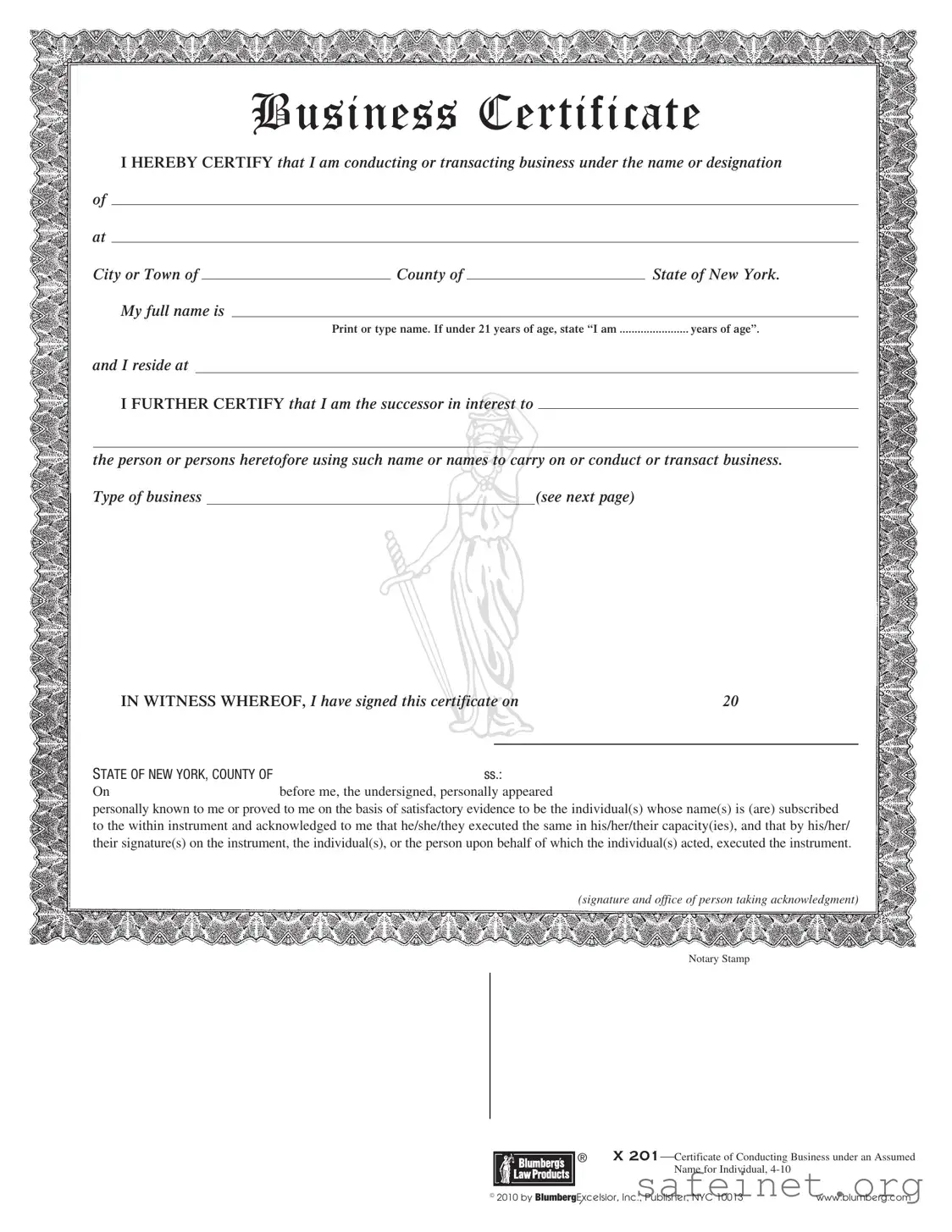
The Business Certificate form serves as a crucial document for individuals and entities looking to conduct business under an assumed name in New York State. This form requires the business owner to certify their identity and the business name they intend to use, along with the city, county, and state where the business operates. Additionally, it includes a section for the owner to affirm that they are the successor in interest to any previous users of the name, ensuring continuity and legal recognition. The form also prompts the individual to specify the type of business they are engaging in, ranging from retail trade to professional services. A notary public must acknowledge the signature on the form, adding a layer of authenticity and legal weight. Furthermore, it is important to note that a certified copy of this certificate must be displayed at the business location, allowing for transparency and compliance with local regulations. Overall, the Business Certificate form is a foundational step for anyone looking to establish a legitimate business presence in New York.


| Fact Name | Details |
|---|---|
| Purpose | The Business Certificate form is used to certify that an individual is conducting business under a specific name in New York State. |
| Governing Law | This form is governed by New York General Business Law §130.4. |
| Age Requirement | Individuals under 21 years of age must indicate their age on the form. |
| Successor Certification | The form allows the individual to certify that they are the successor in interest to any previous users of the business name. |
| Notarization | The form requires notarization, confirming the identity of the person signing the certificate. |
| Display Requirement | A certified copy of the Business Certificate must be displayed at the business location where the business is conducted. |
Filling out the Business Certificate form is a straightforward process that requires careful attention to detail. This document serves to officially register the name under which you will conduct your business. Once completed, you will need to file it with the appropriate local authorities.
What is a Business Certificate form?
The Business Certificate form is a legal document that certifies an individual or entity is conducting business under a specific name in New York. This form is essential for individuals who want to operate a business under an assumed name, ensuring transparency and compliance with local regulations. It includes details such as the business name, type of business, and the individual's personal information.
Who needs to file a Business Certificate?
Anyone planning to conduct business in New York under a name that is not their legal name must file a Business Certificate. This requirement applies to sole proprietors, partnerships, and certain business entities. It helps protect consumers and other businesses by providing a clear record of who is behind a business.
How do I complete the Business Certificate form?
To complete the Business Certificate form, fill in the required information, including your full name, the business name you intend to use, and your address. If you are under 21 years old, you must specify your age. Additionally, indicate the type of business you will be conducting. After completing the form, you must sign it in front of a notary public, who will acknowledge your signature.
Where should I file the Business Certificate?
The completed Business Certificate must be filed with the county clerk's office in the county where your business operates. It is essential to check with your local county clerk for any specific requirements or fees associated with filing. Some counties may also request a certified copy of the original certificate to be displayed at your business location.
What happens if I don’t file a Business Certificate?
Failing to file a Business Certificate can lead to legal complications. You may face fines or penalties, and you could be barred from enforcing contracts related to your business. Additionally, operating without proper registration may damage your business’s credibility and trustworthiness in the eyes of consumers and other businesses.
Incomplete Name Information: Many individuals fail to provide their full name as required. Instead of typing or printing their complete name, they may only include a first name or initials. This can lead to issues with verification and processing.
Age Declaration Omission: If the applicant is under 21 years of age, they must declare their age. Neglecting to include this statement can result in a rejection of the application, as it is a necessary detail for the certification process.
Type of Business Specification: Applicants often overlook specifying the type of business they are conducting. This information is crucial for regulatory purposes and may be required by certain counties. Failing to provide this detail can lead to delays or additional inquiries.
Notary Acknowledgment Errors: Errors in the notary section, such as missing signatures or incorrect dates, can invalidate the certificate. It is essential that the notary public properly acknowledges the individual’s identity and the date of signing to ensure the document's legality.
When starting a business, it’s important to have the right documentation in place. Along with the Business Certificate form, there are several other forms and documents that are commonly used. Each of these documents serves a specific purpose and helps ensure that your business operates legally and efficiently.
Having these documents in order not only helps in establishing your business but also protects your interests and ensures compliance with local and federal regulations. Being prepared with the right paperwork can lead to a smoother business operation and greater peace of mind.
The Business Certificate form is similar to a DBA (Doing Business As) registration. Both documents allow individuals or businesses to operate under a name different from their legal name. A DBA registration is typically filed with the local or state government, providing public notice of the business name. This process helps protect consumers by ensuring they know who they are doing business with. Just like the Business Certificate, a DBA requires the business owner to provide their personal details and the name under which they will conduct business.
Another document that resembles the Business Certificate is the Limited Liability Company (LLC) formation document. An LLC is a business structure that combines the benefits of a corporation and a partnership. When filing for an LLC, the owners must provide a business name, which may also be different from their legal names. This document serves to formally register the business entity with the state, similar to how a Business Certificate registers the business name. Both documents require the inclusion of the owner's information and the name under which the business will operate.
The Sole Proprietorship Registration is also akin to the Business Certificate. This document is used by individuals who want to operate a business without forming a separate legal entity. Like the Business Certificate, it requires the owner to disclose their name and the business name they intend to use. This registration provides legitimacy to the business and ensures compliance with local regulations, just as the Business Certificate does for individuals conducting business under a specific name.
The Partnership Agreement is another document that shares similarities with the Business Certificate. This agreement outlines the terms and conditions under which two or more individuals will conduct business together. While the Business Certificate focuses on the business name, the Partnership Agreement details the roles and responsibilities of each partner. Both documents are essential for establishing a clear understanding of how the business will operate and are often filed with local authorities to ensure transparency.
The Certificate of Incorporation is also comparable to the Business Certificate. This document is filed when creating a corporation and includes the business name, purpose, and details about the incorporators. Just like the Business Certificate, it serves to officially register the business with the state. Both documents require the inclusion of the business name and relevant owner information, ensuring that the business operates under a recognized identity.
Lastly, the Fictitious Business Name Statement is similar to the Business Certificate. This document is filed to register a business name that does not include the owner's surname. It is often required by local governments to ensure that the public is aware of who is behind a business. Like the Business Certificate, the Fictitious Business Name Statement provides a way for business owners to legally operate under a chosen name while also protecting consumers by disclosing the owner’s identity.
When filling out the Business Certificate form, it's essential to follow certain guidelines to ensure accuracy and compliance. Below is a list of things you should and shouldn't do:
By adhering to these guidelines, you can help ensure that your Business Certificate form is processed smoothly and without issues.
Understanding the Business Certificate form can be challenging. Here are six common misconceptions about it:
Being aware of these misconceptions can help ensure that you complete the Business Certificate form accurately and in compliance with local regulations.
Key Takeaways for Filling Out and Using the Business Certificate Form: