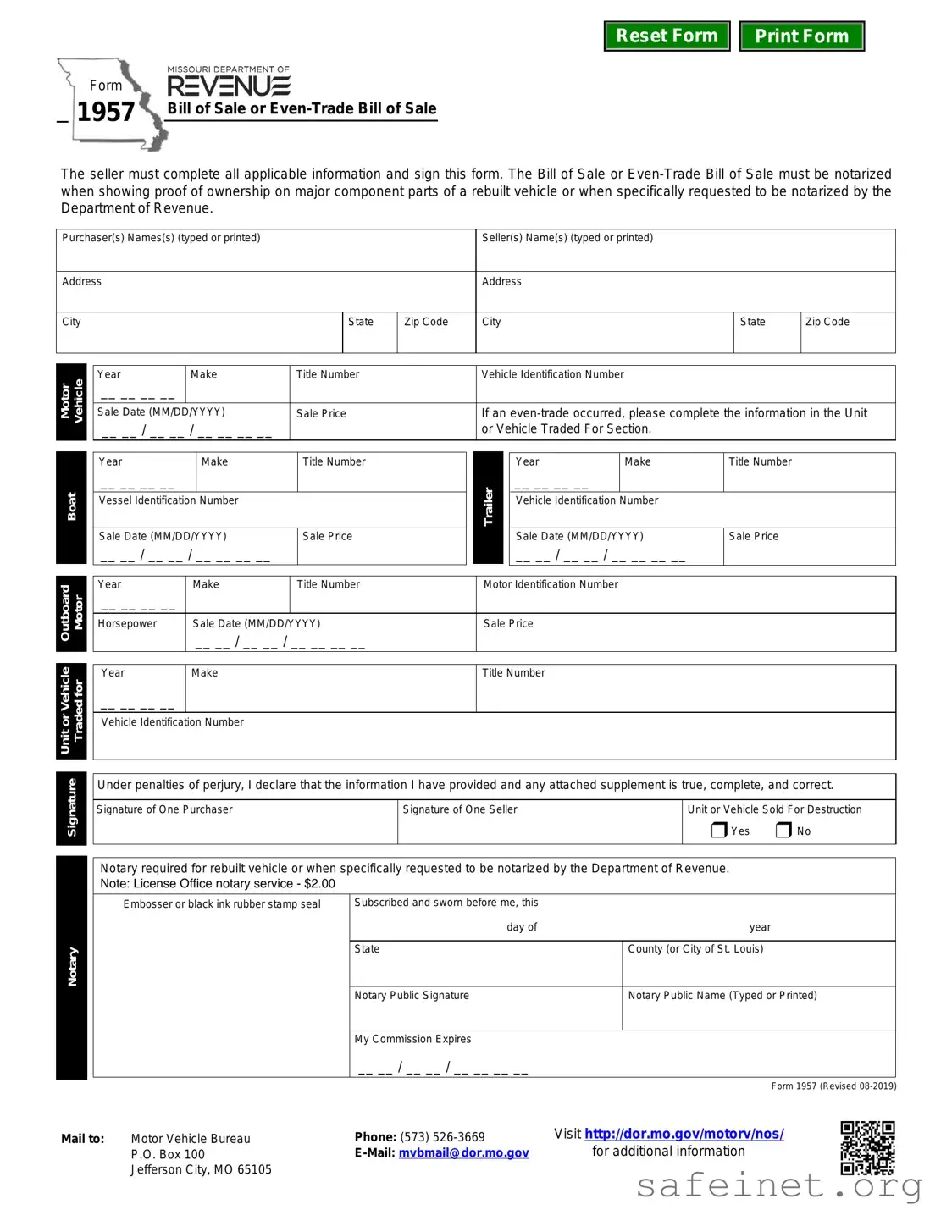
The BOS form is an essential document used in various legal and administrative processes. It serves as a tool for individuals and organizations to provide necessary information in a structured format. This form typically includes sections for personal details, relevant dates, and specific declarations that may be required by law. By filling out the BOS form, users can ensure compliance with regulations while streamlining their application or reporting processes. Its user-friendly design makes it accessible to a wide range of people, from business owners to individuals seeking permits or licenses. Understanding the components of the BOS form can help users complete it accurately and efficiently, ultimately facilitating smoother interactions with governmental and legal entities.
| Fact Name | Description |
|---|---|
| Definition | The BOS form, or Bill of Sale, is a legal document that transfers ownership of personal property from one party to another. |
| Purpose | This form serves as proof of the transaction and outlines the terms of the sale. |
| Common Uses | BOS forms are commonly used for vehicles, equipment, and other significant personal property transactions. |
| State-Specific Variations | Different states may have specific requirements or additional forms that must accompany the BOS. |
| Governing Law (California) | In California, the BOS is governed by the California Civil Code, particularly sections related to sales and transfers of personal property. |
| Governing Law (Texas) | In Texas, the Texas Business and Commerce Code outlines the laws applicable to the sale and transfer of personal property. |
| Governing Law (New York) | In New York, the Uniform Commercial Code governs the sale of goods, including the use of a BOS form. |
| Essential Elements | A valid BOS should include the names of the buyer and seller, a description of the property, and the sale price. |
| Notarization | Some states require notarization of the BOS for it to be legally binding, while others do not. |
Filling out the BOS form is a straightforward process that requires attention to detail. After completing this form, you'll be ready to move forward with your intended purpose, whether it's for personal or business matters.
What is the BOS form?
The BOS form, or Bill of Sale, is a legal document that records the transfer of ownership of an item from one party to another. It can be used for various types of transactions, including vehicles, personal property, and business assets. This form serves as proof that the buyer has purchased the item and the seller has received payment.
Why do I need a BOS form?
A BOS form is important for several reasons. It provides a clear record of the transaction, which can be useful for both parties in case of disputes. It also helps establish the new owner's rights to the item. Additionally, in some states, a BOS is required for registering vehicles or transferring titles.
What information is included in a BOS form?
A typical BOS form includes details such as the names and addresses of the buyer and seller, a description of the item being sold, the sale price, and the date of the transaction. Some forms may also include information about warranties or conditions of the sale.
Is a BOS form legally binding?
Yes, a BOS form is generally considered a legally binding contract once both parties have signed it. This means that both the buyer and seller are obligated to uphold the terms outlined in the document. However, specific laws may vary by state, so it's important to understand the regulations in your area.
Do I need to have the BOS form notarized?
Notarization is not always required for a BOS form, but it can add an extra layer of protection. Having the document notarized can help verify the identities of the parties involved and confirm that both have agreed to the terms. Check local laws to determine if notarization is necessary for your specific situation.
Can I use a BOS form for online transactions?
Yes, a BOS form can be used for online transactions. When buying or selling items online, it is still a good idea to have a written record of the sale. You can create a BOS form that includes all relevant details and send it electronically or print it out for both parties to sign. This can help protect both the buyer and seller in the transaction.
Omitting required personal information. Ensure that all sections requiring your name, address, and contact details are filled out completely.
Failing to sign and date the form. A signature and date are essential for the form to be considered valid.
Using incorrect or outdated information. Always verify that the details you provide are current and accurate.
Neglecting to read the instructions carefully. Understanding the guidelines is crucial to avoid mistakes.
Providing vague or incomplete answers. Be specific and thorough in your responses to prevent delays.
Not checking for spelling and grammatical errors. Mistakes can lead to confusion and may require resubmission.
Forgetting to include supporting documents. Ensure that all necessary attachments are submitted with the form.
Submitting the form to the wrong office or department. Double-check the submission address to ensure it reaches the correct location.
The Bill of Sale (BOS) form is a critical document used in various transactions, particularly in the sale of personal property. However, it often accompanies other forms and documents that help clarify the terms of the sale or provide additional legal protections. Here are five common documents that are frequently used alongside the BOS form.
In summary, while the Bill of Sale form is a vital part of many transactions, understanding the additional documents that may accompany it is equally important. Each of these forms plays a unique role in ensuring a smooth transfer of ownership and protecting the interests of both parties involved in the sale.
The Bill of Sale (BOS) is similar to a Receipt. Both documents serve as proof of a transaction. A receipt is typically issued at the point of sale, confirming that payment has been made for goods or services. Like a BOS, a receipt includes details such as the date of the transaction, the items purchased, and the amount paid. However, a BOS often includes more specific information about the item being sold, such as its condition and any warranties, making it particularly useful for significant transactions like vehicles or real estate.
Another document similar to the BOS is the Purchase Agreement. This document outlines the terms and conditions of a sale before the transaction occurs. While a BOS finalizes the sale, a Purchase Agreement serves as a preliminary agreement between buyer and seller. It details the item, price, and any contingencies that must be met before the sale can proceed. Both documents are essential in ensuring clarity and protection for both parties involved.
The Lease Agreement also shares similarities with the BOS. While a BOS transfers ownership of an item, a Lease Agreement allows one party to use an asset while the other retains ownership. Both documents outline terms, such as duration and payment, and protect the rights of both parties. A BOS is typically a one-time transaction, whereas a Lease Agreement is often ongoing, requiring periodic payments.
The Warranty Deed is another document that bears resemblance to the BOS. A Warranty Deed transfers ownership of real property and guarantees that the seller holds clear title. Like a BOS, it provides legal protection to the buyer. Both documents require signatures from both parties and often need to be notarized. They ensure that the buyer receives what they are entitled to, whether it’s a vehicle or a piece of real estate.
The Quitclaim Deed is also comparable to the BOS. This document transfers ownership rights in a property without guaranteeing that the title is clear. While a Quitclaim Deed may be used to convey property between family members or in divorce settlements, a BOS provides more assurance regarding the condition and ownership of the item being sold. Both documents require signatures and can be recorded with local authorities.
The Assignment of Contract is similar in that it involves the transfer of rights. This document allows one party to transfer their rights and obligations under a contract to another party. While a BOS transfers ownership of a specific item, an Assignment of Contract focuses on the rights related to a broader agreement. Both documents require careful attention to detail to ensure that all parties understand their rights and responsibilities.
The Affidavit of Title can also be likened to the BOS. This document is often used in real estate transactions to confirm that the seller has the right to sell the property. It serves as a sworn statement that can protect the buyer from future claims against the property. Like a BOS, it provides assurance to the buyer about the legitimacy of the transaction.
The Security Agreement shares similarities with the BOS in that it involves the transfer of rights to an asset. A Security Agreement creates a security interest in personal property, allowing the lender to claim the asset if the borrower defaults. Both documents require clear identification of the asset and detail the rights of the parties involved. However, a Security Agreement typically involves ongoing obligations, whereas a BOS is a conclusive transaction.
The Gift Deed is another document that resembles the BOS. This document transfers ownership of property without any exchange of money. Like a BOS, it requires the signatures of both parties and often needs to be notarized. While a BOS is associated with a sale, a Gift Deed reflects a voluntary transfer of ownership, emphasizing the intent behind the transaction.
Finally, the Transfer of Title is akin to the BOS as it signifies the change of ownership of an asset. This document is often required for vehicles and real estate, providing a legal record of ownership. Both the Transfer of Title and the BOS require detailed information about the item and the parties involved. They serve to protect the rights of the new owner and ensure that the transaction is legally recognized.
Filling out a Business Operating Statement (BOS) form can seem daunting, but with the right approach, it can be straightforward. Here’s a handy list of things to do and avoid while completing this important document.
Things You Should Do:
Things You Shouldn't Do:
By following these simple guidelines, you can complete your BOS form with confidence and clarity. Good luck!
Understanding the BOS form can be challenging, and several misconceptions often arise. Here are four common misunderstandings about this form:
By addressing these misconceptions, individuals can better navigate the process associated with the BOS form and ensure they meet all necessary requirements.
Here are some key takeaways about filling out and using the BOS form: