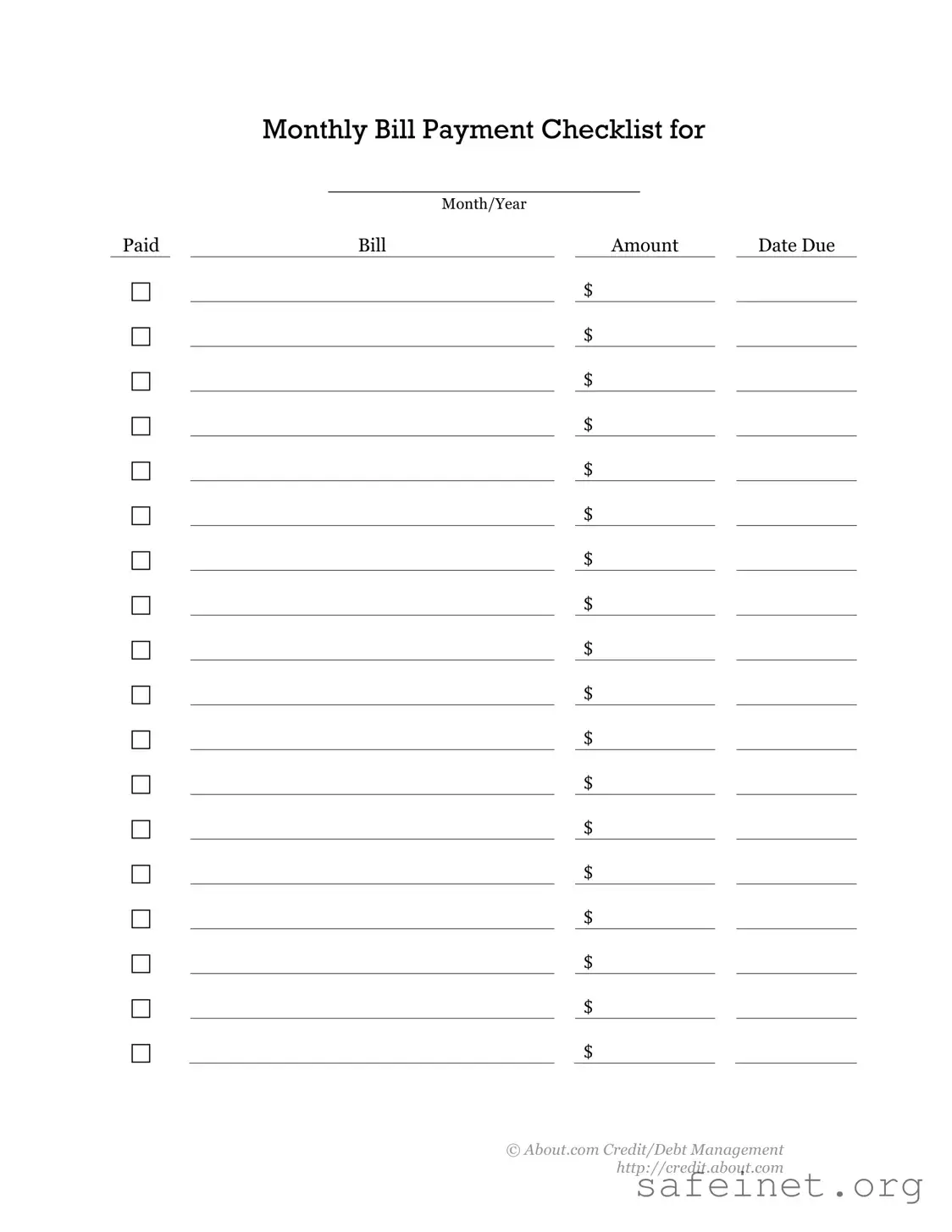
Managing monthly bills can often feel overwhelming, especially when multiple payments are due at various times throughout the month. The Bill Payment Checklist form serves as a practical tool to streamline this process, ensuring that each bill is accounted for and paid on time. This form is designed to help individuals track their financial obligations by providing a clear layout for listing the name of each bill, the corresponding amount due, and the payment deadline. Users can easily fill in the details for each bill, allowing for a comprehensive overview of their monthly expenses. Additionally, the checklist includes a simple "Paid" checkbox next to each entry, enabling users to mark off bills as they are settled. This not only helps in maintaining organization but also offers peace of mind, knowing that all financial commitments are being managed effectively. By utilizing this checklist, individuals can take charge of their financial responsibilities, reducing the risk of late payments and potential penalties.
| Fact Name | Description |
|---|---|
| Purpose | The Bill Payment Checklist form helps individuals track their monthly bills, ensuring timely payments and better financial management. |
| Structure | The form includes spaces to fill in the bill amount, due date, and a checkbox for marking payments as completed. |
| Customization | Users can personalize the form by adding their name and the specific month and year for which they are tracking bills. |
| Governing Laws | In Pennsylvania, the use of such forms may be governed by the Pennsylvania Consumer Credit Code, which outlines consumer rights and responsibilities. |
Completing the Bill Payment Checklist form is a straightforward process that helps you stay organized with your monthly bills. Follow these steps to ensure you fill it out correctly.
Once you have filled out the form, you will have a clear overview of your monthly bills and their status. This will help you manage your finances more effectively.
What is the purpose of the Bill Payment Checklist form?
The Bill Payment Checklist form is designed to help individuals keep track of their monthly bills. By listing each bill along with its amount and due date, users can ensure that they stay organized and avoid missing payments. This can help prevent late fees and maintain a good credit score.
How do I fill out the Bill Payment Checklist form?
To fill out the form, start by writing your name and the month and year at the top. Then, list each bill you need to pay in the provided spaces. For each bill, include the bill amount and the date it is due. As you pay each bill, check the box next to it to mark it as paid. This visual cue helps you keep track of what has been settled and what still needs attention.
Can I use this form for bills that vary in amount each month?
Yes, the Bill Payment Checklist form can be used for bills with varying amounts. Simply enter the amount for each month as you fill out the form. This flexibility allows you to adapt the checklist to your specific financial situation, ensuring that you remain organized regardless of fluctuations in your bills.
Is there a way to customize the checklist for my specific needs?
Absolutely! While the form provides a basic structure, you can customize it to better fit your needs. You might add additional lines for extra bills or include notes about payment methods or reminders. The goal is to create a tool that works best for you and helps you manage your finances effectively.
Where can I find more information about managing my bills?
For more tips and resources on managing your bills, you can visit websites dedicated to credit and debt management, such as About.com. These resources often provide valuable insights and strategies to help you stay on top of your finances and make informed decisions.
Filling out the Bill Payment Checklist form can seem straightforward, but many people make common mistakes that can lead to confusion and missed payments. Here’s a detailed list of nine mistakes to avoid:
Without specifying the month and year, it can be unclear which billing cycle the checklist refers to. Always ensure this information is clearly written at the top.
Not entering the bill amounts can lead to oversights. Filling in these amounts helps track your expenses and manage your budget effectively.
Each bill should have its corresponding due date filled in. Missing this detail can result in late payments and potential penalties.
Inconsistent formatting, such as varying ways of writing amounts or dates, can create confusion. Stick to one format throughout the checklist for clarity.
Once a bill is paid, it’s crucial to check it off. This simple act helps keep track of what has been settled and what still needs attention.
Sometimes, you may need to include notes about specific bills, such as payment methods or account numbers. Ignoring this can lead to complications later.
Taking your time is essential. Rushing can lead to mistakes, such as incorrect amounts or missed due dates. Focus on accuracy.
After filling out the form, it’s easy to forget about it. Regular reviews can help catch any discrepancies or upcoming due dates.
Always retain a copy of your completed checklist. This can serve as a reference and help you stay organized in the future.
Avoiding these common mistakes can streamline your bill payment process and help you maintain better control over your finances. Taking a few extra moments to ensure accuracy can save you time and money in the long run.
The Bill Payment Checklist form is an essential tool for managing monthly expenses effectively. To ensure all financial obligations are met in a timely manner, several other forms and documents can be used alongside it. Below is a list of commonly used documents that complement the Bill Payment Checklist.
Utilizing these documents alongside the Bill Payment Checklist can greatly enhance financial management and ensure that all obligations are met promptly. Keeping organized records is vital for maintaining financial health and avoiding late fees.
The Bill Payment Checklist form shares similarities with a Budgeting Worksheet. Both documents help individuals track their financial obligations and manage their spending. A Budgeting Worksheet typically includes income sources, expenses, and savings goals, allowing users to see the bigger picture of their finances. By incorporating a bill payment checklist, users can ensure that they allocate enough funds for necessary bills while staying within their budget.
Another similar document is the Expense Tracker. This tool focuses on recording all expenditures over a specific period. Like the Bill Payment Checklist, it helps users stay organized and aware of their financial commitments. However, the Expense Tracker may also include categories for discretionary spending, providing a more comprehensive view of where money is going each month.
The Payment Reminder List is yet another document that aligns with the Bill Payment Checklist. It serves as a simple reminder system for upcoming bills, ensuring that payments are made on time. While the checklist focuses on tracking payments already made, the reminder list emphasizes future obligations, helping individuals avoid late fees and maintain good credit.
A Financial Calendar can also be compared to the Bill Payment Checklist. This calendar outlines due dates for various bills throughout the month. By visualizing payment timelines, users can better plan their finances and prioritize payments. The checklist complements this by allowing users to confirm that payments have been completed, providing a sense of accomplishment.
Similarly, a Debt Repayment Plan can be likened to the Bill Payment Checklist. While the checklist focuses on regular bills, a debt repayment plan outlines strategies for paying off loans and credit card balances. Both documents encourage accountability and organization, but the debt repayment plan specifically targets reducing outstanding balances over time.
The Monthly Expense Report is another document that resonates with the Bill Payment Checklist. This report summarizes all expenses incurred during a month, allowing individuals to evaluate their spending habits. By comparing this report with the bill payment checklist, users can identify areas for improvement and make adjustments to their financial strategies.
A Savings Goal Tracker is also similar in its purpose of promoting financial awareness. While the Bill Payment Checklist focuses on outgoing payments, the savings tracker emphasizes the importance of setting aside funds for future needs or emergencies. Both documents encourage proactive financial management and can be used in tandem to achieve overall financial health.
The Utility Payment Log is another comparable document. It specifically tracks payments for utility services, such as electricity, water, and gas. While the Bill Payment Checklist covers various bills, the utility log focuses solely on these essential services. Both documents serve the purpose of keeping track of payments, but the utility log provides a more detailed view of utility expenses over time.
Finally, the Subscription Management List can be associated with the Bill Payment Checklist. This list helps individuals keep track of recurring subscription services, such as streaming platforms or gym memberships. Similar to the checklist, it ensures that users are aware of their ongoing financial commitments. Both documents aim to prevent missed payments and help individuals stay on top of their financial responsibilities.
When filling out the Bill Payment Checklist form, it’s important to follow some simple guidelines to ensure everything goes smoothly. Here’s a list of things you should and shouldn’t do:
Understanding the Bill Payment Checklist form is essential for effective financial management. However, several misconceptions can lead to confusion. Below is a list of common misunderstandings regarding this form.
By addressing these misconceptions, individuals can better utilize the Bill Payment Checklist form to improve their financial management skills.
Using the Bill Payment Checklist form can help you stay organized and on top of your monthly expenses. Here are some key takeaways: