Homepage > Blank Bdsm Checklist Template
Article Structure

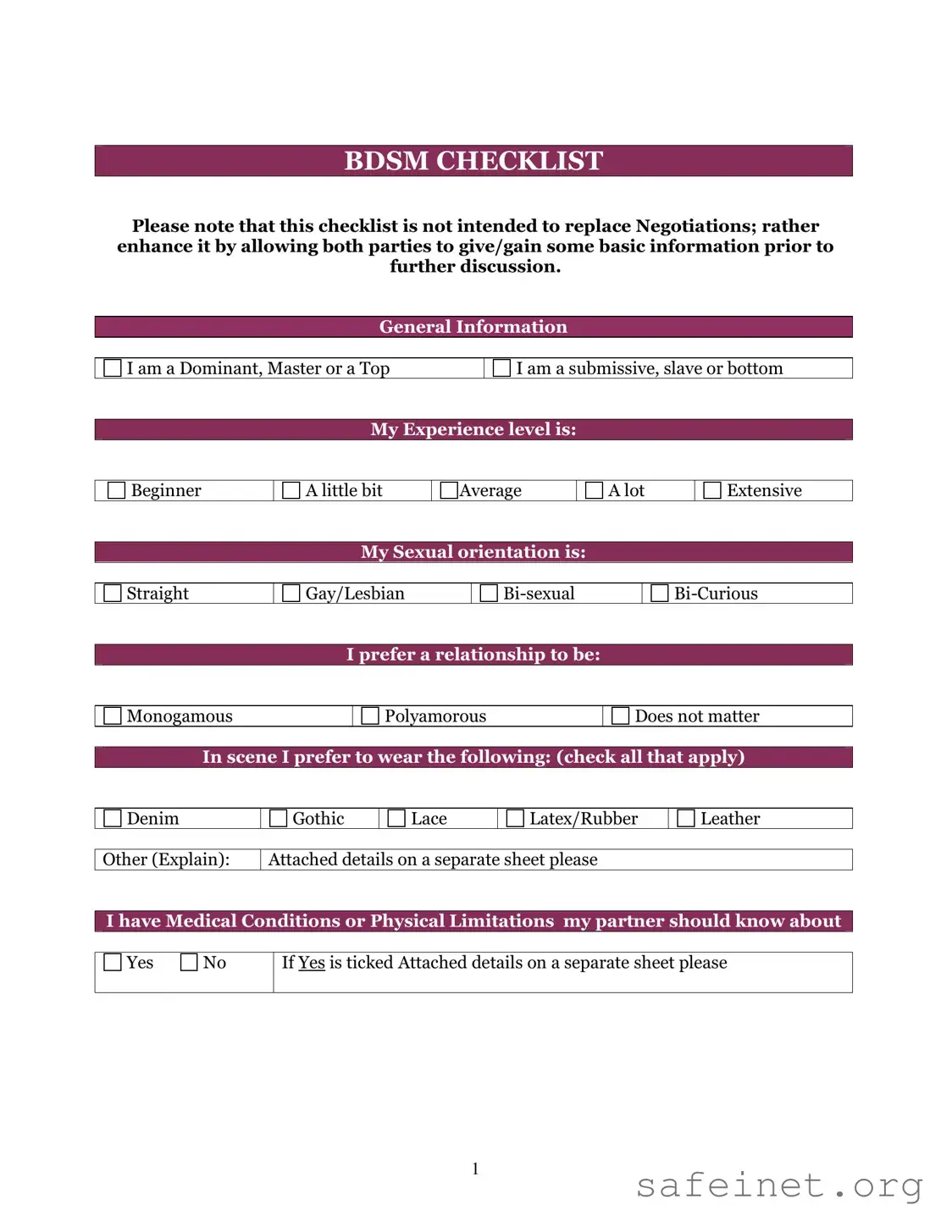
The BDSM Checklist form serves as a valuable tool for individuals exploring BDSM practices. It provides a structured way for partners to communicate their interests, boundaries, and limits. By using this checklist, participants can openly discuss what activities they are comfortable with and what they would prefer to avoid. The form typically covers a wide range of activities, from bondage and discipline to dominance and submission. It encourages honest dialogue about consent and safety, ensuring that all parties are on the same page. Additionally, the checklist can help identify specific preferences, allowing for a more tailored and enjoyable experience. Whether you are new to BDSM or have been practicing for years, this form can enhance your understanding of your own desires and those of your partner, paving the way for a fulfilling and consensual exploration of BDSM dynamics.
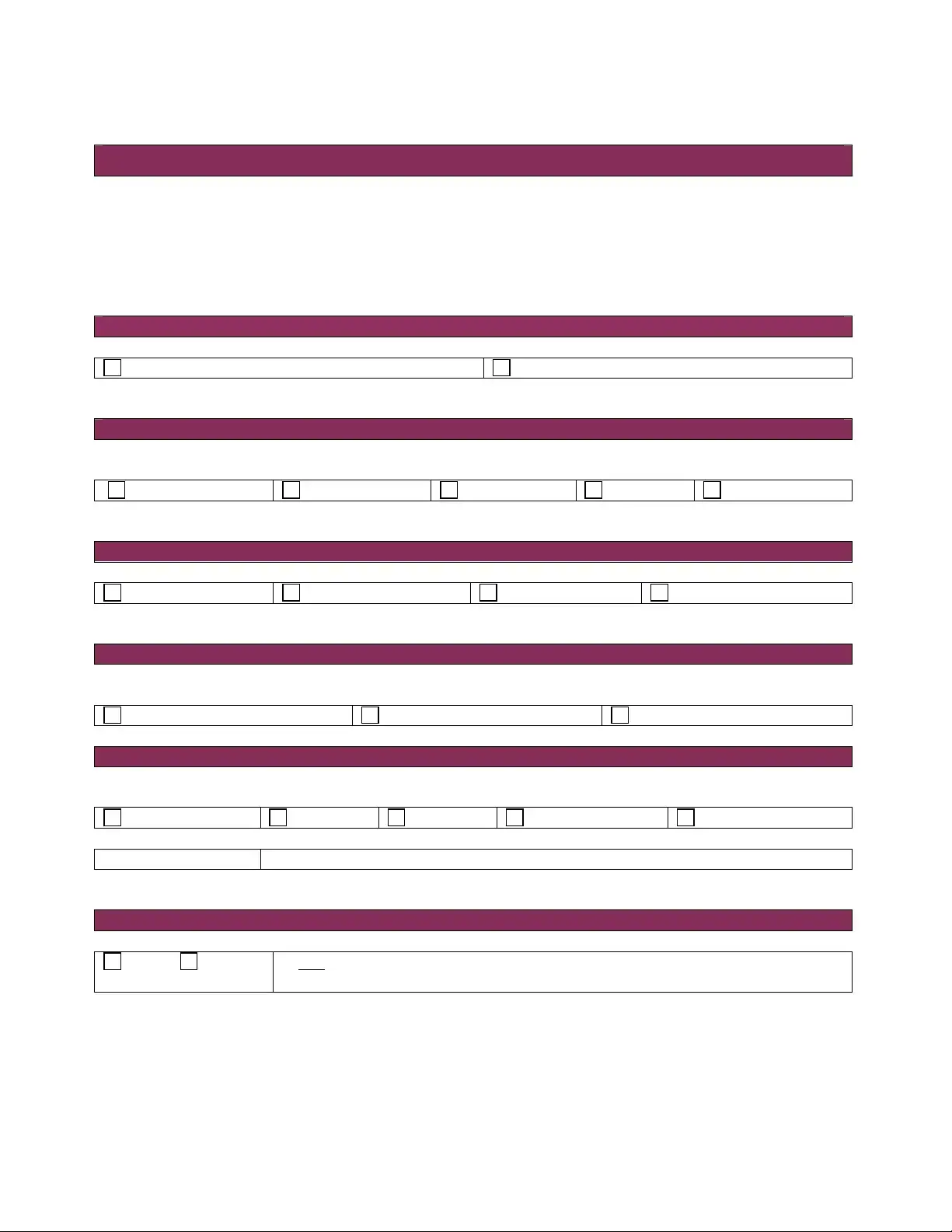
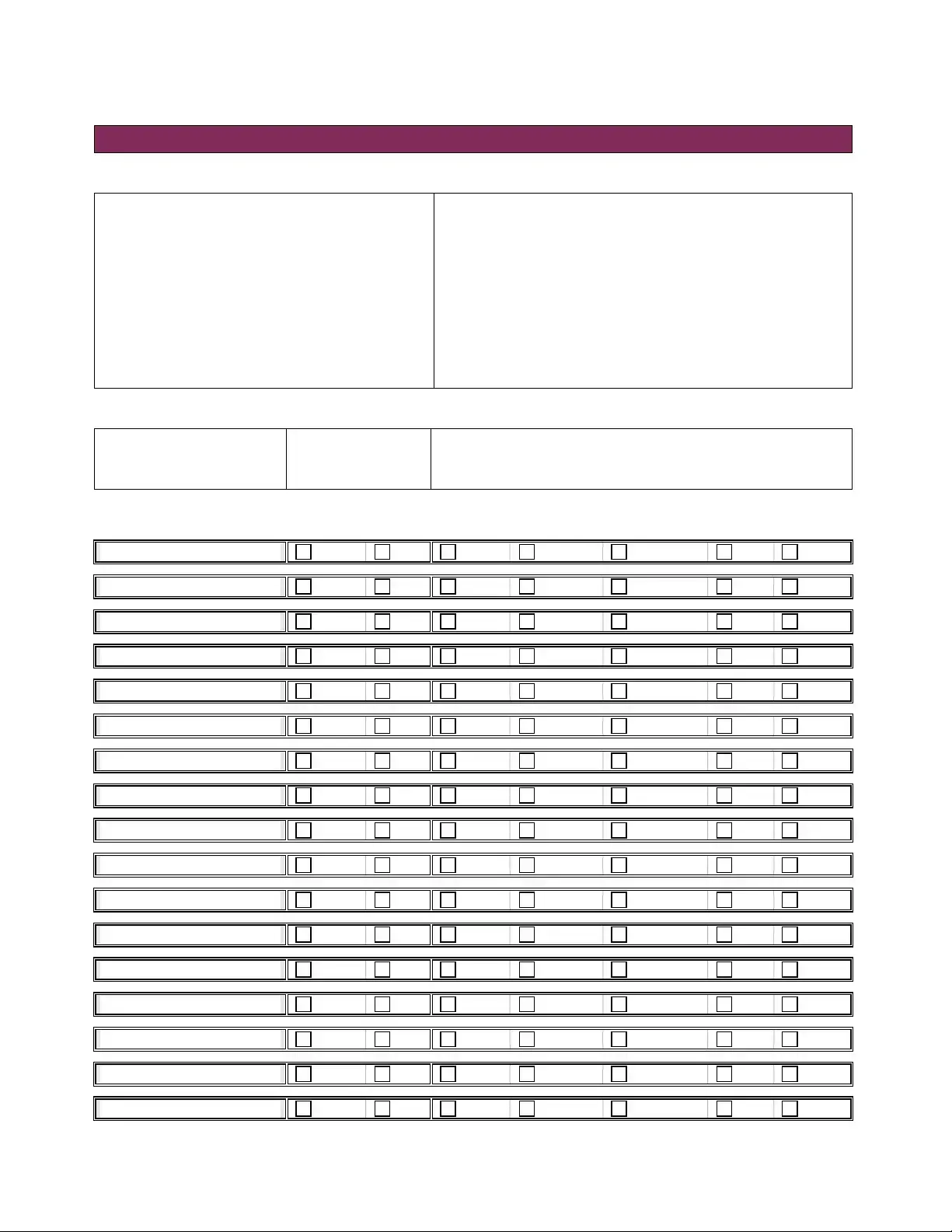
Form Sample

1


 !"#$%$
%&&'
(%$
 
 )"*
    
 )&*
     !
%*
 " 
%!%!*+ ,
 # # $ 
%&'( #))
" $$ &!&
* +
,*#-)#))
2
-./
 )" #&$
$&)&
&%&0#!
"$'%/# & 
$$ 
/# &1!$'
&$*
2$2$+!,'
2 23 &!& %$#$#'
2&&23 &!&)%&'
2023%" '
223 &% !" +,
-" 
" &


 * +   ! %. 
 * +   ! %. 
) * +   ! %. 
&,' * +   ! %. 
&/)' * +   ! %. 
),) * +   ! %. 
 * +   ! %. 
) * +   ! %. 
) * +   ! %. 
)&,' * +   ! %. 
)&/)' * +   ! %. 
"&,' * +   ! %. 
&/)' * +   ! %. 
00 * +   ! %. 
! * +   ! %. 
!1 * +   ! %. 
!,, * +   ! %. 
3
!- * +   ! %. 
!2) * +   ! %. 
!! * +   ! %. 
!" * +   ! %. 
!#-3 * +   ! %. 
! * +   ! %. 
! * +   ! %. 
!,, * +   ! %. 
! * +   ! %. 
 * +   ! %. 
##" * +   ! %. 
 * +   ! %. 
&"#' * +   ! %. 
 * +   ! %. 
2# * +   ! %. 
2$ * +   ! %. 
2" * +   ! %. 
2 * +   ! %. 
2 * +   ! %. 
20%) * +   ! %. 
23 * +   ! %. 
2#) * +   ! %. 
2#) * +   ! %. 
2#)+) * +   ! %. 
2#)) * +   ! %. 
2/)/) * +   ! %. 
 * +   ! %. 
0 * +   ! %. 
)0 * +   ! %. 
4
/-) * +   ! %. 
/" * +   ! %. 
/)4&' * +   ! %. 
/)4&' * +   ! %. 
/)&' * +   ! %. 
/)&' * +   ! %. 
/3 * +   ! %. 
/0 * +   ! %. 
/3 * +   ! %. 
/" * +   ! %. 
/&"' * +   ! %. 
/&"#' * +   ! %. 
/&5' * +   ! %. 
#" * +   ! %. 
, * +   ! %. 
6# * +   ! %. 
 * +   ! %. 
.) * +   ! %. 
.,)" * +   ! %. 
. * +   ! %. 
$2 * +   ! %. 
2 * +   ! %. 
#- * +   ! %. 
&' * +   ! %. 
&' * +   ! %. 
)## * +   ! %. 
,# * +   ! %. 
 * +   ! %. 
+! * +   ! %. 
5
+3 * +   ! %. 
%2 * +   ! %. 
%.- * +   ! %. 
%! * +   ! %. 
"&' * +   ! %. 
"&' * +   ! %. 
"#&' * +   ! %. 
"#&"' * +   ! %. 
" * +   ! %. 
"" * +   ! %. 
"3 * +   ! %. 
"3 * +   ! %. 
$)! * +   ! %. 
$ * +   ! %. 
$# * +   ! %. 
# * +   ! %. 
## * +   ! %. 
#" * +   ! %. 
 * +   ! %. 
) * +   ! %. 
2 * +   ! %. 
 * +   ! %. 
 * +   ! %. 
- * +   ! %. 
#&5' * +   ! %. 
#&' * +   ! %. 
) * +   ! %. 
#- * +   ! %. 
#-3 * +   ! %. 
6
4#- * +   ! %. 
 % * +   ! %. 
 * +   ! %. 
5# * +   ! %. 
0 * +   ! %. 
0 * +   ! %. 
 * +   ! %. 
 * +   ! %. 
#- * +   ! %. 
7, * +   ! %. 
5)# * +   ! %. 
5 * +   ! %. 
3 * +   ! %. 
3 * +   ! %. 

Document Specifications

Fact Name Description
Purpose The BDSM Checklist form is designed to help individuals communicate their preferences and boundaries in BDSM practices.
Consent It emphasizes the importance of informed consent, ensuring all parties understand and agree to the activities involved.
Customization Users can tailor the checklist to fit their specific interests and limits, making it a personal tool for each relationship.
State-Specific Forms Some states may have specific laws governing consent and BDSM practices; users should check local regulations.
Governing Laws In states like California, the law emphasizes mutual consent and safety in BDSM activities.
Communication The form serves as a conversation starter, helping partners discuss their desires and limits openly.
Safety It encourages practices that prioritize safety and respect, which are essential in any BDSM relationship.

Steps to Filling Out Bdsm Checklist

Completing the BDSM Checklist form is a significant step in understanding personal preferences and boundaries within the context of BDSM. It encourages open communication and self-reflection, allowing individuals to articulate their desires and limits clearly. This process fosters trust and safety in any consensual relationship.

  1. Begin by reading through the entire checklist to familiarize yourself with the categories and options available.
  2. Take a moment to reflect on your own interests and boundaries before marking your responses.
  3. For each item listed, indicate your level of interest by selecting one of the provided options, such as "Yes," "No," or "Maybe."
  4. If applicable, provide additional comments or explanations in the designated space for each item to clarify your choices.
  5. Review your responses to ensure they accurately represent your feelings and preferences.
  6. Once satisfied, save or print the completed form for your records and future discussions.

More About Bdsm Checklist

What is a BDSM checklist form?

A BDSM checklist form is a tool used by individuals or couples to outline their interests, limits, and boundaries in BDSM practices. It helps participants communicate openly about their desires and preferences, ensuring a safer and more enjoyable experience.

Why should I use a BDSM checklist?

Using a BDSM checklist promotes clear communication between partners. It helps to identify what activities each person is comfortable with, what they want to explore, and what is off-limits. This transparency builds trust and enhances the overall experience.

What should I include in my BDSM checklist?

Your BDSM checklist should include a variety of activities, ranging from bondage and discipline to role play and impact play. You can also note your hard limits (activities you won’t engage in) and soft limits (activities you may consider under certain circumstances).

How do I discuss the checklist with my partner?

Approach the conversation openly and honestly. Share your completed checklist and ask your partner to do the same. Discuss any differences in preferences and be respectful of each other's boundaries. This dialogue is crucial for establishing a safe environment.

Can my checklist change over time?

Yes, your checklist can and should evolve as you gain more experience and insight into your desires. Regularly revisiting and updating your checklist with your partner allows for continued growth and exploration in your BDSM journey.

Is it necessary to have a checklist if I know my partner well?

Even if you know your partner well, a checklist is still beneficial. It serves as a reminder of each other's boundaries and desires. It can also reveal new interests that you may not have previously discussed, fostering deeper connections.

How detailed should my checklist be?

The level of detail in your checklist depends on you and your partner's preferences. Some people prefer a simple list, while others may want to include detailed descriptions of activities. Choose what feels right for both of you.

What if my partner has different interests than I do?

If your partner's interests differ from yours, it's important to discuss these differences openly. Find a compromise where both parties feel comfortable. Exploring new activities together can lead to exciting experiences, but always prioritize consent and comfort.

Are there any risks associated with BDSM that I should consider?

Yes, BDSM can involve physical and emotional risks. It’s crucial to prioritize safety by establishing safe words, discussing limits, and ensuring aftercare. Being aware of these risks helps create a safe and consensual environment for both partners.

Where can I find a BDSM checklist template?

You can find BDSM checklist templates online through various BDSM community websites and forums. Many of these resources offer customizable checklists that you can adapt to fit your needs and preferences.

Common mistakes

  1. Rushing through the form can lead to incomplete or inaccurate responses. Taking your time to carefully consider each option ensures that you accurately reflect your preferences and boundaries.

  2. Many individuals forget to communicate with their partner before filling out the checklist. Discussing desires and limits together can foster a deeper understanding and enhance the overall experience.

  3. Failing to update the checklist regularly is a common oversight. As interests and boundaries evolve, it’s important to revisit and revise your responses to keep them relevant.

  4. Some people mistakenly think that every option must be filled out. It’s perfectly acceptable to leave certain sections blank if they don’t apply to you or if you’re unsure. The checklist should serve your needs, not constrain them.

Documents used along the form

The BDSM Checklist form is a valuable tool for individuals exploring BDSM relationships and practices. It helps participants communicate their interests, boundaries, and consent. However, several other documents can complement this checklist, enhancing understanding and safety within BDSM dynamics.

  • Consent Agreement: This document outlines the specific terms of consent between partners. It details what activities are agreed upon, the limits of those activities, and any safe words or signals to be used during play. This agreement ensures that all parties are on the same page and have a clear understanding of each other's boundaries.
  • Safety Plan: A safety plan addresses potential risks involved in BDSM activities. It includes emergency contacts, medical information, and procedures for dealing with unexpected situations. This plan provides a framework for ensuring safety and well-being during play.
  • Aftercare Plan: Aftercare is an essential aspect of BDSM play, focusing on the emotional and physical care of participants following a scene. An aftercare plan outlines what each partner needs after a session, such as cuddling, hydration, or time alone. This document helps ensure that both partners feel supported and cared for post-play.
  • Negotiation Document: This document serves as a record of discussions between partners regarding their desires, limits, and expectations. It can include specific activities to explore, any hard limits, and preferences for future sessions. Having a written record can facilitate better communication and help avoid misunderstandings.

Using these documents alongside the BDSM Checklist form can foster a safer and more enjoyable experience for all involved. Clear communication and mutual understanding are fundamental to successful BDSM practices.

Similar forms

The BDSM Checklist form is similar to a consent form used in medical settings. Both documents serve the purpose of ensuring that individuals are fully informed and agree to specific activities. In a medical consent form, patients acknowledge their understanding of the procedures, risks, and benefits involved in treatment. Similarly, the BDSM Checklist allows participants to communicate their preferences, boundaries, and limits, ensuring that all parties are aware of and consent to the activities they wish to engage in.

Another comparable document is the informed consent agreement commonly used in psychological therapy. This agreement outlines the nature of the therapeutic relationship, including confidentiality and the scope of services. Just as clients in therapy must understand and agree to the terms of their treatment, individuals using the BDSM Checklist must clarify their desires and limits, fostering a safe and trusting environment for all involved.

The BDSM Checklist also shares similarities with a risk assessment form often used in adventure sports. Both documents assess potential risks and outline safety measures. In adventure sports, participants evaluate the dangers associated with activities like rock climbing or skydiving. Likewise, the BDSM Checklist encourages users to consider the physical and emotional risks associated with their chosen practices, promoting safer experiences through informed decision-making.

Additionally, the BDSM Checklist resembles a survey form used in relationship counseling. These surveys often include questions about preferences, boundaries, and communication styles within the relationship. Participants in both scenarios reflect on their needs and desires, allowing for open dialogue and understanding. This process enhances the relationship's dynamics, whether in a romantic context or a BDSM partnership.

Moreover, the BDSM Checklist can be compared to a safety plan used in emergency preparedness. Safety plans outline steps individuals should take in various emergency situations, ensuring that everyone knows how to respond effectively. Similarly, the BDSM Checklist helps partners establish safety protocols and boundaries, ensuring that all parties are prepared for any potential issues that may arise during their activities.

Finally, the BDSM Checklist is akin to a project plan used in business settings. Project plans outline objectives, tasks, and roles within a team to ensure successful completion of a project. In the context of BDSM, the checklist serves to define each participant's roles, desires, and limits, creating a structured approach to their experiences. This clarity helps prevent misunderstandings and fosters a more enjoyable and consensual environment.

Dos and Don'ts

When filling out the BDSM Checklist form, it’s important to approach the task thoughtfully. Here are four essential tips to consider:

  • Do be honest about your interests and limits. This ensures that everyone involved understands what is acceptable and what is not.
  • Do communicate openly with your partner(s). Discuss your preferences and boundaries before completing the form together.
  • Don't rush through the checklist. Take your time to reflect on each item to ensure accurate responses.
  • Don't ignore safety concerns. Always prioritize consent and safety in your BDSM practices.

By following these guidelines, you can create a positive and informed experience for everyone involved.

Misconceptions

Misconceptions about the BDSM Checklist form can lead to misunderstandings about its purpose and use. Here are eight common misconceptions:

  • It is only for experienced practitioners. Many believe the checklist is designed solely for those who are well-versed in BDSM. In reality, it serves as a helpful tool for beginners and seasoned participants alike to communicate their boundaries and desires.
  • It covers every possible kink. Some think the checklist includes every kink imaginable. However, it is a starting point and may not encompass all interests. Users should feel free to add their own items.
  • It is a binding contract. There is a misconception that completing the checklist creates a legal agreement. This is not true; it is meant to facilitate conversation and understanding between partners.
  • It is only for sexual activities. Many assume the checklist applies solely to sexual scenarios. In fact, it can also address emotional and psychological aspects of BDSM, ensuring a comprehensive discussion.
  • Using the checklist is a sign of lack of trust. Some believe that needing a checklist indicates mistrust between partners. On the contrary, it can enhance trust by promoting open dialogue about desires and limits.
  • It is a one-time use tool. People often think the checklist is only useful at the beginning of a relationship. However, it can be revisited and updated as preferences and comfort levels change over time.
  • It is too complicated to use. Many feel intimidated by the checklist, thinking it is overly complex. In reality, it is a straightforward way to clarify interests and boundaries without overwhelming detail.
  • Everyone should use the same checklist. Some believe that a universal checklist exists that everyone should follow. Each individual and couple has unique preferences, so checklists should be tailored to fit specific needs.

Key takeaways

Filling out the BDSM Checklist form is an important step in establishing boundaries and preferences in BDSM relationships. Here are some key takeaways to consider:

  • Understand the purpose of the checklist. It helps identify interests and limits, facilitating open communication.
  • Take your time when filling it out. Reflect on your desires and boundaries before making selections.
  • Be honest with yourself and your partner. Transparency is crucial for a safe and consensual experience.
  • Review the checklist together. Discuss your choices and ensure both parties feel comfortable with the agreed-upon activities.
  • Keep the checklist updated. Preferences may change over time, so revisit it periodically to maintain clear communication.
  • Store the checklist securely. Privacy is essential, so ensure it is kept in a safe place where only you and your partner can access it.