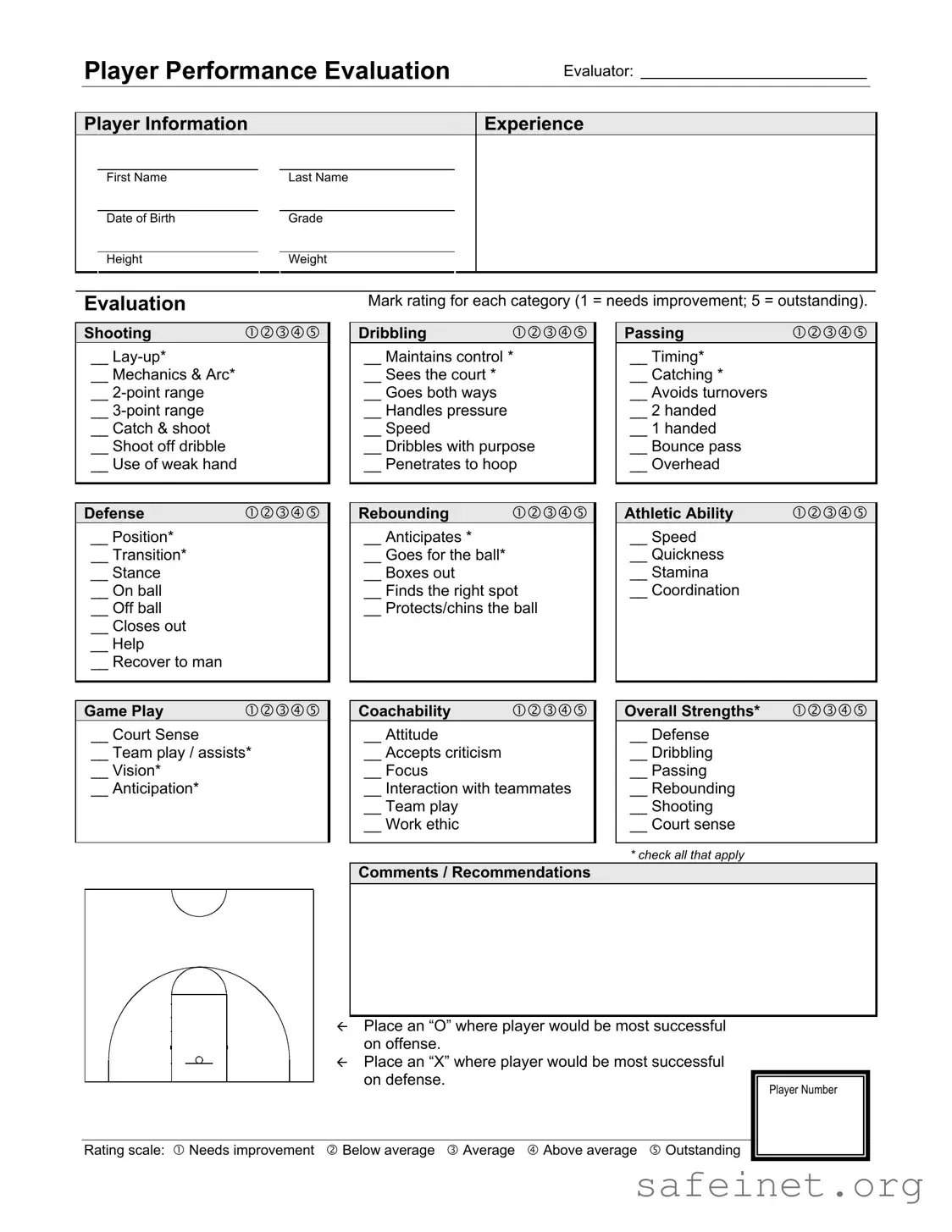
When it comes to evaluating basketball players, having a structured approach can make all the difference. The Basketball Evaluation Form is designed to capture a comprehensive view of a player’s skills and abilities. It includes various categories such as shooting, defense, dribbling, rebounding, passing, athletic ability, and overall game play. Each category allows evaluators to rate a player's performance on a scale from one to five, helping to pinpoint areas that may need improvement as well as highlighting strengths. Additionally, the form prompts evaluators to provide insights into a player’s coachability, teamwork, and overall attitude, which are crucial for development both on and off the court. With sections for comments and recommendations, this form serves as a valuable tool for coaches to guide their players toward success. Whether you’re assessing a novice or a seasoned athlete, this evaluation form helps ensure that every player receives the feedback they need to elevate their game.
| Fact Name | Description |
|---|---|
| Purpose of the Form | The Basketball Evaluation Form is designed to assess a player's skills and performance across various categories, helping coaches identify strengths and areas for improvement. |
| Evaluator Information | Each form requires the evaluator's name, ensuring accountability and providing context for the evaluation. |
| Player Details | Essential player information such as first name, last name, date of birth, grade, height, and weight must be filled out to personalize the evaluation. |
| Rating System | The evaluation uses a simple rating scale from 1 to 5, where 1 indicates "needs improvement" and 5 signifies "outstanding." This makes feedback clear and actionable. |
| Key Skill Categories | The form includes categories like Shooting, Defense, Dribbling, Rebounding, Passing, Athletic Ability, Game Play, and Coachability, covering all aspects of a player's performance. |
| State-Specific Forms | Some states may have specific guidelines or laws governing player evaluations, such as ensuring compliance with youth sports regulations. |
| Comments Section | At the end of the form, evaluators can provide additional comments or recommendations, offering personalized insights that go beyond the numerical ratings. |
Filling out the Basketball Evaluation form is an important step in assessing a player's skills and potential. This process helps coaches understand where a player excels and what areas might need improvement. Follow these steps carefully to ensure a thorough evaluation.
What is the purpose of the Basketball Evaluation form?
The Basketball Evaluation form is designed to assess a player's skills and performance across various categories, including shooting, defense, dribbling, rebounding, passing, athletic ability, game play, and coachability. This comprehensive evaluation helps coaches identify strengths and areas for improvement, ensuring that players receive tailored feedback to enhance their skills and overall performance.
How should I fill out the evaluation ratings?
When filling out the evaluation ratings, you will mark each category on a scale from 1 to 5. A rating of 1 indicates that the player needs improvement, while a rating of 5 signifies outstanding performance. Be sure to evaluate each skill honestly and thoughtfully. Additionally, you can check the boxes next to specific skills to highlight where the player excels or may need more focus. This detailed approach provides a clearer picture of the player's abilities.
Can comments and recommendations be added to the evaluation?
Yes, comments and recommendations can be added to the evaluation form. After rating the player, there is a section for overall strengths and additional notes. Use this space to provide specific feedback on the player's performance, suggest areas for improvement, or highlight exceptional skills. This information can be invaluable for both the player and the coaching staff in developing training plans and strategies.
How is the information from the evaluation used?
The information gathered from the Basketball Evaluation form is used to inform coaching decisions, shape practice plans, and guide player development. Coaches can identify which players may need extra support or training in certain areas. Furthermore, this evaluation helps in positioning players effectively during games by indicating where they are most successful on offense and defense. Ultimately, it aims to enhance the overall team performance and individual growth.
Not providing complete player information. Ensure that all fields, such as first name, last name, date of birth, grade, height, and weight, are filled out accurately.
Failing to rate each category. It’s important to evaluate the player in every section, using the provided scale from 1 to 5.
Overlooking the importance of comments. Use the comments section to provide insights and recommendations that may not be captured in the ratings.
Using inconsistent ratings. Ensure that the ratings reflect the player’s performance consistently across different categories.
Neglecting to indicate strengths. Highlight the player’s strengths in the designated section to provide a balanced evaluation.
Forgetting to check all applicable boxes. When evaluating skills, make sure to check the boxes for all relevant categories.
Not marking the player number. Include the player number to ensure proper identification and organization of evaluations.
Ignoring the rating scale. Familiarize yourself with the rating scale and apply it correctly to avoid confusion.
The Basketball Evaluation form is an essential tool for assessing a player's skills and overall performance on the court. However, several other documents can complement this evaluation, providing a more comprehensive view of a player's abilities and potential. Here’s a list of related forms and documents that are often used in conjunction with the Basketball Evaluation form.
Using these documents alongside the Basketball Evaluation form creates a well-rounded approach to player assessment and development. Together, they help coaches, players, and families understand strengths, areas for improvement, and overall team dynamics.
The Basketball Evaluation Form shares similarities with the Player Assessment Form used in various sports. Both documents aim to evaluate a player's skills and performance in a structured way. The Player Assessment Form typically includes sections for different skill sets, such as shooting, defense, and teamwork, much like the Basketball Evaluation Form. This allows coaches to provide targeted feedback and identify areas for improvement, ensuring that players receive comprehensive evaluations tailored to their specific sport.
Another comparable document is the Athletic Performance Review. This review focuses on a broader range of athletic abilities, including speed, strength, and agility. Similar to the Basketball Evaluation Form, it uses a rating scale to assess performance in different categories. Coaches can analyze an athlete's overall capabilities and track their development over time, making it easier to create personalized training plans that address individual strengths and weaknesses.
The Skill Development Checklist is also akin to the Basketball Evaluation Form. This checklist is often used by coaches to monitor progress in specific skills over a season. Like the evaluation form, it breaks down skills into categories such as dribbling, passing, and shooting. This format helps coaches identify which areas require more focus and allows players to set personal goals for improvement.
The Game Performance Analysis is another document that shares similarities. This analysis typically evaluates a player's performance during actual games, assessing their decision-making, teamwork, and execution of skills under pressure. While the Basketball Evaluation Form focuses on practice performance, both documents aim to provide a holistic view of a player's abilities and areas for growth.
The Coach's Feedback Form is a tool used to gather insights from coaches about a player's performance and potential. This form often includes sections for strengths, weaknesses, and recommendations for improvement. Like the Basketball Evaluation Form, it emphasizes the importance of constructive feedback and helps players understand how they can enhance their skills and contribute to the team.
Another related document is the Player Development Plan. This plan outlines specific goals and strategies for a player's growth over a season or training period. Similar to the Basketball Evaluation Form, it takes into account various skill areas and provides a structured approach to development. This ensures that players have a clear roadmap for improvement and can track their progress effectively.
The Physical Fitness Assessment is also comparable, as it evaluates an athlete's overall fitness level, which directly impacts performance in sports. This assessment often includes measurements of strength, endurance, and flexibility. Like the Basketball Evaluation Form, it provides a detailed overview of an athlete's capabilities and can help inform training regimens tailored to enhance performance in basketball.
The Performance Improvement Plan is another document that aligns with the Basketball Evaluation Form. This plan is designed to address specific areas where a player may be struggling. It includes targeted strategies for improvement and timelines for achieving goals. Both documents emphasize the need for ongoing assessment and adjustment to ensure that players continue to develop their skills effectively.
Finally, the Team Evaluation Report serves a similar purpose by assessing the overall performance of a team rather than individual players. It looks at various aspects, such as teamwork, communication, and strategy execution. While the Basketball Evaluation Form focuses on individual skills, both documents aim to improve performance and foster a better understanding of how players can work together to achieve success.
When filling out the Basketball Evaluation form, it's essential to approach the task thoughtfully. Here are some guidelines to help ensure the evaluation is accurate and constructive.
By following these guidelines, you can create a valuable evaluation that benefits the player and the coaching staff alike.
When it comes to the Basketball Evaluation form, there are several misconceptions that can lead to misunderstandings about its purpose and use. Here are four common misconceptions:
While the form does assess individual skills, it also emphasizes teamwork and game play. Evaluators look at how players interact with teammates and contribute to the overall dynamics of the game.
A low score in a specific area does not define a player's overall ability. It simply indicates where improvement is needed. Every player has strengths and weaknesses, and the evaluation helps identify these areas for growth.
This form is beneficial for players at all levels, including beginners. It provides constructive feedback that can guide training and development, making it a valuable tool for everyone, regardless of experience.
The evaluation should be viewed as an ongoing process. Regular assessments allow players to track their progress over time and adjust their training accordingly. Continuous feedback is essential for improvement.
Filling out the Basketball Evaluation form is an important process that helps assess a player's skills and areas for improvement. Here are some key takeaways to keep in mind:
By following these guidelines, the evaluation process can be more effective and beneficial for the player’s development.