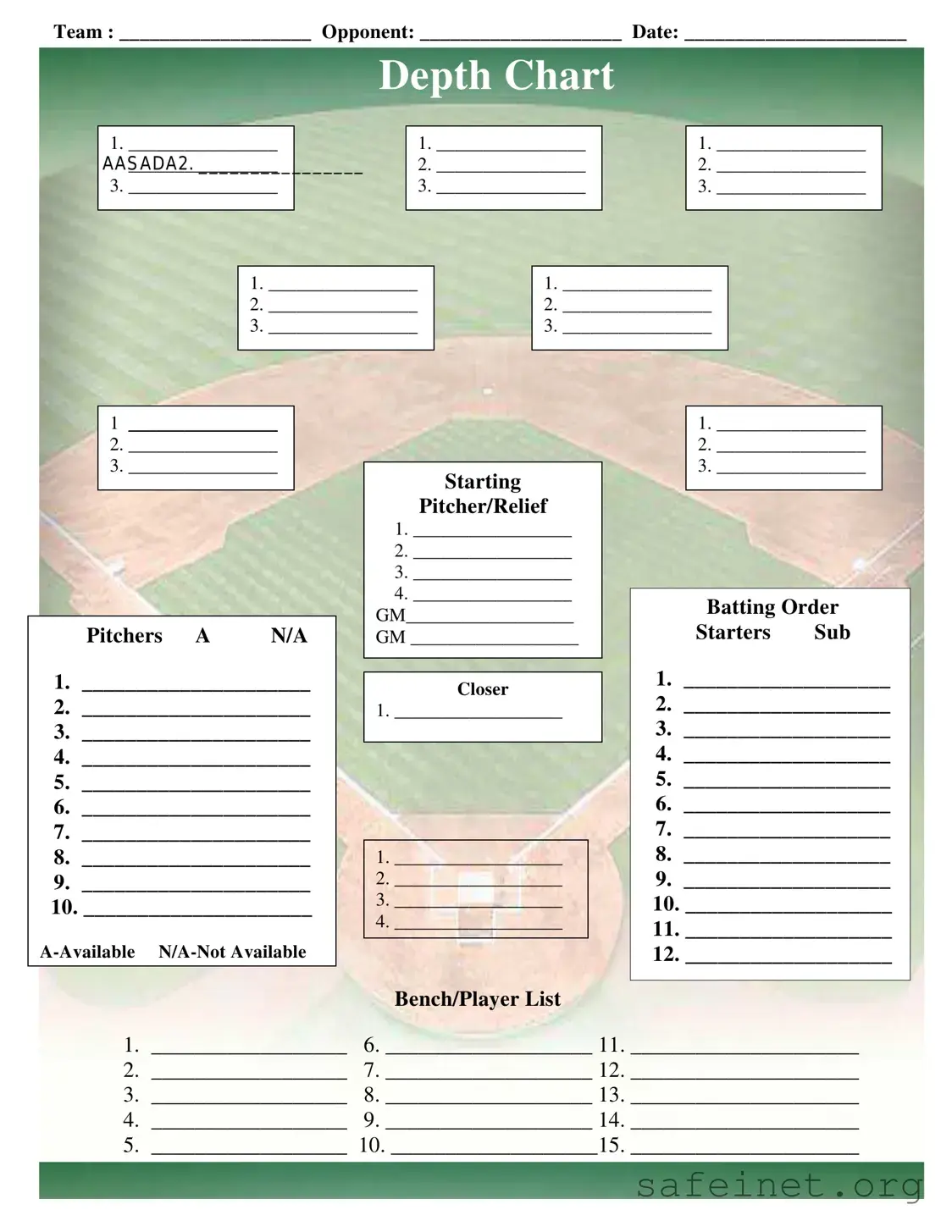
The Baseball Field Lineup form serves as an essential tool for organizing a team's players and strategizing for an upcoming game. This form captures vital information, including the team name, opponent, and date, ensuring that all participants are clearly identified. It features sections for listing players in the batting order, as well as a depth chart that outlines player positions and availability. Coaches can designate starting pitchers and relief options, providing clarity on the pitching lineup. The form also includes a bench/player list, which helps track additional players who may be called upon during the game. By utilizing this comprehensive lineup form, teams can enhance their preparation and communication, ultimately leading to a more coordinated effort on the field.
| Fact Name | Description |
|---|---|
| Team Identification | The form requires the name of the team and the opponent for clarity. |
| Date of Game | It includes a space to enter the date of the game, ensuring proper record-keeping. |
| Player Positions | Players are listed in specific positions to organize the lineup effectively. |
| Depth Chart | A depth chart is included to show player availability and position hierarchy. |
| Pitcher Availability | The form distinguishes between available and not available pitchers, marked as A and N/A. |
| Starting and Relief Pitchers | Sections are designated for starting pitchers and relief pitchers, ensuring clarity in roles. |
| Batting Order | The batting order section allows for listing starters and substitutes, crucial for game strategy. |
| Bench/Player List | A comprehensive bench list is provided to track additional players available for substitution. |
| State-Specific Requirements | Some states may have specific regulations governing the use of this form, such as compliance with local sports associations. |
Completing the Baseball Field Lineup form is essential for organizing the team’s roster and game strategy. The form requires various details about the team, opponent, and specific player positions. Following the steps below will ensure that all necessary information is accurately recorded.
What is the purpose of the Baseball Field Lineup form?
The Baseball Field Lineup form is designed to help coaches and team managers organize player positions, batting orders, and pitching assignments for a game. It ensures that everyone involved knows their roles and responsibilities, which can enhance team performance and coordination on the field.
How do I fill out the team and opponent information?
At the top of the form, you will find spaces to write the name of your team and the opponent's name. Simply enter the names clearly in the designated areas. This helps everyone understand which teams are competing and keeps the lineup organized.
What should I include in the depth chart section?
The depth chart section is where you list players by their positions. You can include starters and substitutes for each position. It helps the coach make quick decisions about who will play and ensures that all positions are filled during the game.
How do I indicate player availability?
You can use the abbreviations "A" for available and "N/A" for not available next to each player's name in the pitching section. This makes it easy to see at a glance who can pitch and who cannot, allowing for better planning during the game.
What is the difference between starting pitchers and relief pitchers?
Starting pitchers are the players who begin the game on the mound. Relief pitchers come in after the starting pitcher, usually to replace them during the game. The form has separate sections for both to help coaches plan their pitching strategy effectively.
How do I organize the batting order?
The batting order section allows you to list players in the order they will bat. Start with your strongest hitters at the top to maximize scoring opportunities. This section is crucial for setting the tone of the game and can influence the outcome.
What information should be included in the bench/player list?
The bench/player list includes all players who are not in the starting lineup but are available for substitution during the game. This helps coaches keep track of all players and ensures that everyone is accounted for during the game.
Can I make changes to the lineup after it is submitted?
Yes, changes can be made to the lineup before the game starts. However, it is essential to communicate any changes to all players and coaching staff to avoid confusion. Keeping an updated lineup is crucial for smooth gameplay.
Who is responsible for filling out the Baseball Field Lineup form?
The team manager or head coach typically fills out the form. They are responsible for ensuring that all player information is accurate and up-to-date. This responsibility helps maintain order and clarity for the team on game day.
When filling out the Baseball Field Lineup form, people often make several common mistakes that can lead to confusion or miscommunication. Here’s a list of five typical errors:
Incomplete Information: Many forget to fill in essential details such as the team name, opponent, or date. This information is crucial for organizing games and ensuring everyone is on the same page.
Incorrect Player Order: Sometimes, players are listed in the wrong order. This can affect the strategy during the game, especially if the batting order is not followed correctly.
Missing Depth Chart Entries: Failing to fill out the depth chart can lead to confusion about player positions and roles. It’s important to provide complete information for all players, especially those who may step in during the game.
Not Indicating Availability: Some forget to mark players as available or not available. This can cause last-minute surprises, impacting team performance and planning.
Overlooking Pitching Details: Players often neglect to specify the starting pitcher and relief options clearly. This information is vital for game strategy and should be filled out accurately.
By being mindful of these common mistakes, you can ensure that the Baseball Field Lineup form is completed accurately, leading to a smoother and more organized game experience.
The Baseball Field Lineup form is an essential document for organizing a team’s roster and strategy for a game. However, several other forms and documents complement this form to ensure smooth operations and communication among coaches, players, and staff. Below is a list of related documents commonly used in conjunction with the Baseball Field Lineup form.
These documents work together to facilitate effective team management and communication. By utilizing them alongside the Baseball Field Lineup form, coaches can enhance their strategic planning and keep players informed and engaged throughout the season.
The Team Roster form is similar to the Baseball Field Lineup form as it also lists players and their roles within a team. Both documents require the names of players and categorize them, often into starters and substitutes. The Team Roster may include additional details such as player positions and jersey numbers, but the core purpose remains the same: to provide a clear overview of who is participating in a game or event.
The Game Schedule form serves a similar function by outlining the dates and times of games, much like the Baseball Field Lineup form specifies the date of the match. It often includes the teams involved, which helps coaches and players prepare for upcoming games. Both documents are essential for organization and communication within a sports team.
The Player Statistics Sheet tracks individual player performance over time. Like the Baseball Field Lineup form, it organizes information systematically, allowing coaches to assess player skills and contributions. Both documents are crucial for making strategic decisions about lineups and game tactics.
The Injury Report form is another document that shares similarities. It lists players who are unable to participate due to injuries, much like the Baseball Field Lineup form notes player availability. This report helps coaches make informed decisions about who can play and who needs to be substituted.
The Pitching Rotation chart is closely related as it details which pitchers will play in upcoming games. Similar to the Baseball Field Lineup form, it helps coaches plan their strategies based on the strengths and weaknesses of their pitchers. Both documents ensure that the team is prepared for each game based on available players.
The Game Day Checklist helps teams prepare for the day of the game. It includes items such as equipment, uniforms, and other essentials. Like the Baseball Field Lineup form, it serves as a guide to ensure that everything is in order before the game starts, helping to minimize last-minute issues.
The Scouting Report provides insights into opposing teams, similar to how the Baseball Field Lineup form prepares a team for its immediate competition. Both documents are used to strategize and adjust gameplay based on the strengths and weaknesses of opponents, making them vital for success.
The Attendance Sheet records who is present for practice or games. This is similar to the Baseball Field Lineup form, which also tracks player availability. Both documents help coaches understand their team’s commitment and readiness for games, allowing for better planning and adjustments.
The Game Summary Report captures the details of a game after it has occurred. While the Baseball Field Lineup form is used before the game, the summary report analyzes player performance and game outcomes. Both documents are essential for evaluating team progress and making future improvements.
The Tournament Bracket outlines the structure of a tournament, similar to how the Baseball Field Lineup form organizes players for a specific game. Both documents are crucial for understanding the competition and ensuring that teams are prepared for each match in a structured manner.
When filling out the Baseball Field Lineup form, it is important to follow certain guidelines to ensure accuracy and clarity. Below is a list of actions to take and avoid.
Misconceptions about the Baseball Field Lineup form can lead to confusion among coaches, players, and parents. Here are four common misunderstandings:
The Baseball Field Lineup form is essential for organizing team structure and game strategy. Here are some key takeaways regarding its use: