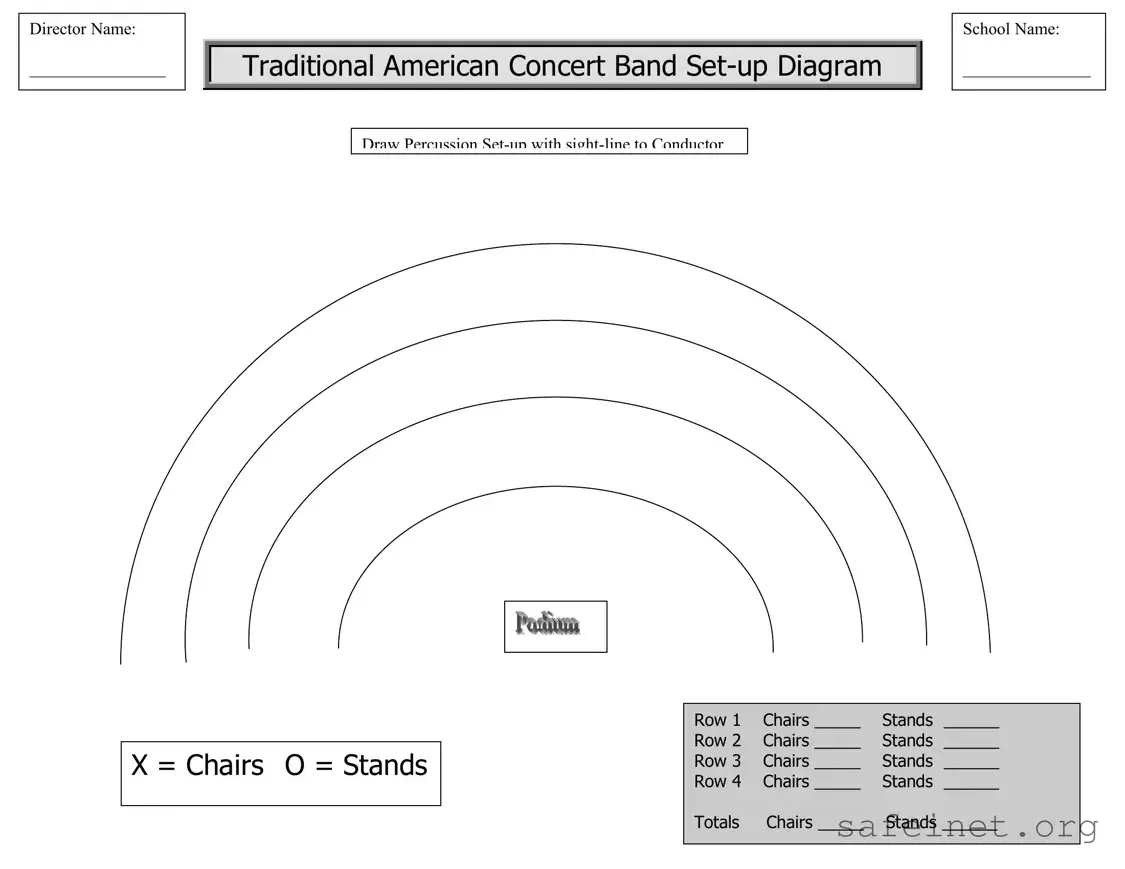
When it comes to organizing a successful concert band performance, the Band Seating Chart form serves as an essential tool for directors and stage crew alike. This form not only allows the director to clearly outline the seating arrangement for musicians but also ensures that every player has an unobstructed view of the conductor. With designated rows for chairs and music stands, the form simplifies the process of arranging various instruments, from woodwinds to brass and percussion. It provides a structured layout that includes specific details such as the number of chairs and stands required for each section, helping to create a cohesive sound during the performance. Additionally, it emphasizes the importance of maintaining the percussion setup as indicated in the traditional American concert band diagram. By filling out the director's name, school name, performance date, and time, the form becomes a comprehensive reference for the stage crew, ensuring that all needs are met prior to the event. With a clear understanding of how to utilize this form, directors can enhance their concert experience, making it enjoyable for both musicians and the audience.
| Fact Name | Details |
|---|---|
| Director Information | The form requires the name of the director and the school to ensure proper identification. |
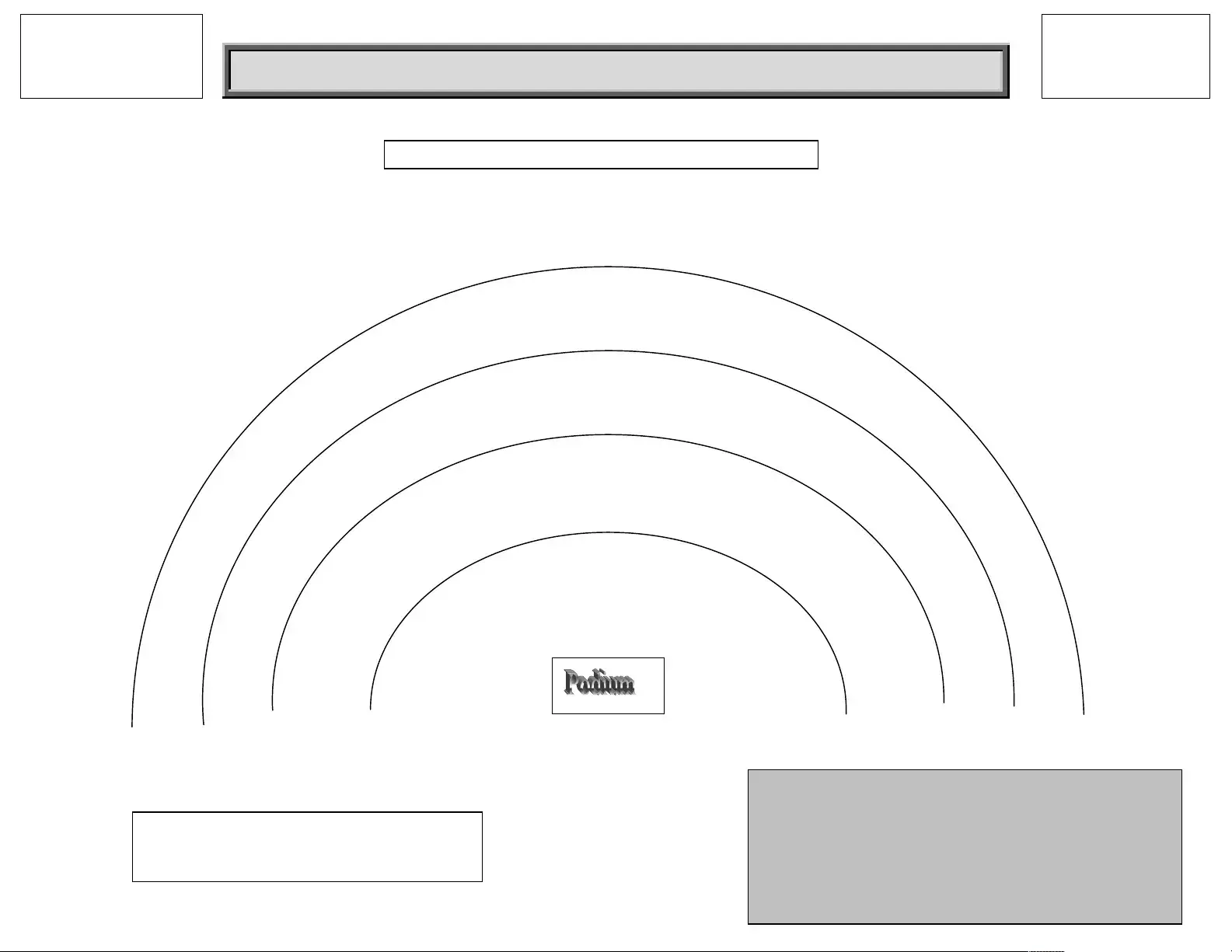
| Setup Diagram | A traditional American concert band setup is illustrated, indicating the arrangement of chairs and stands. |
| Row Specifications | Each row specifies the number of chairs and music stands needed, allowing for precise planning. |
| Submission Deadline | The completed form must be faxed to 780-438-1465, attention Rob Speers, before March 1, 2008. |
| Governing Law | This form is governed by the laws applicable in the state of the event, ensuring compliance with local regulations. |
Once you have the Band Seating Chart form ready, you will need to fill it out carefully. This form is essential for organizing the seating arrangement for your concert band. Make sure to provide accurate information to ensure a smooth setup on performance day.
What is the purpose of the Band Seating Chart form?
The Band Seating Chart form is designed to help organize and visualize the seating arrangement for a concert band performance. It allows directors to specify the number of chairs and music stands needed for each row, ensuring that all musicians are properly accommodated. This form also helps the stage crew understand the specific requirements for the setup, including the placement of percussion instruments and their sight-lines to the conductor.
How should I fill out the form?
To complete the form, start by entering the director's name and the school name at the top. Then, for each row, indicate the number of chairs and music stands required. Make sure to follow the traditional American concert band setup diagram as a guide. Pay special attention to the percussion setup, as it must remain consistent with the basic arrangement shown in the diagram. Finally, include the performance date and time to ensure that the stage crew is prepared for your event.
What happens if I don’t submit the form by the deadline?
It is crucial to submit the Band Seating Chart form by the deadline of March 1, 2008. If the form is not submitted on time, the stage crew may not be able to accommodate your specific seating requirements. This could lead to a less-than-ideal setup for your performance, potentially affecting the musicians' ability to see and hear the conductor effectively.
Can I make changes to the seating arrangement after submitting the form?
Who should I contact if I have questions about the form?
If you have any questions or need assistance while filling out the Band Seating Chart form, reach out to Rob Speers. You can fax your inquiries to the provided number, 780-438-1465. It is always better to clarify any uncertainties ahead of time to ensure a smooth setup process for your concert.
Failing to include the director's name at the top of the form can lead to confusion. Without this essential detail, the stage crew may not know which band the setup is for.
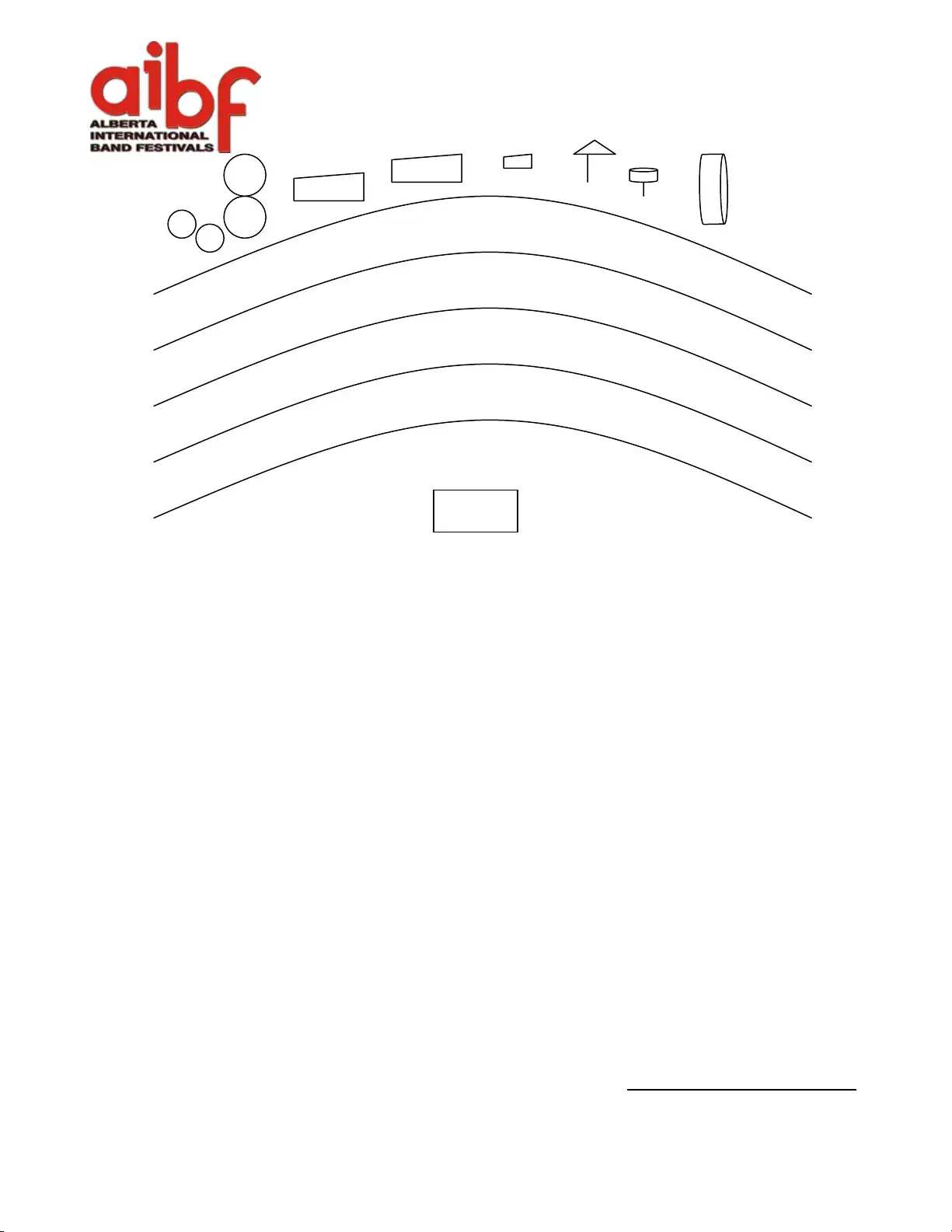
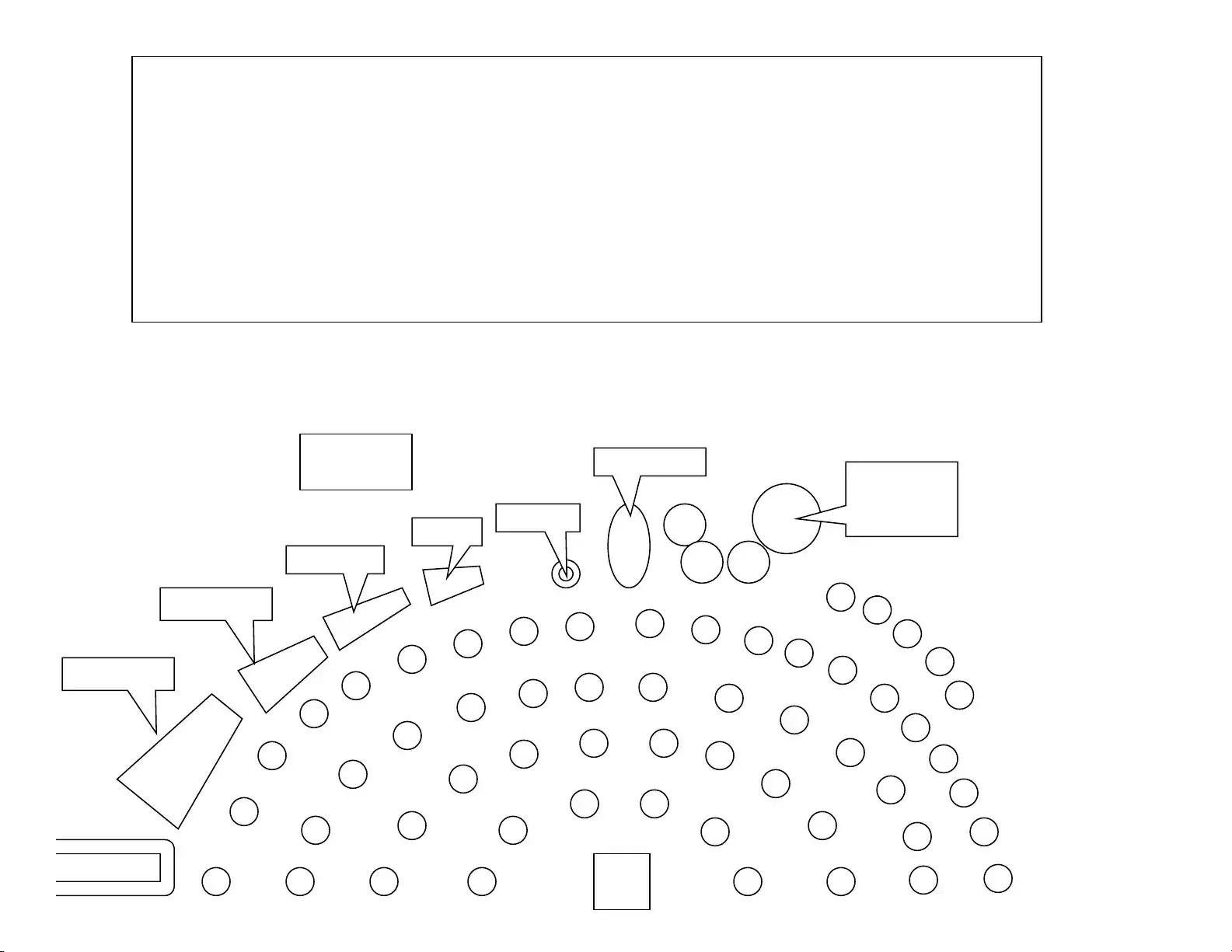
Not adhering to the specified percussion setup can create issues during the performance. The form explicitly states that percussion must remain in the basic arrangement shown in the diagram.
Omitting the school name is another common error. This information is crucial for proper identification and coordination with the venue.
Inaccurately filling in the number of chairs and stands for each row can lead to logistical challenges. It is important to double-check these figures to ensure that all musicians have the necessary equipment.
Neglecting to specify the performance date and time can result in scheduling conflicts. This information is vital for the stage crew to prepare appropriately.
Not faxing the completed form by the March 1 deadline can jeopardize the entire setup process. Timely submission is key to ensuring that all requirements are met.
Failing to draw the percussion setup with a clear sight-line to the conductor can affect the performance. Proper placement is essential for communication between the conductor and the percussion section.
The Band Seating Chart form is an essential document for organizing a concert band performance. However, several other forms and documents often accompany it to ensure a smooth setup and performance. Below is a list of these related documents, each serving a specific purpose.
These documents work together to facilitate a successful concert band performance. Each one plays a crucial role in ensuring that everyone involved is prepared and informed, contributing to a seamless event.
The Event Seating Arrangement form is similar to the Band Seating Chart form in that it outlines the specific placement of individuals or groups at an event. This document typically includes sections for the event organizer's name, venue details, and a diagram that visually represents the seating layout. Just as the Band Seating Chart specifies the number of chairs and stands needed for musicians, the Event Seating Arrangement will detail the number of seats required for guests, ensuring that everyone is accommodated appropriately.
The Performance Setup Sheet also shares similarities with the Band Seating Chart. This document is used to plan the layout of performers and equipment for a stage production or concert. Like the Band Seating Chart, it includes a visual diagram and specific notes on the arrangement of performers, sound equipment, and lighting. Both forms require attention to sightlines and accessibility, ensuring that all participants can perform or participate effectively.
The Classroom Seating Plan serves a similar purpose in an educational setting. It details how students will be arranged in a classroom, often including a diagram that shows desk placements. Like the Band Seating Chart, it takes into account the number of students and their needs, ensuring that each student has a clear view of the instructor and can engage in the learning process without obstruction.
The Sports Team Roster and Seating Chart is another document that aligns with the Band Seating Chart. This form outlines the arrangement of players on a sports team, detailing positions and any necessary equipment. Both documents require careful consideration of each participant's role and how they will interact with one another, ensuring optimal performance during the event.
The Conference Room Layout form is similar in that it specifies how individuals will be seated during a meeting or presentation. This document includes a diagram and notes on the number of chairs and tables required. Like the Band Seating Chart, it aims to create an effective environment for communication and interaction among participants, taking into account factors such as visibility and accessibility.
The Wedding Seating Chart is another comparable document, as it organizes how guests will be seated at a wedding reception. This chart includes a detailed layout of tables and seating assignments, much like the Band Seating Chart outlines the arrangement of musicians. Both documents require careful planning to ensure that individuals are seated in a manner that fosters comfort and social interaction.
Finally, the Theater Seating Plan is akin to the Band Seating Chart in that it details the seating arrangement for an audience during a performance. This document often includes a visual representation of the seating area, specifying the number of seats available and their arrangement. Both the Theater Seating Plan and the Band Seating Chart aim to optimize the experience for participants, ensuring that everyone has a clear view and can engage with the performance effectively.
When filling out the Band Seating Chart form, it's important to ensure clarity and accuracy. Here are five things you should and shouldn't do to make the process smoother:
By following these guidelines, you can help ensure that the seating arrangement for your concert band is well-organized and meets everyone's needs. Happy planning!
When it comes to the Band Seating Chart form, several misconceptions can lead to confusion. Here’s a breakdown of some common misunderstandings:
Some believe that submitting the Band Seating Chart form is not necessary. In reality, it’s crucial for ensuring that the stage is set up correctly for your performance.
While the director's name is required, input from other band members can help ensure accuracy in seating arrangements.
It’s important to note that the percussion must remain in the basic setup as indicated. Changes can disrupt sight lines and overall performance.
Submitting the form after the March 1 deadline may lead to complications in stage setup. Timeliness is key.
Adhering to the provided format is essential. This ensures that all necessary information is captured for effective planning.
Each chair and stand counts towards the overall setup. Accurate numbers help the stage crew accommodate everyone effectively.
These details are vital for the stage crew to coordinate the setup around other events and ensure everything runs smoothly.
Last-minute changes can create chaos. It’s best to finalize arrangements well in advance to avoid issues on the performance day.
When filling out the Band Seating Chart form, keep these key takeaways in mind: