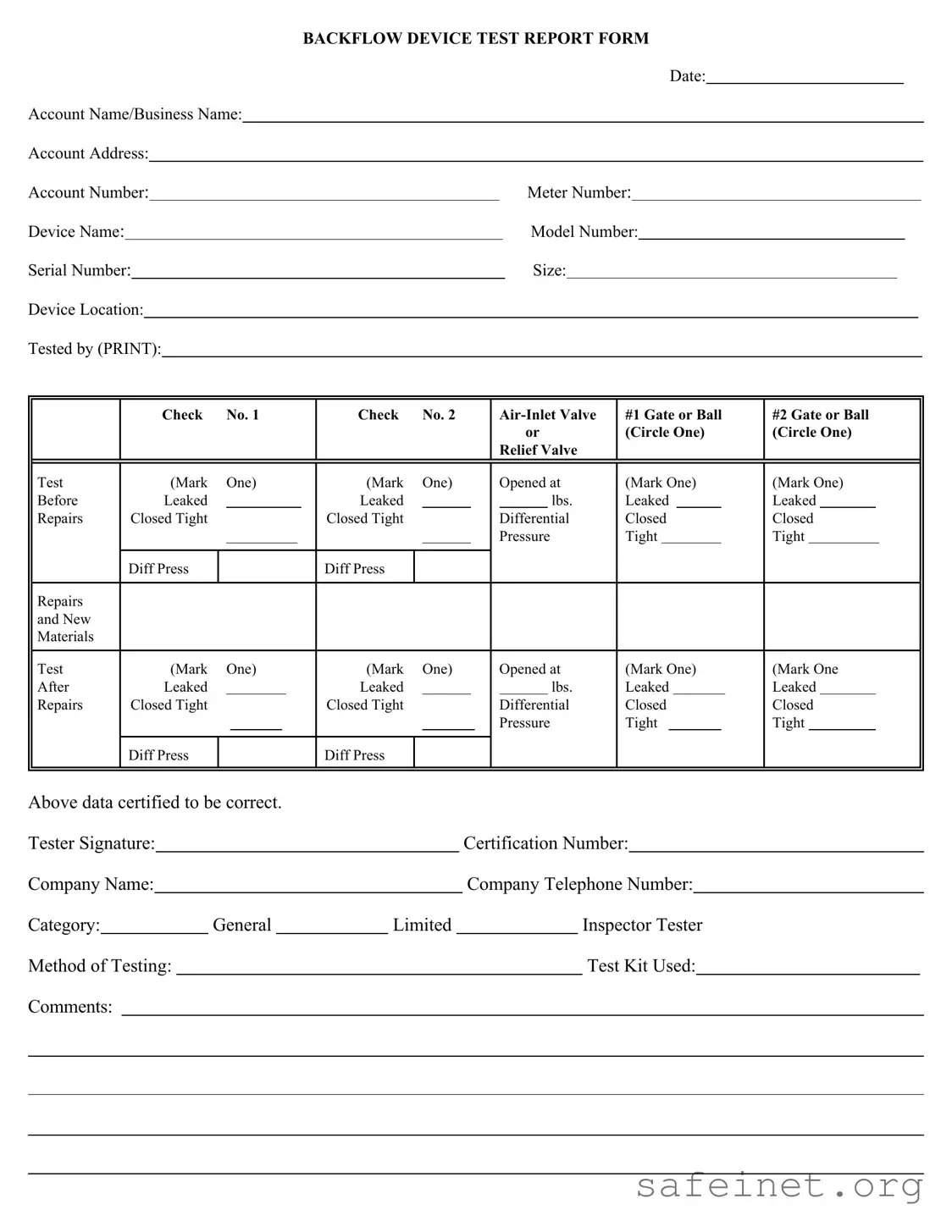
The Backflow Test Report form is an essential document for ensuring the safety and compliance of water systems. This form captures critical information about the backflow prevention device being tested, including details such as the device's name, model number, and serial number. It also includes vital account information, such as the account name, address, and number, as well as the meter number. The form is structured to document the testing process clearly, requiring the tester to indicate whether specific components, like the air-inlet valve and relief valve, opened or leaked during the test. Each section is designed to mark the results of the test, including any repairs needed and the condition of the device after testing. The tester must provide their signature, certification number, and company details, ensuring accountability and traceability. By maintaining accurate records through this form, property owners and water service providers can effectively monitor backflow prevention devices and uphold public health standards.

| Fact Name | Description |
|---|---|
| Purpose | The Backflow Test Report form is used to document the testing of backflow prevention devices, ensuring they function correctly to prevent contamination of the water supply. |
| Required Information | This form requires detailed information including the date, account name, device specifics, and test results to provide a comprehensive record of the testing process. |
| Testing Procedure | Testers must follow specific procedures to assess the performance of backflow devices, marking results for various checks such as air-inlet valves and relief valves. |
| Certification | The tester must sign the form, certifying that the data is accurate, which adds a layer of accountability to the testing process. |
| State Regulations | In many states, including California and Texas, the testing of backflow devices is governed by local plumbing codes and health regulations to protect public health. |
| Record Keeping | Completed forms should be kept on file for future reference, as they may be required during inspections or for compliance with local regulations. |
| Testing Frequency | Many jurisdictions mandate annual testing of backflow devices, ensuring ongoing compliance and safety for the water supply system. |
Once the Backflow Test Report form is completed, it should be submitted to the appropriate authority for review. This ensures compliance with local regulations and helps maintain water safety standards.
What is the purpose of the Backflow Test Report form?
The Backflow Test Report form is used to document the testing of backflow prevention devices. These devices are crucial for ensuring that contaminated water does not flow back into the clean water supply. The form captures essential details about the device being tested, the results of the test, and the qualifications of the tester. This documentation is important for regulatory compliance and public health safety.
What information is required on the form?
The form requires several pieces of information. You will need to provide the date of the test, the account name or business name, and the account address. Additionally, details about the device, including its name, model number, serial number, and size, must be included. The tester's name and certification number, along with the company name and contact information, are also necessary. This comprehensive information helps ensure accountability and traceability.
How is the testing process conducted?
The testing process involves several checks to ensure the backflow prevention device is functioning correctly. The tester will perform specific tests on components such as the air-inlet valve, gate or ball valves, and the relief valve. Each component is assessed for leaks and proper pressure. The tester marks the results on the form, indicating whether each part is closed tight or leaked, and records the differential pressure readings. This thorough examination helps identify any issues that need repair.
What should be done if the device fails the test?
If a backflow prevention device fails the test, it is essential to take immediate action. The tester will typically note any necessary repairs or replacements on the form. After addressing the issues, the device must be retested to ensure compliance with safety standards. Keeping the backflow prevention device in good working order is vital for protecting the water supply.
Who can perform the testing?
The testing must be conducted by a qualified individual, such as a certified backflow tester or inspector. These professionals have the training and knowledge necessary to accurately assess the functionality of backflow prevention devices. The tester's certification number should be included on the form to verify their qualifications.
How often should backflow testing be performed?
Backflow testing is typically required annually, although local regulations may vary. Some jurisdictions may mandate more frequent testing, especially for high-risk facilities. Regular testing ensures that backflow prevention devices are functioning correctly and helps prevent contamination of the public water supply.
Neglecting to fill in the date of the test can lead to confusion about when the test was conducted. Always make sure to provide the date clearly.
Forgetting to include the account name or business name can make it difficult to identify the property associated with the backflow device. This information is crucial for record-keeping.
Omitting the device location can create issues during inspections or future tests. Specify exactly where the device is located on the property.
Incorrectly marking test results can lead to misunderstandings about the device's functionality. Be sure to double-check that you mark the correct options for leaks and pressure readings.
Failing to provide the tester's signature means the report may not be valid. Always sign the form to certify that the test was completed accurately.
Leaving out the certification number can cause delays in processing the report. This number is essential for verifying the tester's credentials.
Not including comments or notes can be a missed opportunity to provide additional context about the test. If there were any issues or special circumstances, make sure to document them.
When dealing with backflow prevention, it's essential to have a complete understanding of the various forms and documents that accompany the Backflow Test Report. Each of these documents plays a crucial role in ensuring compliance, tracking maintenance, and providing necessary information for regulatory purposes. Below is a list of commonly used documents that you may encounter alongside the Backflow Test Report.
Understanding these documents can help you maintain compliance and ensure the safety of your water supply. Each form serves a specific purpose, contributing to the overall management and oversight of backflow prevention systems. Keeping these documents organized and accessible will facilitate easier inspections and maintenance in the future.
The Cross-Connection Control Survey form is similar to the Backflow Test Report form in that both documents are essential for ensuring safe water systems. A Cross-Connection Control Survey assesses potential risks in plumbing systems, identifying points where contaminants could enter the water supply. Like the Backflow Test Report, it requires detailed information about the location and type of devices in use, as well as the results of inspections. Both forms help maintain public health by preventing water contamination.
The Water Quality Testing Report serves a similar purpose by documenting the results of water quality tests. This report includes data on various contaminants and overall water safety. Both documents emphasize the importance of accurate testing and reporting to safeguard public health. They also require signatures from qualified personnel, ensuring accountability in the testing process.
The Plumbing Inspection Report is another document that shares similarities with the Backflow Test Report. This report provides a comprehensive evaluation of plumbing systems, including the condition of backflow prevention devices. Both reports are critical for compliance with local regulations and standards. They include details about the systems inspected and any necessary repairs, ensuring that plumbing systems function properly and safely.
The Device Maintenance Log is akin to the Backflow Test Report in that it tracks the maintenance history of backflow prevention devices. This log records dates of service, repairs, and inspections, ensuring that devices are regularly maintained. Both documents help establish a timeline for device performance and are vital for demonstrating compliance with regulations.
The Fire Protection System Test Report is also similar, particularly when it comes to testing backflow devices connected to fire protection systems. This report documents the testing of fire hydrants and sprinkler systems, including backflow prevention measures. Both reports require detailed information about the devices tested and the results, ensuring that fire protection systems are effective and compliant with safety standards.
The Irrigation System Inspection Report shares commonalities with the Backflow Test Report, especially regarding the testing of backflow devices in irrigation systems. This inspection report assesses the entire irrigation setup, including the functionality of backflow preventers. Both documents are crucial for maintaining the integrity of water supplies and ensuring that irrigation practices do not contaminate drinking water sources.
The Environmental Compliance Report is another document that aligns with the Backflow Test Report. This report evaluates adherence to environmental regulations, including those related to water safety and contamination prevention. Both documents require detailed data and analysis, reinforcing the importance of compliance in protecting public health and the environment.
Lastly, the Health Department Inspection Report is similar in that it reviews the safety and compliance of facilities with respect to public health standards. This report often includes assessments of plumbing systems and backflow prevention devices. Both documents aim to ensure that facilities operate within health regulations, safeguarding the community from potential hazards.
When filling out the Backflow Test Report form, it’s important to follow certain guidelines to ensure accuracy and compliance. Here are some do's and don'ts to keep in mind:
By following these tips, you can help ensure that the Backflow Test Report is completed correctly and efficiently.
Understanding the Backflow Test Report form is crucial for ensuring the safety and integrity of water systems. However, several misconceptions can lead to confusion. Here are nine common misunderstandings about this important document:
By clearing up these misconceptions, property owners and managers can better understand their responsibilities regarding backflow prevention and ensure the safety of their water supply.
When filling out and using the Backflow Test Report form, keep these key takeaways in mind: