Homepage > Blank Automobile Service Checklist Template
Article Structure

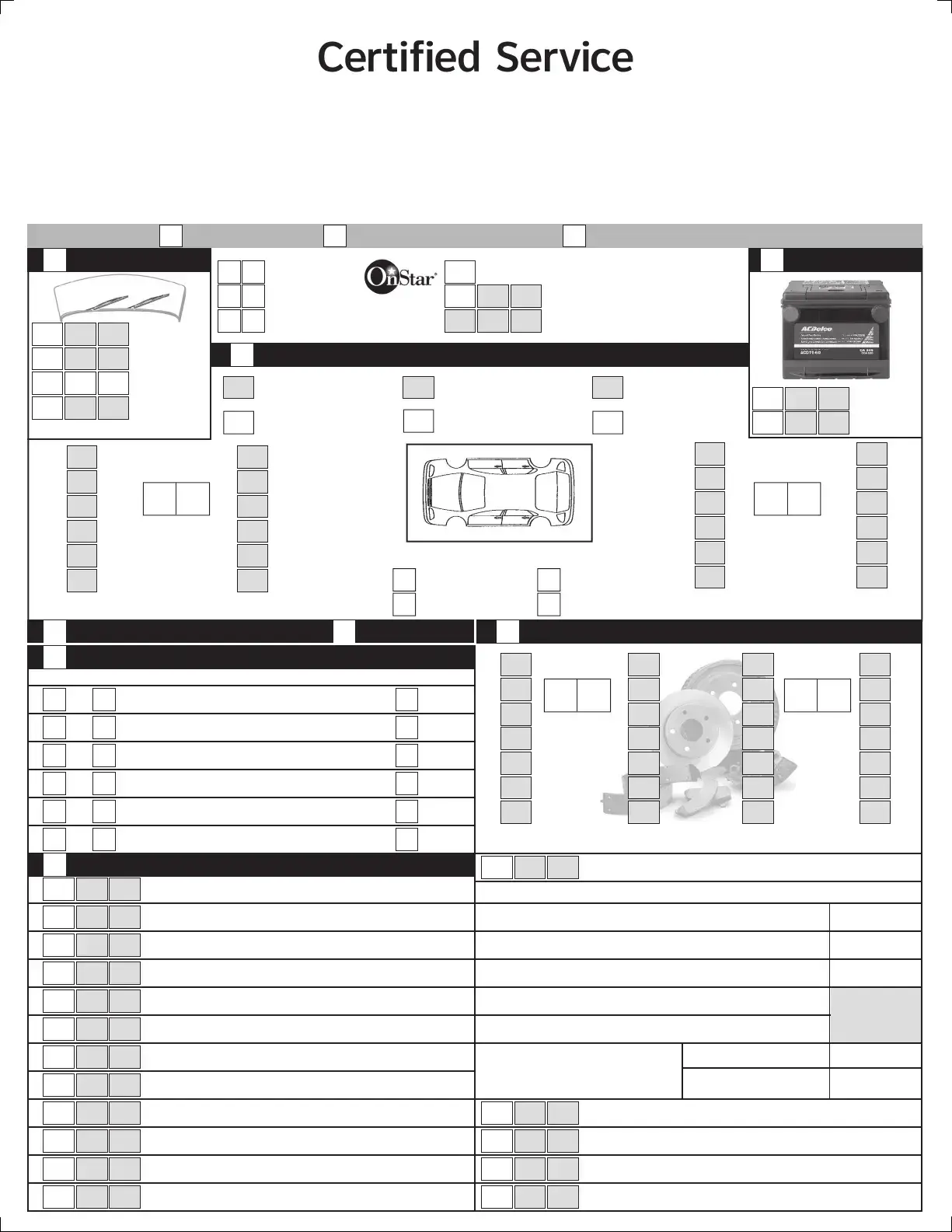
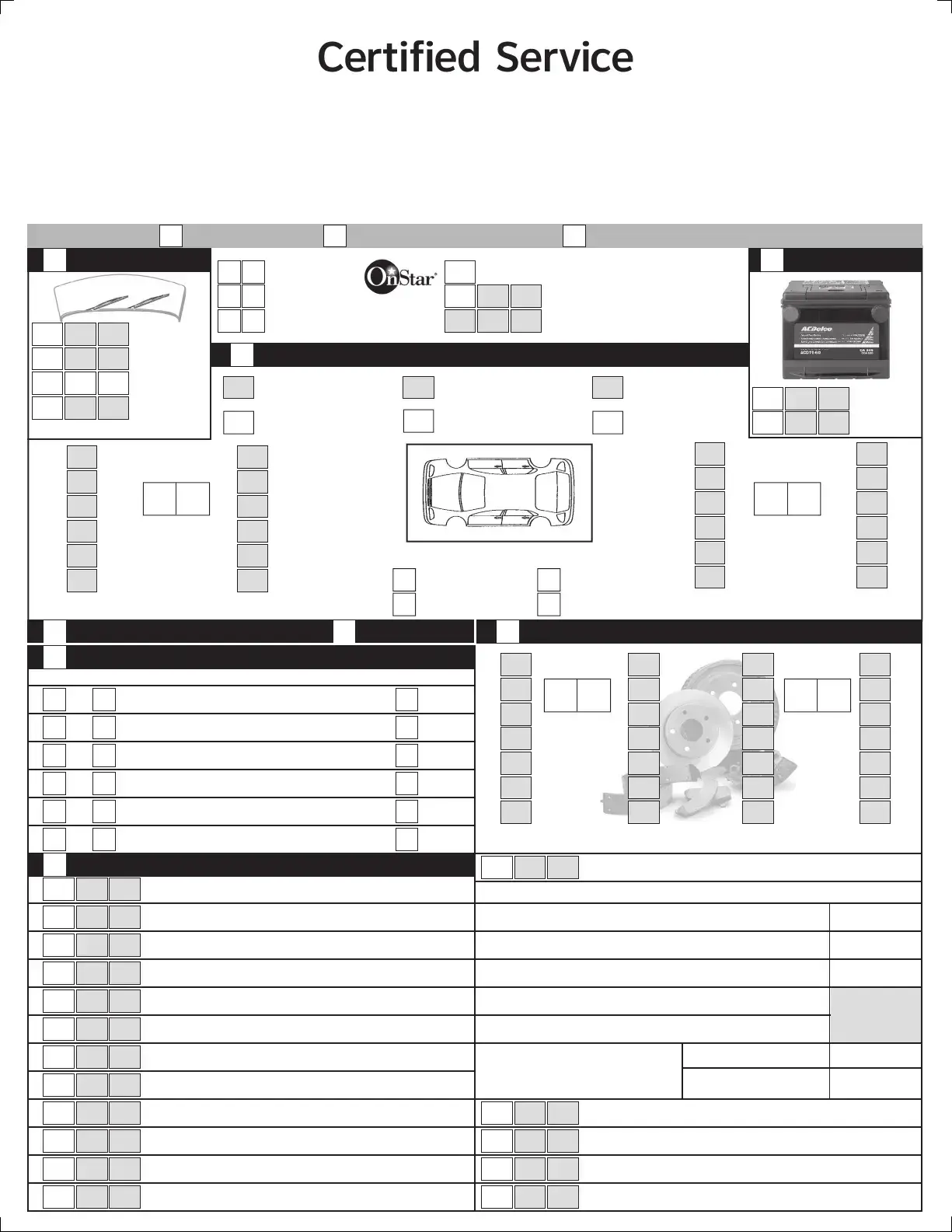
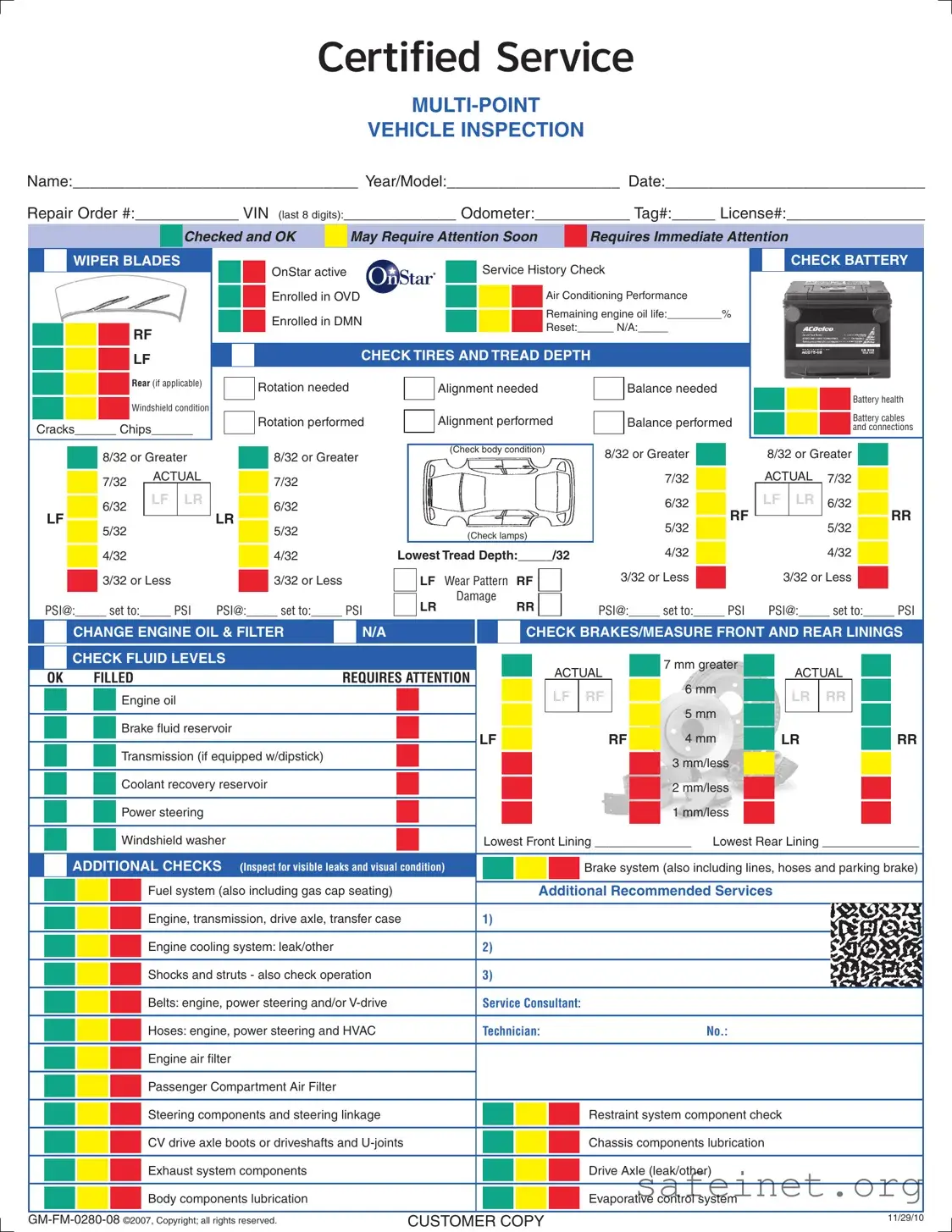
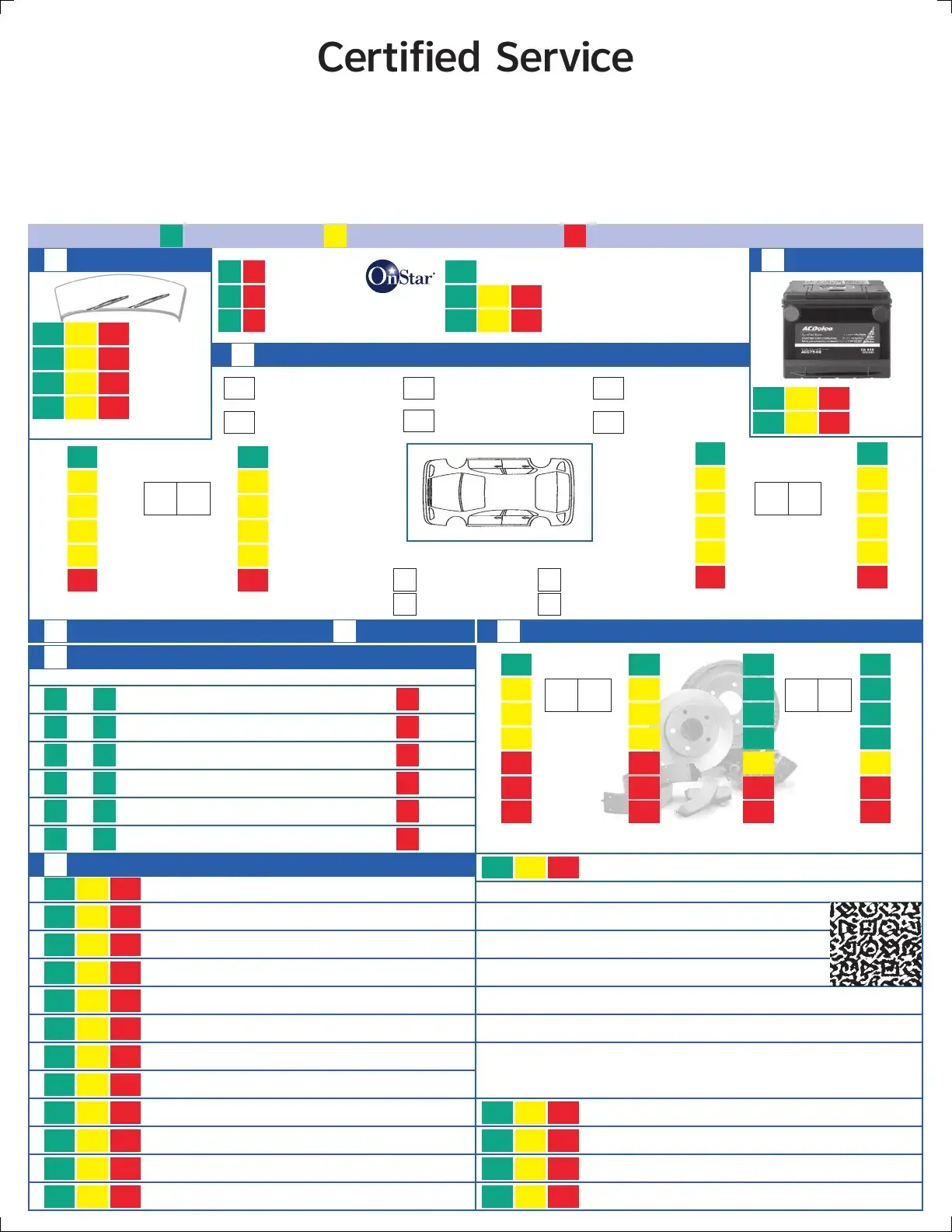
The Automobile Service Checklist form serves as an essential tool for vehicle maintenance, ensuring that every critical aspect of a car's performance is thoroughly examined. This comprehensive checklist is designed to guide service technicians through a multi-point vehicle inspection, covering areas such as wiper blades, tire conditions, and battery health. Each component is assessed with clear indicators, allowing for easy identification of issues that may require immediate attention or those that may need monitoring in the near future. The form also includes sections for checking fluid levels, measuring brake linings, and evaluating the condition of essential systems like the engine and transmission. Additionally, it prompts technicians to inspect for visible leaks and to assess the vehicle's overall health through a series of standardized checks. By documenting these findings, the form not only helps in maintaining the vehicle's safety and performance but also provides valuable records for both the service provider and the vehicle owner. Ultimately, the Automobile Service Checklist form is a vital resource that promotes proactive vehicle care and informed decision-making regarding necessary repairs and maintenance tasks.
Form Sample

Fuel system (also including gas cap seating)
Engine, transmission, drive axle, transfer case
Engine cooling system: leak/other
Shocks and struts - also check operation
Belts: engine, power steering and/or V-drive
Hoses: engine, power steering and HVAC
Engine air fi lter
Passenger Compartment Air Filter
Steering components and steering linkage
CV drive axle boots or driveshafts and U-joints
Exhaust system components
Body components lubrication
MULTI-POINT
VEHICLE INSPECTION
Checked and OK May Require Attention Soon Requires Immediate Attention
CHECK TIRES AND TREAD DEPTH
CHECK FLUID LEVELS
CHANGE ENGINE OIL & FILTER N/A CHECK BRAKES/MEASURE FRONT AND REAR LININGS
REQUIRES ATTENTIONOK FILLED
Engine oil
Brake fl uid reservoir
Transmission (if equipped w/dipstick)
Coolant recovery reservoir
Power steering
Windshield washer
ADDITIONAL CHECKS (Inspect for visible leaks and visual condition)
WIPER BLADES
Cracks______ Chips______
Rear (if applicable)
Windshield condition
LF
RF
Rotation performed
Rotation needed
Alignment performed
Alignment needed
Balance performed
Balance needed
1)
2)
3)
Service Consultant:
Technician: No.:
Additional Recommended Services
GM-FM-0280-08 ©2007, Copyright; all rights reserved.
11/29/10
CUSTOMER COPY
CHECK BATTERY
Battery health
Battery cables
and connections
OnStar active
Enrolled in OVD
Enrolled in DMN
Air Conditioning Performance
Remaining engine oil life:_________%
Reset:______ N/A:_____
Service History Check
Restraint system component check
Chassis components lubrication
Drive Axle (leak/other)
Evaporative control system
Brake system (also including lines, hoses and parking brake)
(Check body condition)
(Check lamps)
Lowest Tread Depth:_____/32
LF RF
LR RR
PSI@:_____ set to:_____ PSI
8/32 or Greater
7/32
6/32
5/32
4/32
3/32 or Less
LR
PSI@:_____ set to:_____ PSI
8/32 or Greater
7/32
6/32
5/32
4/32
3/32 or Less
RF
PSI@:_____ set to:_____ PSI
8/32 or Greater
7/32
6/32
5/32
4/32
3/32 or Less
LF
PSI@:_____ set to:_____ PSI
8/32 or Greater
7/32
6/32
5/32
4/32
3/32 or Less
RR
LF LR
ACTUAL
LF LR
ACTUAL
Lowest Front Lining ______________ Lowest Rear Lining ______________
LF
RF RRLR
7 mm greater
6 mm
5 mm
4 mm
3 mm/less
2 mm/less
1 mm/less
LF RF
ACTUAL
LR RR
ACTUAL
Name:_________________________________ Year/Model:____________________ Date:______________________________
Repair Order #:____________ VIN (last 8 digits):_____________ Odometer:___________ Tag#:_____ License#:________________
Wear Pattern
Damage
——
VEHICLE OWNER CHECKLIST ——
AT EACH FUEL STOP
ONCE A MONTH
Engine oil level check
Engine coolant level check
Windshield washer fluid level check
ONCE A YEAR
Tire inflation check
Tire wear inspection
Refer to your vehicle owner’s manual for additional required services. Visit your
GM Goodwrench Dealer’s Service Department to assist you with these
maintenance needs.
Fuel system (also including gas cap seating)
Engine, transmission, drive axle, transfer case
Engine cooling system: leak/other
Shocks and struts - also check operation
Belts: engine, power steering and/or V-drive
Hoses: engine, power steering and HVAC
Engine air fi lter
Passenger Compartment Air Filter
Steering components and steering linkage
CV drive axle boots or driveshafts and U-joints
Exhaust system components
Body components lubrication
MULTI-POINT
VEHICLE INSPECTION
Checked and OK May Require Attention Soon Requires Immediate Attention
CHECK TIRES AND TREAD DEPTH
CHECK FLUID LEVELS
CHANGE ENGINE OIL & FILTER N/A CHECK BRAKES/MEASURE FRONT AND REAR LININGS
REQUIRES ATTENTIONOK FILLED
Engine oil
Brake fl uid reservoir
Transmission (if equipped w/dipstick)
Coolant recovery reservoir
Power steering
Windshield washer
ADDITIONAL CHECKS (Inspect for visible leaks and visual condition)
WIPER BLADES
Cracks______ Chips______
Rear (if applicable)
Windshield condition
LF
RF
Rotation performed
Rotation needed
Alignment performed
Alignment needed
Balance performed
Balance needed
1)
2)
3)
Service Consultant:
Technician: No.:
Additional Recommended Services
GM-FM-0280-08 ©2007, Copyright; all rights reserved.
11/29/10
CHECK BATTERY
Battery health
Battery cables
and connections
OnStar active
Enrolled in OVD
Enrolled in DMN
Air Conditioning Performance
Remaining engine oil life:_________%
Reset:______ N/A:_____
Service History Check
Restraint system component check
Chassis components lubrication
Drive Axle (leak/other)
Evaporative control system
Brake system (also including lines, hoses and parking brake)
(Check body condition)
(Check lamps)
Lowest Tread Depth:_____/32
LF RF
LR RR
PSI@:_____ set to:_____ PSI
8/32 or Greater
7/32
6/32
5/32
4/32
3/32 or Less
LR
PSI@:_____ set to:_____ PSI
8/32 or Greater
7/32
6/32
5/32
4/32
3/32 or Less
RF
PSI@:_____ set to:_____ PSI
8/32 or Greater
7/32
6/32
5/32
4/32
3/32 or Less
LF
PSI@:_____ set to:_____ PSI
8/32 or Greater
7/32
6/32
5/32
4/32
3/32 or Less
RR
LF LR
ACTUAL
LF LR
ACTUAL
Lowest Front Lining ______________ Lowest Rear Lining ______________
LF
RF RRLR
7 mm greater
6 mm
5 mm
4 mm
3 mm/less
2 mm/less
1 mm/less
LF RF
ACTUAL
LR RR
ACTUAL
Name:_________________________________ Year/Model:____________________ Date:______________________________
Repair Order #:____________ VIN
(last 8 digits):_____________ Odometer:___________ Tag#:_____ License#:________________
Wear Pattern
Damage
XOLSG XOLSY
XACRXACY
XWIPY
XWIPY XWIPR
XWIPR
XWNDY
XWNDR
XROTR
XALGN
XBALR
XBATY
XBATR
XCABY
XCABR
XFULY XFULR
XTRAY XTRAR
XSHKY XSHKR
XBELY XBELR
XHOSY XHOSR
XAFY XAFR
XCFY XCFR
XENGY XENGR
XSTRY XSTRR
XCVJY XCVJR
XEXHY XEXHR
XBODY XBODR
XRESY
XCHSY
XEVPY
XRESR
XCHSR
XAXLR
XEVPY
XAXLY
XEVPR
BK7
BK6
BK5
BK4
BK3
BK2
BK1
BK7
BK6
BK5
BK4
BK3
BK2
BK1
BK7
BK6
BK5
BK4
BK3
BK2
BK1
BK7
BK6
BK5
BK4
BK3
BK2
BK1
TIRE8
TIRE7
TIRE6
TIRE5
TIRE4
TIRE3
TIRE8
TIRE7
TIRE6
TIRE5
TIRE4
TIRE3
TIRE8
TIRE7
TIRE6
TIRE5
TIRE4
TIRE3
TIRE8
TIRE7
TIRE6
TIRE5
TIRE4
TIRE3
Recommended FRH:
Total FRH Sold:
FRH
XBRKRXBRKY
XOLSR
CUSTOMER FILE COPY
Category Yellow Red
Wiper XWIPY XWIPR
Windshield XWNDY XWNDR
Air Conditioning XACY XACR
Rotation XROTR
Alignment XALGN
Tire Balance XBALR
Battery XBATY XBATR
Battery Cable XCABY XCABR
Fuel System XFULY XFULR
Engine (Leak, Other) XENGY XENGR
Transmission/Transfer Case (Leak, Other) XTRAY XTRAR
Drive Axle (Leak, Other) XAXLY XAXLR
Shock/Strut XSHKY XSHKR
Belts XBELY XBELR
Hoses XHOSY XHOSR
Engine Air Filter XAFY XAFR
Cabin Air Filter XCFY XCFR
Steering/Suspension XSTRY XSTRR
CV Joint, Driveshaft, U-Joint XCVJY XCVJR
Exhaust System XEXHY XEXHR
Body Components Lubrication XBODY XBODR
Restraint System XRESY XRESR
Chassis Components Lubrication XCHSY XCHSR
Evaporative control system XEVPY XEVPR
Current Recommend Labor Operations
Tires (Tread Depth) Tire 8 thru Tire3
Brake (Lining Measurement) BK7 thru BK1
Fuel system (also including gas cap seating)
Engine, transmission, drive axle, transfer case
Engine cooling system: leak/other
Shocks and struts - also check operation
Belts: engine, power steering and/or V-drive
Hoses: engine, power steering and HVAC
Engine air fi lter
Passenger Compartment Air Filter
Steering components and steering linkage
CV drive axle boots or driveshafts and U-joints
Exhaust system components
Body components lubrication
MULTI-POINT
VEHICLE INSPECTION
Checked and OK May Require Attention Soon Requires Immediate Attention
CHECK TIRES AND TREAD DEPTH
CHECK FLUID LEVELS
CHANGE ENGINE OIL & FILTER N/A CHECK BRAKES/MEASURE FRONT AND REAR LININGS
REQUIRES ATTENTIONOK FILLED
Engine oil
Brake fl uid reservoir
Transmission (if equipped w/dipstick)
Coolant recovery reservoir
Power steering
Windshield washer
ADDITIONAL CHECKS (Inspect for visible leaks and visual condition)
WIPER BLADES
Cracks______ Chips______
Rear (if applicable)
Windshield condition
LF
RF
Rotation performed
Rotation needed
Alignment performed
Alignment needed
Balance performed
Balance needed
1)
2)
3)
Service Consultant:
Technician: No.:
Additional Recommended Services
GM-FM-0280-08 ©2007, Copyright; all rights reserved.
11/29/10
CHECK BATTERY
Battery health
Battery cables
and connections
OnStar active
Enrolled in OVD
Enrolled in DMN
Air Conditioning Performance
Remaining engine oil life:_________%
Reset:______ N/A:_____
Service History Check
Restraint system component check
Chassis components lubrication
Drive Axle (leak/other)
Evaporative control system
Brake system (also including lines, hoses and parking brake)
(Check body condition)
(Check lamps)
Lowest Tread Depth:_____/32
LF RF
LR RR
PSI@:_____ set to:_____ PSI
8/32 or Greater
7/32
6/32
5/32
4/32
3/32 or Less
LR
PSI@:_____ set to:_____ PSI
8/32 or Greater
7/32
6/32
5/32
4/32
3/32 or Less
RF
PSI@:_____ set to:_____ PSI
8/32 or Greater
7/32
6/32
5/32
4/32
3/32 or Less
LF
PSI@:_____ set to:_____ PSI
8/32 or Greater
7/32
6/32
5/32
4/32
3/32 or Less
RR
LF LR
ACTUAL
LF LR
ACTUAL
Lowest Front Lining ______________ Lowest Rear Lining ______________
LF
RF RRLR
7 mm greater
6 mm
5 mm
4 mm
3 mm/less
2 mm/less
1 mm/less
LF RF
ACTUAL
LR RR
ACTUAL
Name:_________________________________ Year/Model:____________________ Date:______________________________
Repair Order #:____________ VIN
(last 8 digits):_____________ Odometer:___________ Tag#:_____ License#:________________
Wear Pattern
Damage
XOLSG XOLSY
XACRXACY
XWIPY
XWIPY XWIPR
XWIPR
XWNDY
XWNDR
XROTR
XALGN
XBALR
XBATY
XBATR
XCABY
XCABR
XFULY XFULR
XTRAY XTRAR
XSHKY XSHKR
XBELY XBELR
XHOSY XHOSR
XAFY XAFR
XCFY XCFR
XENGY XENGR
XSTRY XSTRR
XCVJY XCVJR
XEXHY XEXHR
XBODY XBODR
XRESY
XCHSY
XEVPY
XRESR
XCHSR
XAXLR
XEVPY
XAXLY
XEVPR
BK7
BK6
BK5
BK4
BK3
BK2
BK1
BK7
BK6
BK5
BK4
BK3
BK2
BK1
BK7
BK6
BK5
BK4
BK3
BK2
BK1
BK7
BK6
BK5
BK4
BK3
BK2
BK1
TIRE8
TIRE7
TIRE6
TIRE5
TIRE4
TIRE3
TIRE8
TIRE7
TIRE6
TIRE5
TIRE4
TIRE3
TIRE8
TIRE7
TIRE6
TIRE5
TIRE4
TIRE3
TIRE8
TIRE7
TIRE6
TIRE5
TIRE4
TIRE3
Recommended FRH:
Total FRH Sold:
FRH
XBRKRXBRKY
XOLSR
SERVICE CONSULTANT COPY

Document Specifications

Fact Name Description
Purpose The Automobile Service Checklist form is designed to ensure comprehensive vehicle inspections, helping to identify issues that may require attention.
Multi-Point Inspection This form includes a multi-point inspection that covers essential vehicle components such as wiper blades, tires, brakes, and fluid levels.
Condition Categories Each component inspected is categorized as "Checked and OK," "May Require Attention Soon," or "Requires Immediate Attention" to prioritize repairs.
Fluid Level Checks Fluid levels for engine oil, brake fluid, coolant, and power steering are assessed to ensure they are at appropriate levels.
Tire Inspection The checklist includes a detailed tire inspection that measures tread depth and checks for damage, ensuring safety on the road.
Battery Health Battery condition is evaluated, including the health of battery cables and connections, to prevent potential starting issues.
State-Specific Regulations Some states may have specific laws governing vehicle inspections, which could affect how the checklist is utilized (e.g., California Vehicle Code § 24002).
Service Recommendations The form allows for additional recommended services, such as checking the engine cooling system and inspecting belts and hoses.
Owner's Checklist Vehicle owners are encouraged to perform routine checks, such as oil level and tire inflation, at each fuel stop and monthly.
Documentation All inspections and findings are documented on the form, providing a record for both the service provider and the vehicle owner.

Steps to Filling Out Automobile Service Checklist

Completing the Automobile Service Checklist form is an essential step in ensuring your vehicle receives the necessary attention and maintenance. By following these instructions, you will accurately fill out the form, providing vital information that can help service technicians understand your vehicle's condition.

  1. Begin by entering your Name in the designated space.
  2. Fill in the Year/Model of your vehicle.
  3. Record the Date of the inspection.
  4. Enter the Repair Order # assigned to your service request.
  5. Provide the last 8 digits of your VIN in the appropriate field.
  6. Document the Odometer reading at the time of inspection.
  7. Fill in the Tag# and License# of your vehicle.
  8. For each inspection item, check the appropriate box indicating the condition of the component: Checked and OK, May Require Attention Soon, or Requires Immediate Attention.
  9. For the Wiper Blades, indicate the condition for the right front (RF) and left front (LF) wipers.
  10. Assess the Windshield condition and note any cracks or chips.
  11. Check the Air Conditioning Performance and indicate if OnStar is active and if the service history is enrolled.
  12. Record the Remaining engine oil life percentage and whether it has been reset.
  13. Inspect the tires and document the tread depth and pressure for each tire.
  14. Check the Battery health and the condition of battery cables and connections.
  15. Assess the brakes by measuring the front and rear linings.
  16. Check the fluid levels for engine oil, brake fluid, transmission fluid, coolant, power steering fluid, and windshield washer fluid.
  17. Conduct additional checks for visible leaks and the condition of various systems, including the brake system, fuel system, and engine cooling system.
  18. Finally, ensure all sections are completed and any additional recommended services are noted.

More About Automobile Service Checklist

What is the purpose of the Automobile Service Checklist form?

The Automobile Service Checklist form is designed to provide a comprehensive overview of a vehicle's condition during a multi-point inspection. It helps identify areas that are functioning well, those that may require attention soon, and those needing immediate repairs. This systematic approach ensures that vehicle owners receive a thorough assessment of their car’s health, promoting safety and reliability on the road.

How often should I use the Automobile Service Checklist?

What types of inspections are included in the checklist?

The checklist includes a variety of inspections, such as tire condition and tread depth, battery health, fluid levels, brake system checks, and wiper blade functionality. It also covers additional checks for visible leaks and the overall condition of key vehicle components, including the engine, transmission, and steering systems. Each section helps ensure that all critical aspects of the vehicle are evaluated.

What do the status indicators mean on the checklist?

The checklist features three status indicators: "Checked and OK," "May Require Attention Soon," and "Requires Immediate Attention." "Checked and OK" indicates that the component is functioning properly. "May Require Attention Soon" suggests that while the component is currently operational, it may need service in the near future. "Requires Immediate Attention" signals that the component is in critical condition and should be addressed without delay to ensure safety.

Can I perform the inspections myself, or should I take my vehicle to a professional?

What should I do if my vehicle requires immediate attention?

If your vehicle is flagged for immediate attention on the checklist, it is crucial to address the issue as soon as possible. Schedule an appointment with a qualified mechanic to diagnose and repair the problem. Ignoring these alerts could lead to more severe damage or safety hazards while driving.

Is there a cost associated with using the Automobile Service Checklist?

The use of the Automobile Service Checklist itself does not incur a cost; however, any repairs or maintenance services identified through the checklist may involve fees. It is advisable to discuss potential costs with your service provider before proceeding with any recommended work. Transparency about pricing helps you make informed decisions regarding your vehicle's maintenance.

How can I keep track of my vehicle’s service history?

Common mistakes

  1. Inaccurate Information Entry: Many individuals fail to provide accurate details such as the vehicle's year, model, or VIN. This can lead to confusion in service history and may affect warranty claims or recall notifications.

  2. Neglecting to Check All Items: Some people overlook specific items on the checklist, such as tire tread depth or fluid levels. This oversight can result in missed maintenance needs, potentially compromising vehicle safety and performance.

  3. Improper Use of Checkboxes: Users often forget to mark the appropriate checkboxes for each item inspected. Failing to indicate whether a component is "Checked and OK," "May Require Attention Soon," or "Requires Immediate Attention" can lead to miscommunication with service personnel.

  4. Ignoring Additional Recommendations: The checklist includes sections for additional checks and recommended services. Some individuals may not take these suggestions seriously, missing out on crucial maintenance that could prevent future issues.

Documents used along the form

The Automobile Service Checklist form is a vital document used during vehicle maintenance. Several other forms and documents complement this checklist, enhancing the overall service process. Below is a list of commonly used documents that support the vehicle service experience.

  • Repair Order Form: This document outlines the services requested by the customer, including specific repairs and maintenance tasks. It serves as a contract between the service provider and the customer.
  • Service History Report: This report provides a record of all previous services performed on the vehicle. It helps technicians assess the vehicle's maintenance needs and ensures continuity in service.
  • Parts Order Form: Used to request specific parts needed for repairs or maintenance, this form helps track inventory and ensures that the necessary components are available for service.
  • Customer Authorization Form: This document is signed by the customer to authorize the service provider to perform specific repairs or maintenance tasks. It protects both parties by confirming consent.
  • Warranty Information Document: This document outlines any warranties applicable to parts or services provided. It informs customers of their rights and coverage related to repairs.
  • Payment Receipt: After services are completed, this receipt provides a record of the transaction, including services rendered and total costs. It serves as proof of payment for the customer.
  • Vehicle Inspection Report: This report details the results of any inspections conducted on the vehicle, including safety and emissions checks. It is essential for compliance with local regulations.

These documents work together with the Automobile Service Checklist to facilitate efficient vehicle maintenance and ensure clear communication between service providers and customers.

Similar forms

The Vehicle Maintenance Log serves a similar purpose to the Automobile Service Checklist by documenting the services performed on a vehicle over time. This log typically includes details such as the date of service, type of service completed, and any parts replaced. Like the checklist, it helps vehicle owners keep track of maintenance history, ensuring that regular upkeep is performed and that the vehicle remains in good working condition. Both documents emphasize the importance of routine checks and can assist in identifying patterns that may indicate larger issues.

The Pre-Purchase Inspection Report is another document that aligns closely with the Automobile Service Checklist. This report is generated during the inspection of a vehicle before purchase, detailing its condition and any necessary repairs. Similar to the checklist, it covers various aspects of the vehicle, such as brakes, tires, and fluid levels. This report provides potential buyers with an overview of the vehicle’s condition, helping them make informed decisions, just as the checklist aids current owners in maintaining their vehicles.

The Oil Change Receipt is also comparable, as it outlines the specifics of an oil change service performed on a vehicle. This document typically includes the date of service, type of oil used, and any additional services performed during the visit. Like the Automobile Service Checklist, it serves as a record of maintenance activities, helping vehicle owners stay informed about when their next oil change is due and ensuring that their engine remains in optimal condition.

The Tire Inspection Report shares similarities with the Automobile Service Checklist, focusing specifically on the condition of a vehicle’s tires. This report often includes tread depth measurements, tire pressure readings, and recommendations for rotation or replacement. Both documents aim to enhance safety and performance by ensuring that tires are adequately maintained, which is critical for vehicle safety and efficiency.

The Brake Inspection Report is another document that parallels the Automobile Service Checklist, concentrating on the vehicle's braking system. It details the condition of brake pads, rotors, and fluid levels, similar to how the checklist assesses these components. Both documents are essential for ensuring that the braking system is functioning properly, which is crucial for safe driving.

The Fluid Level Check Sheet is similar in that it provides a detailed account of the various fluids in a vehicle, including oil, coolant, and brake fluid. This document is often used during routine maintenance to ensure that all fluid levels are adequate. Like the Automobile Service Checklist, it serves as a guide for vehicle owners to monitor essential fluids that affect overall vehicle performance and longevity.

Lastly, the Annual Vehicle Inspection Report is akin to the Automobile Service Checklist in that it provides a comprehensive review of a vehicle's condition. This report is typically required by law in many states and includes checks on safety features, emissions, and overall vehicle functionality. Both documents emphasize the importance of regular inspections to maintain safety and compliance, ensuring that vehicles remain roadworthy.

Dos and Don'ts

When filling out the Automobile Service Checklist form, it’s crucial to ensure accuracy and clarity. Below are seven essential do's and don'ts to guide you through the process.

  • Do fill in all required fields, including your name, vehicle year/model, and VIN.
  • Do accurately record the odometer reading to reflect the vehicle's current mileage.
  • Do check each item thoroughly and mark the appropriate status (OK, May Require Attention Soon, Requires Immediate Attention).
  • Do keep a copy of the completed checklist for your records.
  • Don't leave any sections blank; incomplete information can lead to misunderstandings.
  • Don't rush through the inspection; take your time to ensure everything is checked properly.
  • Don't ignore any signs of issues; if something seems off, mark it for further attention.

Misconceptions

When it comes to the Automobile Service Checklist form, several misconceptions can lead to misunderstandings about its purpose and use. Here are seven common misconceptions:

  • It’s only for major repairs. Many people believe the checklist is only necessary when their vehicle requires significant repairs. In reality, it serves as a routine maintenance tool, helping to identify minor issues before they escalate.
  • Only mechanics can understand it. Some think that the form is too technical for the average vehicle owner. However, it is designed to be user-friendly, allowing anyone to comprehend the basic checks and their importance.
  • It’s optional for vehicle maintenance. While the checklist may not be legally required, using it is highly recommended for maintaining vehicle safety and performance. Regular checks can prevent costly repairs down the line.
  • All items must be checked every time. There is a misconception that every item on the checklist must be evaluated at each service appointment. In fact, some checks may be more relevant at different intervals, depending on the vehicle's condition and usage.
  • It’s only for older vehicles. Many people assume that only older cars need a checklist. However, even new vehicles benefit from regular inspections to ensure everything is functioning correctly and to uphold warranty conditions.
  • The checklist is the same for all vehicles. Some believe that one checklist fits all vehicles. In truth, the checklist may vary depending on the make and model, as different vehicles have unique maintenance requirements.
  • It guarantees no future problems. While the checklist helps identify current issues, it does not guarantee that problems won’t arise in the future. Regular maintenance is key, but unforeseen issues can still occur.

Understanding these misconceptions can help vehicle owners make informed decisions about their car maintenance, ensuring a safer and more reliable driving experience.

Key takeaways

  • Ensure all sections of the Automobile Service Checklist are completed accurately. This includes personal and vehicle information such as name, year/model, date, and VIN.

  • Regularly check the status of various vehicle components. The checklist categorizes items as "Checked and OK," "May Require Attention Soon," or "Requires Immediate Attention."

  • Pay special attention to the tire tread depth and pressure. This information is crucial for safety and performance.

  • Monitor fluid levels for essential systems, including engine oil, brake fluid, and coolant. The checklist provides specific measurements to guide these checks.

  • Schedule routine maintenance based on the recommendations in the checklist. Regular checks can prevent costly repairs down the line.

  • Utilize the checklist during each fuel stop for quick inspections of engine oil, coolant, and windshield washer fluid levels.

  • Refer to your vehicle owner’s manual for additional required services. The checklist serves as a supplementary tool for maintaining vehicle health.

  • Engage with your service consultant or technician. They can provide insights based on the checklist findings and recommend further actions.