When engaging in the buying or selling of a tractor in Arkansas, a well-structured bill of sale is essential to facilitate a smooth transaction. This document serves as a formal record that outlines the details of the sale, including the identities of the buyer and seller, a description of the tractor, and the agreed-upon purchase price. Additionally, it often includes important information such as the vehicle identification number (VIN) and any warranties or conditions associated with the sale. By providing clear terms and conditions, the bill of sale protects both parties involved, ensuring that the buyer receives a legitimate and functioning piece of equipment while the seller secures payment. Furthermore, having this document properly completed and signed can help prevent disputes in the future, making it a crucial step in the process of transferring ownership. In Arkansas, understanding the specific requirements and components of the Tractor Bill of Sale form can significantly enhance the efficiency and legality of the transaction.
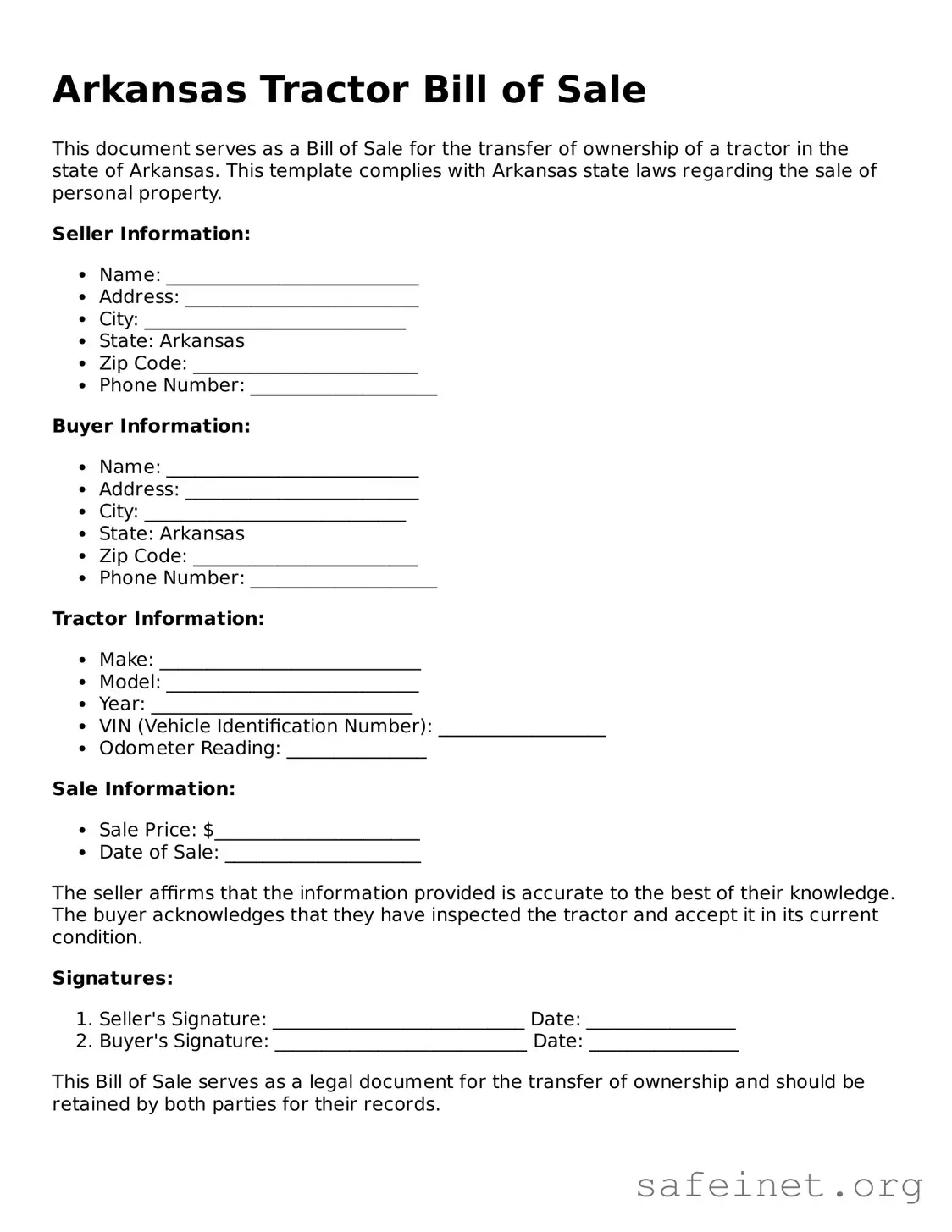
Arkansas Tractor Bill of Sale
This document serves as a Bill of Sale for the transfer of ownership of a tractor in the state of Arkansas. This template complies with Arkansas state laws regarding the sale of personal property.
Seller Information:
Buyer Information:
Tractor Information:
Sale Information:
The seller affirms that the information provided is accurate to the best of their knowledge. The buyer acknowledges that they have inspected the tractor and accept it in its current condition.
Signatures:
This Bill of Sale serves as a legal document for the transfer of ownership and should be retained by both parties for their records.
| Fact Name | Description |
|---|---|
| Purpose | The Arkansas Tractor Bill of Sale form is used to document the sale of a tractor between a buyer and a seller. |
| Governing Law | This form is governed by the laws of the State of Arkansas, specifically the Uniform Commercial Code (UCC) as it relates to the sale of goods. |
| Required Information | The form typically requires details such as the names and addresses of both parties, the tractor's make, model, year, and Vehicle Identification Number (VIN). |
| Signatures | Both the buyer and seller must sign the form to validate the transaction and ensure that both parties agree to the terms of the sale. |
Once you have the Arkansas Tractor Bill of Sale form in front of you, it's time to fill it out accurately. This document will serve as a record of the transaction between the buyer and seller, ensuring both parties have a clear understanding of the sale.
After completing the form, both parties should retain a copy for their records. This ensures that you have proof of the transaction and the details involved should any questions arise in the future.
What is a Tractor Bill of Sale in Arkansas?
A Tractor Bill of Sale is a legal document used to transfer ownership of a tractor from one party to another in Arkansas. This form provides essential details about the transaction, including the buyer and seller's information, the tractor's description, and the sale price. It serves as proof of the sale and can be useful for registration and tax purposes.
Do I need a Tractor Bill of Sale to sell my tractor in Arkansas?
While it’s not legally required to have a Bill of Sale for every transaction, it is highly recommended. This document protects both the buyer and the seller by providing a record of the sale. It can help resolve any disputes that may arise later and is often required when registering the tractor with the state.
What information should be included in the Tractor Bill of Sale?
Essential information includes the names and addresses of both the buyer and seller, the tractor's make, model, year, and Vehicle Identification Number (VIN). Additionally, the sale price and the date of the transaction should be clearly stated. Both parties should sign the document to validate the sale.
Is there a specific format for the Tractor Bill of Sale in Arkansas?
There is no specific format mandated by the state. However, it should be clear and organized, including all necessary information. Many templates are available online to help guide you in creating a comprehensive Bill of Sale that meets your needs.
Can I use a generic Bill of Sale form for my tractor?
Yes, you can use a generic Bill of Sale form, but ensure it includes all relevant details specific to the tractor sale. Tailoring the form to include specific information about the tractor and the transaction will provide better protection for both parties.
Do I need to notarize the Tractor Bill of Sale?
Notarization is not required for a Tractor Bill of Sale in Arkansas, but it can add an extra layer of security and authenticity to the document. If you choose to have it notarized, both parties should be present during the notarization process.
What if the tractor has a lien on it?
If there is a lien on the tractor, it’s crucial to disclose this information in the Bill of Sale. The seller should ensure that the lien is satisfied before completing the sale. Buyers should also check for any outstanding liens to avoid potential complications after the purchase.
How does a Tractor Bill of Sale affect registration and taxes?
The Tractor Bill of Sale serves as proof of ownership when registering the tractor with the Arkansas Department of Finance and Administration. It may also be required for tax purposes, as it helps determine the sales tax owed on the transaction. Keeping a copy of the Bill of Sale is important for your records.
What should I do if I lose my Tractor Bill of Sale?
If you lose your Tractor Bill of Sale, you can create a new one, but both parties must agree to it. It’s important to include all the original details in the new document. Alternatively, if you have a copy of the original Bill of Sale, that can serve as a reference for recreating the document.
Where can I find a Tractor Bill of Sale template?
Templates for a Tractor Bill of Sale can be found online through various legal and document preparation websites. Many state government websites also provide resources and templates to assist with creating this document. Make sure to choose a template that aligns with Arkansas laws and requirements.
Incomplete Information: Failing to provide all required details can lead to complications. Make sure to include the names and addresses of both the buyer and seller, as well as the tractor's make, model, year, and Vehicle Identification Number (VIN).
Incorrect VIN: The VIN is crucial for identifying the tractor. Double-check that the VIN matches the one on the tractor itself. An incorrect VIN can result in registration issues.
Omitting Signatures: Both parties must sign the bill of sale. Without signatures, the document lacks legal validity. Ensure that both the buyer and seller sign and date the form.
Not Keeping Copies: After completing the form, retain copies for your records. This can be important for future reference or in case of disputes. Both parties should have a copy for their files.
When completing a transaction involving a tractor in Arkansas, several other documents may be necessary to ensure a smooth process. Each of these forms serves a specific purpose, providing essential information and legal protections for both the buyer and the seller.
In summary, these documents play a crucial role in the sale of a tractor in Arkansas. They help protect both parties and ensure compliance with state laws. Having the right paperwork in place can prevent disputes and facilitate a successful transaction.
The Arkansas Vehicle Bill of Sale serves a similar purpose to the Tractor Bill of Sale. Both documents facilitate the transfer of ownership for a vehicle or machinery, ensuring that all necessary details about the buyer, seller, and the item being sold are clearly outlined. This document is crucial for registering the vehicle with the state and provides legal protection for both parties involved in the transaction.
The Boat Bill of Sale is another document akin to the Tractor Bill of Sale. Like the Tractor Bill, it records the sale of a specific item, in this case, a boat. It includes information about the buyer and seller, as well as details about the boat such as its make, model, and identification number. This document is essential for transferring ownership and for registering the boat with the appropriate authorities.
When filling out the Arkansas Tractor Bill of Sale form, it's important to follow specific guidelines to ensure the document is valid and serves its purpose effectively. Here are some key dos and don'ts to consider:
When it comes to the Arkansas Tractor Bill of Sale form, there are several misconceptions that people often have. Here are five common misunderstandings:
Many believe that a bill of sale is only required for transactions involving dealerships. In reality, even private sales benefit from having a bill of sale. It serves as proof of the transaction and can protect both the buyer and seller.
Some think that only the seller's signature is required for the bill of sale to be valid. However, both the buyer and seller should sign the document to ensure that both parties agree to the terms of the sale.
While notarization is not always required for a bill of sale in Arkansas, having it notarized can add an extra layer of authenticity and may be necessary for certain transactions, especially if the buyer wants to register the tractor later.
Some view the bill of sale as a mere formality that can be skipped. In truth, it is an important legal document that can help resolve disputes and clarify ownership, making it essential for both parties.
People often assume that any bill of sale template will suffice. However, the Arkansas Tractor Bill of Sale form includes specific information relevant to tractors and must comply with state regulations to be valid.
Understanding these misconceptions can help ensure a smoother transaction when buying or selling a tractor in Arkansas.
When filling out and using the Arkansas Tractor Bill of Sale form, it is essential to keep several key points in mind. Here are ten important takeaways: