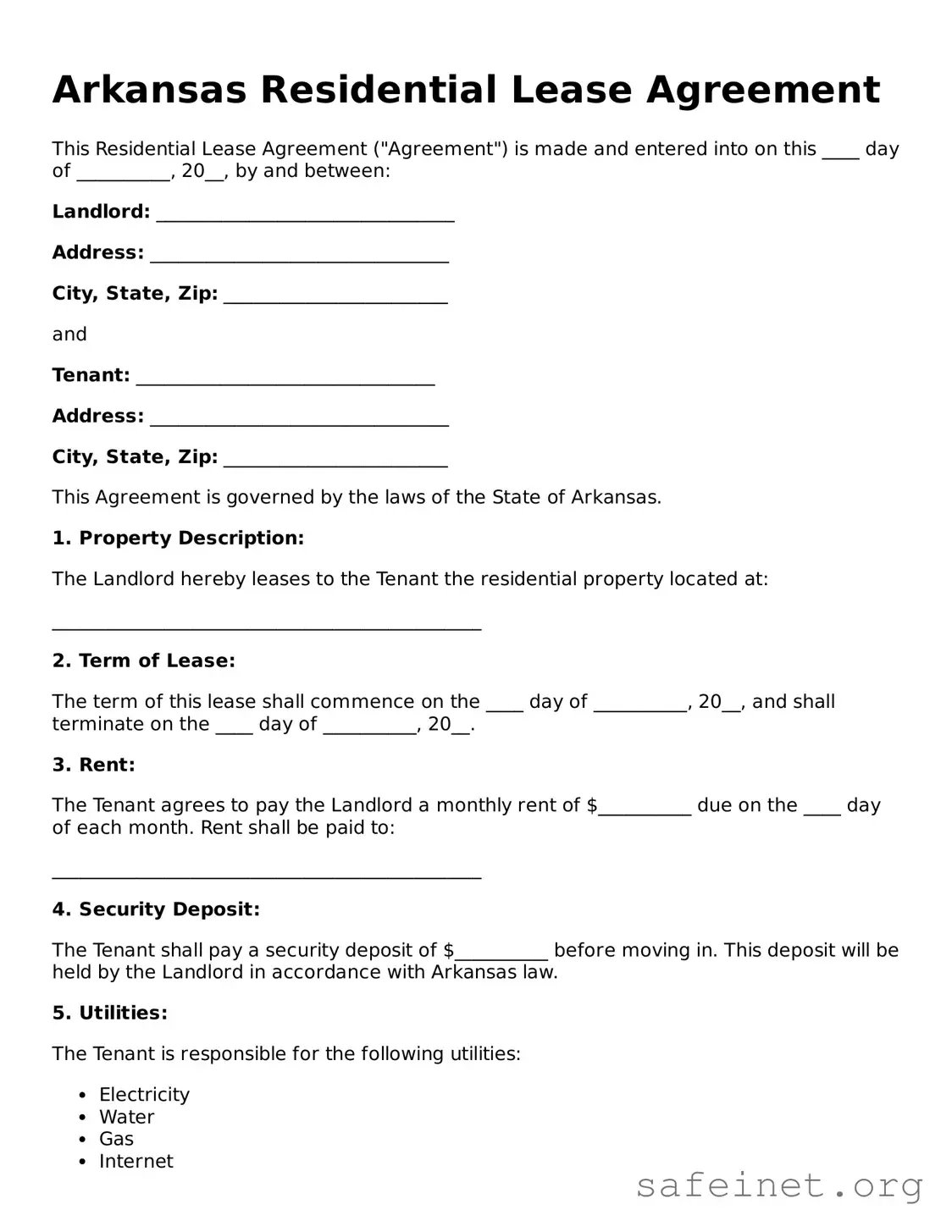
When renting a property in Arkansas, having a clear and comprehensive Residential Lease Agreement is essential for both landlords and tenants. This document serves as a binding contract that outlines the terms and conditions of the rental arrangement. Key aspects of the agreement include the duration of the lease, rental payment details, and security deposit requirements. Additionally, it covers responsibilities for property maintenance, rules regarding pets, and procedures for terminating the lease. By establishing these expectations upfront, the agreement helps prevent misunderstandings and disputes down the line. Understanding the components of the Arkansas Residential Lease Agreement is crucial for anyone entering into a rental relationship, ensuring that both parties are on the same page and protecting their rights throughout the leasing process.
Arkansas Residential Lease Agreement
This Residential Lease Agreement ("Agreement") is made and entered into on this ____ day of __________, 20__, by and between:
Landlord: ________________________________
Address: ________________________________
City, State, Zip: ________________________
and
Tenant: ________________________________
Address: ________________________________
City, State, Zip: ________________________
This Agreement is governed by the laws of the State of Arkansas.
1. Property Description:
The Landlord hereby leases to the Tenant the residential property located at:
______________________________________________
2. Term of Lease:
The term of this lease shall commence on the ____ day of __________, 20__, and shall terminate on the ____ day of __________, 20__.
3. Rent:
The Tenant agrees to pay the Landlord a monthly rent of $__________ due on the ____ day of each month. Rent shall be paid to:
______________________________________________
4. Security Deposit:
The Tenant shall pay a security deposit of $__________ before moving in. This deposit will be held by the Landlord in accordance with Arkansas law.
5. Utilities:
The Tenant is responsible for the following utilities:
6. Maintenance and Repairs:
The Tenant agrees to keep the property in good condition and notify the Landlord of any needed repairs.
7. Pets:
Pets are allowed / not allowed (circle one). If allowed, a pet deposit of $__________ is required.
8. Termination:
Either party may terminate this Agreement by providing a written notice of at least ____ days before the intended termination date.
9. Governing Law:
This Agreement shall be governed by and construed in accordance with the laws of the State of Arkansas.
IN WITNESS WHEREOF, the parties have executed this Agreement as of the date first above written.
Landlord Signature: ________________________________
Date: ________________________________
Tenant Signature: ________________________________
Date: ________________________________
| Fact Name | Description |
|---|---|
| Governing Law | The Arkansas Residential Lease Agreement is governed by the Arkansas Code Annotated Title 18, Chapter 17. |
| Parties Involved | The agreement is between the landlord (lessor) and the tenant (lessee), outlining their rights and responsibilities. |
| Lease Duration | The lease can be for a fixed term or month-to-month, depending on what the parties agree upon. |
| Security Deposit | Arkansas law allows landlords to collect a security deposit, which cannot exceed two months' rent. |
| Notice Requirements | Landlords must provide written notice to tenants for lease termination, typically 30 days for month-to-month leases. |
| Rent Payment | The agreement should specify the rent amount, due date, and acceptable payment methods. |
| Maintenance Obligations | Landlords are responsible for maintaining the property in a habitable condition, while tenants must keep the premises clean. |
| Dispute Resolution | The lease may outline procedures for resolving disputes, which can include mediation or arbitration. |
Filling out the Arkansas Residential Lease Agreement form is a straightforward process. This form outlines the terms of the lease between the landlord and the tenant, ensuring both parties understand their rights and responsibilities. Follow the steps below to complete the form accurately.
Once the form is completed, both parties should keep a copy for their records. Ensure all information is accurate to avoid misunderstandings in the future.
What is an Arkansas Residential Lease Agreement?
An Arkansas Residential Lease Agreement is a legal document that outlines the terms and conditions under which a landlord rents a residential property to a tenant. This agreement typically includes details such as the duration of the lease, rental amount, security deposit requirements, and responsibilities of both parties. It serves to protect the rights of both landlords and tenants, ensuring clarity and reducing potential disputes.
What are the key components of this lease agreement?
Key components of an Arkansas Residential Lease Agreement include the names of the landlord and tenant, property address, lease term (length of time the tenant will occupy the property), rent amount and payment schedule, security deposit details, maintenance responsibilities, and rules regarding pets or alterations to the property. Additionally, the agreement should outline the process for terminating the lease and any penalties for breaking it early.
How long is a typical lease term in Arkansas?
In Arkansas, lease terms can vary widely. They can be as short as a month-to-month arrangement or as long as a year or more. The specific duration should be clearly stated in the lease agreement. It's essential for both landlords and tenants to agree on the term length before signing, as this will dictate the rental relationship and obligations.
Can a landlord increase the rent during the lease term?
Generally, a landlord cannot increase the rent during the lease term unless the lease agreement specifically allows for it. Most leases are fixed for the duration of the term, meaning the rent amount remains unchanged until the lease expires. However, if the lease is month-to-month, the landlord may provide proper notice before increasing the rent, as dictated by Arkansas law.
What should I do if I need to terminate the lease early?
If you need to terminate the lease early, it is crucial to review the lease agreement for any clauses related to early termination. Many leases include a notice period and potential penalties for breaking the lease. Communicating with the landlord as soon as possible is essential. They may be willing to negotiate terms or allow you to find a replacement tenant, which can help avoid legal complications.
Incomplete Information: One common mistake is not filling out all required fields. Each section of the lease agreement is important. Missing information can lead to confusion or disputes later on.
Incorrect Dates: Many people overlook the importance of accuracy in dates. Ensure that the lease start and end dates are correct. An error here can affect the lease's validity.
Failure to Read the Terms: Some individuals rush through the document without understanding the terms. It's crucial to read and comprehend each clause. This helps avoid surprises regarding responsibilities and obligations.
Neglecting Signatures: Not signing the lease or having all necessary parties sign can invalidate the agreement. Ensure that everyone involved has signed and dated the document.
Ignoring Local Laws: Some people do not consider local rental laws when completing the lease. Familiarize yourself with Arkansas rental regulations. This knowledge can prevent legal issues down the road.
When entering into a rental agreement in Arkansas, several additional forms and documents may be necessary to ensure a smooth leasing process. These documents help clarify the terms of the lease, protect the rights of both landlords and tenants, and provide essential information regarding the rental property.
These documents are essential for both landlords and tenants to maintain clarity and protect their interests throughout the leasing process. Having the appropriate forms in place can help prevent misunderstandings and disputes in the future.
The Arkansas Residential Lease Agreement is similar to the standard lease agreement found in many states. Both documents outline the terms and conditions under which a landlord rents property to a tenant. They typically include details such as the rental amount, duration of the lease, and responsibilities of both parties. While the specific laws may vary by state, the core elements of these agreements remain consistent, ensuring that both landlords and tenants understand their rights and obligations.
Another document that resembles the Arkansas Residential Lease Agreement is the month-to-month rental agreement. This type of agreement provides flexibility for both landlords and tenants, allowing either party to terminate the lease with proper notice. Like the residential lease agreement, it outlines the rental amount and other essential terms. However, the month-to-month agreement does not lock tenants into a long-term commitment, making it ideal for those who may need to move frequently.
The commercial lease agreement is another similar document, but it is tailored for business properties rather than residential spaces. While it shares common elements, such as rental terms and maintenance responsibilities, a commercial lease often includes additional clauses related to business operations, such as zoning regulations and permitted use of the property. This document is essential for landlords and business owners to ensure a clear understanding of their responsibilities and rights in a commercial setting.
A sublease agreement also bears similarities to the Arkansas Residential Lease Agreement. This document allows a tenant to rent out their leased property to another person, known as the subtenant. Both agreements outline the terms of occupancy, payment, and responsibilities. However, the original tenant remains responsible to the landlord, which adds a layer of complexity. Sublease agreements are often used when a tenant needs to temporarily vacate the property but does not wish to break their lease.
Finally, the rental application form is closely related to the Arkansas Residential Lease Agreement in that it is often completed before the lease is signed. This document collects important information about prospective tenants, such as employment history, rental history, and references. It helps landlords assess whether an applicant is suitable for renting their property. While it does not outline the terms of the lease, it plays a crucial role in the leasing process by determining who may eventually sign the lease agreement.
When filling out the Arkansas Residential Lease Agreement form, it is essential to approach the task with care and attention to detail. The following list outlines key actions to take and avoid during this process.
When dealing with the Arkansas Residential Lease Agreement form, several misconceptions can arise. Understanding these misconceptions can help both landlords and tenants navigate their rights and responsibilities more effectively.
While it is strongly recommended to have a written lease for clarity, verbal agreements can still be legally binding in Arkansas. However, without a written document, proving the terms of the agreement can become complicated.
Not all lease agreements are identical. Each lease can include different terms, conditions, and provisions tailored to the specific needs of the landlord and tenant. It’s essential to read and understand the specific lease being signed.
Many tenants believe they must accept the lease as it is presented. In reality, lease terms can often be negotiated. This includes rent amount, security deposits, and maintenance responsibilities. Open communication can lead to a more favorable agreement for both parties.
Some tenants assume that their lease will automatically renew without any action needed. However, this depends on the specific terms outlined in the lease. It’s important to check for any renewal clauses and understand the notice requirements for ending or renewing the lease.
Filling out and using the Arkansas Residential Lease Agreement form is a crucial step for both landlords and tenants. Here are key takeaways to consider:
By paying attention to these key aspects, both landlords and tenants can ensure a smoother rental experience in Arkansas.