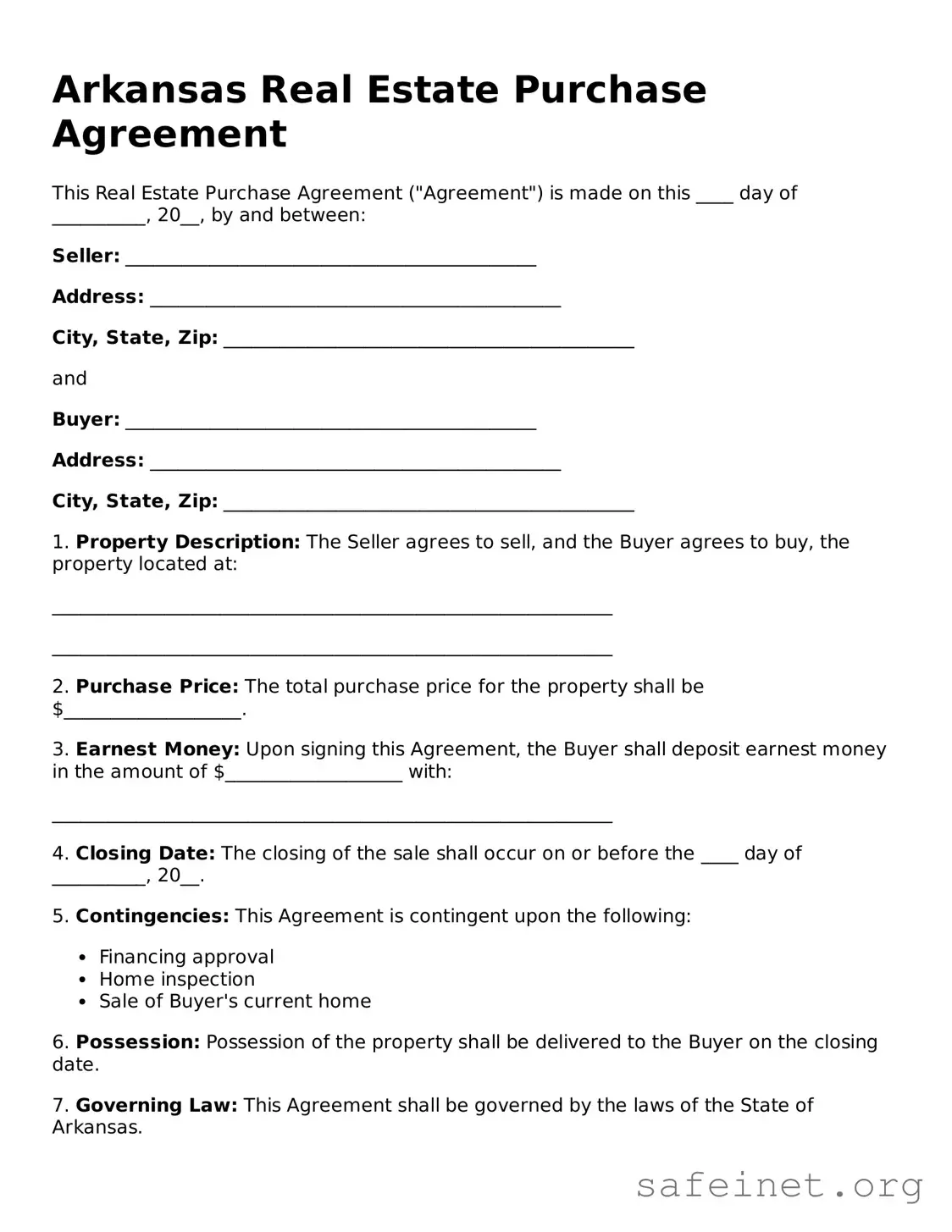
In the realm of real estate transactions in Arkansas, the Real Estate Purchase Agreement form serves as a crucial document that outlines the terms and conditions under which a property is bought and sold. This comprehensive agreement typically includes essential details such as the purchase price, the property’s legal description, and the closing date, ensuring that both the buyer and seller are on the same page. Additionally, it addresses important contingencies, such as financing and inspections, which can protect the interests of both parties involved. The form also stipulates the responsibilities of each party, including disclosures and any potential repairs that may need to be addressed before the sale is finalized. By clearly laying out these elements, the Real Estate Purchase Agreement not only facilitates a smoother transaction but also helps to minimize misunderstandings and disputes that could arise during the process.
Arkansas Real Estate Purchase Agreement
This Real Estate Purchase Agreement ("Agreement") is made on this ____ day of __________, 20__, by and between:
Seller: ____________________________________________
Address: ____________________________________________
City, State, Zip: ____________________________________________
and
Buyer: ____________________________________________
Address: ____________________________________________
City, State, Zip: ____________________________________________
1. Property Description: The Seller agrees to sell, and the Buyer agrees to buy, the property located at:
____________________________________________________________
____________________________________________________________
2. Purchase Price: The total purchase price for the property shall be $___________________.
3. Earnest Money: Upon signing this Agreement, the Buyer shall deposit earnest money in the amount of $___________________ with:
____________________________________________________________
4. Closing Date: The closing of the sale shall occur on or before the ____ day of __________, 20__.
5. Contingencies: This Agreement is contingent upon the following:
6. Possession: Possession of the property shall be delivered to the Buyer on the closing date.
7. Governing Law: This Agreement shall be governed by the laws of the State of Arkansas.
8. Signatures: By signing below, both parties agree to the terms outlined in this Agreement.
Seller's Signature: ___________________________ Date: __________
Buyer's Signature: ___________________________ Date: __________
| Fact Name | Description |
|---|---|
| Governing Law | The Arkansas Real Estate Purchase Agreement is governed by Arkansas state law. |
| Parties Involved | The agreement involves a buyer and a seller, both of whom must be clearly identified. |
| Property Description | A detailed description of the property being sold is required, including the address and legal description. |
| Purchase Price | The total purchase price must be specified, along with any earnest money deposit. |
| Contingencies | The agreement may include contingencies, such as financing or inspection clauses. |
| Closing Date | A closing date should be established, outlining when the transaction will be finalized. |
| Disclosure Requirements | Sellers must provide disclosures regarding the condition of the property, as mandated by Arkansas law. |
| Signatures | Both parties must sign the agreement to make it legally binding. |
After gathering the necessary information, proceed to fill out the Arkansas Real Estate Purchase Agreement form. This document is essential for formalizing the purchase of real estate in Arkansas. Ensure accuracy and clarity as you complete each section.
What is the Arkansas Real Estate Purchase Agreement form?
The Arkansas Real Estate Purchase Agreement form is a legal document that outlines the terms and conditions under which a buyer agrees to purchase real estate from a seller. It serves as a binding contract once both parties have signed it, detailing the specifics of the transaction.
What information is included in the form?
This form typically includes details such as the names of the buyer and seller, the property address, purchase price, earnest money deposit, financing terms, and any contingencies that must be met before the sale can be finalized. It may also specify the closing date and any additional terms agreed upon by both parties.
Is the Arkansas Real Estate Purchase Agreement form required for all real estate transactions?
Can the terms of the agreement be negotiated?
Yes, the terms of the Arkansas Real Estate Purchase Agreement can be negotiated before both parties sign. Buyers and sellers should feel free to discuss and modify terms such as the purchase price, closing date, and any contingencies. Once signed, however, the terms become legally binding.
What happens if one party does not fulfill their obligations?
If one party fails to meet their obligations as outlined in the agreement, the other party may have legal grounds to pursue remedies. This could include seeking damages or enforcing the contract through legal action. It's important to understand that both parties are expected to uphold their end of the agreement.
Are there any contingencies that can be included in the agreement?
Yes, contingencies are common in real estate agreements. They may include conditions such as the buyer securing financing, the property passing an inspection, or the sale of the buyer's current home. These contingencies protect the buyer and seller by allowing them to back out of the agreement if certain conditions are not met.
How can I ensure the agreement is legally binding?
To ensure that the Arkansas Real Estate Purchase Agreement is legally binding, both parties must sign the document. Additionally, it is advisable to have the agreement reviewed by a real estate attorney or a qualified professional to confirm that all necessary elements are included and that it complies with state laws.
Can I use this form for commercial real estate transactions?
The Arkansas Real Estate Purchase Agreement form is primarily designed for residential transactions. For commercial real estate transactions, a different form or agreement may be more appropriate. It is important to use the correct documentation to ensure all legal requirements are met.
What should I do if I have questions about the form?
If you have questions about the Arkansas Real Estate Purchase Agreement form, consider consulting with a real estate professional or an attorney. They can provide guidance specific to your situation and help clarify any uncertainties you may have regarding the agreement.
Where can I obtain the Arkansas Real Estate Purchase Agreement form?
The Arkansas Real Estate Purchase Agreement form can typically be obtained from real estate agents, online legal document services, or local real estate offices. Ensure that you are using the most current version of the form to comply with state regulations.
Failing to include all necessary parties' names. It is crucial to list all buyers and sellers accurately. Missing a name can lead to legal complications.
Not specifying the property address clearly. The agreement should include the full address, including any unit or apartment numbers, to avoid confusion.
Leaving out the purchase price. The total amount being offered for the property must be clearly stated to ensure all parties are aware of the financial terms.
Overlooking contingencies. Buyers should include conditions that must be met for the sale to proceed, such as financing or inspection contingencies.
Not providing a closing date. Specifying when the transaction will be finalized is essential for both parties to prepare accordingly.
Using vague language. Clear and precise terms help prevent misunderstandings. Avoid ambiguous phrases that could lead to disputes later.
Neglecting to sign and date the agreement. All parties must sign and date the document for it to be legally binding. An unsigned agreement is not enforceable.
When engaging in a real estate transaction in Arkansas, several additional forms and documents may accompany the Real Estate Purchase Agreement. Each of these documents serves a unique purpose, ensuring that both parties are protected and that the transaction proceeds smoothly. Below is a list of commonly used forms that you may encounter.
Understanding these additional forms can greatly enhance the real estate transaction process. Each document plays a vital role in safeguarding the interests of all parties involved, fostering transparency and trust throughout the buying and selling experience.
The Arkansas Residential Lease Agreement is a document that outlines the terms and conditions under which a landlord allows a tenant to occupy a property. Like the Real Estate Purchase Agreement, it specifies important details such as the duration of the lease, rental amount, and responsibilities of both parties. Both documents aim to protect the interests of the involved parties and ensure clarity regarding their obligations. However, while the purchase agreement deals with the sale of property, the lease agreement focuses on the rental aspect, highlighting the temporary nature of the tenant's occupancy.
The Arkansas Seller's Disclosure Statement is another important document that shares similarities with the Real Estate Purchase Agreement. This statement requires sellers to disclose any known defects or issues with the property to potential buyers. Both documents emphasize transparency and help buyers make informed decisions. While the purchase agreement finalizes the sale, the disclosure statement acts as a safeguard, ensuring that buyers are aware of any potential problems before proceeding with their purchase.
The Arkansas Counteroffer Form is a document used when a buyer or seller wishes to propose changes to the original offer. Similar to the Real Estate Purchase Agreement, it includes essential terms such as price and conditions. Both documents facilitate negotiations and ensure that all parties are on the same page. The counteroffer form allows for adjustments, while the purchase agreement serves as the final agreement once all terms are accepted.
The Arkansas Addendum to Purchase Agreement is a document that can be added to the Real Estate Purchase Agreement to include additional terms or conditions. This addendum allows for flexibility in the transaction, similar to how the purchase agreement itself outlines the primary terms of the sale. Both documents work together to create a comprehensive understanding of the sale, ensuring that any unique circumstances or agreements are formally recognized.
The Arkansas Real Estate Option Agreement is a document that grants a buyer the right to purchase a property at a later date for a specified price. This agreement shares the same goal as the Real Estate Purchase Agreement, which is to facilitate a property transaction. However, the option agreement allows for a delay in the purchase, providing the buyer with more time to secure financing or make a decision. Both documents protect the interests of buyers and sellers, but they cater to different timelines and commitments.
The Arkansas Lease Purchase Agreement combines elements of both leasing and purchasing a property. Similar to the Real Estate Purchase Agreement, it outlines the terms of a future sale, while also detailing the rental terms for the duration of the lease. This document is particularly beneficial for buyers who may not be ready to purchase outright but wish to secure a property for future ownership. Both agreements serve to clarify the rights and responsibilities of the parties involved.
The Arkansas Real Estate Commission's Purchase Agreement Template is a standardized document that provides a framework for real estate transactions. Like the Real Estate Purchase Agreement, it includes essential details about the property, price, and terms of sale. This template ensures that all necessary components are included in the agreement, promoting consistency and compliance with state regulations. Both documents aim to facilitate smooth transactions and protect the rights of all parties involved.
When filling out the Arkansas Real Estate Purchase Agreement form, it is essential to approach the task with care and attention to detail. Here are some important guidelines to consider:
By adhering to these guidelines, individuals can help facilitate a smoother transaction and reduce the likelihood of misunderstandings in the future.
Understanding the Arkansas Real Estate Purchase Agreement form is crucial for both buyers and sellers. However, several misconceptions can lead to confusion. Below is a list of common misunderstandings:
Being aware of these misconceptions can help parties navigate the real estate process more effectively. Understanding the nuances of the Arkansas Real Estate Purchase Agreement is key to a successful transaction.
When filling out the Arkansas Real Estate Purchase Agreement form, keep these key points in mind:
Being thorough and informed can make the process smoother for everyone involved.