In Arkansas, a Power of Attorney (POA) is a crucial legal document that allows individuals to appoint someone else to make decisions on their behalf. This form can cover a wide range of responsibilities, from managing financial affairs to making healthcare decisions. By granting this authority, the principal—who is the person creating the POA—can ensure that their wishes are respected even if they become unable to communicate or manage their own affairs. There are different types of POAs in Arkansas, including durable, which remains effective even if the principal becomes incapacitated, and springing, which only takes effect under certain conditions. It's essential to understand the specific powers being granted, as well as the rights and responsibilities of both the principal and the agent—the person designated to act on behalf of the principal. Additionally, the form must meet specific legal requirements to be valid, ensuring that it serves its intended purpose without complications. Understanding these aspects is vital for anyone considering establishing a Power of Attorney in Arkansas.
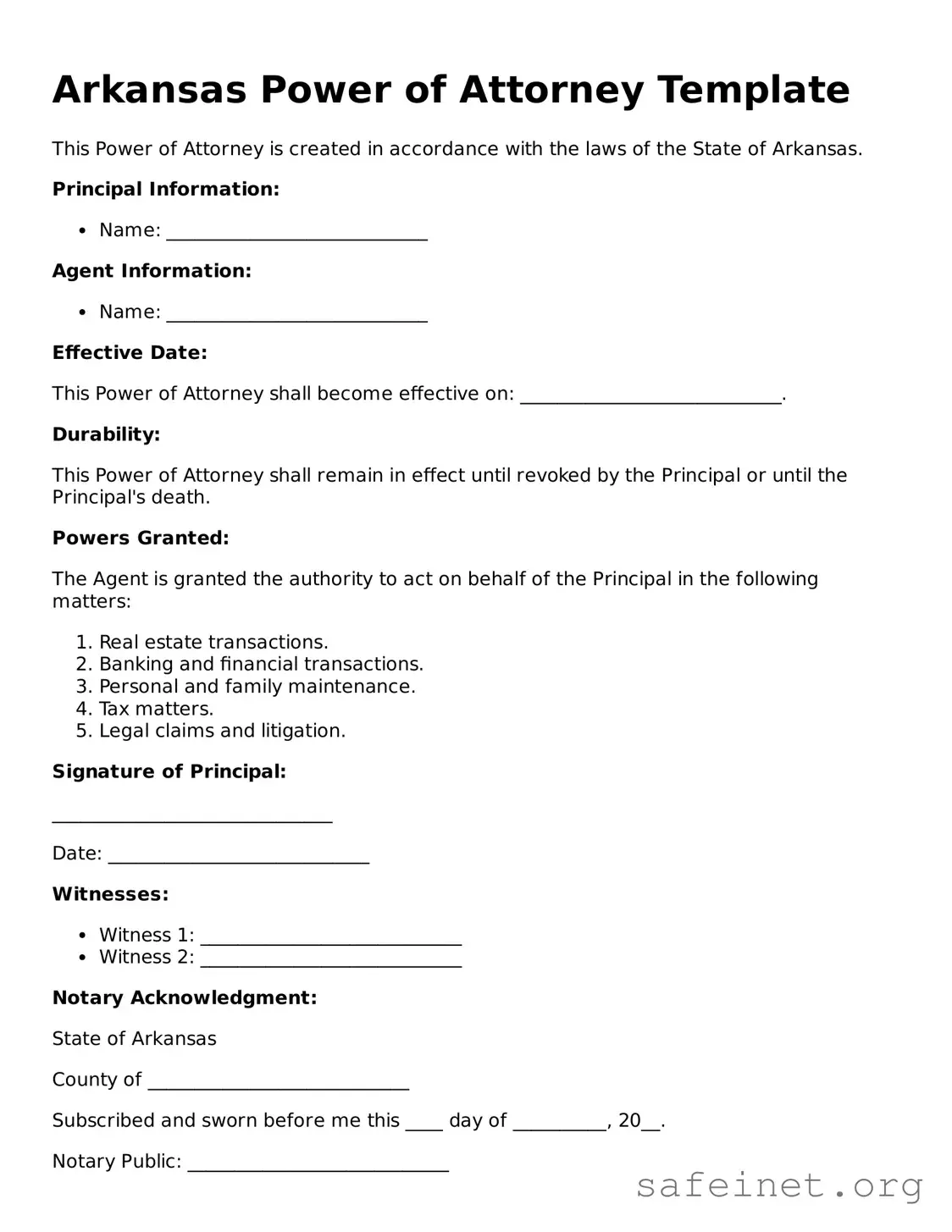
Arkansas Power of Attorney Template
This Power of Attorney is created in accordance with the laws of the State of Arkansas.
Principal Information:
Agent Information:
Effective Date:
This Power of Attorney shall become effective on: ____________________________.
Durability:
This Power of Attorney shall remain in effect until revoked by the Principal or until the Principal's death.
Powers Granted:
The Agent is granted the authority to act on behalf of the Principal in the following matters:
Signature of Principal:
______________________________
Date: ____________________________
Witnesses:
Notary Acknowledgment:
State of Arkansas
County of ____________________________
Subscribed and sworn before me this ____ day of __________, 20__.
Notary Public: ____________________________
My commission expires: ____________________________
| Fact Name | Description |
|---|---|
| Definition | The Arkansas Power of Attorney form allows an individual (the principal) to appoint someone else (the agent) to make decisions on their behalf. |
| Governing Law | This form is governed by the Arkansas Code Annotated, specifically Title 28, Chapter 68. |
| Types of Powers | It can grant broad or limited powers, covering financial, medical, or legal matters, depending on the principal's wishes. |
| Durability | A durable power of attorney remains effective even if the principal becomes incapacitated, unless revoked. |
| Signing Requirements | The form must be signed by the principal and witnessed by two individuals or notarized to be valid. |
| Revocation | The principal can revoke the Power of Attorney at any time, as long as they are mentally competent. |
Filling out the Arkansas Power of Attorney form is a critical step in ensuring that your financial and legal matters are handled according to your wishes. Once you have completed the form, it is essential to have it signed and notarized to ensure its validity. This process can empower someone you trust to act on your behalf, providing peace of mind for you and your loved ones.
After completing these steps, your Power of Attorney will be ready for use. Ensure that all parties involved understand their roles and responsibilities to avoid any confusion in the future.
What is a Power of Attorney in Arkansas?
A Power of Attorney (POA) in Arkansas is a legal document that allows one person, known as the principal, to appoint another person, called the agent or attorney-in-fact, to make decisions on their behalf. This can include financial decisions, medical care, or other matters. The document must be signed by the principal and can be tailored to grant specific powers or be broad in scope.
How do I create a Power of Attorney in Arkansas?
To create a Power of Attorney in Arkansas, you must be at least 18 years old and mentally competent. You will need to fill out a Power of Attorney form, which can be obtained from various sources, including online legal services or local attorneys. After completing the form, it must be signed in the presence of a notary public. It is advisable to provide copies to your agent and any relevant institutions.
Can I revoke a Power of Attorney in Arkansas?
Yes, you can revoke a Power of Attorney in Arkansas at any time, as long as you are mentally competent. To do so, you should create a written revocation document, sign it, and provide copies to your agent and any institutions that may have relied on the original POA. It is important to ensure that the revocation is clear to avoid any confusion.
What happens if the principal becomes incapacitated?
If the principal becomes incapacitated, the Power of Attorney remains in effect unless it is a limited or springing Power of Attorney, which only takes effect upon incapacitation. The agent can then act on behalf of the principal, making decisions according to the authority granted in the document. It is crucial that the agent understands the principal's wishes and acts in their best interest.
Can I use a Power of Attorney for medical decisions in Arkansas?
Yes, you can use a Power of Attorney for medical decisions in Arkansas by creating a specific type called a Durable Power of Attorney for Health Care. This document allows your agent to make health-related decisions on your behalf if you are unable to do so. It is important to discuss your wishes with your agent and ensure they understand your preferences regarding medical treatment.
Is a Power of Attorney valid if I move to another state?
A Power of Attorney executed in Arkansas is generally valid in other states, but it is advisable to check the specific laws of the state you are moving to. Some states may have different requirements for the execution or acceptance of a Power of Attorney. It may be beneficial to consult with a local attorney in the new state to ensure compliance with local laws.
Not Naming an Agent: One common mistake is failing to designate a trusted person as your agent. Without an agent, the document loses its purpose.
Inadequate Specificity: Some people make the error of being vague about the powers granted. Clearly outlining what your agent can and cannot do is crucial.
Not Signing the Document: It might seem obvious, but forgetting to sign the form can invalidate it. Ensure that you sign and date the document in the appropriate places.
Ignoring Witness and Notary Requirements: Arkansas requires that the Power of Attorney be signed in front of a notary public. Skipping this step can lead to complications later.
Failing to Update the Document: Life changes, and so do your needs. Not revisiting and updating your Power of Attorney can result in outdated information or agents.
When creating a Power of Attorney in Arkansas, there are several additional forms and documents that may be beneficial to consider. Each of these documents serves a specific purpose and can enhance the effectiveness of the Power of Attorney, ensuring that your intentions are clearly communicated and legally recognized.
By understanding and utilizing these forms, individuals can ensure their wishes are respected and that their appointed agents have the necessary authority to act on their behalf. It's essential to review each document carefully and consult with a professional if needed to ensure all legal requirements are met.
The Arkansas Power of Attorney form shares similarities with the Durable Power of Attorney. Both documents allow an individual to designate someone else to make decisions on their behalf. However, the Durable Power of Attorney remains effective even if the principal becomes incapacitated. This feature makes it particularly useful for long-term planning, ensuring that the designated agent can act when the principal can no longer manage their affairs.
Another document akin to the Arkansas Power of Attorney is the Medical Power of Attorney. This specific form focuses on healthcare decisions. It enables individuals to appoint someone to make medical choices if they are unable to do so themselves. Like the general Power of Attorney, it grants authority to the agent, but its scope is limited to health-related matters, ensuring that personal values and preferences are honored in medical situations.
The Living Will is also similar, as it addresses end-of-life decisions. While the Power of Attorney allows an agent to make decisions, the Living Will provides direct instructions regarding medical treatment preferences. This document is crucial for individuals who want to outline their wishes regarding life-sustaining treatments, ensuring that their desires are respected even when they cannot communicate them.
A Trust is another relevant document. While a Power of Attorney grants authority to manage affairs, a Trust allows for the management and distribution of assets. Trusts can help avoid probate and provide greater control over how assets are handled after death. Both documents can work together, with the Power of Attorney managing assets during the principal's lifetime and the Trust governing them afterward.
The Guardianship form is also comparable, particularly when it comes to decision-making authority. A Guardianship is established through the court for individuals who cannot make decisions for themselves. In contrast, a Power of Attorney is a voluntary arrangement that allows someone to act on another's behalf without court intervention. Both serve to protect individuals who may need assistance, but they do so through different legal mechanisms.
Lastly, the Advance Directive is similar to the Arkansas Power of Attorney in that it allows individuals to express their healthcare preferences. While the Power of Attorney appoints someone to make decisions, an Advance Directive lays out specific wishes regarding treatment and care. This document ensures that healthcare providers and loved ones understand the individual's desires, especially in critical situations where communication may not be possible.
When filling out the Arkansas Power of Attorney form, it is important to follow specific guidelines to ensure the document is valid and meets your needs. Here are ten key points to consider:
Many people have misunderstandings about the Arkansas Power of Attorney form. Here are five common misconceptions:
While many use a Power of Attorney for financial decisions, it can also be used for health care and other personal matters. The scope of authority can be tailored to fit specific needs.
In Arkansas, a Power of Attorney does not always need to be notarized. However, having it notarized can help prevent disputes and ensure acceptance by third parties.
This is not true. You can revoke a Power of Attorney at any time, as long as you are mentally competent. A written notice of revocation is typically required.
Not all powers are granted by default. You must clearly specify the powers you wish to give to your agent in the document.
A Power of Attorney can be effective immediately upon signing, or it can be set to activate only upon incapacitation. This flexibility is important for many individuals.
When considering the Arkansas Power of Attorney form, it’s essential to understand its implications and the steps involved in its completion. Here are five key takeaways: