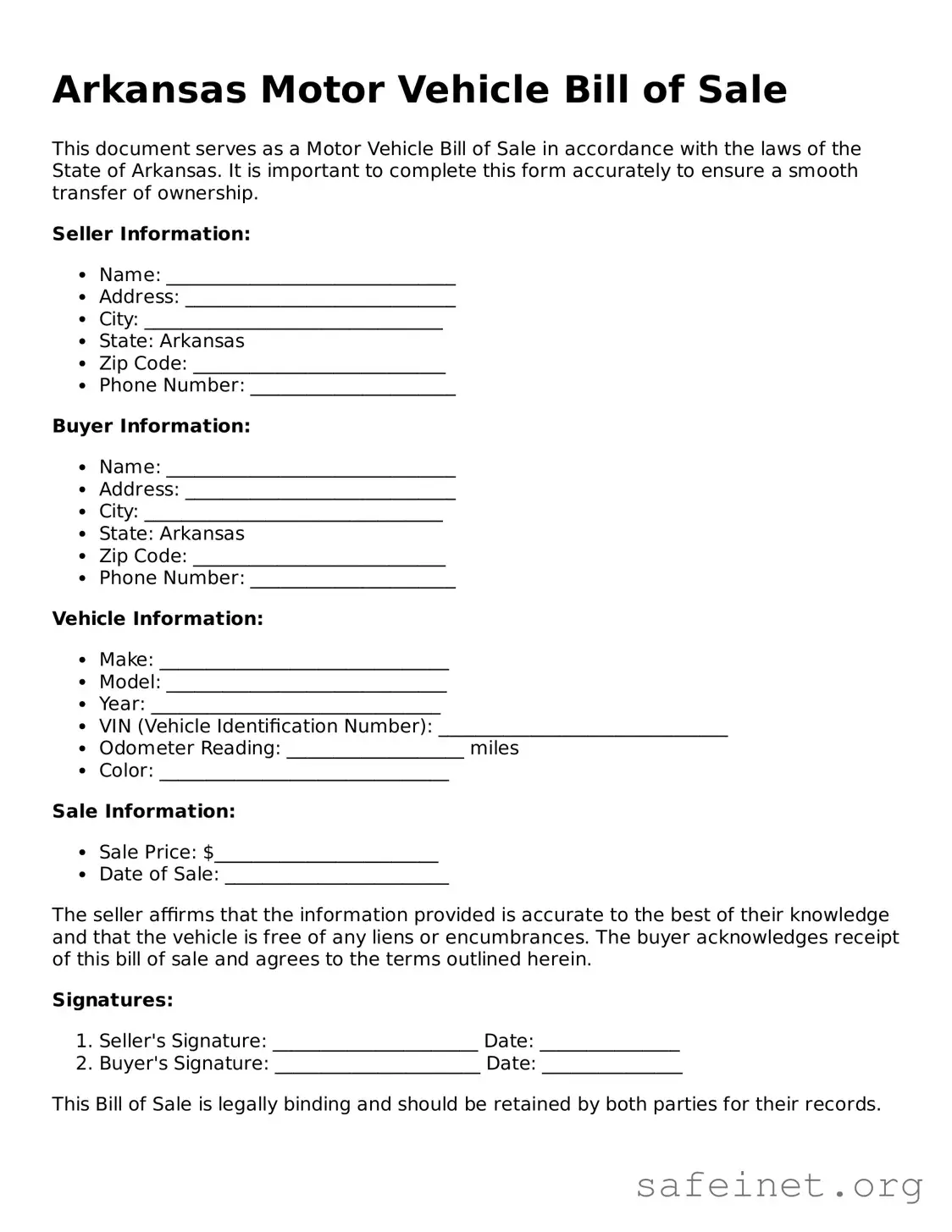
When it comes to buying or selling a vehicle in Arkansas, having the right documentation is crucial for a smooth transaction. One of the most important documents you'll encounter is the Arkansas Motor Vehicle Bill of Sale form. This form serves as a legal record of the sale and includes essential details such as the names and addresses of both the buyer and seller, the vehicle's make, model, and identification number, as well as the sale price. It also provides space for the date of the transaction and any additional terms agreed upon by both parties. While the form is straightforward, its importance cannot be overstated; it protects both the buyer and seller by clearly outlining the terms of the sale and ensuring that the transfer of ownership is documented properly. By understanding the key components of this form, you can navigate the vehicle sale process with confidence, ensuring that all necessary information is captured and both parties are protected.
Arkansas Motor Vehicle Bill of Sale
This document serves as a Motor Vehicle Bill of Sale in accordance with the laws of the State of Arkansas. It is important to complete this form accurately to ensure a smooth transfer of ownership.
Seller Information:
Buyer Information:
Vehicle Information:
Sale Information:
The seller affirms that the information provided is accurate to the best of their knowledge and that the vehicle is free of any liens or encumbrances. The buyer acknowledges receipt of this bill of sale and agrees to the terms outlined herein.
Signatures:
This Bill of Sale is legally binding and should be retained by both parties for their records.
| Fact Name | Description |
|---|---|
| Purpose | The Arkansas Motor Vehicle Bill of Sale form is used to document the sale or transfer of ownership of a motor vehicle between a seller and a buyer. |
| Governing Law | This form is governed by the Arkansas Code Annotated § 27-14-101, which outlines the requirements for vehicle sales and transfers. |
| Required Information | Essential details such as the vehicle identification number (VIN), make, model, year, and odometer reading must be included on the form. |
| Signatures | Both the seller and the buyer must sign the form to validate the transaction, indicating their agreement to the sale. |
| Record Keeping | It is advisable for both parties to keep a copy of the Bill of Sale for their records, as it serves as proof of the transaction. |
Once you have your Arkansas Motor Vehicle Bill of Sale form ready, it's time to fill it out accurately. This document will be essential for transferring ownership of the vehicle, so ensure that all information is clear and correct. Follow these steps to complete the form.
After completing the form, it is advisable to keep a copy for your records. The buyer will need this document when registering the vehicle, and the seller should retain a copy as proof of the sale. Make sure to follow any additional steps required by the Arkansas DMV for a smooth transfer of ownership.
What is a Motor Vehicle Bill of Sale in Arkansas?
A Motor Vehicle Bill of Sale is a legal document that records the sale of a vehicle from one party to another. It serves as proof of the transaction and includes important details such as the vehicle's make, model, year, and Vehicle Identification Number (VIN). This document is essential for both the buyer and the seller to protect their interests in the sale.
Why do I need a Bill of Sale when buying or selling a vehicle?
The Bill of Sale acts as a receipt for the transaction. It provides evidence that the buyer has purchased the vehicle and that the seller has received payment. This document can be crucial if any disputes arise in the future regarding ownership or the terms of the sale.
What information should be included in the Bill of Sale?
The Bill of Sale should include the names and addresses of both the buyer and the seller, the vehicle's details (make, model, year, and VIN), the sale price, and the date of the transaction. It is also advisable to include any conditions of the sale, such as whether the vehicle is sold "as-is" or if any warranties are provided.
Is the Bill of Sale required to register the vehicle in Arkansas?
Yes, the Bill of Sale is typically required when registering a vehicle in Arkansas. The Arkansas Department of Finance and Administration may ask for this document to verify the transaction and confirm ownership before issuing new registration and title documents.
Do I need to have the Bill of Sale notarized?
While notarization is not strictly required for a Bill of Sale in Arkansas, it can provide an extra layer of security. Having the document notarized can help confirm the identities of the parties involved and the authenticity of their signatures, which may be beneficial if any disputes arise later.
Can I use a generic Bill of Sale form?
Yes, you can use a generic Bill of Sale form, but it is important to ensure that it includes all necessary information specific to the vehicle and the transaction. Using a form tailored for Arkansas can help ensure compliance with state requirements and reduce the risk of errors.
What if the vehicle is a gift?
If the vehicle is being given as a gift, a Bill of Sale is still recommended. The document should indicate that the vehicle is a gift and include the fair market value of the vehicle. This information may be necessary for tax purposes, and it helps clarify the nature of the transaction.
How do I complete the Bill of Sale?
To complete the Bill of Sale, both the buyer and the seller should fill out their respective sections with accurate information. After ensuring all details are correct, both parties should sign and date the document. It is wise for each party to keep a copy for their records.
What should I do if I lose the Bill of Sale?
If you lose the Bill of Sale, it is advisable to contact the seller (if you are the buyer) or the buyer (if you are the seller) to see if they have a copy. If not, you may need to create a new Bill of Sale and have both parties sign it again. Keeping a digital copy can help prevent loss in the future.
Where can I obtain a Bill of Sale form for Arkansas?
You can obtain a Bill of Sale form from various sources. Many websites offer free templates, and you can also find forms at local DMV offices. Ensure that any form you use meets the requirements set by the state of Arkansas to avoid complications during the registration process.
Incorrect Vehicle Information: Many individuals fail to provide accurate details about the vehicle, such as the VIN (Vehicle Identification Number), make, model, and year. This can lead to complications in registration and ownership transfer.
Missing Signatures: Both the buyer and seller must sign the Bill of Sale. Omitting one of the signatures can render the document invalid, causing issues later on.
Failure to Date the Document: Not including the date on which the sale took place can create confusion regarding the transaction timeline. This is important for record-keeping and legal purposes.
Ignoring Payment Details: Some people neglect to specify the sale price or payment method. This information is crucial for both parties and can affect tax obligations.
Not Keeping Copies: After filling out the form, individuals often forget to make copies for their records. Retaining a copy is essential for future reference and potential disputes.
When buying or selling a vehicle in Arkansas, the Motor Vehicle Bill of Sale form is an essential document. However, several other forms and documents may be needed to ensure a smooth transaction and comply with state regulations. Below is a list of commonly used forms that accompany the Bill of Sale.
Each of these documents plays a vital role in the vehicle transaction process. Ensuring that all necessary paperwork is completed and submitted can help prevent future complications and make the transfer of ownership seamless.
The Arkansas Motor Vehicle Bill of Sale form is quite similar to the general Bill of Sale, which can be used for various types of personal property transactions. Like the Motor Vehicle Bill of Sale, a general Bill of Sale serves as a legal document that records the transfer of ownership from one party to another. It typically includes details such as the names of the buyer and seller, a description of the item being sold, and the sale price. Both documents provide protection for both parties by creating a written record of the transaction, which can be crucial in case of disputes or misunderstandings in the future.
Another document that resembles the Arkansas Motor Vehicle Bill of Sale is the Vehicle Title. The Vehicle Title is an official document issued by the state that proves ownership of a vehicle. While the Bill of Sale serves as a receipt for the transaction, the title is a formal recognition of ownership. When a vehicle is sold, the seller must sign over the title to the buyer, and this process often accompanies the completion of a Bill of Sale. Both documents are essential for the legal transfer of vehicle ownership, ensuring that all parties are protected during the transaction.
The Affidavit of Vehicle Ownership is another document that shares similarities with the Arkansas Motor Vehicle Bill of Sale. This affidavit is often used when a vehicle owner cannot locate the title but still wants to prove ownership for the purpose of selling or transferring the vehicle. Like the Bill of Sale, the affidavit includes details about the vehicle and the owner, affirming that the seller has the right to sell the vehicle. Both documents can be vital in establishing legal ownership and facilitating a smooth transaction, particularly in cases where the title is missing.
The Odometer Disclosure Statement is also comparable to the Arkansas Motor Vehicle Bill of Sale. This document is required by federal law when a vehicle is sold, ensuring that the buyer is informed about the vehicle's mileage at the time of sale. Similar to the Bill of Sale, the Odometer Disclosure Statement must be completed and signed by both the seller and buyer. Both documents aim to protect the buyer from potential fraud and misrepresentation, providing a clear record of the transaction and the vehicle's condition at the time of sale.
Lastly, the Release of Liability form is akin to the Arkansas Motor Vehicle Bill of Sale in that it protects the seller after the vehicle has been sold. This document notifies the state that the seller is no longer responsible for the vehicle, effectively releasing them from any future liabilities associated with it. While the Bill of Sale confirms the sale and transfer of ownership, the Release of Liability ensures that the seller is protected from any legal issues that may arise after the transaction. Both documents are crucial for a secure and transparent vehicle sale process.
When filling out the Arkansas Motor Vehicle Bill of Sale form, it's important to follow certain guidelines to ensure a smooth transaction. Here are some essential dos and don'ts to keep in mind:
By following these guidelines, you can help ensure that your vehicle sale goes smoothly and is legally binding. Properly completing the Bill of Sale is crucial for both the buyer and the seller.
Many people have misunderstandings about the Arkansas Motor Vehicle Bill of Sale form. Here are six common misconceptions:
Understanding these misconceptions can help ensure a smooth vehicle transaction in Arkansas.
When dealing with the Arkansas Motor Vehicle Bill of Sale form, it’s important to understand several key aspects to ensure a smooth transaction. Here are some essential takeaways:
By keeping these points in mind, you can navigate the process of completing the Motor Vehicle Bill of Sale form in Arkansas with confidence.