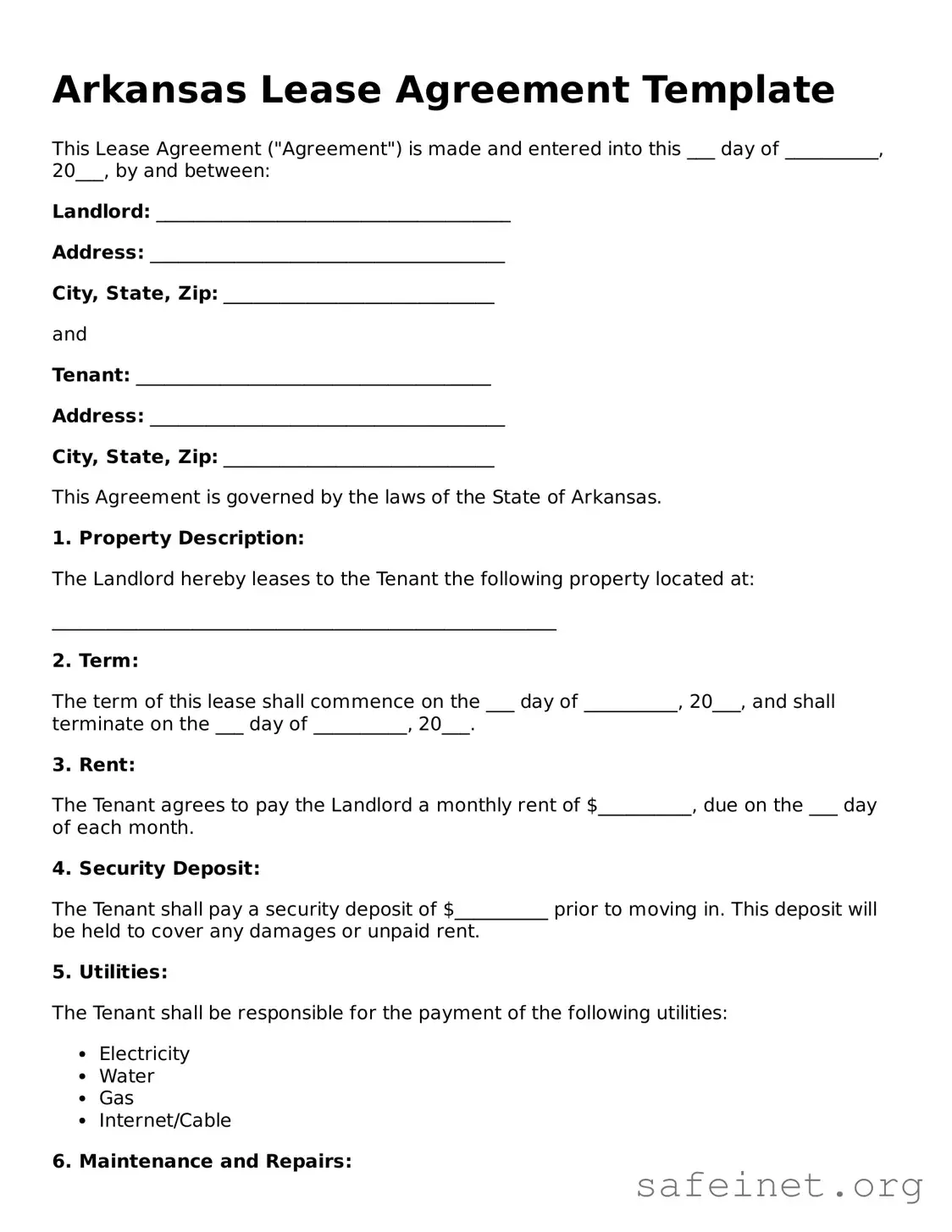
When entering into a rental arrangement in Arkansas, having a well-structured lease agreement is essential for both landlords and tenants. This document serves as a legally binding contract that outlines the rights and responsibilities of each party involved. Key elements typically included in the Arkansas Lease Agreement form are the duration of the lease, the rental amount, and payment terms. It also addresses security deposits, maintenance responsibilities, and rules regarding pets or alterations to the property. Additionally, the form may cover provisions for terminating the lease, handling disputes, and any specific local regulations that must be adhered to. Understanding these components can help ensure a smooth rental experience, fostering clear communication and reducing the likelihood of conflicts down the road.
Arkansas Lease Agreement Template
This Lease Agreement ("Agreement") is made and entered into this ___ day of __________, 20___, by and between:
Landlord: ______________________________________
Address: ______________________________________
City, State, Zip: _____________________________
and
Tenant: ______________________________________
Address: ______________________________________
City, State, Zip: _____________________________
This Agreement is governed by the laws of the State of Arkansas.
1. Property Description:
The Landlord hereby leases to the Tenant the following property located at:
______________________________________________________
2. Term:
The term of this lease shall commence on the ___ day of __________, 20___, and shall terminate on the ___ day of __________, 20___.
3. Rent:
The Tenant agrees to pay the Landlord a monthly rent of $__________, due on the ___ day of each month.
4. Security Deposit:
The Tenant shall pay a security deposit of $__________ prior to moving in. This deposit will be held to cover any damages or unpaid rent.
5. Utilities:
The Tenant shall be responsible for the payment of the following utilities:
6. Maintenance and Repairs:
The Tenant agrees to keep the property in good condition and to notify the Landlord of any needed repairs.
7. Termination:
Either party may terminate this Agreement by providing a written notice of ___ days to the other party.
8. Governing Law:
This Agreement shall be governed by the laws of the State of Arkansas.
9. Signatures:
By signing below, both parties agree to the terms of this Lease Agreement.
Landlord Signature: ___________________________ Date: __________
Tenant Signature: ____________________________ Date: __________
| Fact Name | Description |
|---|---|
| Governing Law | The Arkansas Lease Agreement is governed by the Arkansas Code Title 18, Chapter 17. |
| Types of Leases | It can be used for residential, commercial, and agricultural leases. |
| Written Requirement | A lease agreement for a term longer than one year must be in writing to be enforceable. |
| Security Deposit | Arkansas law does not specify a maximum amount for security deposits, but it should be reasonable. |
| Notice Period | Landlords must provide a notice period of at least 30 days for month-to-month leases before termination. |
| Habitability Standards | Landlords are required to maintain rental properties in a habitable condition, ensuring basic living standards. |
| Disclosure Requirements | Landlords must disclose any known lead-based paint hazards in properties built before 1978. |
| Termination Clauses | Lease agreements may include specific clauses outlining the conditions under which the lease can be terminated early. |
Filling out the Arkansas Lease Agreement form is a straightforward process that ensures both landlords and tenants have a clear understanding of their rights and responsibilities. Following these steps will help you complete the form accurately and efficiently.
Once the form is filled out and signed, both parties should keep a copy for their records. This helps ensure that everyone is on the same page and can refer back to the agreement if needed.
What is an Arkansas Lease Agreement form?
An Arkansas Lease Agreement form is a legally binding document that outlines the terms and conditions under which a landlord rents property to a tenant. It includes details such as the rental amount, duration of the lease, security deposit, and responsibilities of both parties. This document is essential for protecting the rights of both landlords and tenants in the state of Arkansas.
What are the key components of the Arkansas Lease Agreement?
The key components typically include the names of the landlord and tenant, property address, lease term, rent amount, payment due date, security deposit details, maintenance responsibilities, and termination conditions. Each of these elements plays a crucial role in ensuring clarity and mutual understanding between both parties.
Is it necessary to have a written lease agreement in Arkansas?
Can a landlord increase the rent during the lease term?
What happens if a tenant wants to terminate the lease early?
Are there any specific laws governing lease agreements in Arkansas?
How can disputes be resolved if they arise from the lease agreement?
Missing Names: One common mistake is not including the full names of all tenants and landlords. Make sure to list everyone involved in the lease to avoid confusion later.
Incorrect Dates: Failing to specify the correct lease start and end dates can lead to misunderstandings. Double-check these dates to ensure they align with your agreement.
Omitting Rent Amount: It's crucial to clearly state the monthly rent amount. Leaving this blank or writing it incorrectly can create disputes down the line.
Neglecting Security Deposit Details: Not specifying the security deposit amount and conditions for its return can lead to complications. Be clear about this aspect to protect both parties.
Ignoring Maintenance Responsibilities: Failing to outline who is responsible for maintenance and repairs can cause friction. Clearly define these responsibilities in the agreement.
Not Including Pet Policies: If pets are allowed or prohibited, make sure to include this in the lease. This avoids potential issues with tenants who may assume otherwise.
Leaving Out Utilities Information: Clearly state which utilities are included in the rent and which are the tenant's responsibility. This prevents confusion about bills.
Failing to Sign and Date: A lease agreement is not valid unless all parties sign and date it. Ensure everyone involved does this to make the agreement legally binding.
Not Reviewing Local Laws: Ignoring Arkansas rental laws can lead to issues. Familiarize yourself with local regulations to ensure compliance and protect your rights.
When entering into a lease agreement in Arkansas, several other forms and documents may be necessary to ensure clarity and legal compliance. These documents help protect both landlords and tenants by outlining responsibilities, expectations, and legal rights. Below are some commonly used forms that accompany the Arkansas Lease Agreement.
Utilizing these documents alongside the Arkansas Lease Agreement can significantly enhance the rental experience for both landlords and tenants. They provide essential protections and clarify expectations, reducing the likelihood of misunderstandings or disputes down the line.
The Arkansas Lease Agreement form shares similarities with the Rental Agreement. Both documents outline the terms under which a landlord allows a tenant to occupy a property. They typically include details such as the rental amount, duration of the lease, and responsibilities for maintenance. While a lease agreement often covers a longer term, a rental agreement may be more flexible, allowing for month-to-month arrangements. Both documents aim to protect the rights of both parties while ensuring clarity in the rental relationship.
Another document akin to the Arkansas Lease Agreement is the Sublease Agreement. This agreement allows a tenant to lease the property to another individual, known as the subtenant. Similar to the lease agreement, it outlines the terms of occupancy, including rental payments and duration. The original tenant remains responsible to the landlord, which adds a layer of complexity. Both agreements must be clear to prevent misunderstandings and ensure all parties understand their rights and obligations.
The Purchase Agreement also shares commonalities with the Arkansas Lease Agreement. While the former pertains to the sale of property, both documents detail the terms of use and conditions surrounding the property. For instance, both agreements specify the financial obligations of the parties involved. In a purchase agreement, the buyer commits to paying a certain amount, while in a lease agreement, the tenant agrees to pay rent. Each document serves to protect the interests of the parties involved, ensuring that expectations are clearly defined.
A similar document is the Commercial Lease Agreement, which is used for business properties. Like the Arkansas Lease Agreement, it specifies the terms of occupancy, including rent and duration. However, commercial leases often contain additional clauses tailored to business needs, such as provisions for property modifications or use restrictions. Both agreements are essential in establishing a legal framework for the tenant's use of the property, protecting both the landlord's and tenant's interests.
Finally, the Roommate Agreement can be compared to the Arkansas Lease Agreement. While a lease agreement typically involves a landlord and tenant, a roommate agreement is between individuals sharing a rental space. Both documents outline responsibilities, including rent payment and maintenance duties. They serve to clarify expectations and prevent disputes among roommates, much like how a lease agreement protects the relationship between landlords and tenants. Each agreement fosters a harmonious living situation by clearly defining the roles and responsibilities of all parties involved.
When filling out the Arkansas Lease Agreement form, it is important to approach the task with care and attention to detail. Below is a list of actions to consider, both positive and negative, to ensure that the process goes smoothly.
Following these guidelines can help facilitate a positive leasing experience for both tenants and landlords. Careful attention to the details of the lease agreement is essential in establishing a clear understanding between both parties.
Understanding lease agreements is crucial for both landlords and tenants. However, several misconceptions can lead to confusion or even legal issues. Here are six common misconceptions about the Arkansas Lease Agreement form:
Many people believe that lease agreements are standard and interchangeable. In reality, each lease can be tailored to the specific needs of the landlord and tenant. It's essential to read and understand the terms of your particular agreement.
Some individuals think that a verbal agreement is just as good as a written one. However, in Arkansas, a lease should be in writing to be enforceable, especially if it lasts longer than one year. Always get it in writing!
There's a common belief that once a security deposit is paid, it cannot be recovered. In Arkansas, tenants can get their security deposit back, minus any deductions for damages or unpaid rent, as long as they follow the proper procedures.
Many tenants think landlords have unrestricted access to their rental property. In Arkansas, landlords must provide reasonable notice before entering the property, usually 24 hours, except in emergencies.
Some tenants feel they must accept the lease terms as they are. However, most lease agreements are negotiable. If you have concerns or requests, don’t hesitate to discuss them with your landlord.
It's a misconception that signed leases are set in stone. While changes can be complicated, amendments can be made if both parties agree and document the changes properly.
Understanding these misconceptions can help both landlords and tenants navigate their lease agreements more effectively. Always read the fine print and don’t hesitate to ask questions if something is unclear!
When filling out and using the Arkansas Lease Agreement form, keep these key takeaways in mind: