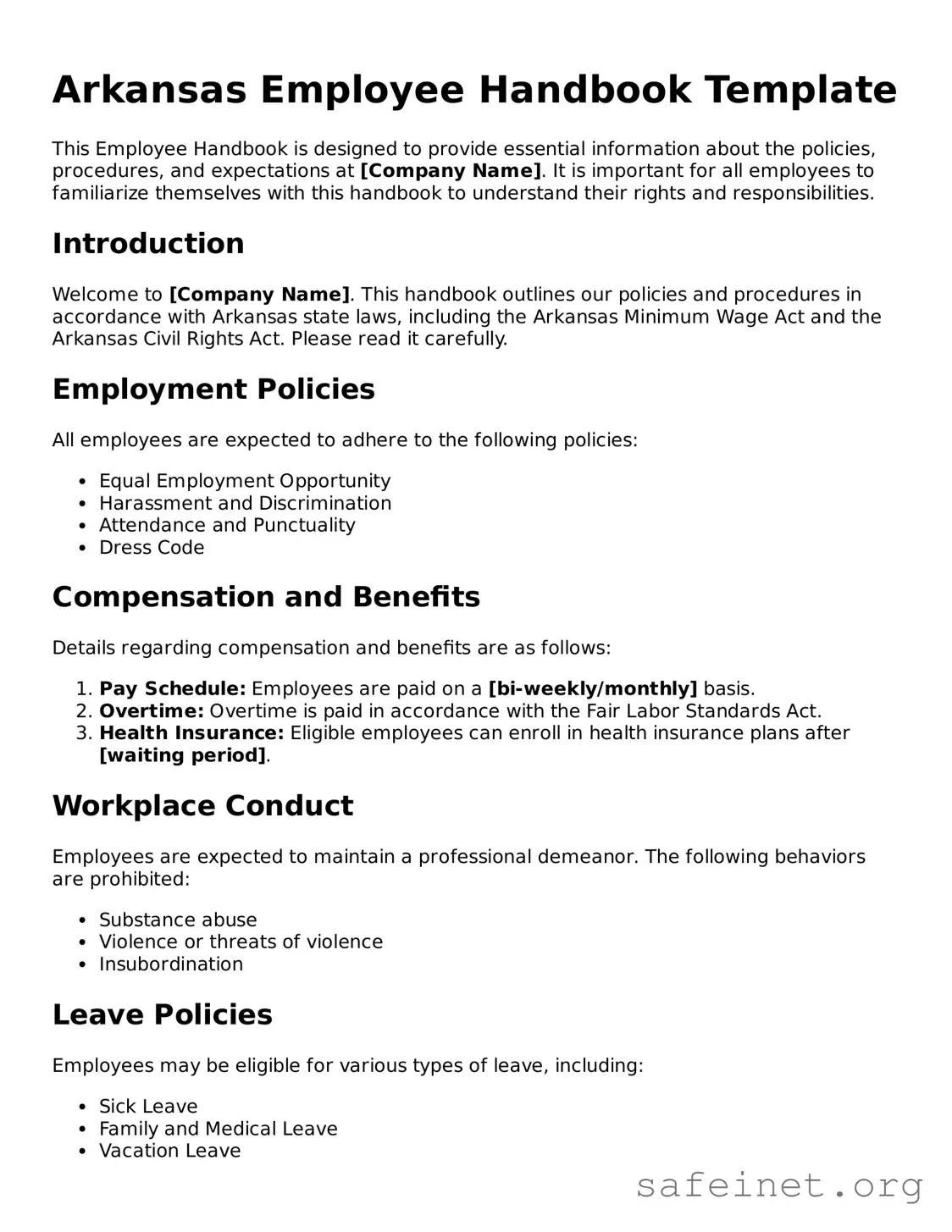
Creating an employee handbook is a crucial step for any business operating in Arkansas. This document serves as a foundational resource that outlines company policies, employee rights, and workplace expectations. It addresses various essential topics, including employee conduct, attendance policies, and the procedures for requesting time off. Furthermore, the handbook often covers benefits information, such as health insurance options and retirement plans, ensuring that employees are well-informed about their entitlements. Additionally, it outlines the company's stance on equal employment opportunities, harassment, and safety protocols, promoting a healthy and inclusive work environment. By providing clear guidelines and expectations, the Arkansas Employee Handbook form not only helps foster a positive workplace culture but also serves to protect both the employer and the employees by minimizing misunderstandings and potential legal issues.
Arkansas Employee Handbook Template
This Employee Handbook is designed to provide essential information about the policies, procedures, and expectations at [Company Name]. It is important for all employees to familiarize themselves with this handbook to understand their rights and responsibilities.
Introduction
Welcome to [Company Name]. This handbook outlines our policies and procedures in accordance with Arkansas state laws, including the Arkansas Minimum Wage Act and the Arkansas Civil Rights Act. Please read it carefully.
Employment Policies
All employees are expected to adhere to the following policies:
Compensation and Benefits
Details regarding compensation and benefits are as follows:
Workplace Conduct
Employees are expected to maintain a professional demeanor. The following behaviors are prohibited:
Leave Policies
Employees may be eligible for various types of leave, including:
Health and Safety
It is the responsibility of all employees to maintain a safe working environment. Employees should report any unsafe conditions to their supervisor immediately.
Employee Acknowledgment
By signing below, you acknowledge that you have received, read, and understood the policies outlined in this Employee Handbook.
Employee Name: ________________________
Employee Signature: _____________________
Date: _________________________________
| Fact Name | Description |
|---|---|
| Purpose | The Arkansas Employee Handbook serves as a guide for employees, outlining company policies, procedures, and expectations. |
| Legal Requirement | While not legally required, having an employee handbook can help protect employers from legal disputes by clearly stating policies. |
| Governing Law | The handbook must comply with Arkansas labor laws, including the Arkansas Minimum Wage Act and the Arkansas Civil Rights Act. |
| Content Essentials | Key topics typically included are workplace conduct, benefits, leave policies, and disciplinary procedures. |
| Updates | Regular updates are essential to ensure compliance with changing laws and to reflect any changes in company policy. |
Completing the Arkansas Employee Handbook form is a straightforward process. Following these steps will ensure that you accurately fill out the necessary information. After submitting the form, it will be reviewed for completeness and compliance with state regulations.
What is the purpose of the Arkansas Employee Handbook form?
The Arkansas Employee Handbook form serves as a guide for both employees and employers. It outlines the company’s policies, procedures, and expectations. This document helps ensure that all employees understand their rights and responsibilities within the workplace. It can also provide clarity on topics such as attendance, benefits, and workplace conduct, fostering a positive work environment.
Who should complete the Arkansas Employee Handbook form?
Typically, the Arkansas Employee Handbook form should be completed by the employer or HR department. However, employees may also be asked to acknowledge receipt of the handbook. This acknowledgment confirms that they have read and understood the policies outlined in the handbook. It is important for all new hires to be familiar with this document to ensure a smooth onboarding process.
How often should the Arkansas Employee Handbook be updated?
What should I do if I have questions about the Employee Handbook?
If you have questions about the Employee Handbook, it is best to reach out to your HR department or supervisor. They can provide clarification on any policies or procedures you may not understand. Open communication is encouraged, and addressing your concerns will help ensure a clear understanding of your rights and responsibilities as an employee.
Failing to read the entire handbook. Many employees skim through the handbook, missing important policies and procedures.
Not providing accurate personal information. Incorrect details can lead to issues with payroll and benefits.
Overlooking the acknowledgment section. Employees often forget to sign or date the form, which can create problems later.
Ignoring updates or changes. Employees should regularly check for any updates to the handbook and ensure they understand new policies.
Not asking questions. If something is unclear, employees should seek clarification instead of making assumptions.
When creating an employee handbook in Arkansas, several other forms and documents may be necessary to ensure compliance with state and federal laws. These documents help outline policies, procedures, and employee rights. Below is a list of essential forms that often accompany an employee handbook.
These documents serve vital roles in establishing clear expectations and protecting both the employer and employees. It's essential to keep them updated and readily accessible to maintain a productive and compliant workplace.
The Arkansas Employee Handbook is similar to the Employee Handbook commonly used in many states. These handbooks serve as a guide for employees, outlining company policies, procedures, and expectations. Both documents typically cover topics like workplace conduct, attendance, and benefits, ensuring that employees understand their rights and responsibilities within the organization.
Another document similar to the Arkansas Employee Handbook is the Company Policy Manual. This manual provides detailed information on specific policies, such as anti-discrimination, harassment, and workplace safety. Like the employee handbook, it aims to create a clear understanding of the rules and regulations that govern employee behavior and company culture.
The Orientation Guide is another comparable document. Often provided to new hires, this guide introduces them to the company’s mission, vision, and values. It may also include an overview of policies found in the employee handbook, helping new employees transition smoothly into the workplace.
The Job Description Document shares similarities with the employee handbook as well. It outlines the responsibilities, qualifications, and expectations for specific roles within the company. This document helps employees understand their duties and how they fit into the larger organizational structure.
Employee Policies and Procedures documents are also closely related. These documents detail specific procedures employees must follow in various situations, such as reporting absences or requesting time off. They provide clarity and ensure that employees know how to navigate common workplace scenarios.
Another relevant document is the Code of Conduct. This outlines the ethical standards and behaviors expected from employees. Similar to the employee handbook, it emphasizes the importance of integrity and professionalism in the workplace.
The Benefits Guide is another document that complements the employee handbook. It provides detailed information about employee benefits, such as health insurance, retirement plans, and paid time off. Both documents work together to ensure employees understand the perks and responsibilities associated with their employment.
Training Manuals often align with the employee handbook as well. These manuals provide instructions on specific tasks or skills required for various positions. They help employees gain the knowledge needed to perform their jobs effectively, just as the employee handbook sets the groundwork for overall workplace expectations.
The Performance Evaluation Form is similar in that it outlines the criteria for assessing employee performance. This document may reference policies from the employee handbook, ensuring that evaluations are consistent with company standards and expectations.
Finally, the Exit Policy Document is related to the employee handbook. It outlines the procedures for employees who are leaving the company, whether voluntarily or involuntarily. This document ensures that employees understand their rights and responsibilities during the exit process, similar to how the employee handbook informs them of their rights throughout their employment.
When filling out the Arkansas Employee Handbook form, it is important to follow certain guidelines to ensure accuracy and compliance. Below is a list of things you should and shouldn't do.
By adhering to these guidelines, you can help ensure a smooth process when completing the Arkansas Employee Handbook form.
When it comes to the Arkansas Employee Handbook, many misconceptions can lead to confusion for both employers and employees. Here are some common misunderstandings:
This is not true. Each handbook can be tailored to fit the specific needs and culture of the organization. While there are common elements, the content can vary significantly from one company to another.
While not legally required, having an employee handbook is highly recommended. It serves as a guide for employees and helps protect employers by clearly outlining policies and expectations.
This is a misconception. Laws and workplace practices change over time, so it’s essential to regularly review and update the handbook to ensure it remains relevant and compliant.
On the contrary, employee handbooks are a great place to set expectations for workplace behavior. Policies on harassment, discrimination, and conduct can help foster a positive work environment.
While handbooks can outline policies, not all statements create a contractual obligation. It's important for employers to clarify which policies are enforceable.
While it's a good practice to have employees sign an acknowledgment, it is not a legal requirement. Providing the handbook and ensuring employees have access is often sufficient.
This is a misconception. Small businesses can benefit from having a handbook just as much as larger ones. It helps set clear guidelines for all employees, regardless of company size.
While some may think handbooks are no longer necessary, they remain a vital tool for communication and policy enforcement in the workplace.
In reality, policies can be revised as needed. Employers should communicate any changes to employees to ensure everyone is informed and on the same page.
When filling out and using the Arkansas Employee Handbook form, consider the following key takeaways:
By following these guidelines, you can create an effective employee handbook that serves as a valuable resource for your team.