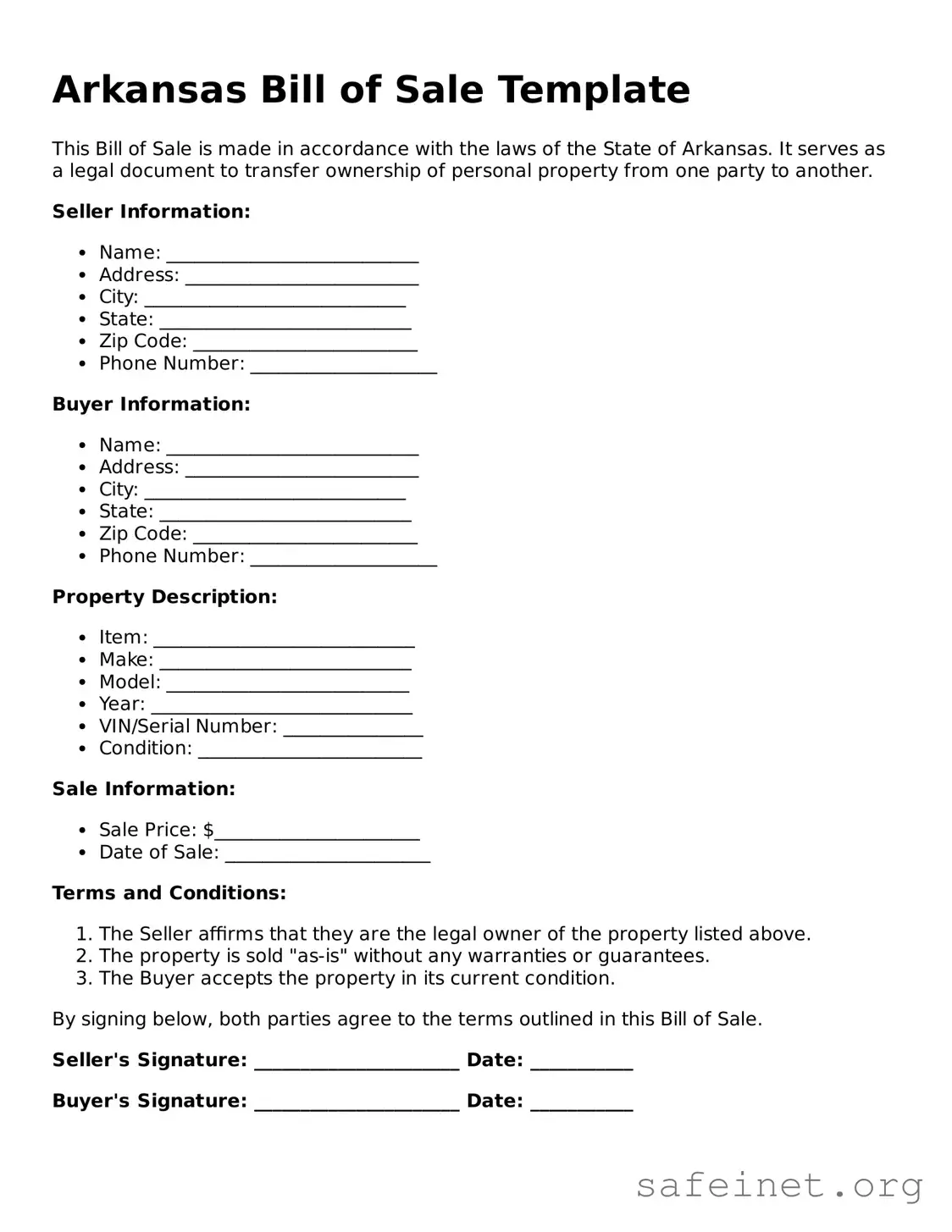
The Arkansas Bill of Sale form serves as a crucial document in various transactions, primarily involving the transfer of personal property. This form outlines the details of the sale, including the names and addresses of both the seller and buyer, a clear description of the item being sold, and the agreed-upon sale price. It acts as proof of ownership transfer and can be essential for future legal reference. Additionally, the form may include important terms and conditions related to the sale, such as warranties or disclaimers, ensuring both parties understand their rights and responsibilities. In Arkansas, using a Bill of Sale can simplify the process of buying or selling vehicles, boats, and other significant assets, providing peace of mind for both the seller and the buyer. Understanding how to properly fill out and execute this form can prevent disputes and facilitate smoother transactions.
Arkansas Bill of Sale Template
This Bill of Sale is made in accordance with the laws of the State of Arkansas. It serves as a legal document to transfer ownership of personal property from one party to another.
Seller Information:
Buyer Information:
Property Description:
Sale Information:
Terms and Conditions:
By signing below, both parties agree to the terms outlined in this Bill of Sale.
Seller's Signature: ______________________ Date: ___________
Buyer's Signature: ______________________ Date: ___________
| Fact Name | Description |
|---|---|
| Purpose | The Arkansas Bill of Sale form serves as a legal document that records the transfer of ownership of personal property from one party to another. |
| Governing Law | This form is governed by Arkansas Code Annotated § 18-28-201, which outlines the requirements for the transfer of personal property. |
| Types of Property | The Bill of Sale can be used for various types of personal property, including vehicles, boats, and equipment, ensuring clarity in ownership transfer. |
| Notarization | While notarization is not always required, having the Bill of Sale notarized can provide additional legal protection and verification of the transaction. |
After obtaining the Arkansas Bill of Sale form, follow these steps to complete it accurately. Ensure all information is correct to avoid any issues later on.
Once the form is completed, retain a copy for your records. The seller should provide the buyer with the original document for their records as well.
What is an Arkansas Bill of Sale form?
The Arkansas Bill of Sale form is a legal document that serves as proof of the transfer of ownership of personal property from one party to another. This form is commonly used for transactions involving vehicles, boats, and other tangible items. It includes essential details such as the names and addresses of the buyer and seller, a description of the item being sold, and the sale price.
Is a Bill of Sale required in Arkansas?
While a Bill of Sale is not legally required for every transaction in Arkansas, it is highly recommended. This document provides a record of the sale and can protect both the buyer and seller in case of disputes. For vehicle transactions, the Arkansas Department of Finance and Administration requires a Bill of Sale to register the vehicle in the buyer's name.
What information should be included in the Bill of Sale?
An effective Arkansas Bill of Sale should include the following information: the full names and addresses of both the buyer and seller, a detailed description of the item being sold (including make, model, year, and VIN for vehicles), the sale price, the date of the transaction, and any warranties or conditions agreed upon by both parties. Including a space for signatures of both parties is also essential to validate the document.
Can I create my own Bill of Sale?
Yes, you can create your own Bill of Sale in Arkansas. However, it is important to ensure that all necessary information is included and that the document is clear and concise. There are also templates available online that can help guide you in creating a legally sound Bill of Sale. Just make sure to customize it according to your specific transaction.
Do I need to have the Bill of Sale notarized?
In Arkansas, notarization of the Bill of Sale is not required by law. However, having the document notarized can provide an extra layer of security and authenticity. This can be particularly useful in case of disputes or if you need to prove the transaction in the future.
Where should I keep the Bill of Sale after the transaction?
After the transaction is complete, both the buyer and seller should keep a copy of the Bill of Sale for their records. It is advisable to store it in a safe place, as it may be needed for future reference, such as for tax purposes or if any legal issues arise regarding the sale.
Failing to provide accurate contact information for both the buyer and seller. Ensure all names, addresses, and phone numbers are correct.
Not including a detailed description of the item being sold. Be specific about the make, model, year, and condition to avoid disputes later.
Omitting the purchase price. Clearly state the amount paid to ensure transparency and legal validity.
Neglecting to date the form. The date of the transaction is crucial for record-keeping and legal purposes.
Forgetting to include signatures from both parties. Without signatures, the document lacks enforceability.
Using vague language in the terms of sale. Clearly outline any warranties, guarantees, or conditions attached to the sale.
Not keeping a copy of the completed Bill of Sale. Always retain a copy for your records as proof of the transaction.
Ignoring local regulations that may apply. Check for any specific requirements in Arkansas that could affect the validity of your Bill of Sale.
When completing a transaction in Arkansas, especially for the sale of personal property, several other forms and documents may be needed alongside the Arkansas Bill of Sale. These documents help ensure that the transaction is legally sound and that both parties are protected. Below is a list of commonly used forms that may accompany a Bill of Sale.
Having these documents ready can streamline the sales process and provide peace of mind for both the buyer and seller. It's important to ensure that all necessary paperwork is completed accurately to avoid any future disputes or complications.
The Arkansas Bill of Sale form shares similarities with the Vehicle Bill of Sale. Both documents serve as proof of a transaction, specifically for the sale of a vehicle. A Vehicle Bill of Sale includes details such as the vehicle's make, model, year, and Vehicle Identification Number (VIN). This form not only protects the buyer by providing a record of ownership but also safeguards the seller by documenting the transfer of liability. Like the Arkansas Bill of Sale, it is often required for registration purposes and helps clarify the terms of the sale, ensuring both parties understand their rights and responsibilities.
Another document akin to the Arkansas Bill of Sale is the Personal Property Bill of Sale. This form is used when selling items that are not real estate, such as furniture, electronics, or collectibles. Similar to the Arkansas Bill of Sale, it outlines the details of the transaction, including a description of the item, the sale price, and the date of the sale. Both documents serve to protect the interests of both the buyer and the seller by providing a clear record of the transaction. This clarity helps prevent disputes that may arise after the sale has been completed.
The Arkansas Bill of Sale is also comparable to the Lease Agreement. While a Bill of Sale documents the transfer of ownership, a Lease Agreement outlines the terms under which one party rents property from another. Both documents establish clear terms and conditions. They specify the obligations of each party, whether it be payment for a sold item or rent for a leased property. Just as a Bill of Sale provides proof of ownership, a Lease Agreement offers proof of the rental arrangement, helping to protect both the landlord and tenant in case of disputes.
Lastly, the Arkansas Bill of Sale can be likened to a Power of Attorney form, particularly when it comes to the transfer of assets. A Power of Attorney grants one individual the authority to act on behalf of another in legal matters, including the sale of property. While the Bill of Sale finalizes a transaction, the Power of Attorney may be necessary to facilitate that transaction if the seller cannot be present. Both documents are vital in ensuring that the transfer of ownership is legitimate and recognized by law, providing a layer of security and clarity in the process.
When filling out the Arkansas Bill of Sale form, it's essential to approach the task with care. This document serves as a legal record of a transaction, so accuracy is crucial. Here are some dos and don'ts to keep in mind:
When it comes to the Arkansas Bill of Sale form, several misconceptions can lead to confusion for those looking to buy or sell personal property. Understanding these myths is crucial for ensuring a smooth transaction. Here are five common misconceptions:
By addressing these misconceptions, individuals can better navigate the buying and selling process in Arkansas, ensuring that their transactions are clear and legally sound.
When completing and utilizing the Arkansas Bill of Sale form, several important points should be considered to ensure the document serves its intended purpose effectively. Below are key takeaways:
By following these guidelines, individuals can ensure that their use of the Arkansas Bill of Sale form is both effective and legally sound.