When seeking a new rental home in Arizona, understanding the rental application form is crucial for both tenants and landlords. This form serves as the initial step in the leasing process, allowing landlords to gather essential information about prospective tenants. Key aspects include personal details such as name, contact information, and employment history. Additionally, applicants must provide financial information, including income and credit history, which helps landlords assess their ability to pay rent consistently. The form often requires references from previous landlords, ensuring that applicants have a history of responsible tenancy. Furthermore, applicants may need to disclose any criminal history, which can impact their eligibility. By familiarizing themselves with these components, both parties can navigate the rental process more effectively and set the stage for a successful landlord-tenant relationship.
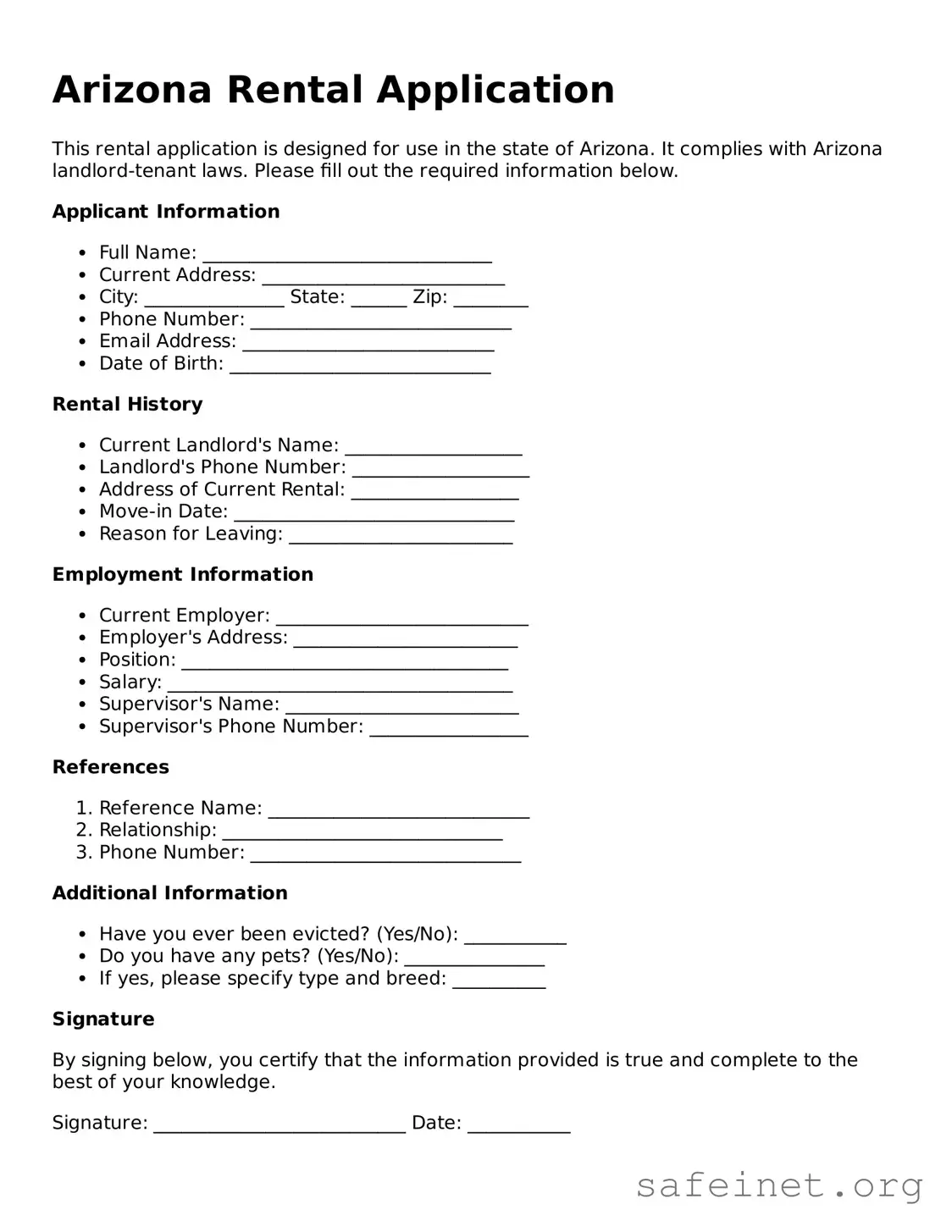
Arizona Rental Application
This rental application is designed for use in the state of Arizona. It complies with Arizona landlord-tenant laws. Please fill out the required information below.
Applicant Information
Rental History
Employment Information
References
Additional Information
Signature
By signing below, you certify that the information provided is true and complete to the best of your knowledge.
Signature: ___________________________ Date: ___________
| Fact Name | Description |
|---|---|
| Purpose | The Arizona Rental Application form is used by landlords to screen potential tenants. |
| Required Information | Applicants must provide personal details, rental history, employment information, and references. |
| Application Fee | Landlords may charge a non-refundable application fee to cover the cost of background checks. |
| Governing Law | The form is governed by Arizona Revised Statutes, particularly Title 33, which covers landlord-tenant relationships. |
| Fair Housing Compliance | The application process must comply with the Fair Housing Act, prohibiting discrimination based on protected classes. |
After obtaining the Arizona Rental Application form, you are ready to begin the process of filling it out. Completing this form accurately is crucial for your rental application to be considered. Follow these steps carefully to ensure all necessary information is provided.
Once you have filled out the application, review it for accuracy. Make sure all sections are complete before submitting it to the landlord or property management company.
What is the purpose of the Arizona Rental Application form?
The Arizona Rental Application form is used by landlords and property managers to collect essential information from prospective tenants. This information helps them assess the suitability of applicants for renting a property. It typically includes details such as employment history, rental history, income verification, and personal references.
What information do I need to provide on the application?
Applicants are usually required to provide personal information, including their full name, contact information, and Social Security number. Employment details, income sources, and previous rental history are also important. Additionally, applicants may need to list references and consent to a background check, which may include credit history.
Is there a fee associated with submitting the rental application?
Yes, many landlords and property management companies charge an application fee. This fee helps cover the costs of processing the application, conducting background checks, and verifying information. The amount can vary, so it is advisable to confirm the fee with the landlord or property manager before submitting the application.
How long does it take to process a rental application?
The processing time for a rental application can vary based on several factors. Generally, it may take anywhere from a few hours to several days. Factors influencing the timeline include the responsiveness of the applicant in providing necessary documents and the thoroughness of the background checks conducted by the landlord or property manager.
What happens if my application is denied?
If a rental application is denied, the landlord or property manager is typically required to provide a reason for the denial. Common reasons include insufficient income, poor credit history, or negative rental references. Applicants have the right to request this information and may also seek to correct any inaccuracies in their credit report if that was a factor in the denial.
Can I appeal a rental application denial?
While there is no formal appeal process mandated by law, applicants can often discuss the denial with the landlord or property manager. They may be able to provide additional information or clarification that could change the landlord's decision. However, it is ultimately at the landlord's discretion whether to reconsider the application.
Incomplete Information: One of the most common mistakes is failing to fill out all required fields. Applicants often overlook sections that ask for employment history, income, or previous rental addresses. Incomplete applications can lead to delays or outright denials.
Inaccurate Details: Providing incorrect information can have serious consequences. Some applicants may accidentally misstate their income or employment status. Others might forget to include a previous landlord's contact information. Such inaccuracies can raise red flags during the screening process.
Neglecting to Disclose Criminal History: Many applicants fail to disclose past criminal convictions, believing it may not be relevant. However, rental applications often require full disclosure of any criminal history. Omitting this information can result in immediate disqualification.
Ignoring the Application Fee: Some applicants overlook the requirement to pay an application fee. This fee is typically non-refundable and is often necessary for the landlord to process the application. Not submitting the fee can lead to delays or the application not being considered at all.
When applying for a rental property in Arizona, several forms and documents may accompany the rental application. These documents help landlords assess potential tenants and ensure a smooth rental process. Below is a list of common forms used alongside the Arizona Rental Application.
Gathering these documents can streamline the application process and provide landlords with a comprehensive view of potential tenants. Being prepared with the necessary paperwork can facilitate a smoother rental experience for everyone involved.
The Arizona Rental Application form shares similarities with a standard lease agreement. Both documents are essential in the rental process, outlining the terms and conditions of the tenancy. While the rental application focuses on gathering information about the prospective tenant, the lease agreement formalizes the relationship once the tenant is approved. It typically includes details such as rent amount, duration of the lease, and responsibilities of both parties, making it a crucial next step after the application process.
Another document akin to the Arizona Rental Application is the tenant screening report. This report is often generated after the application is submitted and includes background checks, credit history, and rental history. Like the rental application, it helps landlords assess the suitability of potential tenants. Both documents serve to protect the landlord's interests while ensuring that the tenant meets the necessary criteria for renting the property.
The rental agreement is also similar to the Arizona Rental Application in that it captures essential information about the tenant. This document typically includes personal details, employment history, and references. While the rental application is primarily about gathering initial information, the rental agreement solidifies the terms agreed upon once a tenant is accepted. Both documents work together to create a clear understanding of the rental arrangement.
The roommate agreement is another document that shares similarities with the Arizona Rental Application. This agreement is particularly relevant for tenants who plan to share a rental unit. Like the rental application, it outlines the responsibilities and expectations of each roommate. It helps prevent misunderstandings and establishes clear guidelines for living together, much like how the rental application sets the stage for the landlord-tenant relationship.
Lease addendums are similar to the Arizona Rental Application in that they provide additional terms and conditions that may not be covered in the standard lease. For instance, if a tenant has specific needs or requests, these can be documented in an addendum. Both documents aim to clarify expectations and ensure that all parties are on the same page, enhancing the overall rental experience.
The eviction notice is another document that relates to the Arizona Rental Application. While the application is about starting a rental relationship, the eviction notice deals with ending one. It outlines the reasons for eviction and the necessary steps that must be taken. Both documents are crucial in the rental process, highlighting the importance of adhering to the terms set forth in the application and subsequent agreements.
A rental reference form is also similar to the Arizona Rental Application. This document is often requested by landlords to verify a prospective tenant's rental history. It typically includes contact information for previous landlords and details about the tenant's behavior and payment history. Like the rental application, it serves to provide insight into the tenant's reliability and suitability for the property.
Security deposit agreements share similarities with the Arizona Rental Application as well. This document outlines the terms regarding the security deposit, including the amount, conditions for its return, and any deductions that may be taken. Both documents work together to protect the landlord's property while ensuring the tenant understands their financial responsibilities.
Lastly, the move-in checklist is akin to the Arizona Rental Application in that it documents the condition of the rental property at the time of occupancy. This checklist can help prevent disputes over damages when the tenant moves out. Both documents serve to protect the interests of both the landlord and the tenant, establishing a clear record of expectations and responsibilities from the very beginning of the rental relationship.
When filling out the Arizona Rental Application form, it is important to approach the process carefully. Here are some key dos and don’ts to keep in mind:
When it comes to rental applications in Arizona, many individuals hold misconceptions that can lead to confusion and frustration. Understanding these common misunderstandings can empower both renters and landlords. Here are five prevalent misconceptions about the Arizona Rental Application form:
Many believe that rental applications across different properties or landlords are identical. In reality, each landlord may have specific requirements and questions tailored to their property or preferences. Always read the application carefully to ensure you provide the necessary information.
Some applicants think they can skip sections of the application that request personal information. However, landlords often require this information to conduct background checks and verify rental history. Omitting details may result in a denied application.
While a strong credit score is beneficial, it does not automatically secure approval. Landlords consider various factors, including income, rental history, and references. A holistic review of an application is common.
Some believe that rental applications are solely for first-time renters. In fact, current tenants seeking to renew their lease or transfer to a different unit may also need to fill out a new application.
Applicants often think that once they submit their rental application, they cannot make any changes. However, most landlords allow applicants to update or correct information before a decision is made. It’s best to communicate openly with the landlord or property manager.
By addressing these misconceptions, both renters and landlords can navigate the rental process more effectively. Clear communication and understanding are essential for a successful rental experience.
When filling out the Arizona Rental Application form, it's important to keep several key points in mind. Understanding these can help streamline the process and ensure all necessary information is provided.
Taking these steps can help improve your chances of securing a rental property in Arizona. Stay organized and proactive throughout the application process.