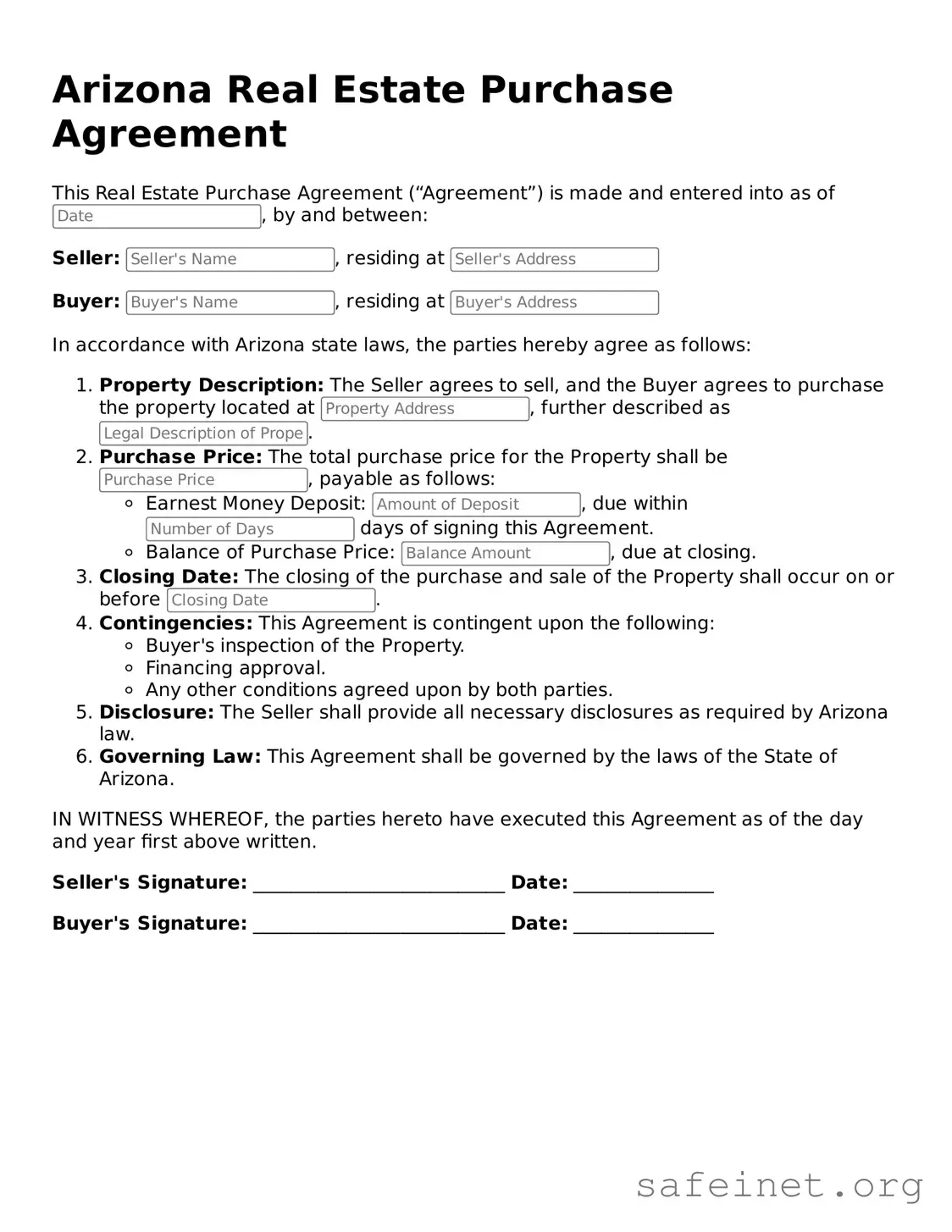
The Arizona Real Estate Purchase Agreement form is a crucial document that facilitates the sale of residential properties in the state. This form outlines the essential terms and conditions agreed upon by both the buyer and the seller, ensuring clarity and legal protection for all parties involved. Key components include the purchase price, financing details, and a description of the property being sold. Additionally, the agreement addresses contingencies, such as inspections and financing approvals, which can affect the transaction's progression. Timelines for closing and possession are also specified, providing a clear roadmap for the transfer of ownership. Furthermore, the form includes provisions for earnest money deposits, which demonstrate the buyer's commitment to the purchase. By clearly delineating the rights and responsibilities of each party, the Arizona Real Estate Purchase Agreement helps to minimize disputes and fosters a smoother transaction process.
Arizona Real Estate Purchase Agreement
This Real Estate Purchase Agreement (“Agreement”) is made and entered into as of , by and between:
Seller: , residing at
Buyer: , residing at
In accordance with Arizona state laws, the parties hereby agree as follows:
IN WITNESS WHEREOF, the parties hereto have executed this Agreement as of the day and year first above written.
Seller's Signature: ___________________________ Date: _______________
Buyer's Signature: ___________________________ Date: _______________
| Fact Name | Description |
|---|---|
| Governing Law | The Arizona Real Estate Purchase Agreement is governed by Arizona state law. |
| Purpose | This form is used to outline the terms of a real estate transaction between a buyer and a seller. |
| Parties Involved | The agreement includes information about the buyer and the seller, including their legal names and contact details. |
| Property Description | A detailed description of the property being sold is required, including the address and legal description. |
| Purchase Price | The total purchase price must be clearly stated in the agreement. |
| Earnest Money | The agreement typically specifies an earnest money deposit to show the buyer's commitment. |
| Contingencies | Buyers may include contingencies, such as financing or inspection, which must be met for the sale to proceed. |
| Closing Date | The agreement should specify the expected closing date for the transaction. |
| Disclosures | Sellers are required to disclose any known issues with the property, such as defects or hazards. |
| Signatures | Both parties must sign the agreement for it to be legally binding. |
Filling out the Arizona Real Estate Purchase Agreement form is an important step in the home buying process. Once you have completed the form, it will be ready for submission to the necessary parties involved in the transaction. Follow these steps carefully to ensure all required information is accurately provided.
What is the Arizona Real Estate Purchase Agreement form?
The Arizona Real Estate Purchase Agreement form is a legal document used when a buyer and seller agree to the sale of real property in Arizona. This form outlines the terms and conditions of the sale, including the purchase price, closing date, and any contingencies that must be met before the sale is finalized.
Who typically uses this form?
This form is primarily used by real estate agents, buyers, and sellers involved in residential real estate transactions in Arizona. It serves as a formal agreement that both parties can refer to throughout the buying process.
What key information is included in the agreement?
The agreement includes essential details such as the names of the buyer and seller, property description, purchase price, earnest money deposit, financing terms, and any contingencies, such as inspections or appraisals. It also specifies the closing date and any additional terms agreed upon by both parties.
Are there any contingencies that can be included in the agreement?
Yes, contingencies are an important part of the agreement. Common contingencies include financing, home inspections, and the sale of the buyer's current home. These contingencies protect the buyer by allowing them to back out of the agreement without penalty if certain conditions are not met.
How is the purchase price determined?
The purchase price is typically negotiated between the buyer and seller. Factors influencing the price may include the property’s market value, condition, location, and any recent comparable sales in the area. Both parties should feel comfortable with the final agreed-upon price.
What happens after the agreement is signed?
Once both parties sign the agreement, it becomes a legally binding contract. The buyer usually submits an earnest money deposit, which shows their commitment to the purchase. The transaction then moves forward, with both parties working to meet any contingencies and prepare for the closing process.
Can the agreement be modified after it is signed?
Yes, the agreement can be modified if both parties agree to the changes. Any modifications should be documented in writing and signed by both the buyer and seller to ensure clarity and enforceability. This could include changes to the closing date, purchase price, or contingencies.
What should I do if I have questions about the agreement?
If you have questions or need clarification about any part of the Arizona Real Estate Purchase Agreement, it’s advisable to consult a real estate professional or an attorney. They can provide guidance specific to your situation and help ensure that your interests are protected throughout the transaction.
Is it necessary to have a real estate agent when using this form?
While it is not mandatory to have a real estate agent when using the Arizona Real Estate Purchase Agreement form, having one can be beneficial. Agents have experience with the process, can help negotiate terms, and ensure that all necessary paperwork is completed accurately. Their expertise can make the transaction smoother and more efficient.
Incomplete Information: Failing to fill in all required fields can delay the process. Ensure that all buyer and seller details are complete.
Incorrect Property Description: Misidentifying the property can lead to legal issues. Double-check the address and legal description.
Omitting Contingencies: Not including necessary contingencies, like financing or inspection, can put you at risk. Always specify these conditions clearly.
Ignoring Deadlines: Missing deadlines for responses or deposits can jeopardize the deal. Keep track of all important dates.
Not Understanding Terms: Using terms you don’t understand can lead to confusion. Take the time to clarify any unfamiliar language.
Skipping Signatures: Forgetting to sign or initial the document can render it invalid. Review the agreement to ensure all necessary signatures are present.
Ignoring Local Laws: Each state has its own regulations. Familiarize yourself with Arizona’s specific requirements for real estate transactions.
Not Consulting Professionals: Filling out the form without legal or real estate advice can lead to mistakes. Always consider consulting a professional.
When engaging in a real estate transaction in Arizona, several additional documents often accompany the Real Estate Purchase Agreement. Each of these documents serves a specific purpose and helps ensure a smooth transaction process. Below is a list of commonly used forms and documents.
Understanding these documents can facilitate a more informed and efficient real estate transaction. Each document plays a crucial role in protecting the interests of both buyers and sellers, ensuring that all parties are aware of their rights and responsibilities throughout the process.
The Arizona Real Estate Purchase Agreement (REPA) is often compared to the Residential Purchase Agreement used in many states. Both documents serve the same primary purpose: to outline the terms and conditions under which a buyer agrees to purchase a property from a seller. They include essential details such as the purchase price, closing date, and contingencies. While the specific language may vary from state to state, the fundamental structure and intent remain consistent across these agreements.
Another similar document is the Commercial Purchase Agreement. This type of agreement is tailored for commercial properties, such as office buildings or retail spaces. Like the REPA, it outlines the terms of the sale, but it often includes additional clauses related to zoning laws, tenant rights, and property usage. Both agreements aim to protect the interests of both parties while ensuring a clear understanding of the transaction's details.
The Exclusive Right to Sell Agreement also shares similarities with the REPA. This document is used when a seller hires a real estate agent to market their property. While the REPA focuses on the sale terms, the Exclusive Right to Sell Agreement details the relationship between the seller and the agent, including commission rates and the duration of the agreement. Both documents are crucial in real estate transactions, albeit serving different roles.
The Lease Purchase Agreement is another document that resembles the REPA. This agreement allows a tenant to lease a property with the option to purchase it later. Like the REPA, it contains terms related to the purchase price and conditions for the sale. The Lease Purchase Agreement is particularly beneficial for buyers who may need time to secure financing while still committing to the property.
The Option to Purchase Agreement is similar in that it gives a buyer the right, but not the obligation, to buy a property at a predetermined price within a specified timeframe. This document can be used alongside the REPA, allowing potential buyers to secure a property while they finalize their decision. Both agreements share the goal of providing a clear framework for the transaction, though the Option to Purchase Agreement offers more flexibility.
The Real Estate Listing Agreement also bears a resemblance to the REPA. This document is used when a seller lists their property with a real estate agent. It outlines the terms of the listing, including the agent's commission and the duration of the agreement. While the REPA is focused on the sale itself, the Listing Agreement prepares the groundwork for the transaction, making both documents essential in the real estate process.
The Seller Financing Agreement is another document that aligns with the REPA. This agreement outlines the terms under which a seller finances the buyer's purchase, rather than the buyer obtaining a traditional mortgage. It includes details such as interest rates, payment schedules, and consequences of default. Both documents aim to facilitate the sale while addressing the financial aspects of the transaction.
Lastly, the Counteroffer is a document that often follows the initial REPA. When a seller receives an offer from a buyer but wants to change certain terms, they may issue a counteroffer. This document details the revised terms and can lead to further negotiations. Similar to the REPA, the Counteroffer serves to clarify the expectations of both parties, helping to ensure a successful transaction.
When filling out the Arizona Real Estate Purchase Agreement form, it is essential to follow certain guidelines to ensure accuracy and compliance. Here is a list of things you should and shouldn't do:
When dealing with real estate transactions in Arizona, misunderstandings about the Real Estate Purchase Agreement (REPA) can lead to confusion. Here are six common misconceptions to clear up:
This is not true. The REPA becomes legally binding once both parties sign it, even before the closing occurs. This means that both buyers and sellers should understand their obligations from the moment they sign.
While it’s always wise to consult with a lawyer, Arizona law does not require an attorney to draft the REPA. Many real estate agents are trained to prepare these agreements and can help navigate the process.
Each REPA can be tailored to fit the specific details of the property and the agreement between the buyer and seller. Factors like contingencies, closing dates, and special conditions can vary significantly from one transaction to another.
This is a misconception. The REPA can be amended if both parties agree to the changes. It's important to document any modifications in writing to avoid future disputes.
The REPA focuses on the sale of the property itself but does not address every detail, such as financing arrangements or home inspections. Buyers and sellers should ensure that all necessary agreements are in place to cover these aspects.
This is misleading. While verbal agreements can be enforceable in some situations, they are difficult to prove and not recommended. The REPA provides clear, written terms that protect both parties.
Understanding these misconceptions can help buyers and sellers navigate the real estate process more effectively. Always seek guidance when needed to ensure a smooth transaction.
Understanding the Arizona Real Estate Purchase Agreement form is crucial for both buyers and sellers. Here are key takeaways to keep in mind:
By keeping these points in mind, individuals can better navigate the process of filling out and utilizing the Arizona Real Estate Purchase Agreement form.