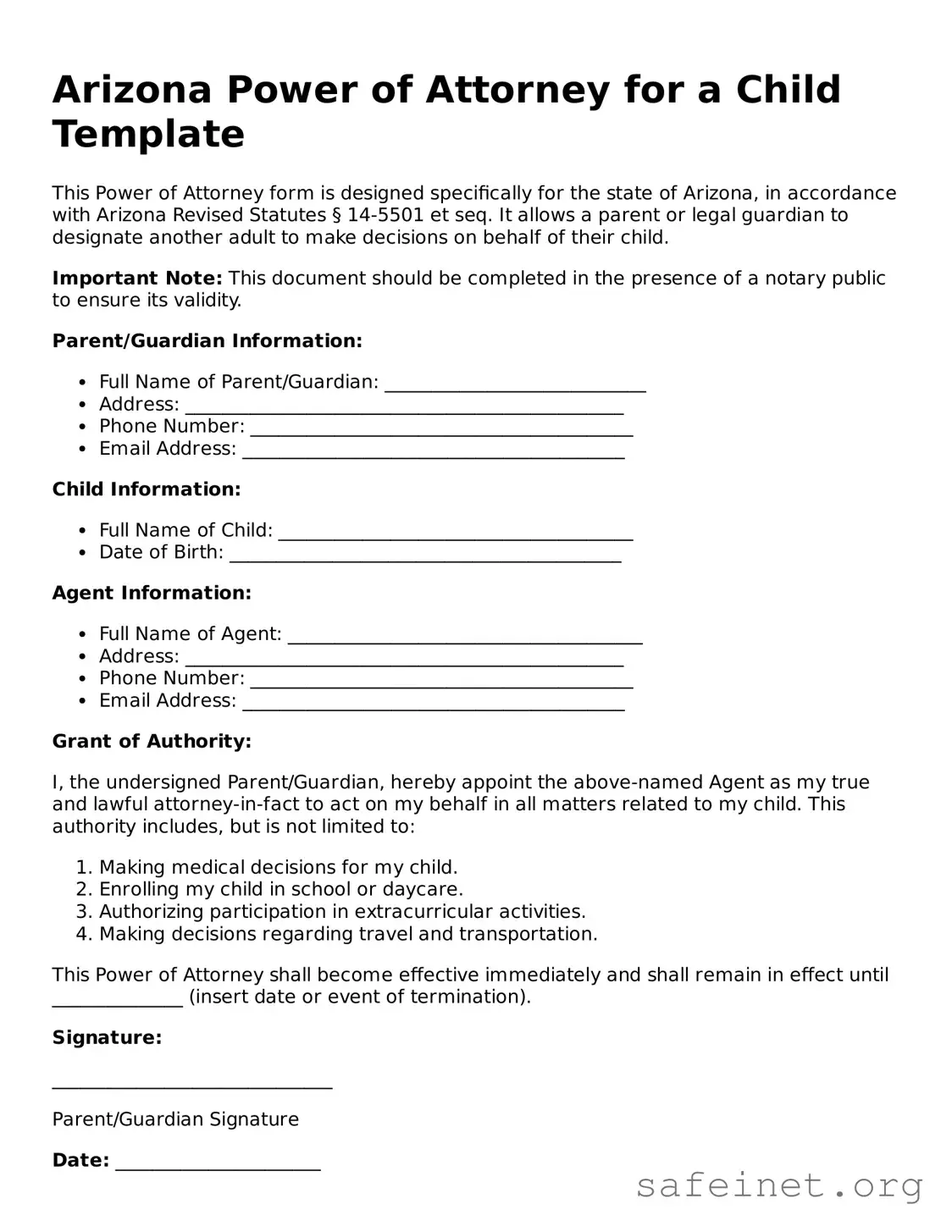
When it comes to ensuring the well-being and care of a child in Arizona, the Power of Attorney for a Child form serves as a vital tool for parents and guardians. This legal document allows a parent to grant another trusted adult the authority to make decisions on behalf of their child, particularly in situations where the parent is unable to be present. This can include everyday decisions regarding education, healthcare, and general welfare. The form is designed to provide clarity and peace of mind, ensuring that the child’s needs are met even in the absence of the parent. It is important to note that the authority granted through this form can be temporary or more long-term, depending on the specific circumstances and intentions of the parent. By understanding how this form works, parents can better navigate the complexities of caregiving and ensure their child’s best interests are always prioritized.
Arizona Power of Attorney for a Child Template
This Power of Attorney form is designed specifically for the state of Arizona, in accordance with Arizona Revised Statutes § 14-5501 et seq. It allows a parent or legal guardian to designate another adult to make decisions on behalf of their child.
Important Note: This document should be completed in the presence of a notary public to ensure its validity.
Parent/Guardian Information:
Child Information:
Agent Information:
Grant of Authority:
I, the undersigned Parent/Guardian, hereby appoint the above-named Agent as my true and lawful attorney-in-fact to act on my behalf in all matters related to my child. This authority includes, but is not limited to:
This Power of Attorney shall become effective immediately and shall remain in effect until ______________ (insert date or event of termination).
Signature:
______________________________
Parent/Guardian Signature
Date: ______________________
Notary Acknowledgment:
State of Arizona, County of ________________
Subscribed and sworn before me this _____ day of ______________, 20__.
______________________________
Notary Public Signature
My commission expires: ________________
| Fact Name | Details |
|---|---|
| Purpose | The Arizona Power of Attorney for a Child form allows a parent or legal guardian to designate another individual to make decisions on behalf of their child. |
| Governing Law | This form is governed by Arizona Revised Statutes, Title 14, Chapter 5. |
| Eligibility | Any parent or legal guardian can create this power of attorney for their child, provided they are of sound mind. |
| Duration | The authority granted can be temporary or long-term, depending on the specifications outlined in the form. |
| Notarization | The form must be signed in the presence of a notary public to be legally binding. |
| Revocation | Parents or guardians can revoke the power of attorney at any time, provided they notify the designated individual. |
| Limitations | The designated individual cannot make decisions that require parental consent, such as adoption or marriage. |
| Health Care Decisions | This form does not automatically grant authority for medical decisions; a separate health care power of attorney is needed for that. |
| Emergency Situations | Parents often use this form to ensure that their child is cared for during emergencies or extended absences. |
| Filing | No filing with a court is required; however, it is advisable to keep copies in accessible locations. |
Completing the Arizona Power of Attorney for a Child form is a straightforward process that allows you to designate a trusted individual to make decisions on behalf of your child. This can be especially useful in situations where you may be temporarily unavailable or unable to care for your child. Follow these steps to fill out the form accurately.
Once the form is filled out and notarized, you can provide a copy to the appointed agent and keep the original in a safe place. It’s important to communicate with the agent about their responsibilities and ensure they understand the authority granted to them.
What is a Power of Attorney for a Child in Arizona?
A Power of Attorney for a Child in Arizona is a legal document that allows a parent or legal guardian to grant another individual the authority to make decisions on behalf of their child. This can include decisions related to medical care, education, and general welfare. It is particularly useful for situations where the parent or guardian is temporarily unable to care for the child, such as during travel or extended absences.
Who can be designated as an agent in the Power of Attorney for a Child?
The agent can be any responsible adult, including relatives, family friends, or neighbors. It is essential to choose someone who is trustworthy and capable of making decisions in the best interest of the child. The selected agent should be informed and willing to take on this responsibility.
How long does the Power of Attorney for a Child remain in effect?
The Power of Attorney for a Child remains in effect until the specified expiration date stated in the document, or until the parent or guardian revokes it. If no expiration date is provided, the authority typically ends when the child reaches the age of 18, or when the parent or guardian decides to terminate the agreement.
Do I need to have the Power of Attorney for a Child form notarized?
Yes, in Arizona, it is advisable to have the Power of Attorney for a Child notarized to ensure its validity. Notarization adds an extra layer of authenticity and can help prevent disputes regarding the authority granted to the agent.
Can the Power of Attorney for a Child be revoked?
Yes, a parent or legal guardian can revoke the Power of Attorney for a Child at any time. To do so, it is recommended to provide written notice to the agent and any relevant parties. This ensures that everyone is aware that the authority has been terminated.
Is a Power of Attorney for a Child the same as guardianship?
No, a Power of Attorney for a Child is not the same as guardianship. Guardianship is a more permanent legal arrangement that grants an individual full legal responsibility for a child. A Power of Attorney is typically temporary and allows for specific decision-making authority without transferring full custody.
What decisions can the agent make on behalf of the child?
The agent can make various decisions regarding the child's health care, education, and general welfare. This includes consenting to medical treatment, enrolling the child in school, and making day-to-day decisions. However, the authority granted can be limited or specific, depending on the preferences of the parent or guardian.
Do I need to file the Power of Attorney for a Child with the court?
Generally, you do not need to file the Power of Attorney for a Child with the court in Arizona. However, it is wise to keep a copy of the document accessible and provide copies to the designated agent and any relevant institutions, such as schools or medical facilities.
Can a Power of Attorney for a Child be used in other states?
While a Power of Attorney for a Child is valid in Arizona, its acceptance in other states may vary. It is advisable to check the specific requirements of the state where the child will be located to ensure that the document is recognized and accepted.
Not Specifying the Duration: Many individuals fail to indicate how long the power of attorney will be in effect. Without a clear timeframe, it may lead to confusion about the authority granted.
Missing Signatures: All required parties must sign the document. Sometimes, people overlook the need for the child's parent or guardian to sign, which can render the form invalid.
Inaccurate Information: Providing incorrect details about the child or the agent can create legal complications. Double-check names, addresses, and dates of birth to ensure accuracy.
Not Notarizing the Document: In Arizona, a power of attorney for a child typically requires notarization. Failing to have the document notarized can lead to its rejection by schools or medical facilities.
Overlooking Specific Powers: Some people forget to specify what powers they are granting. It’s important to outline whether the agent can make medical decisions, enroll the child in school, or handle other responsibilities.
Ignoring Revocation Procedures: Individuals often neglect to include how to revoke the power of attorney. Clearly stating this process can prevent misunderstandings in the future.
Failing to Inform Relevant Parties: After completing the form, it’s crucial to inform schools, doctors, and other relevant entities about the power of attorney. Without this communication, the agent may face challenges when acting on behalf of the child.
The Arizona Power of Attorney for a Child form allows a parent or guardian to designate another adult to make decisions for a child. When using this form, there are additional documents that may be beneficial to ensure clarity and legal compliance. Below is a list of commonly used forms and documents that often accompany the Power of Attorney for a Child.
Having these documents prepared alongside the Arizona Power of Attorney for a Child can streamline communication and decision-making. It is crucial to ensure that all parties involved understand their roles and responsibilities clearly.
The Arizona Power of Attorney for a Child form is similar to the General Power of Attorney. Both documents allow an individual to appoint another person to make decisions on their behalf. However, the General Power of Attorney can cover a wide range of matters, including financial and legal decisions, while the Power of Attorney for a Child specifically focuses on decisions related to the care and welfare of a minor child. This ensures that the designated agent can manage the child's needs in a more targeted manner.
Another similar document is the Medical Power of Attorney. This form grants someone the authority to make healthcare decisions for another person. While the Arizona Power of Attorney for a Child allows for broader parental rights and responsibilities, the Medical Power of Attorney is specifically limited to health-related decisions. This distinction is crucial for parents wanting to ensure that their child's medical needs are addressed by a trusted individual when they cannot be present.
The Child Custody Agreement also shares similarities with the Arizona Power of Attorney for a Child. Both documents establish the rights and responsibilities of caregivers. However, a Child Custody Agreement is typically used in divorce or separation situations to outline living arrangements and visitation rights. In contrast, the Power of Attorney for a Child is often utilized when a parent needs to delegate authority temporarily, without altering custody arrangements.
The Guardianship Agreement is another related document. This form appoints a guardian to take care of a child when the parents are unable to do so. While the Power of Attorney for a Child allows for temporary delegation of authority, a Guardianship Agreement is usually more permanent. It involves a legal process and court approval, making it a more formal arrangement compared to the more flexible Power of Attorney.
The Affidavit of Guardianship is similar in that it also designates someone to care for a child. This document is often used in situations where a parent is unavailable but does not want to go through a formal guardianship process. Like the Power of Attorney for a Child, it provides a way for a trusted individual to manage the child's day-to-day needs, but it may lack the same level of authority as a Power of Attorney.
The Temporary Custody Agreement is another document that serves a similar purpose. This agreement allows a parent to grant temporary custody of their child to another person. It is often used in emergency situations or when a parent is unable to care for their child for a short period. While both documents provide for the care of a child, the Temporary Custody Agreement is more focused on custody arrangements, whereas the Power of Attorney for a Child allows for broader decision-making authority.
The Child Care Authorization Form is also comparable. This form gives permission for someone to care for a child, often used for school or daycare purposes. It allows caregivers to make decisions regarding the child's activities and care. However, the Arizona Power of Attorney for a Child encompasses a wider range of responsibilities and decisions beyond just child care, making it a more comprehensive document.
Lastly, the Consent for Medical Treatment form is similar in that it allows someone to make medical decisions for a child. This document is often used by schools or camps to ensure that a child can receive necessary medical care. However, the Arizona Power of Attorney for a Child goes further by allowing the designated agent to make various decisions related to the child's overall welfare, not just medical treatment.
When filling out the Arizona Power of Attorney for a Child form, there are several important considerations to keep in mind. Here’s a list of things you should and shouldn’t do to ensure the process goes smoothly.
By following these guidelines, you can help ensure that the Power of Attorney for a Child form is filled out correctly and meets all necessary legal requirements.
Many people have misunderstandings about the Arizona Power of Attorney for a Child form. Here are five common misconceptions:
Understanding these misconceptions can help parents make informed decisions about their child's care and well-being.
When filling out and using the Arizona Power of Attorney for a Child form, keep the following key points in mind: