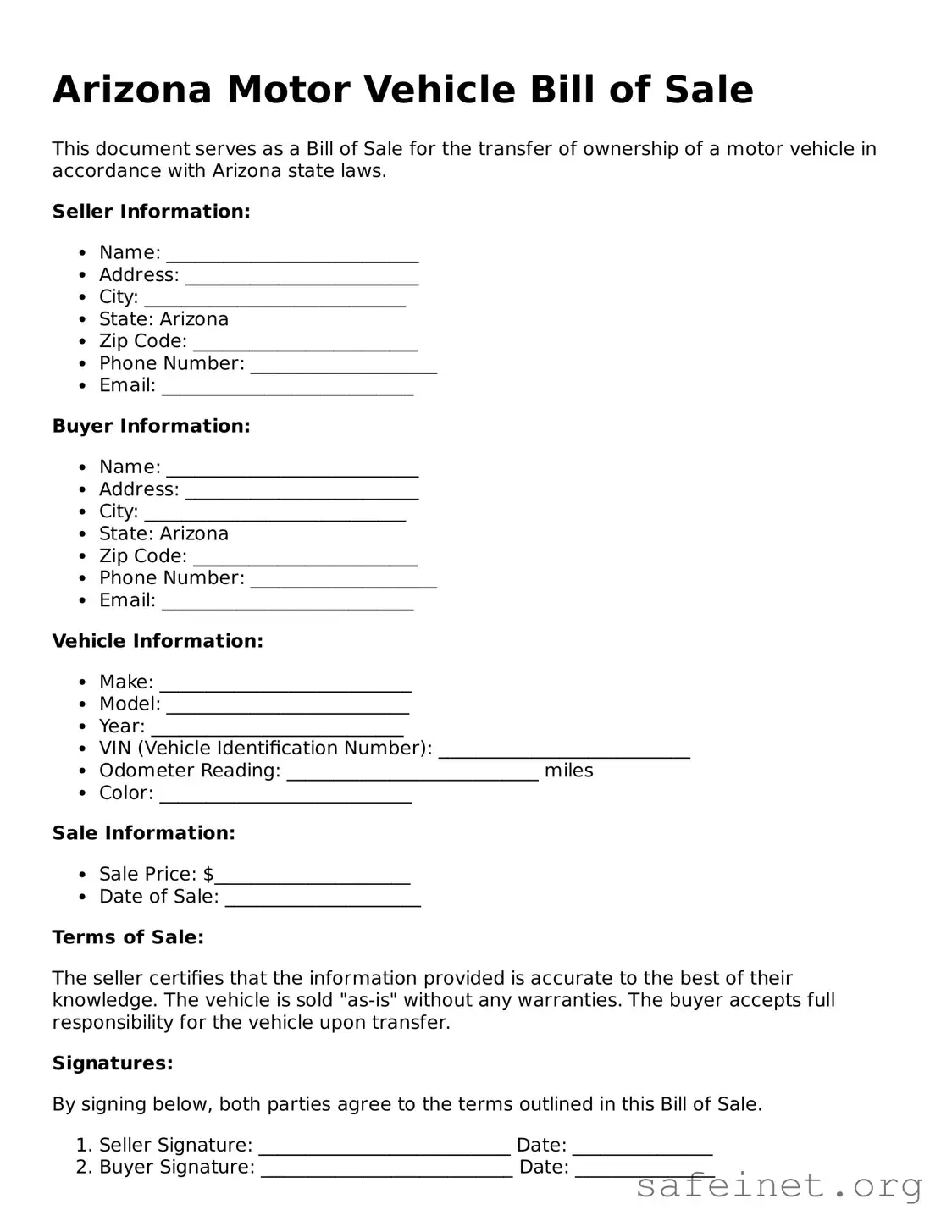
When it comes to buying or selling a vehicle in Arizona, having the right documentation is crucial for a smooth transaction. The Arizona Motor Vehicle Bill of Sale form plays a vital role in this process, serving as a legal record of the sale and transfer of ownership. This form captures essential details such as the vehicle's make, model, year, and VIN (Vehicle Identification Number), as well as the buyer's and seller's names and addresses. It also outlines the sale price, ensuring both parties are on the same page regarding the financial aspect of the transaction. Additionally, the form may include information about any liens on the vehicle, providing transparency and protecting the interests of the buyer. Whether you're a seasoned car dealer or a first-time seller, understanding the importance of this document can help you navigate the complexities of vehicle sales in Arizona effectively. Failure to complete this form properly could lead to complications down the road, so it's essential to pay close attention to the details and ensure all necessary information is included.
Arizona Motor Vehicle Bill of Sale
This document serves as a Bill of Sale for the transfer of ownership of a motor vehicle in accordance with Arizona state laws.
Seller Information:
Buyer Information:
Vehicle Information:
Sale Information:
Terms of Sale:
The seller certifies that the information provided is accurate to the best of their knowledge. The vehicle is sold "as-is" without any warranties. The buyer accepts full responsibility for the vehicle upon transfer.
Signatures:
By signing below, both parties agree to the terms outlined in this Bill of Sale.
This Bill of Sale is effective upon signing by both parties.
| Fact Name | Description |
|---|---|
| Purpose | The Arizona Motor Vehicle Bill of Sale form is used to document the sale of a motor vehicle between a seller and a buyer. |
| Governing Law | This form is governed by Arizona Revised Statutes (ARS) § 28-2001 and § 28-2071. |
| Required Information | It requires details such as the vehicle's make, model, year, VIN, and the sale price. |
| Signatures | Both the seller and buyer must sign the form to validate the transaction. |
| Notarization | Notarization is not required for the Bill of Sale in Arizona, but it can add an extra layer of authenticity. |
| Record Keeping | Both parties should keep a copy of the Bill of Sale for their records after the transaction. |
| Transfer of Ownership | The Bill of Sale serves as proof of ownership transfer, which is essential for vehicle registration. |
| Usage Beyond Sales | It can also be used for gifting a vehicle or transferring ownership in other situations. |
After you have gathered all necessary information, you can proceed to fill out the Arizona Motor Vehicle Bill of Sale form. Ensure you have the vehicle details, buyer and seller information, and the sale price ready. This form is essential for documenting the sale and transferring ownership.
Once completed, keep a copy for your records and provide the original to the buyer. This form will help facilitate the transfer of ownership with the Arizona Department of Transportation.
What is a Motor Vehicle Bill of Sale in Arizona?
A Motor Vehicle Bill of Sale is a legal document that records the transfer of ownership of a vehicle from one party to another. In Arizona, this form includes essential information such as the vehicle's make, model, year, VIN (Vehicle Identification Number), and the sale price. It serves as proof of the transaction and is important for both the buyer and seller for future reference.
Is a Bill of Sale required in Arizona?
While a Bill of Sale is not legally required for the sale of a vehicle in Arizona, it is highly recommended. Having this document can protect both parties in case of disputes regarding the sale. Additionally, it can be helpful for the buyer when registering the vehicle with the Arizona Department of Transportation (ADOT).
What information should be included in the Arizona Motor Vehicle Bill of Sale?
The Arizona Motor Vehicle Bill of Sale should include several key pieces of information. This includes the full names and addresses of both the buyer and seller, details about the vehicle (make, model, year, VIN), the sale price, and the date of the transaction. It’s also beneficial to include any disclosures about the vehicle’s condition, such as whether it has been in any accidents or has any existing liens.
Do I need to notarize the Bill of Sale?
No, notarization is not a requirement for the Bill of Sale in Arizona. However, having the document notarized can add an extra layer of security and legitimacy to the transaction. It can also help prevent future disputes by providing a verified record of the agreement between the buyer and seller.
How do I use the Bill of Sale after the transaction?
After completing the sale, both the buyer and seller should keep a copy of the Bill of Sale for their records. The buyer will need to present this document when registering the vehicle with the ADOT. It is essential for the buyer to ensure that the vehicle is properly titled in their name to avoid any legal issues in the future.
What if the vehicle has a lien on it?
If the vehicle has an existing lien, it is crucial to disclose this information in the Bill of Sale. The seller should ensure that the lien is paid off and that they provide proof of lien release before completing the sale. This protects the buyer from any future claims on the vehicle and ensures a clear title transfer.
Missing Signatures: Both the buyer and seller must sign the form. Failing to do so can lead to issues with the transfer of ownership.
Incorrect Vehicle Information: Ensure that the vehicle's make, model, year, and VIN are accurate. Errors can cause confusion and may complicate registration.
Omitting Sale Price: Always include the agreed-upon sale price. This is essential for tax purposes and legal documentation.
Not Dating the Form: The date of the sale is crucial. Without it, the transaction may be questioned later on.
Failure to Provide Buyer’s Information: The buyer’s full name and address should be clearly stated. This helps in identifying the new owner.
Not Keeping a Copy: After filling out the form, both parties should keep a copy. This serves as proof of the transaction and can be useful in the future.
Ignoring State Requirements: Each state may have specific requirements for a bill of sale. Familiarize yourself with Arizona’s regulations to ensure compliance.
When buying or selling a vehicle in Arizona, the Motor Vehicle Bill of Sale form is essential. However, several other documents may also be required or helpful in completing the transaction smoothly. Here’s a list of common forms and documents that often accompany the Bill of Sale.
Having these documents ready can streamline the vehicle transaction process in Arizona. Each plays a crucial role in ensuring that the sale is legitimate and that both parties are protected.
The Arizona Vehicle Registration form is similar to the Motor Vehicle Bill of Sale as both documents are essential for the transfer of ownership of a vehicle. When you purchase a vehicle, you need to register it in your name, which requires proof of ownership. The Bill of Sale serves as this proof. It contains important details about the vehicle and the transaction, such as the Vehicle Identification Number (VIN), purchase price, and the names of the buyer and seller.
The Arizona Title Application is another document that shares similarities with the Motor Vehicle Bill of Sale. When you buy a vehicle, you typically need to apply for a new title in your name. The Bill of Sale is often required as part of this application process. It verifies that the seller has the right to sell the vehicle and that you are the new owner. Both documents help ensure that the transfer of ownership is properly documented.
The Affidavit of Vehicle Ownership is also comparable to the Motor Vehicle Bill of Sale. This document may be used when the original title is lost or not available. It serves as a sworn statement that you are the rightful owner of the vehicle. Like the Bill of Sale, it includes details about the vehicle and the transaction, providing a legal basis for ownership when the title cannot be produced.
The Arizona Vehicle Inspection form can be seen as related to the Motor Vehicle Bill of Sale as well. When purchasing a used vehicle, buyers often want to ensure that the vehicle is in good condition. An inspection may be required before the sale is finalized. While the Bill of Sale documents the transaction, the Vehicle Inspection form provides assurance regarding the vehicle's condition, which can influence the buyer's decision.
The Arizona Odometer Disclosure Statement is another document that complements the Motor Vehicle Bill of Sale. This form is required when transferring ownership of a vehicle to disclose the current mileage. It helps prevent odometer fraud and ensures that the buyer is aware of the vehicle's mileage at the time of sale. The information on this form is often included in the Bill of Sale to provide a complete picture of the transaction.
The Arizona Power of Attorney for Vehicle Transactions is also similar in nature. This document allows one person to act on behalf of another in vehicle-related matters. If the seller cannot be present to complete the sale, they may grant power of attorney to someone else. The Bill of Sale would still be needed to finalize the sale, but the Power of Attorney ensures that the transaction can proceed smoothly even if the seller is unavailable.
Finally, the Arizona Release of Liability form is related to the Motor Vehicle Bill of Sale as it protects the seller after the vehicle has been sold. Once the sale is complete, the seller wants to ensure that they are no longer responsible for any issues related to the vehicle. This form notifies the state that the seller is no longer the owner, providing peace of mind. The Bill of Sale serves as the initial record of the transaction, while the Release of Liability confirms the end of the seller's responsibility.
When filling out the Arizona Motor Vehicle Bill of Sale form, it is essential to follow certain guidelines to ensure accuracy and compliance. Below is a list of things you should and shouldn't do:
Misconception 1: A Bill of Sale is only necessary for registered vehicles.
This is incorrect. A Bill of Sale is important for all vehicle transactions, whether the vehicle is registered or not. It serves as a legal record of the sale and can be used to establish ownership.
Misconception 2: A Bill of Sale must be notarized to be valid.
While notarization can add an extra layer of authenticity, it is not a requirement for a Bill of Sale in Arizona. The form is valid as long as both parties sign it, though having it notarized may be beneficial for certain transactions.
Misconception 3: The Bill of Sale replaces the title transfer process.
This is misleading. A Bill of Sale is a separate document that records the sale, but it does not replace the need to transfer the vehicle title through the Arizona Department of Transportation. Both steps are necessary for a complete transaction.
Misconception 4: A Bill of Sale is only required for private sales.
This is not entirely true. While private sales often require a Bill of Sale, it can also be beneficial in transactions involving dealerships or auctions. It provides a written record of the sale, regardless of the seller's status.
When filling out and using the Arizona Motor Vehicle Bill of Sale form, there are several important points to keep in mind. This document serves as a crucial record of the transaction between a buyer and a seller. Here are some key takeaways:
By following these guidelines, you can ensure that the Arizona Motor Vehicle Bill of Sale form is completed correctly and serves its intended purpose effectively.