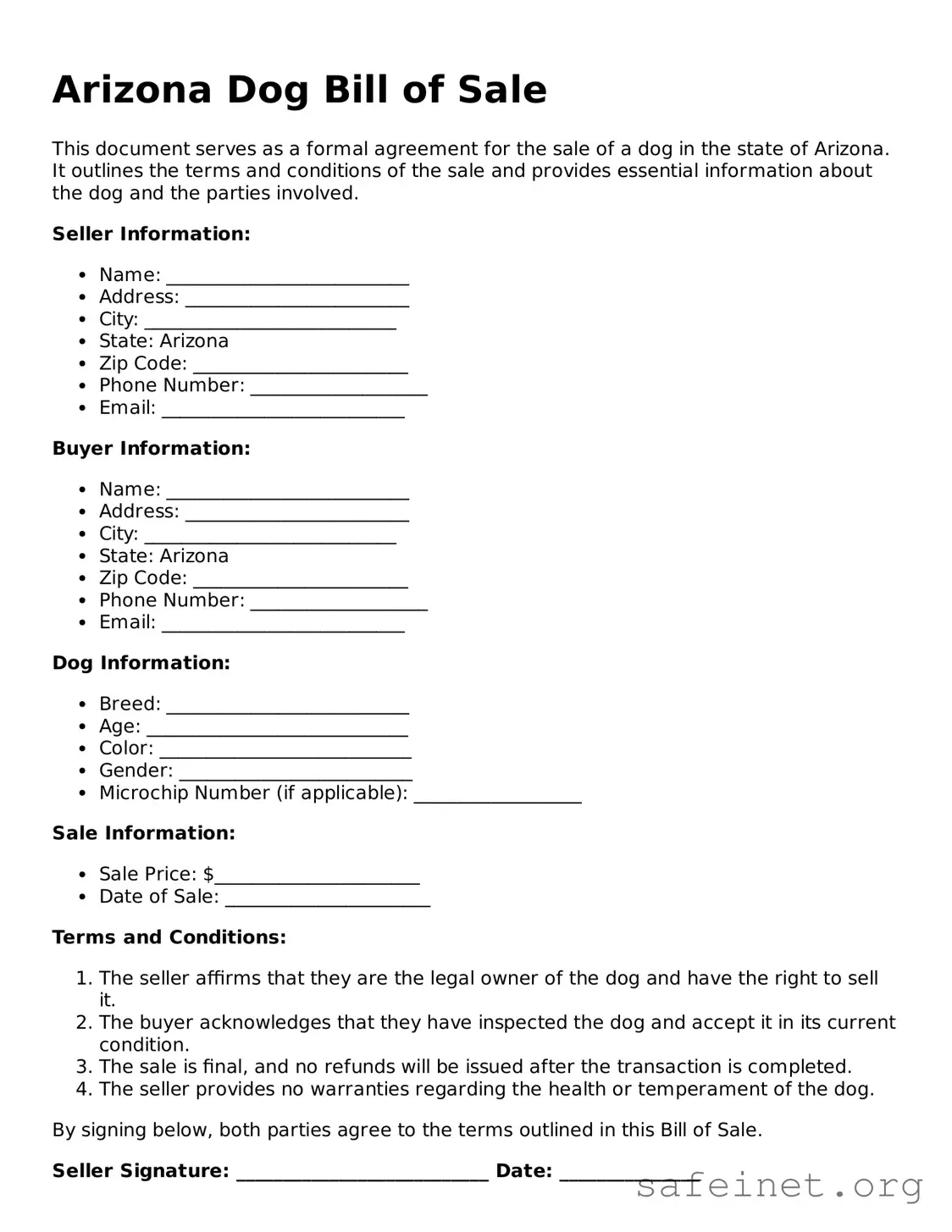
When considering the purchase or sale of a dog in Arizona, having the right documentation is essential to ensure a smooth and transparent transaction. The Arizona Dog Bill of Sale form serves as a crucial tool in this process, outlining important details that protect both the buyer and the seller. This form typically includes essential information such as the names and contact details of both parties, a thorough description of the dog being sold—including breed, age, and any identifying marks—and the agreed-upon purchase price. Additionally, the form may address the health status of the dog, any warranties provided by the seller, and specific conditions of the sale. By utilizing this form, both parties can establish clear expectations and responsibilities, making it easier to resolve any potential disputes that may arise after the transaction. Understanding the significance of this document not only facilitates a legal sale but also fosters trust between the buyer and seller, ensuring that the well-being of the animal is prioritized throughout the process.
Arizona Dog Bill of Sale
This document serves as a formal agreement for the sale of a dog in the state of Arizona. It outlines the terms and conditions of the sale and provides essential information about the dog and the parties involved.
Seller Information:
Buyer Information:
Dog Information:
Sale Information:
Terms and Conditions:
By signing below, both parties agree to the terms outlined in this Bill of Sale.
Seller Signature: ___________________________ Date: _______________
Buyer Signature: ___________________________ Date: _______________
| Fact Name | Description |
|---|---|
| Purpose | The Arizona Dog Bill of Sale form serves as a legal document to record the sale or transfer of ownership of a dog. |
| Governing Law | This form is governed by Arizona state law, particularly under the Arizona Revised Statutes Title 44, which pertains to sales and contracts. |
| Required Information | Key details such as the seller's and buyer's names, contact information, and a description of the dog must be included in the form. |
| Signatures | The form must be signed by both the seller and the buyer to ensure that the transaction is legally binding. |
| Consideration | While the form can document a sale, it can also be used for gifting a dog, but it must still outline any consideration, such as a nominal fee or other terms. |
Once you have the Arizona Dog Bill of Sale form in hand, you’re ready to begin the process. This form helps document the transfer of ownership of a dog from one person to another. Follow these steps to fill it out accurately.
After completing the form, keep a copy for your records. This document serves as proof of the transaction and can be helpful in the future.
What is an Arizona Dog Bill of Sale form?
The Arizona Dog Bill of Sale form is a legal document used to transfer ownership of a dog from one party to another. This form serves as proof of the transaction and includes important details such as the dog's breed, age, and identification information, along with the names and addresses of both the seller and the buyer. Having this document can help protect both parties in case of disputes regarding ownership or health issues related to the dog.
Is the Dog Bill of Sale required in Arizona?
While it is not legally mandated to use a Dog Bill of Sale in Arizona, it is highly recommended. This document provides a clear record of the sale, which can be beneficial for both the seller and the buyer. In the event of a disagreement or if the dog is lost or stolen, having a bill of sale can serve as evidence of ownership. Additionally, some breeders or shelters may require a bill of sale as part of their adoption or sale process.
What information should be included in the Dog Bill of Sale?
A comprehensive Dog Bill of Sale should include several key pieces of information. This typically consists of the seller's and buyer's full names and contact details, a detailed description of the dog (including breed, color, age, and any unique identifying marks), the sale price, and the date of the transaction. It may also include any warranties or guarantees about the dog's health, as well as the seller's signature to validate the agreement.
Can the Dog Bill of Sale be used for other pets?
While the Dog Bill of Sale is specifically designed for dogs, similar forms can be adapted for other pets. Each type of animal may require specific details relevant to its care and ownership transfer. Therefore, if you are selling or adopting a different type of pet, it is advisable to create or obtain a tailored bill of sale that reflects the unique attributes and needs of that animal.
What should I do after completing the Dog Bill of Sale?
After completing the Dog Bill of Sale, both the seller and the buyer should retain a copy for their records. This ensures that both parties have proof of the transaction. It may also be beneficial to register the dog with local authorities or pet registries, if applicable. Additionally, the buyer should schedule a veterinary check-up for the dog to ensure its health and well-being, especially if any health guarantees were included in the sale.
Incomplete Information: Failing to fill out all required fields can lead to issues later. Ensure that both the seller and buyer's names, addresses, and contact information are complete.
Incorrect Dog Details: Providing inaccurate information about the dog, such as breed, age, or health status, can cause disputes. Double-check these details before submitting the form.
Missing Signatures: Both parties must sign the document for it to be valid. Neglecting to do so can invalidate the sale.
Not Including Payment Details: It's important to specify the payment amount and method. Leaving this section blank can lead to misunderstandings.
Ignoring Local Laws: Different areas may have specific regulations regarding pet sales. Make sure to familiarize yourself with any local laws that may apply.
Failing to Keep Copies: Not retaining a copy of the completed form can be problematic. Always keep a copy for your records in case of future disputes.
Not Providing Health Records: If the dog has had vaccinations or health checks, it’s wise to include this information. Buyers appreciate transparency about the dog's health history.
Overlooking Additional Terms: If there are specific terms or conditions regarding the sale, they should be included. This could cover things like return policies or care instructions.
The Arizona Dog Bill of Sale form serves as a critical document for the transfer of ownership of a dog. However, several other forms and documents are often used in conjunction with this bill of sale to ensure a smooth and legally sound transaction. Below is a list of these documents, each serving a unique purpose in the process.
Utilizing these additional forms and documents alongside the Arizona Dog Bill of Sale can facilitate a comprehensive and responsible transfer of pet ownership. Each document plays a significant role in ensuring that both the buyer and seller are protected and informed throughout the process.
The Arizona Dog Bill of Sale form shares similarities with a general Bill of Sale, which is used for various types of property transactions. A general Bill of Sale serves as a written record that transfers ownership from one party to another. It typically includes details about the item being sold, the purchase price, and the date of the transaction. Just like the Dog Bill of Sale, it protects both the buyer and the seller by providing proof of the sale and outlining the terms agreed upon by both parties.
Another document that resembles the Arizona Dog Bill of Sale is a Pet Adoption Agreement. This agreement is often used by shelters or rescue organizations when an individual adopts a pet. It includes terms and conditions regarding the care and responsibility for the animal. Similar to the Dog Bill of Sale, it formalizes the transfer of ownership and ensures that the new owner understands their obligations toward the pet. Both documents aim to promote responsible pet ownership and provide a clear understanding of the relationship between the parties involved.
A Sales Contract for Pets is another document that aligns closely with the Arizona Dog Bill of Sale. This contract outlines the specific terms of the sale, including the health status of the animal, any warranties, and the responsibilities of the buyer. It serves to protect the interests of both the seller and the buyer, ensuring that all necessary information about the pet is disclosed. Like the Dog Bill of Sale, it is a legally binding document that can be referenced in case of disputes regarding the sale.
Finally, a Transfer of Ownership form for pets is similar in purpose to the Arizona Dog Bill of Sale. This form is often used when ownership of a pet is transferred, whether through sale, gift, or other means. It typically includes information about the pet, the previous owner, and the new owner. Both documents serve to document the change in ownership and provide a record that can be useful for future reference, especially in situations involving veterinary care or licensing.
When filling out the Arizona Dog Bill of Sale form, it is important to follow certain guidelines to ensure that the transaction is valid and clear. Below are some essential dos and don'ts to consider.
Things You Should Do:
Things You Shouldn't Do:
When it comes to the Arizona Dog Bill of Sale form, there are several misconceptions that can lead to confusion for both buyers and sellers. Understanding these misconceptions is crucial for ensuring a smooth transaction. Below is a list of common misunderstandings:
Being aware of these misconceptions can help ensure that both buyers and sellers navigate the process of dog ownership transfer smoothly and legally. Always consider consulting with a professional if you have questions about the bill of sale or the responsibilities it entails.
When filling out and using the Arizona Dog Bill of Sale form, there are several important considerations to keep in mind. This document serves as a legal record of the transfer of ownership of a dog. Here are key takeaways to ensure a smooth process:
By following these guidelines, individuals can ensure that their transaction is clear and legally binding, protecting both the seller and the buyer in the process.