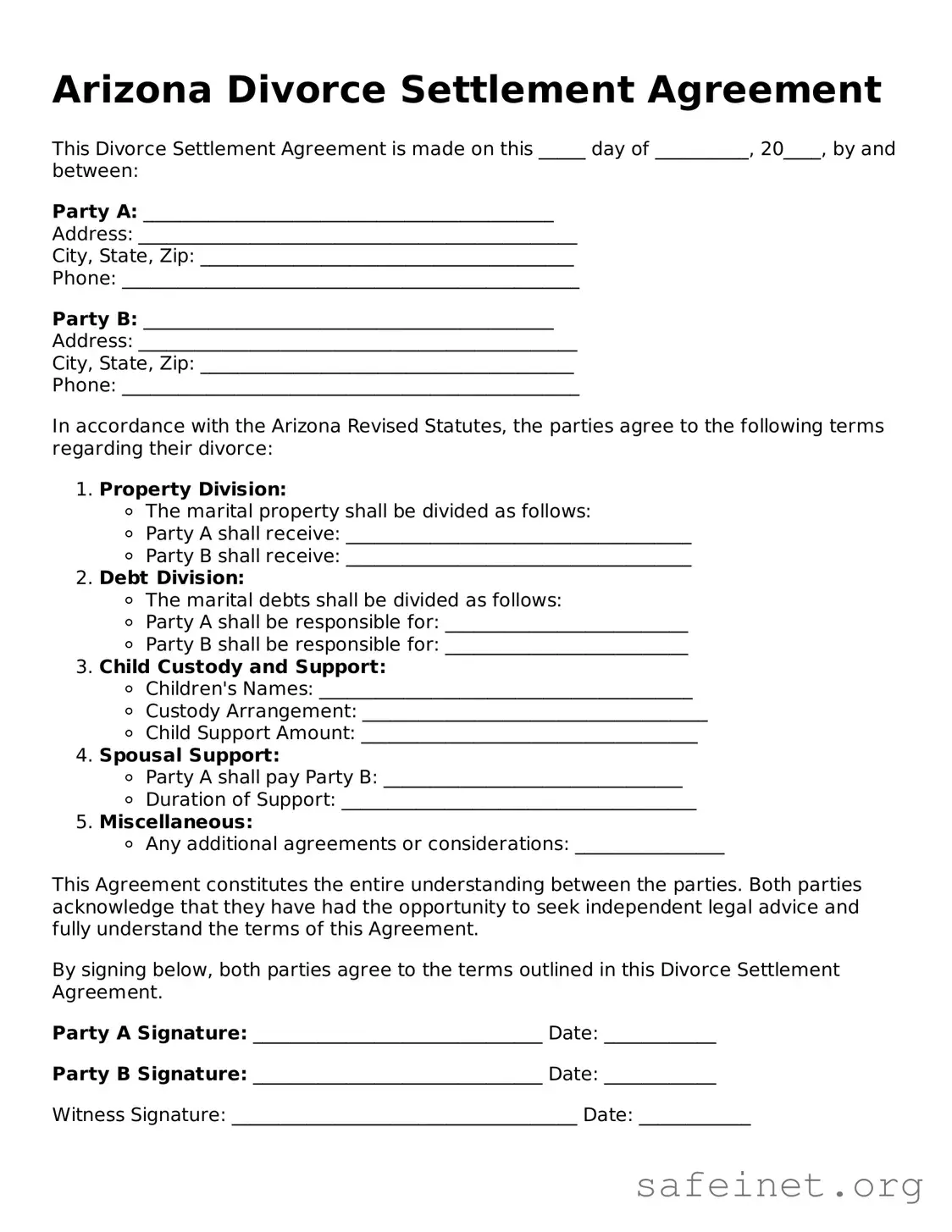
In the process of navigating a divorce in Arizona, one critical component that couples must address is the Divorce Settlement Agreement form. This document serves as a comprehensive outline of the terms agreed upon by both parties regarding the division of assets, liabilities, and responsibilities. It encompasses essential aspects such as child custody arrangements, visitation schedules, child support obligations, and spousal support, if applicable. Additionally, the form details the division of property, including real estate, personal belongings, and financial accounts, ensuring that both parties have a clear understanding of their rights and obligations post-divorce. By carefully filling out this form, couples can facilitate a smoother transition into their new lives, minimizing the potential for conflict and confusion in the future. Understanding the significance of this agreement is vital for anyone looking to finalize their divorce in a fair and amicable manner.
Arizona Divorce Settlement Agreement
This Divorce Settlement Agreement is made on this _____ day of __________, 20____, by and between:
Party A: ____________________________________________
Address: _______________________________________________
City, State, Zip: ________________________________________
Phone: _________________________________________________
Party B: ____________________________________________
Address: _______________________________________________
City, State, Zip: ________________________________________
Phone: _________________________________________________
In accordance with the Arizona Revised Statutes, the parties agree to the following terms regarding their divorce:
This Agreement constitutes the entire understanding between the parties. Both parties acknowledge that they have had the opportunity to seek independent legal advice and fully understand the terms of this Agreement.
By signing below, both parties agree to the terms outlined in this Divorce Settlement Agreement.
Party A Signature: _______________________________ Date: ____________
Party B Signature: _______________________________ Date: ____________
Witness Signature: _____________________________________ Date: ____________
| Fact Name | Description |
|---|---|
| Governing Law | The Arizona Divorce Settlement Agreement is governed by Arizona Revised Statutes Title 25. |
| Purpose | This form outlines the terms of the divorce settlement between spouses, including asset division and child custody arrangements. |
| Filing Requirement | The completed agreement must be filed with the court as part of the divorce proceedings. |
| Mutual Agreement | Both parties must agree to the terms outlined in the settlement for it to be valid. |
| Modification | Changes to the agreement can be made if both parties consent and the court approves the modifications. |
| Legal Representation | While not required, having legal representation is strongly recommended to ensure fairness and compliance. |
| Child Support Guidelines | Any child support arrangements must adhere to Arizona's child support guidelines to be enforceable. |
Filling out the Arizona Divorce Settlement Agreement form is an important step in the divorce process. This document helps outline the agreements made between both parties regarding asset division, child custody, and other critical matters. Once completed, the form will be submitted to the court for approval, paving the way for the finalization of the divorce.
What is an Arizona Divorce Settlement Agreement?
An Arizona Divorce Settlement Agreement is a legal document that outlines the terms and conditions agreed upon by both spouses regarding the division of assets, debts, child custody, and support during a divorce. This agreement is crucial for ensuring that both parties understand their rights and responsibilities after the marriage ends.
Is a Divorce Settlement Agreement required in Arizona?
No, a Divorce Settlement Agreement is not legally required in Arizona. However, having one can simplify the divorce process and help avoid future disputes. When both parties reach an agreement, it can be submitted to the court for approval, making the divorce proceedings smoother.
What should be included in the Divorce Settlement Agreement?
The agreement should cover various important aspects, including the division of property and debts, child custody arrangements, visitation schedules, and child or spousal support. It is important for both parties to be clear and detailed in their agreement to prevent misunderstandings later on.
How is a Divorce Settlement Agreement enforced?
Once the Divorce Settlement Agreement is approved by the court, it becomes a legally binding document. If one party fails to comply with the terms of the agreement, the other party can seek enforcement through the court. This may involve requesting a modification or even contempt proceedings, depending on the situation.
Can the Divorce Settlement Agreement be modified after it is signed?
Yes, the Divorce Settlement Agreement can be modified, but only under certain circumstances. If there is a significant change in circumstances, such as a change in income or living situation, one party may request a modification through the court. Both parties must agree to the changes, and the court must approve them.
Do I need a lawyer to create a Divorce Settlement Agreement?
While it is not mandatory to have a lawyer, it is highly advisable. A lawyer can help ensure that the agreement is fair and complies with Arizona laws. They can also provide guidance on complex issues, such as child custody and support, which can be challenging to navigate without legal expertise.
How long does it take to finalize a Divorce Settlement Agreement?
The time it takes to finalize a Divorce Settlement Agreement can vary widely. If both parties are in agreement and all necessary information is provided, it may take only a few weeks. However, if there are disputes or negotiations required, it could take several months to reach a resolution.
What happens if we cannot agree on the terms of the Divorce Settlement Agreement?
If both parties cannot reach an agreement, the case may go to court. A judge will then make decisions regarding the division of assets, custody, and support based on the evidence presented. This can lead to a more lengthy and costly process, so open communication and negotiation are encouraged.
Where can I find a template for the Arizona Divorce Settlement Agreement?
Templates for the Arizona Divorce Settlement Agreement can often be found online, including on legal aid websites and court resources. However, it is recommended to consult with a lawyer to ensure that the template is appropriate for your specific situation and complies with state laws.
Incomplete Information: One common mistake is failing to provide all necessary information. Each section of the form must be filled out completely. Missing details can lead to delays or complications in the divorce process.
Incorrect Financial Disclosure: Many individuals overlook the importance of accurately disclosing their financial situation. This includes income, assets, and debts. Inaccuracies can not only affect the settlement but may also have legal consequences.
Not Considering Future Needs: Some people focus solely on the present without considering future implications. It’s essential to think about long-term financial stability, especially regarding child support and alimony.
Ignoring Legal Advice: Finally, neglecting to seek legal counsel can be a significant oversight. While it might seem like a straightforward process, having an attorney review the agreement can help ensure that your rights are protected and that the agreement is fair.
When navigating a divorce in Arizona, several forms and documents complement the Divorce Settlement Agreement. Each of these documents serves a specific purpose in the process, ensuring that all aspects of the divorce are addressed properly.
Each of these documents plays a crucial role in the divorce process, ensuring that all necessary details are covered and that both parties have a clear understanding of their rights and responsibilities. Properly completing and submitting these forms can help facilitate a smoother divorce experience.
The Arizona Divorce Settlement Agreement form shares similarities with the Marital Settlement Agreement, which is often used in various states. Both documents outline the terms of the divorce, including asset division, child custody, and support arrangements. While the terminology may differ slightly, the fundamental purpose remains the same: to provide a clear framework for both parties to follow, ensuring that all agreements are documented and enforceable in court.
Another related document is the Separation Agreement. This is particularly relevant for couples who wish to live apart without formally divorcing. Like the Divorce Settlement Agreement, it addresses issues such as property division and child support. However, the Separation Agreement can serve as a precursor to divorce, allowing couples to establish terms while they contemplate their future.
The Parenting Plan is another essential document that complements the Divorce Settlement Agreement. It specifically focuses on child custody arrangements and parenting responsibilities. While the Divorce Settlement Agreement covers a broader range of issues, the Parenting Plan delves deeper into the specifics of co-parenting, including visitation schedules and decision-making responsibilities.
The Child Support Agreement is crucial for any divorce involving children. This document outlines the financial responsibilities of each parent regarding child support payments. Similar to the Divorce Settlement Agreement, it ensures that both parties understand their obligations and helps prevent future disputes about financial support.
The Property Settlement Agreement is focused solely on the division of marital assets and debts. While the Divorce Settlement Agreement encompasses various aspects of divorce, the Property Settlement Agreement hones in on the specifics of what each spouse will receive. This document is vital for ensuring a fair division and can be incorporated into the broader settlement agreement.
The Alimony Agreement, or Spousal Support Agreement, addresses financial support from one spouse to another post-divorce. This document details the amount and duration of support payments, much like the Divorce Settlement Agreement outlines overall financial obligations. Both documents aim to provide clarity and reduce conflict after the marriage ends.
The Quitclaim Deed is a legal document used to transfer property ownership from one spouse to another. In the context of a divorce, it can be part of the Divorce Settlement Agreement when determining who retains ownership of the marital home or other real estate. While the Quitclaim Deed is more specific to property transfer, it plays a crucial role in fulfilling the terms set forth in the Divorce Settlement Agreement.
The Financial Affidavit is often required during divorce proceedings to provide a clear picture of each party's financial situation. This document complements the Divorce Settlement Agreement by ensuring that both parties have a transparent understanding of their financial standing, which can impact negotiations regarding asset division and support obligations.
Lastly, the Final Judgment of Dissolution of Marriage is the court document that officially ends the marriage. While it serves a different purpose than the Divorce Settlement Agreement, it often incorporates the terms agreed upon in the settlement. This final judgment is the culmination of the divorce process, ensuring that all agreements are legally recognized and enforceable.
When filling out the Arizona Divorce Settlement Agreement form, it is essential to approach the task with care and attention to detail. The following guidelines can help ensure that the process goes smoothly and that the agreement is comprehensive and clear.
By adhering to these dos and don'ts, individuals can facilitate a more efficient and equitable divorce settlement process in Arizona.
Understanding the Arizona Divorce Settlement Agreement form is crucial for individuals navigating the divorce process. However, several misconceptions can lead to confusion. Here are eight common misconceptions:
In Arizona, both parties must sign the Divorce Settlement Agreement for it to be valid. This ensures that both spouses agree to the terms outlined in the document.
While property division is a significant aspect, the Divorce Settlement Agreement can also address child custody, child support, and spousal maintenance. It encompasses various issues that may arise during a divorce.
Verbal agreements regarding divorce terms are not legally binding. A written and signed Divorce Settlement Agreement is necessary to enforce the terms agreed upon by both parties.
While the agreement is binding once signed, modifications can be made if both parties agree to the changes. It's essential to document any amendments in writing.
The court reviews the Divorce Settlement Agreement to ensure it is fair and reasonable, especially concerning children. Approval is not guaranteed, and the court may request modifications.
While individuals can complete the form without legal assistance, consulting an attorney can provide valuable insights. Legal advice can help ensure that rights are protected and the agreement is comprehensive.
Arizona follows community property laws, meaning assets acquired during the marriage are typically divided equally. However, the agreement can specify different arrangements based on the couple’s circumstances.
While it is advisable to file the agreement with the court for enforcement purposes, the agreement itself is valid as soon as both parties sign it. Filing simply adds an extra layer of legal protection.
Addressing these misconceptions can lead to a clearer understanding of the Divorce Settlement Agreement process in Arizona, ultimately aiding individuals in making informed decisions during a challenging time.
When completing the Arizona Divorce Settlement Agreement form, it’s essential to understand the key aspects that will guide you through the process. Here are some important takeaways:
By following these guidelines, you can navigate the divorce settlement process more effectively and ensure that your agreement is comprehensive and enforceable.