When entering into a commercial lease agreement in Arizona, understanding the essential components of the lease form is crucial for both landlords and tenants. This document serves as a legally binding contract that outlines the terms and conditions under which a property can be rented for business purposes. Key aspects include the lease duration, rental payment terms, and security deposit requirements. Additionally, the agreement specifies the responsibilities of both parties regarding maintenance and repairs, as well as any restrictions on property use. It’s important to pay attention to clauses related to renewal options, termination rights, and any additional fees that may apply. By familiarizing yourself with these elements, you can navigate the leasing process more effectively, ensuring a smoother experience for everyone involved.
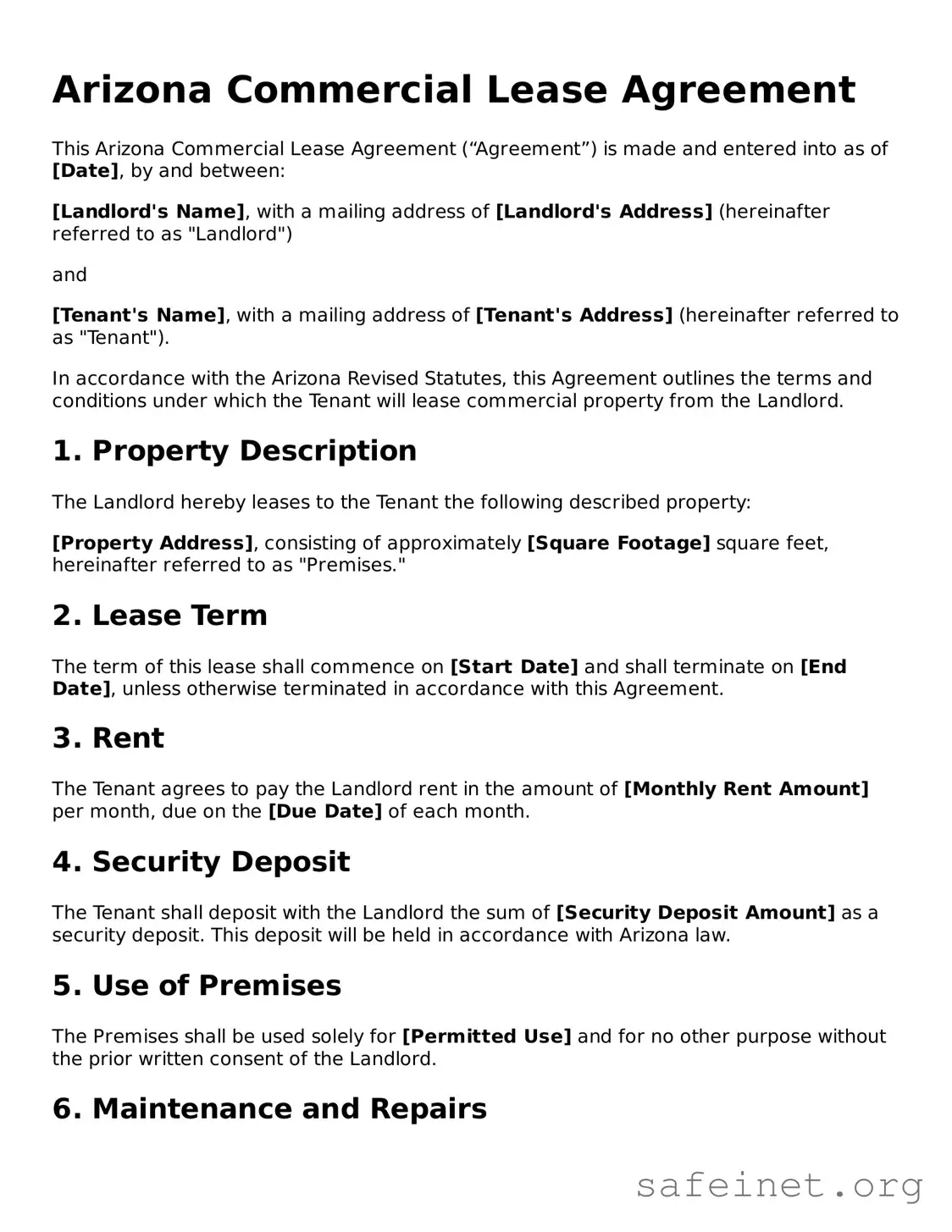
Arizona Commercial Lease Agreement
This Arizona Commercial Lease Agreement (“Agreement”) is made and entered into as of [Date], by and between:
[Landlord's Name], with a mailing address of [Landlord's Address] (hereinafter referred to as "Landlord")
and
[Tenant's Name], with a mailing address of [Tenant's Address] (hereinafter referred to as "Tenant").
In accordance with the Arizona Revised Statutes, this Agreement outlines the terms and conditions under which the Tenant will lease commercial property from the Landlord.
1. Property Description
The Landlord hereby leases to the Tenant the following described property:
[Property Address], consisting of approximately [Square Footage] square feet, hereinafter referred to as "Premises."
2. Lease Term
The term of this lease shall commence on [Start Date] and shall terminate on [End Date], unless otherwise terminated in accordance with this Agreement.
3. Rent
The Tenant agrees to pay the Landlord rent in the amount of [Monthly Rent Amount] per month, due on the [Due Date] of each month.
4. Security Deposit
The Tenant shall deposit with the Landlord the sum of [Security Deposit Amount] as a security deposit. This deposit will be held in accordance with Arizona law.
5. Use of Premises
The Premises shall be used solely for [Permitted Use] and for no other purpose without the prior written consent of the Landlord.
6. Maintenance and Repairs
The Tenant shall maintain the Premises in good order and condition. The Landlord shall be responsible for:
7. Utilities
The Tenant shall be responsible for the payment of all utilities, including but not limited to:
8. Alterations
The Tenant shall not make any alterations or improvements to the Premises without the Landlord's prior written consent.
9. Termination
Either party may terminate this Agreement by providing written notice of [Notice Period] days to the other party.
10. Governing Law
This Agreement shall be governed by and construed in accordance with the laws of the State of Arizona.
11. Signatures
By signing below, both parties agree to the terms and conditions outlined in this Agreement:
Landlord: ____________________________ Date: _______________
Tenant: _____________________________ Date: _______________
| Fact Name | Description |
|---|---|
| Governing Law | The Arizona Commercial Lease Agreement is governed by Arizona state law, specifically Title 33 of the Arizona Revised Statutes. |
| Parties Involved | The agreement typically involves two main parties: the lessor (landlord) and the lessee (tenant). |
| Lease Duration | The lease duration can vary widely, often ranging from one year to several years, depending on the needs of the parties. |
| Rent Payment Terms | Rent payment terms, including the amount and due date, must be clearly outlined in the agreement to avoid disputes. |
Filling out the Arizona Commercial Lease Agreement form is an important step in establishing a rental arrangement for commercial property. The following steps will guide you through the process to ensure all necessary information is accurately provided.
What is an Arizona Commercial Lease Agreement?
An Arizona Commercial Lease Agreement is a legal document that outlines the terms and conditions under which a landlord rents commercial property to a tenant. This agreement includes important details such as the rental amount, lease duration, and responsibilities of both parties. It is essential for protecting the rights of both landlords and tenants in commercial real estate transactions.
What should be included in a Commercial Lease Agreement?
A well-drafted Commercial Lease Agreement should include several key elements. These typically encompass the names of the parties involved, a description of the property, the lease term, the rental payment amount, and any security deposit requirements. Additionally, it should outline maintenance responsibilities, rules regarding subleasing, and conditions for terminating the lease. Clear terms help prevent misunderstandings down the line.
How long is a typical commercial lease in Arizona?
The length of a commercial lease in Arizona can vary widely depending on the needs of the tenant and the landlord. Common lease terms range from one to five years, but longer leases are not unusual, especially for businesses looking for stability. Short-term leases may also be available for startups or seasonal businesses. It's important to choose a term that aligns with your business goals.
What happens if a tenant wants to break the lease early?
If a tenant wishes to break a commercial lease early, they should first review the lease agreement for any specific provisions related to early termination. Many leases include penalties or require a notice period before termination. In some cases, the landlord may allow the tenant to find a replacement tenant to take over the lease. Open communication with the landlord can often lead to a mutually agreeable solution.
Incomplete Information: Many individuals forget to fill out all required fields. This can lead to delays or even rejection of the lease.
Incorrect Dates: Entering the wrong lease start or end dates can create confusion. Always double-check the calendar before finalizing.
Missing Signatures: Failing to sign the document is a common oversight. Ensure that all parties involved sign the agreement.
Neglecting to Review Terms: Skimming over the terms and conditions can result in misunderstandings. Take the time to read everything carefully.
Ignoring Local Laws: Each state has specific regulations regarding commercial leases. Not adhering to Arizona's laws can lead to legal issues down the road.
When entering into a commercial lease agreement in Arizona, several additional forms and documents may be necessary to ensure a smooth transaction. Each of these documents serves a specific purpose, providing clarity and protection for both the landlord and the tenant. Below is a list of commonly used documents that often accompany the Arizona Commercial Lease Agreement.
Each of these documents plays a vital role in the leasing process, helping to clarify expectations and protect the interests of all parties involved. Understanding their purpose can significantly contribute to a successful leasing experience.
The Arizona Commercial Lease Agreement is similar to the Residential Lease Agreement, which outlines the terms between a landlord and tenant for residential properties. Both documents specify the duration of the lease, the amount of rent due, and the responsibilities of each party. However, the Residential Lease Agreement typically focuses on the needs of individual tenants, such as maintenance and security deposits, while the Commercial Lease Agreement addresses business-related considerations, like permitted use and modifications to the space.
Another document akin to the Arizona Commercial Lease Agreement is the Office Lease Agreement. This type of lease is specifically tailored for office spaces and includes clauses that cater to the unique needs of businesses operating in an office environment. Similar to the Commercial Lease Agreement, it covers rent, lease duration, and maintenance obligations but may also include specific provisions regarding office hours, signage, and shared facilities.
The Retail Lease Agreement shares many similarities with the Commercial Lease Agreement as well. Retail leases are designed for businesses that operate in retail spaces. They outline terms such as rent, lease duration, and maintenance responsibilities. Additionally, they often include clauses about foot traffic, advertising rights, and the exclusivity of certain business types, which are critical for retailers to ensure their success.
The Industrial Lease Agreement is another document that parallels the Arizona Commercial Lease Agreement. This lease is specifically for industrial properties, such as warehouses and manufacturing facilities. Both agreements detail rent, duration, and maintenance obligations, but the Industrial Lease often includes provisions related to zoning, environmental regulations, and the use of heavy machinery, reflecting the unique nature of industrial operations.
A Ground Lease Agreement is also similar in that it involves leasing land for long-term use, often for commercial purposes. This type of lease allows a tenant to build on the property while paying rent for the land. Like the Commercial Lease Agreement, it includes terms regarding rent and property maintenance but may also specify the types of structures that can be built and the duration of the lease, which can extend for decades.
The Sublease Agreement is another related document. This agreement allows a tenant to lease their rented space to another party, often with the landlord's consent. While the Commercial Lease Agreement governs the primary relationship between the landlord and tenant, the Sublease Agreement details the terms between the original tenant and the subtenant, including rent payment and responsibilities for maintenance and repairs.
The Equipment Lease Agreement is similar in that it involves leasing, but instead of property, it pertains to equipment used for business operations. Both agreements establish terms regarding payment, duration, and maintenance. However, the Equipment Lease focuses on the specific equipment being leased, including its condition and any warranties, which are less relevant in a standard Commercial Lease Agreement.
Lastly, the Business Lease Agreement is comparable as it encompasses various types of commercial leases, including retail, office, and industrial. This document serves as an umbrella term for any lease agreement concerning business premises. Like the Commercial Lease Agreement, it outlines rent, duration, and obligations, but it may also include broader terms that apply to multiple types of commercial properties, making it a versatile option for businesses.
When filling out the Arizona Commercial Lease Agreement form, it’s essential to approach the process carefully. Here’s a list of things you should and shouldn’t do to ensure everything goes smoothly.
By following these guidelines, you can help ensure that your experience with the Arizona Commercial Lease Agreement is positive and productive.
Understanding the Arizona Commercial Lease Agreement form is crucial for both landlords and tenants. However, several misconceptions can lead to confusion and potentially costly mistakes. Here are seven common misconceptions:
Being aware of these misconceptions can help both landlords and tenants navigate the complexities of the Arizona Commercial Lease Agreement more effectively.
When dealing with the Arizona Commercial Lease Agreement form, it is essential to understand several key aspects to ensure a smooth leasing process. Here are important takeaways:
By paying attention to these elements, both landlords and tenants can create a clear and effective commercial lease agreement.