In the vibrant landscape of Arizona's legal framework, the Cease and Desist Letter form serves as a crucial tool for individuals and businesses seeking to address unwanted actions or behaviors. This form acts as a formal request, urging the recipient to halt specific activities that may infringe on rights or cause harm. Commonly utilized in situations involving harassment, copyright infringement, or breach of contract, the letter provides a structured approach to resolving disputes without immediately resorting to litigation. By clearly outlining the nature of the objectionable behavior and the legal grounds for the request, the form empowers the sender to assert their rights while maintaining a professional tone. Additionally, it often includes a deadline for compliance, emphasizing the urgency of the matter. Understanding how to effectively use this letter can be a game-changer in protecting one’s interests and fostering a resolution that benefits all parties involved.
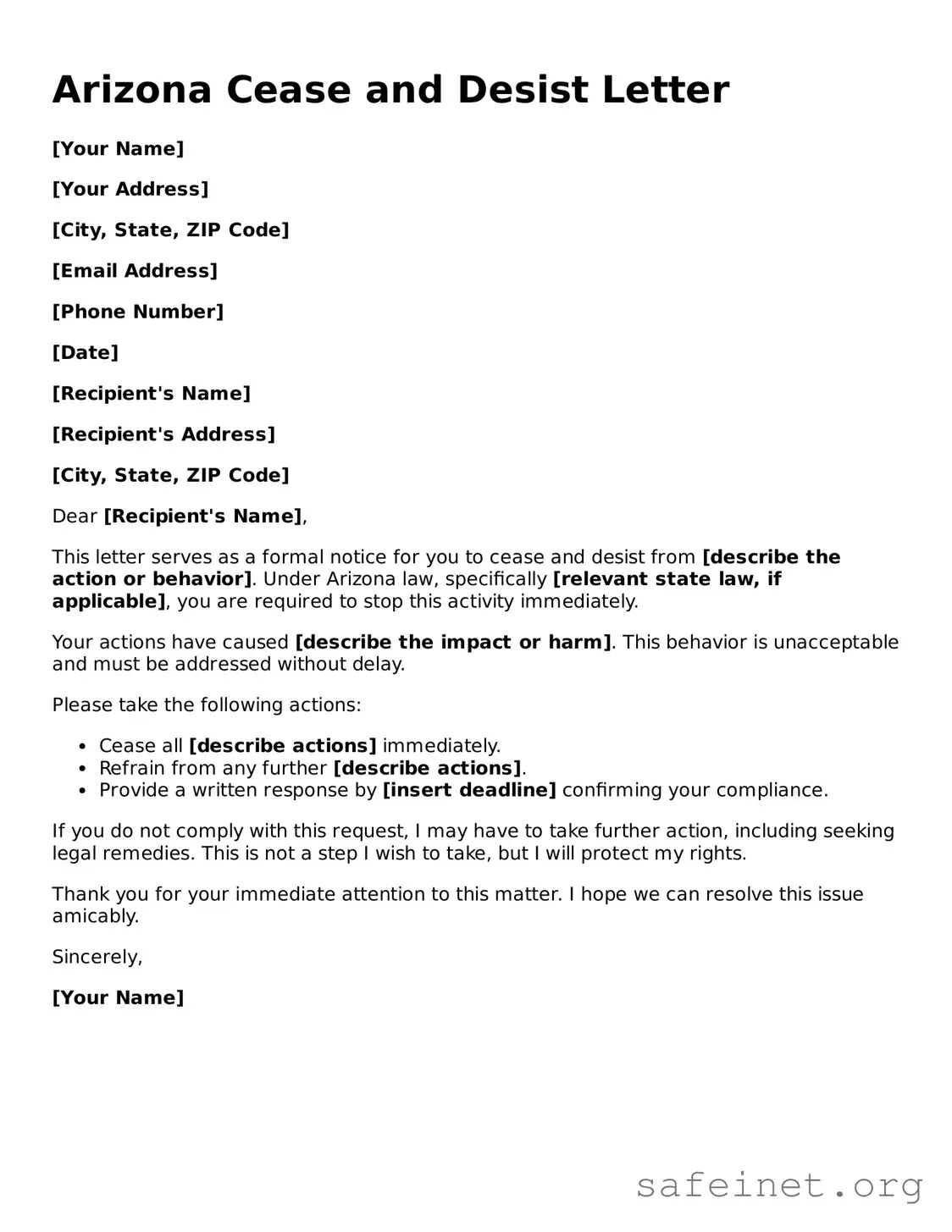
Arizona Cease and Desist Letter
[Your Name]
[Your Address]
[City, State, ZIP Code]
[Email Address]
[Phone Number]
[Date]
[Recipient's Name]
[Recipient's Address]
[City, State, ZIP Code]
Dear [Recipient's Name],
This letter serves as a formal notice for you to cease and desist from [describe the action or behavior]. Under Arizona law, specifically [relevant state law, if applicable], you are required to stop this activity immediately.
Your actions have caused [describe the impact or harm]. This behavior is unacceptable and must be addressed without delay.
Please take the following actions:
If you do not comply with this request, I may have to take further action, including seeking legal remedies. This is not a step I wish to take, but I will protect my rights.
Thank you for your immediate attention to this matter. I hope we can resolve this issue amicably.
Sincerely,
[Your Name]
| Fact Name | Description |
|---|---|
| Purpose | The Arizona Cease and Desist Letter is used to formally request that an individual or entity stop a specific activity that is believed to be unlawful or harmful. |
| Governing Law | This letter is governed by Arizona state law, particularly under the Arizona Revised Statutes. |
| Delivery Method | It is advisable to send the letter via certified mail to ensure that the recipient receives it and can be held accountable. |
| Contents | The letter typically includes the sender's contact information, a description of the activity to cease, and a deadline for compliance. |
| Legal Consequences | If the recipient fails to comply, the sender may pursue further legal action, which could include filing a lawsuit. |
After obtaining the Arizona Cease and Desist Letter form, you will need to fill it out accurately to ensure it serves its intended purpose. Follow the steps below to complete the form correctly.
What is a Cease and Desist Letter?
A Cease and Desist Letter is a formal request asking someone to stop a specific activity that is believed to be unlawful or harmful. It serves as a warning that legal action may follow if the behavior does not cease. This letter can be used in various situations, including copyright infringement, harassment, or breach of contract.
Who can use a Cease and Desist Letter in Arizona?
Anyone can use a Cease and Desist Letter in Arizona. Individuals, businesses, and organizations often utilize this tool to protect their rights. If you believe someone is infringing on your rights or causing harm, you have the right to send this letter as a first step before pursuing further legal action.
What should be included in a Cease and Desist Letter?
A well-crafted Cease and Desist Letter should include several key elements: a clear statement of the behavior you want to stop, the legal basis for your request, a deadline for compliance, and a warning about potential legal action if the behavior continues. Additionally, including your contact information and any relevant evidence can strengthen your case.
Is a Cease and Desist Letter legally binding?
No, a Cease and Desist Letter is not legally binding. It is a formal request and serves as a warning. However, it can be an important step in documenting your concerns and intentions. If the recipient ignores the letter, you may have grounds to pursue legal action, but the letter itself does not compel them to act.
How should I deliver a Cease and Desist Letter?
Delivery methods can vary, but it’s best to send the letter via certified mail with a return receipt. This way, you have proof that the recipient received the letter. You may also consider delivering it in person or sending it via email, but make sure to keep records of all communications.
What happens if the recipient ignores the Cease and Desist Letter?
If the recipient ignores your Cease and Desist Letter, you have several options. You may choose to pursue legal action, such as filing a lawsuit, depending on the severity of the issue. Consulting with a lawyer can help you understand your options and the best course of action moving forward.
Can I draft my own Cease and Desist Letter?
Yes, you can draft your own Cease and Desist Letter. However, it’s advisable to seek legal advice to ensure that the letter is effective and properly addresses your concerns. A lawyer can help you avoid common pitfalls and strengthen your position, making it more likely that the recipient will take your request seriously.
Not including the recipient's full name and address. This information is crucial for ensuring the letter reaches the intended party.
Failing to clearly state the specific behavior or action that needs to stop. Vague language can lead to misunderstandings.
Omitting a deadline for compliance. Without a clear timeline, the recipient may not take the request seriously.
Not providing evidence or examples of the behavior in question. Supporting details can strengthen the request and clarify the issue.
Using aggressive or threatening language. A professional tone is more likely to yield a positive response.
Neglecting to include your contact information. This allows the recipient to reach out for clarification or discussion.
Failing to sign the letter. A signature adds authenticity and indicates that the letter is a serious request.
Not keeping a copy of the letter for personal records. Documentation is essential for any potential future actions.
Ignoring state-specific requirements. Each state may have unique guidelines for cease and desist letters, which should be followed.
A Cease and Desist Letter is often used to formally request that an individual or organization stop an action that is believed to be unlawful or harmful. In Arizona, this letter can be accompanied by various other documents to strengthen the case or provide additional context. Below is a list of forms and documents that may be relevant when dealing with a Cease and Desist Letter.
Each of these documents plays a role in the process of addressing grievances and can help facilitate a resolution. Understanding their purposes can aid in navigating the complexities of legal matters effectively.
The Arizona Cease and Desist Letter form shares similarities with the Demand Letter. A Demand Letter is often the first step in resolving a dispute without going to court. It outlines the specific actions that the sender wants the recipient to take, such as stopping certain behaviors or paying a debt. Both documents aim to communicate a serious concern and seek compliance from the recipient, often serving as a precursor to more formal legal action if the issue is not resolved.
Another document similar to the Cease and Desist Letter is the Notice of Violation. This notice is typically used to inform an individual or entity that they are in violation of specific laws or regulations. Like the Cease and Desist Letter, it clearly states the behavior that needs to stop and may outline potential consequences if the violation continues. Both documents serve to alert the recipient to an issue that requires immediate attention.
The Settlement Agreement also bears resemblance to the Cease and Desist Letter. While a Settlement Agreement is often a formal resolution to a dispute, it can include terms that require one party to cease certain actions. Both documents aim to prevent further issues and provide a clear path forward, although the Settlement Agreement usually involves more negotiation and compromise between the parties.
Additionally, the Letter of Intent can be compared to the Cease and Desist Letter. A Letter of Intent outlines the preliminary understanding between parties regarding a potential agreement. While it does not demand immediate action like a Cease and Desist Letter, it sets the stage for future negotiations and can express intentions to halt certain activities until an agreement is reached.
The Non-Disclosure Agreement (NDA) is another document that shares some characteristics with the Cease and Desist Letter. An NDA is used to protect sensitive information from being disclosed. While it does not directly demand that someone stop a behavior, it does impose restrictions on sharing information, similar to how a Cease and Desist Letter seeks to stop specific actions that may cause harm.
Moreover, the Release of Liability form is akin to the Cease and Desist Letter in that it addresses potential legal issues. A Release of Liability form is used to protect one party from being held responsible for certain actions. Both documents can serve to clarify boundaries and expectations, ensuring that parties understand the consequences of their actions and the need to avoid specific behaviors.
The Warning Letter is another document that shares a purpose with the Cease and Desist Letter. A Warning Letter is typically issued to notify someone that their behavior is unacceptable and needs to change. It serves as a formal notice and can lead to more serious actions if the behavior continues, much like the Cease and Desist Letter, which seeks immediate compliance to prevent further issues.
Finally, the Formal Complaint can be compared to the Cease and Desist Letter. A Formal Complaint is often filed with a regulatory body or court to address grievances. While it is a more formal step in the legal process, both documents articulate concerns and seek to address issues before escalating to litigation. They serve as important tools for individuals and organizations to protect their rights and interests.
When filling out the Arizona Cease and Desist Letter form, it is important to approach the task with care and attention to detail. Here are some key points to consider:
Many people have misunderstandings about the Arizona Cease and Desist Letter form. Here are five common misconceptions:
While often associated with harassment, a cease and desist letter can address various issues, including copyright infringement, defamation, and contract violations.
Although legal assistance can be beneficial, individuals can create a cease and desist letter on their own. It should clearly state the issue and the actions required to resolve it.
A cease and desist letter is a formal request, but it does not guarantee that the recipient will comply. Legal action may still be necessary if the issue persists.
A cease and desist letter is an informal way to resolve disputes before escalating to court. It can often lead to a resolution without the need for legal proceedings.
Notarization is not a requirement for a cease and desist letter in Arizona. The letter should be clear and direct, focusing on the issues at hand.
When dealing with a situation that requires a cease and desist letter in Arizona, understanding how to fill out and use the letter effectively is crucial. Here are some key takeaways to consider:
Using a cease and desist letter can be an effective way to address disputes. Ensuring that it is properly filled out and delivered can help in resolving issues amicably.