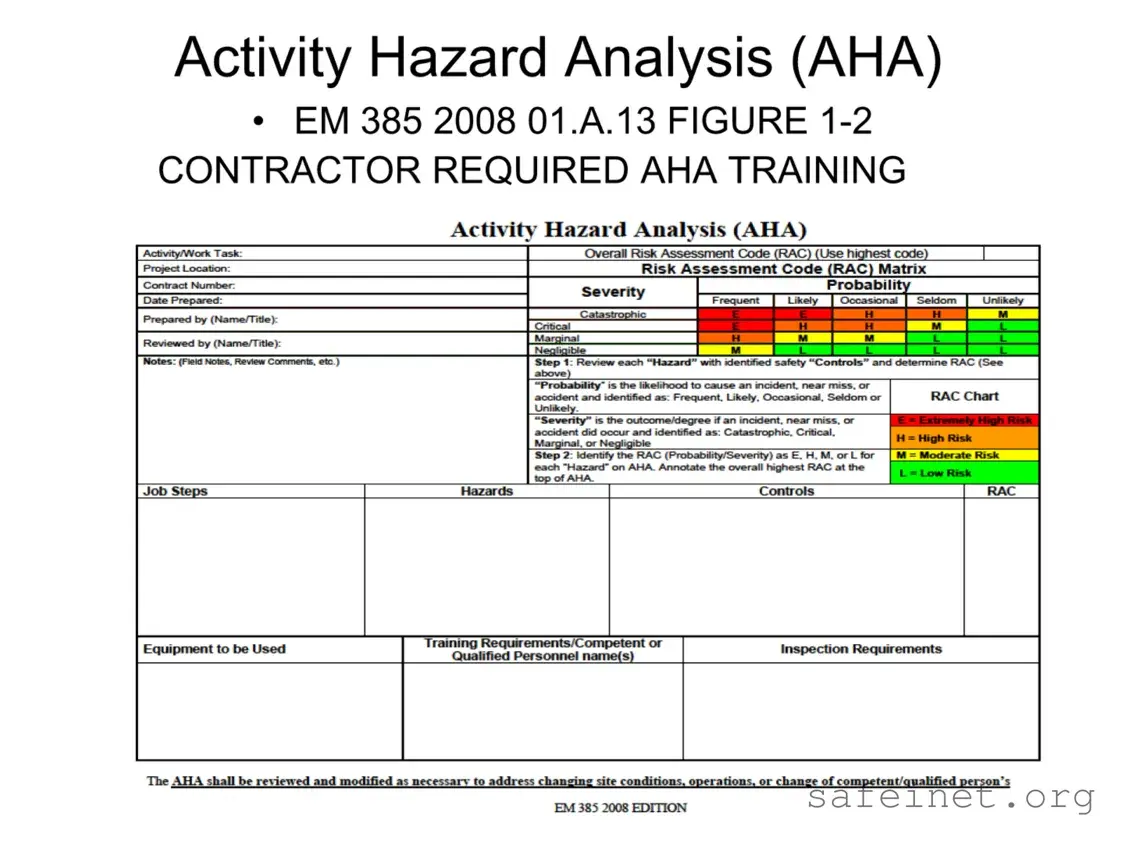
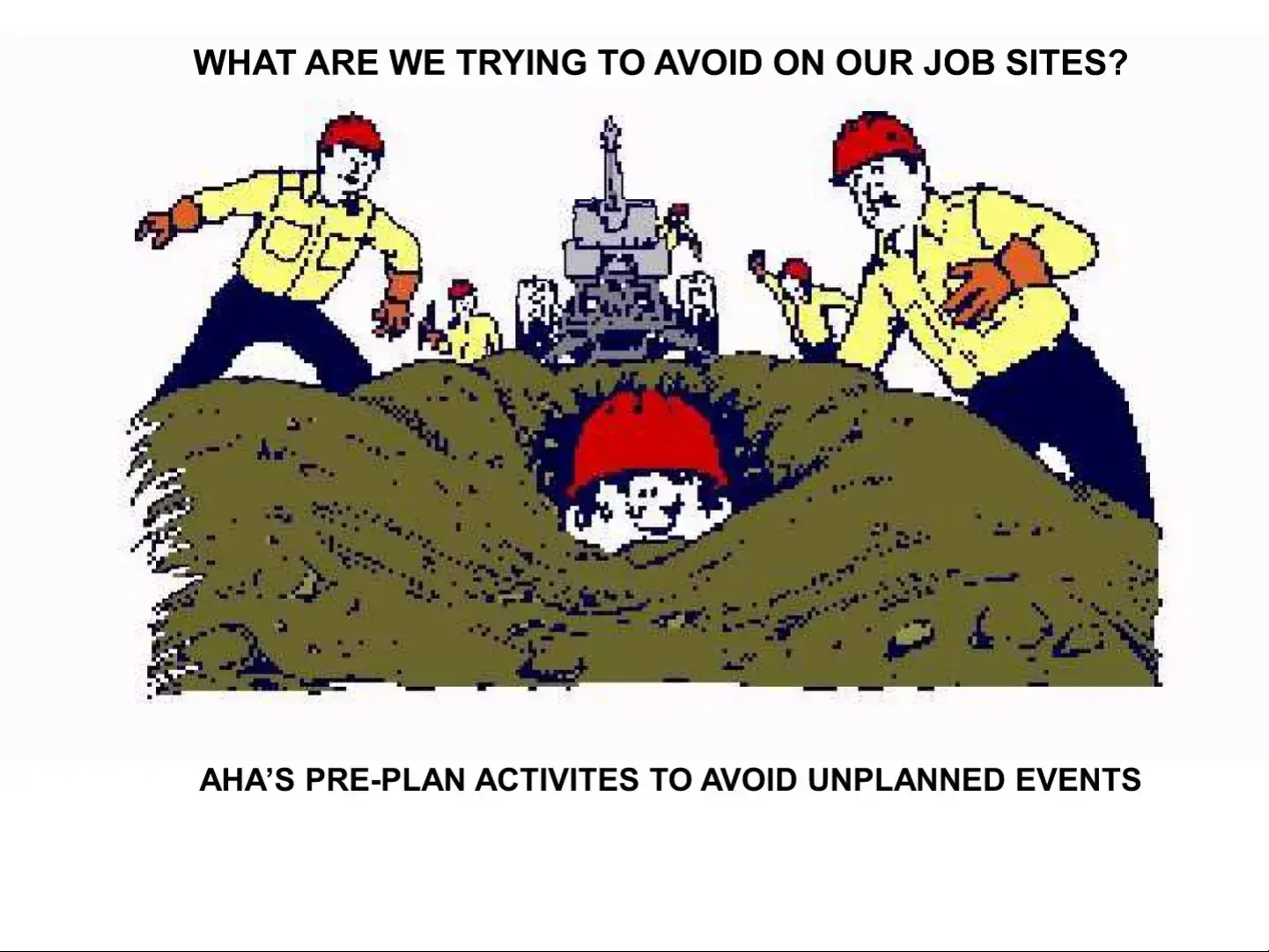
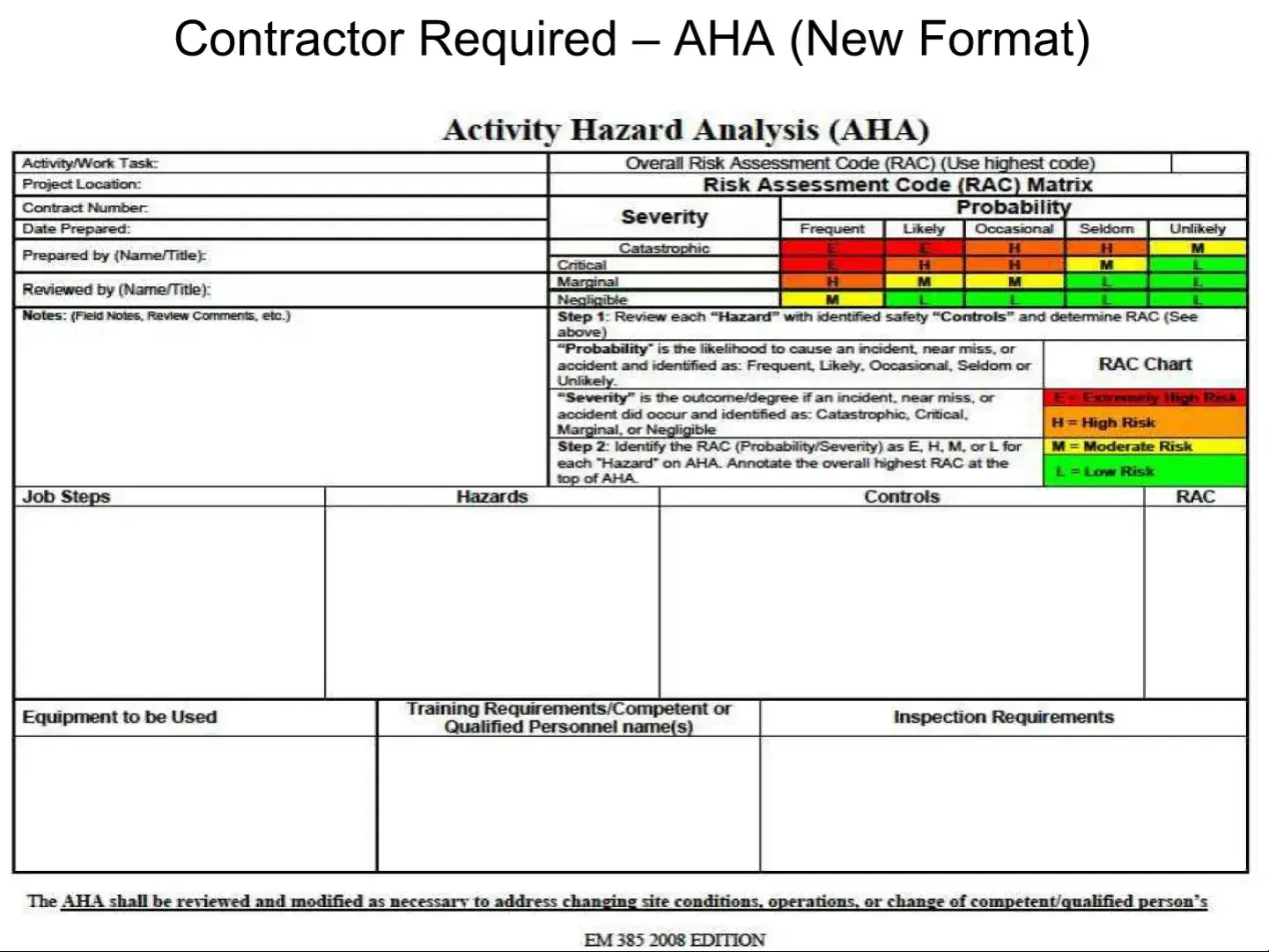
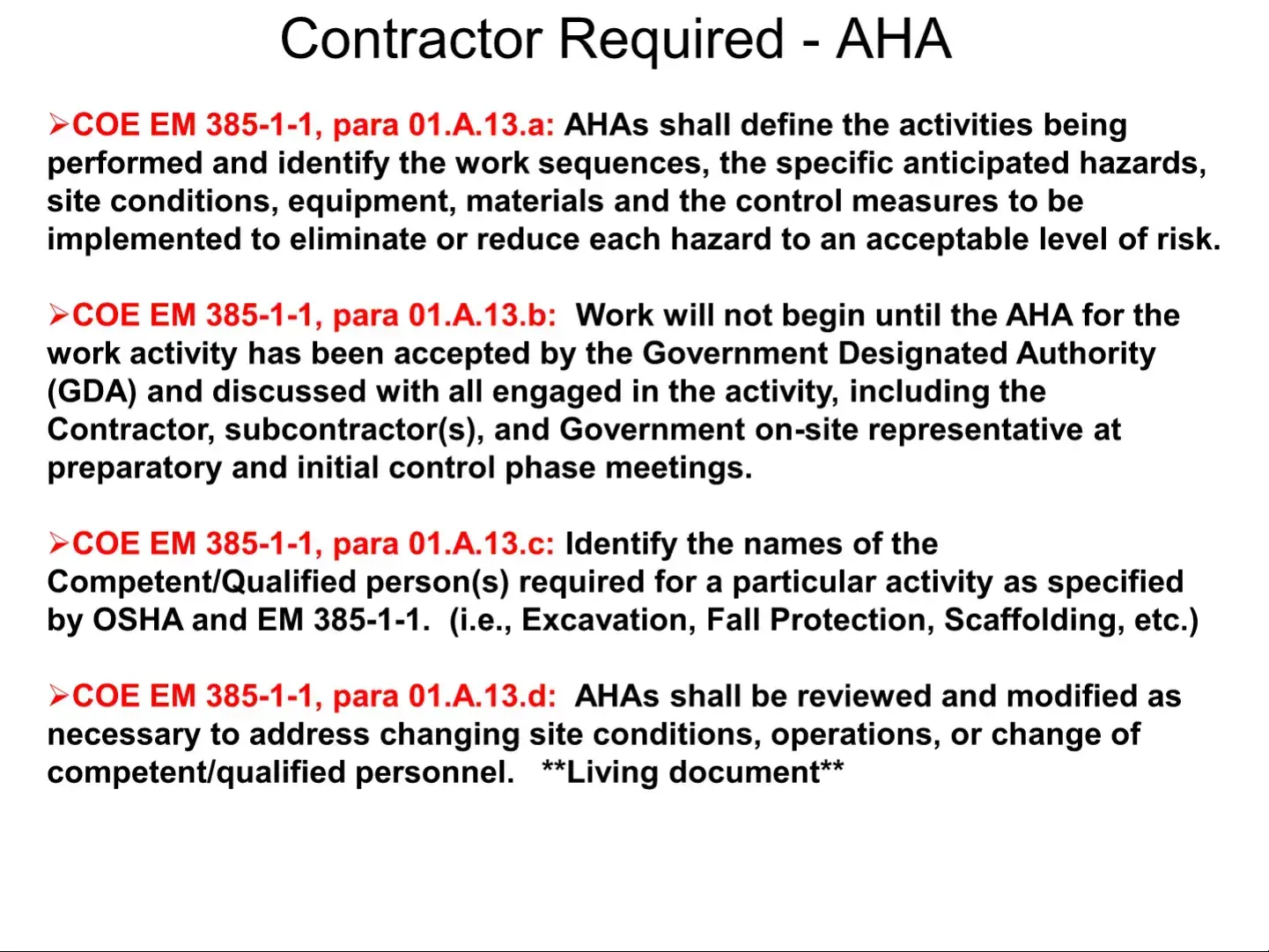
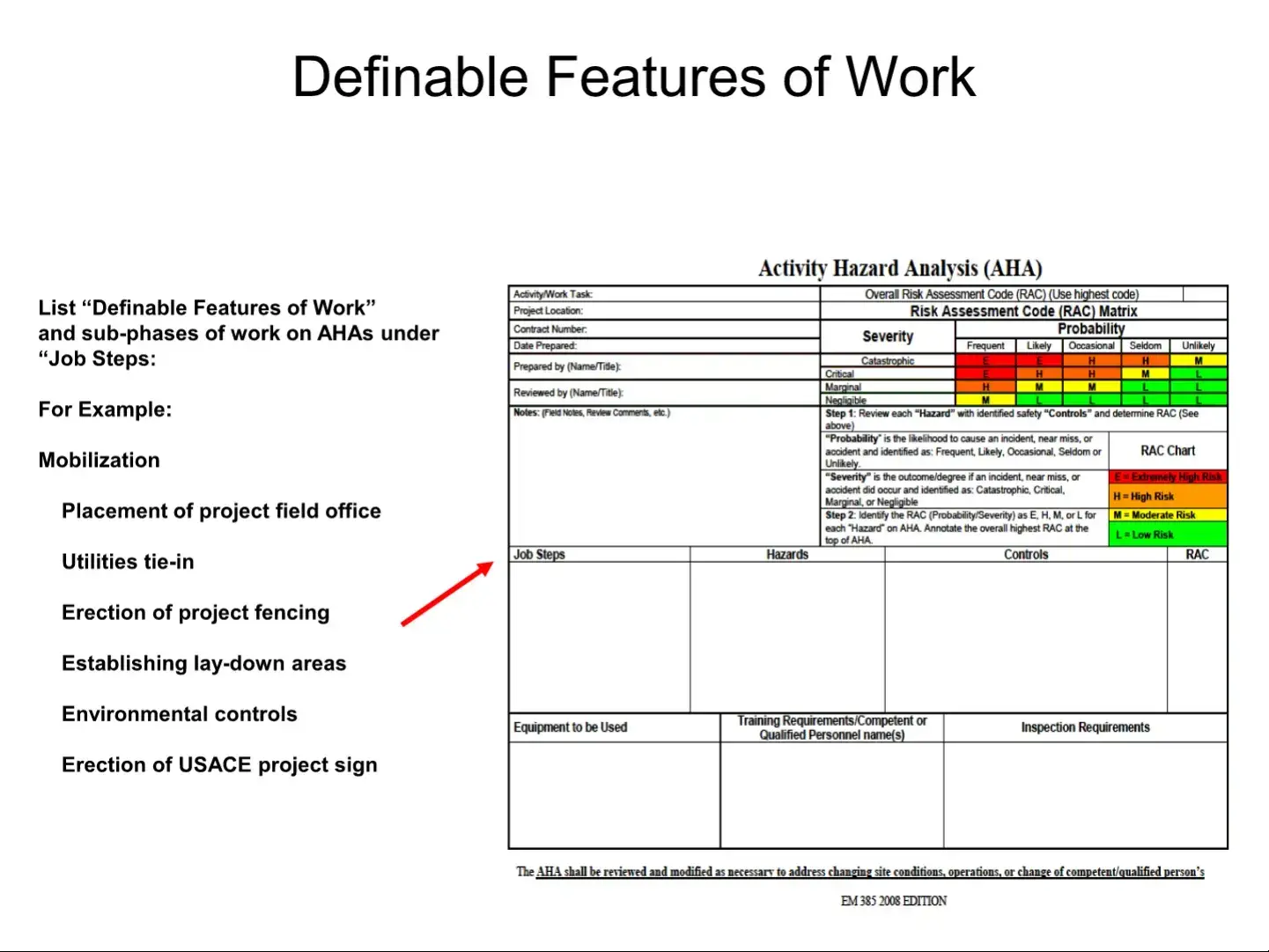
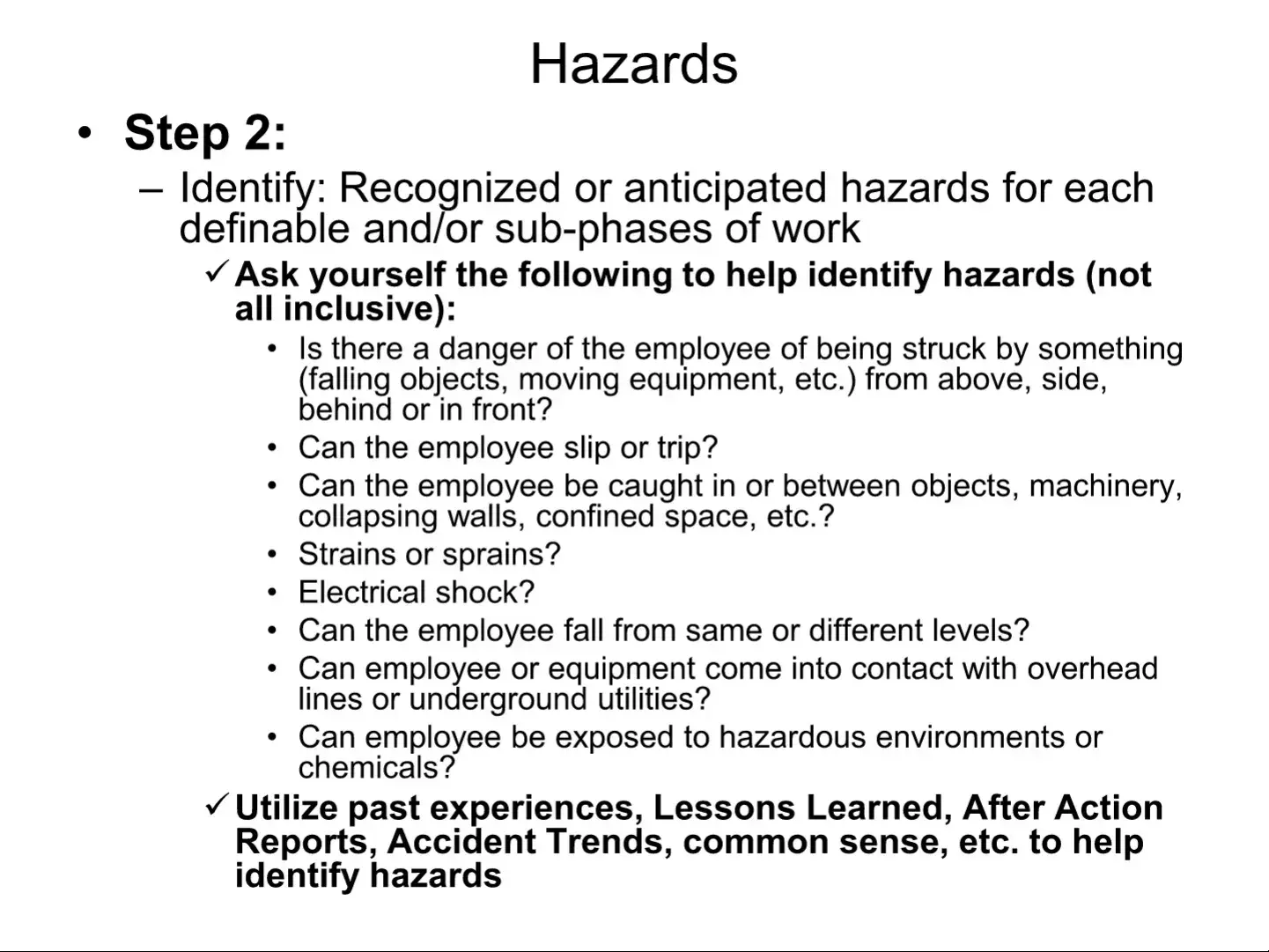
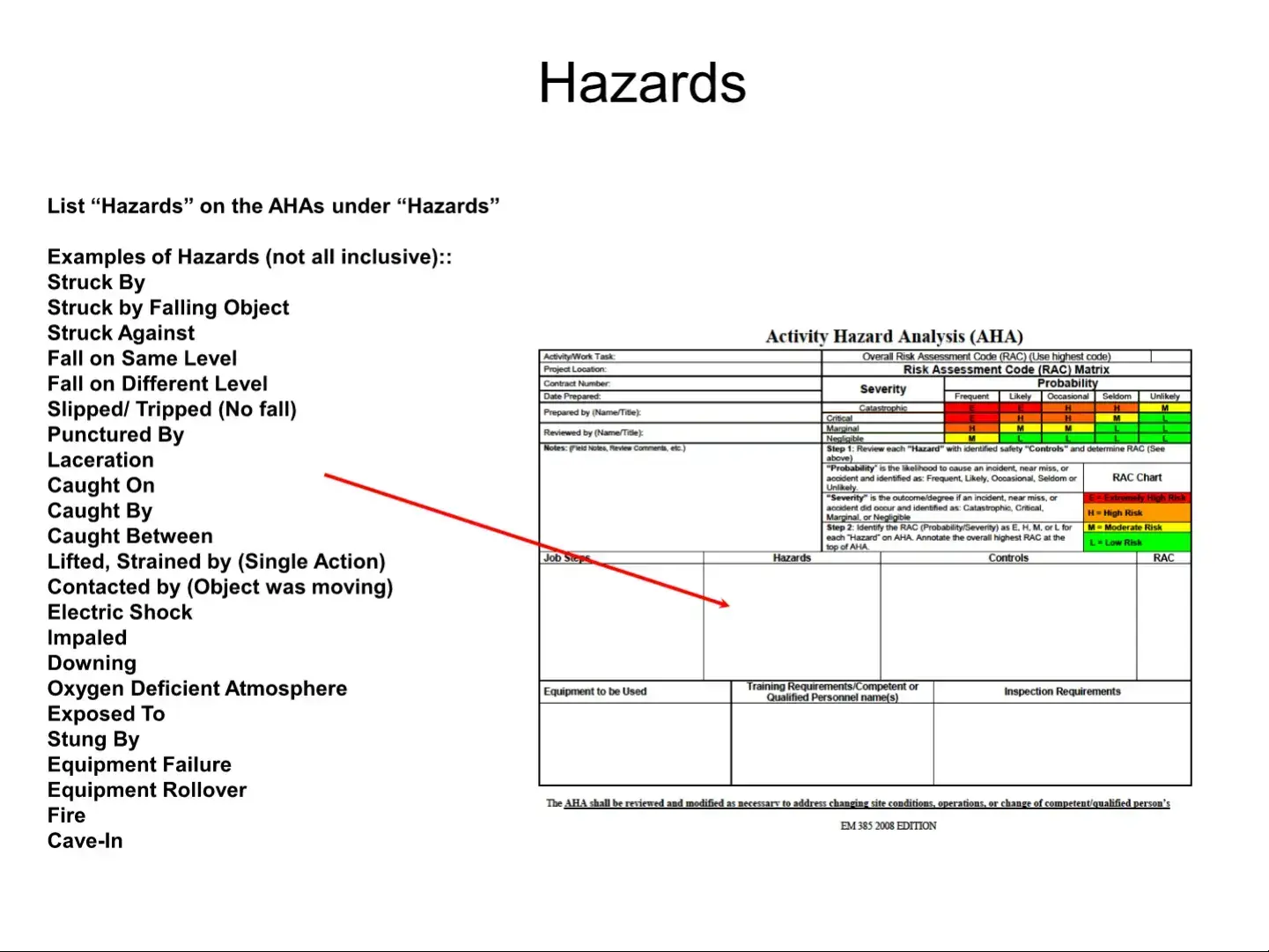
The AHA EM 385 form serves as a crucial tool in ensuring workplace safety by facilitating a thorough Activity Hazard Analysis (AHA). This form outlines the specific activities or work tasks being performed, while also identifying potential hazards associated with those tasks. It employs a Risk Assessment Code (RAC) matrix to evaluate the severity and probability of hazards, helping to determine the overall risk level. The AHA is not just a one-time document; it is a living document that must be reviewed and updated regularly to reflect changing site conditions, operations, or personnel. It mandates that work cannot commence until the AHA has been accepted by the Government Designated Authority (GDA) and discussed with all involved parties, including contractors and subcontractors. Furthermore, the form specifies the need for competent or qualified personnel for certain activities, in compliance with OSHA standards. By establishing controls to mitigate hazards, the AHA EM 385 form aims to reduce risks to an acceptable level, thereby promoting a safer work environment and preventing unplanned events.
| Fact Name | Details |
|---|---|
| Purpose | The AHA EM 385 form serves as a risk assessment tool to identify hazards and establish controls for safety on job sites. |
| Risk Assessment Code (RAC) | The form utilizes a Risk Assessment Code (RAC) matrix to evaluate the severity and probability of hazards, categorizing them as High, Moderate, Low, or Negligible. |
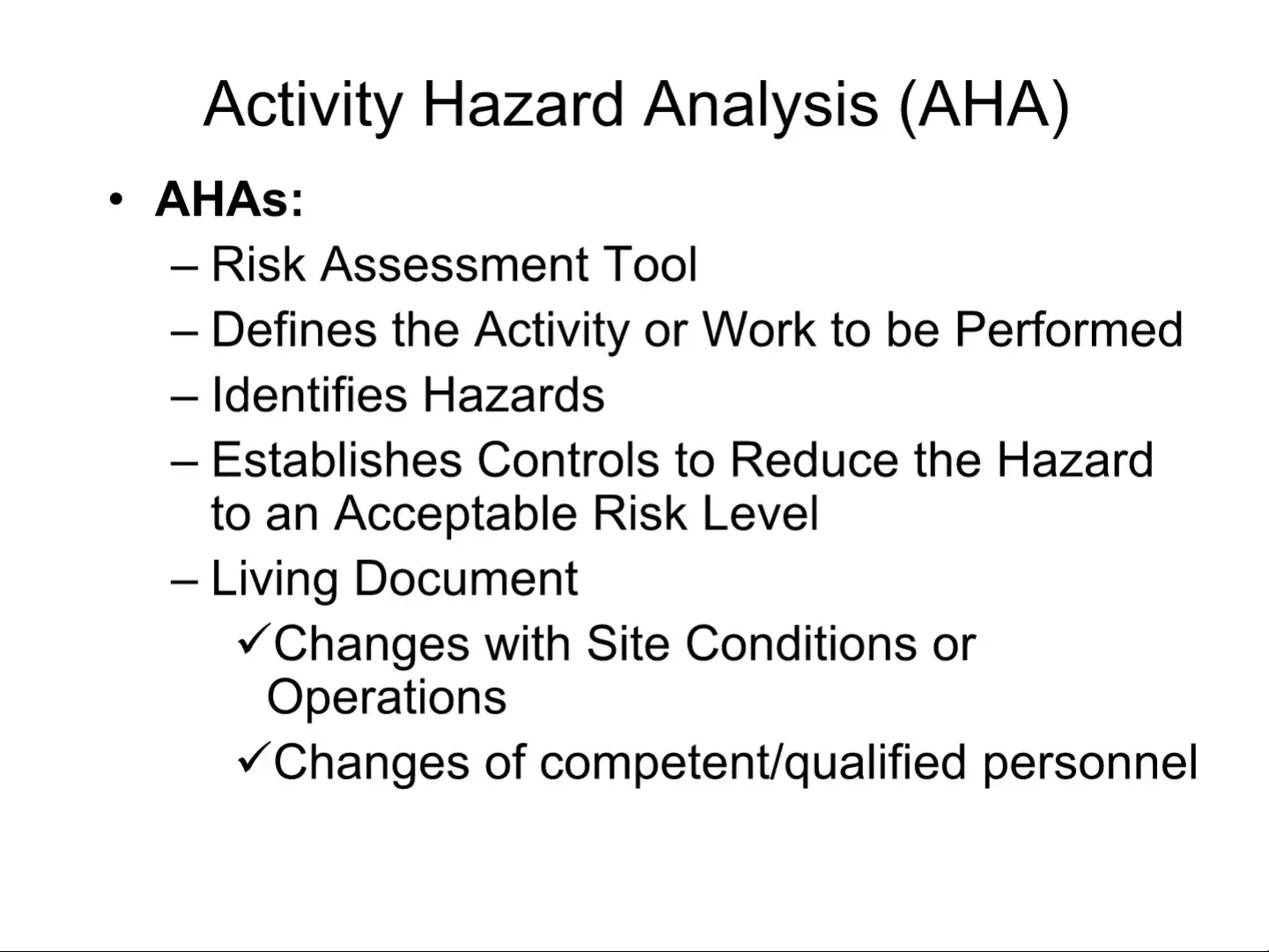
| Living Document | The AHA is considered a living document, meaning it must be updated regularly to reflect changes in site conditions or personnel. |
| Training Requirements | It specifies the need for training and identifies competent or qualified personnel responsible for safety measures. |
| Governing Law | The AHA EM 385 form is governed by the U.S. Army Corps of Engineers (COE) EM 385-1-1 regulations, particularly sections 01.A.13.a to 01.A.13.d. |
| Approval Process | Work cannot commence until the AHA has been accepted by the Government Designated Authority and discussed with all parties involved. |
Completing the AHA EM 385 form requires careful attention to detail and a thorough understanding of the work being performed. The form serves as a critical tool for identifying potential hazards and establishing safety controls. Below are the steps to fill out the form effectively.
What is the purpose of the AHA EM 385 form?
The AHA EM 385 form, or Activity Hazard Analysis, serves as a crucial risk assessment tool in construction and other high-risk industries. Its primary purpose is to identify potential hazards associated with specific activities or work tasks. By outlining these hazards and establishing control measures, the AHA helps ensure that risks are reduced to an acceptable level, thereby promoting a safer work environment.
Who is required to complete the AHA EM 385 form?
The AHA EM 385 form must be completed by contractors and their subcontractors involved in work activities that fall under the jurisdiction of the U.S. Army Corps of Engineers (USACE). It is essential that the AHA is prepared by individuals who are competent and qualified, as defined by OSHA standards. The form must also be reviewed and accepted by the Government Designated Authority (GDA) before any work begins.
How often should the AHA EM 385 form be reviewed and updated?
The AHA EM 385 form is considered a living document, meaning it should be reviewed and modified as necessary. Changes in site conditions, operations, or personnel may require updates to the AHA. Regular reviews help ensure that the analysis remains relevant and effective in addressing current hazards and risks associated with ongoing work activities.
What are the key components included in the AHA EM 385 form?
The AHA EM 385 form includes several critical components: a description of the activity or work task, identification of hazards, a risk assessment code (RAC), and the control measures to mitigate those hazards. It also outlines the equipment to be used, training requirements for personnel, and inspection protocols. Each of these elements contributes to a comprehensive understanding of the risks involved and the necessary precautions to take.
What happens if the AHA EM 385 form is not completed or accepted?
If the AHA EM 385 form is not completed or accepted, work cannot commence. The regulations stipulate that all involved parties, including contractors and government representatives, must discuss the AHA during preparatory and initial control phase meetings. This ensures that everyone understands the hazards and control measures before any activities begin, thereby reducing the likelihood of accidents and injuries on the job site.
Failing to accurately identify the Activity/Work Task. This is essential for ensuring that the analysis reflects the specific tasks being performed.
Not using the highest Risk Assessment Code (RAC) when assessing hazards. Each hazard should be evaluated carefully to determine the most significant risk level.
Neglecting to review each identified Hazard alongside its corresponding safety Controls. This step is crucial for understanding how to mitigate risks effectively.
Overlooking the need for a review of the AHA document. Changes in site conditions or personnel require updates to ensure ongoing safety compliance.
Inadequately documenting the names of Competent or Qualified Personnel. It is important to clearly identify who is responsible for overseeing safety measures related to specific tasks.
Failing to discuss the AHA with all parties involved before beginning work. Engaging everyone in the conversation ensures that everyone understands the hazards and controls in place.
The AHA EM 385 form is a crucial document for ensuring safety and compliance on job sites. Along with the AHA, several other forms and documents are commonly used to support safety management and risk assessment. Each of these documents plays a vital role in maintaining a safe working environment. Below is a list of these documents, along with brief descriptions of their purposes.
Utilizing these documents in conjunction with the AHA EM 385 form enhances safety protocols and compliance on job sites. It is critical to keep these forms updated and accessible to all personnel involved in the work process. Regular reviews and training sessions can help ensure that everyone understands their roles in maintaining a safe work environment.
The Job Hazard Analysis (JHA) is a document that shares similarities with the AHA EM 385 form. Like the AHA, the JHA identifies specific tasks and evaluates potential hazards associated with those tasks. It also outlines control measures to mitigate identified risks. Both documents emphasize the importance of continuous review and adaptation to changing conditions on the job site. The JHA, however, often focuses more on the individual worker's safety and the specific steps they should take to protect themselves while performing their duties.
The Safety Data Sheet (SDS) is another document that aligns with the AHA EM 385 form. The SDS provides critical information about hazardous materials that may be present on a job site. It includes details on handling, storage, and emergency measures. While the AHA focuses on the activity and overall risk assessment, the SDS complements it by detailing the specific hazards of materials used in those activities. Both documents aim to ensure a safe working environment by promoting awareness of hazards and necessary precautions.
The Risk Assessment Matrix (RAM) serves as a useful tool similar to the AHA EM 385 form. The RAM evaluates the likelihood and severity of risks associated with various activities, allowing for a structured approach to risk management. Like the AHA, the RAM categorizes risks into levels, helping teams prioritize which hazards require immediate attention. While the AHA provides a broader context for specific work tasks, the RAM offers a more quantitative assessment of risk, allowing for clearer decision-making regarding safety measures.
The Permit-Required Confined Space (PRCS) document is another relevant comparison. This document outlines the safety requirements for entering and working in confined spaces, which can pose significant hazards. Similar to the AHA, the PRCS identifies potential risks and specifies the necessary precautions and procedures to ensure worker safety. Both documents require that personnel be adequately trained and that safety measures are in place before work begins. The PRCS, however, is more focused on specific environments and the unique dangers they present, while the AHA encompasses a wider range of activities and hazards.
When filling out the AHA EM 385 form, attention to detail is paramount. Below is a list of things you should and shouldn’t do to ensure the process is smooth and effective.
By adhering to these guidelines, you can create a comprehensive and effective Activity Hazard Analysis that prioritizes safety and compliance.
Understanding the AHA EM 385 form is crucial for ensuring safety on job sites. However, several misconceptions can lead to confusion. Here are nine common misconceptions about the AHA EM 385 form, along with clarifications.
By addressing these misconceptions, individuals and organizations can enhance their understanding of the AHA EM 385 form and promote a safer work environment.
Filling out and using the AHA EM 385 form is essential for ensuring safety on job sites. Here are key takeaways to consider:
By adhering to these guidelines, safety can be significantly enhanced on job sites, minimizing the risk of accidents and injuries.