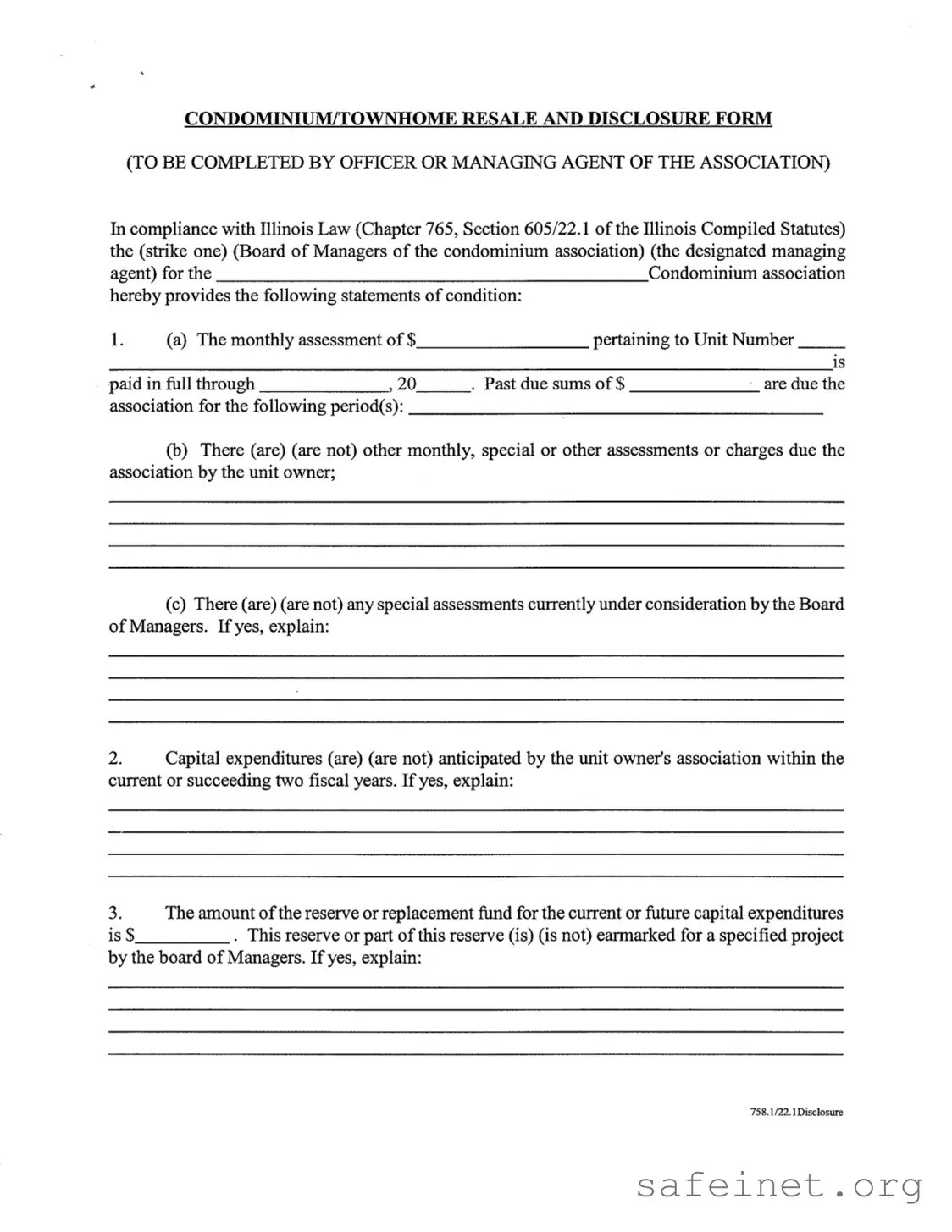
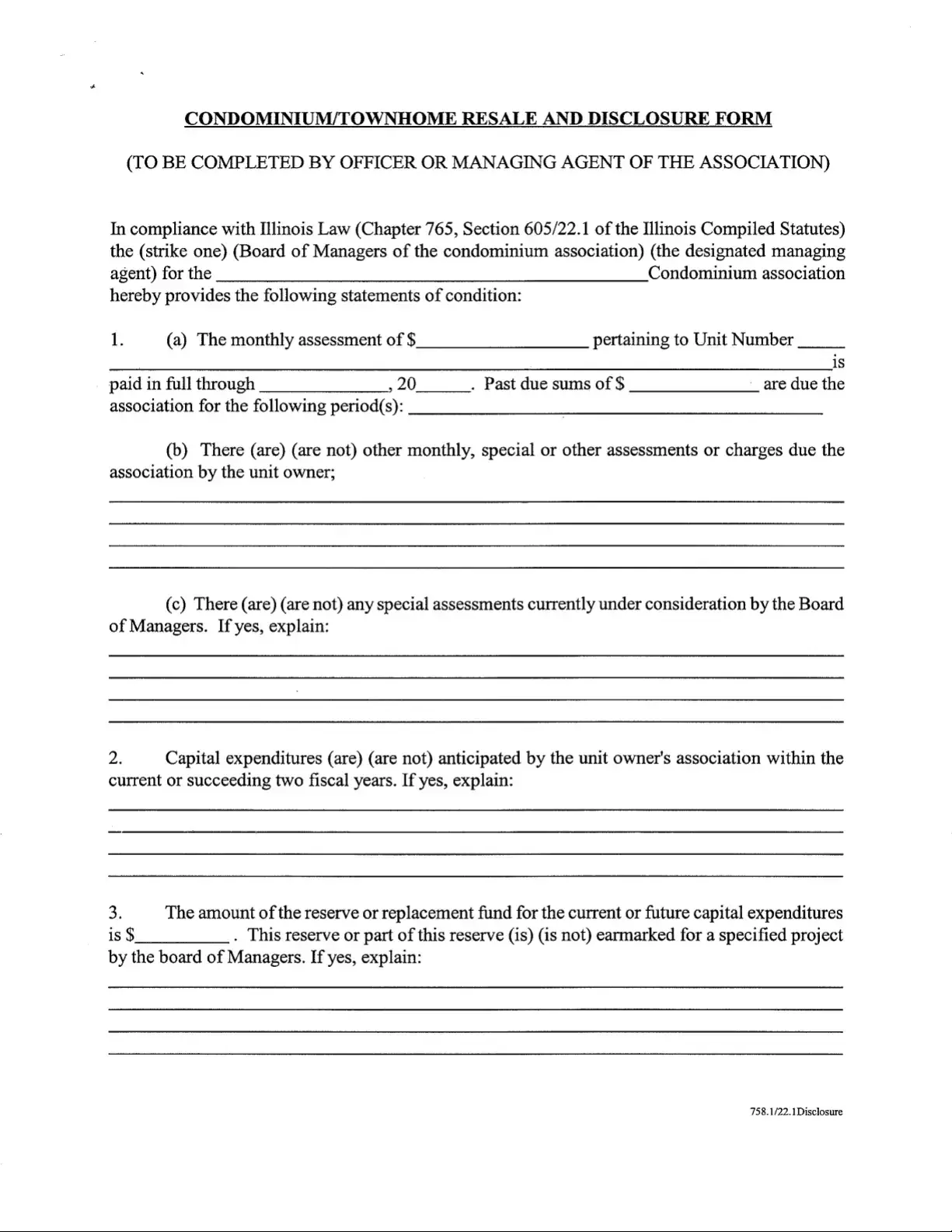
When purchasing a condominium or townhome in Illinois, understanding the Act 221 Disclosure form is essential for prospective buyers. This form is designed to provide critical information about the financial health and legal status of the condominium association. It includes details such as the payment status of monthly assessments for the specific unit, any outstanding dues, and whether there are special assessments or charges pending. Buyers will also find insights into anticipated capital expenditures and the current state of the association's reserve funds. Additionally, the form addresses any pending lawsuits involving the association, ensuring that potential buyers are aware of any legal issues that could impact their investment. The inclusion of the association's most recent budget offers transparency regarding financial management. Lastly, the form confirms that there are no known violations of the condominium's rules or regulations concerning the unit in question. Overall, the Act 221 Disclosure form serves as a vital tool for informed decision-making in the real estate market.
| Fact Name | Details |
|---|---|
| Form Purpose | The Act 221 Disclosure form provides essential information about a condominium or townhome prior to resale. |
| Governing Law | Illinois Law, Chapter 765, Section 605/22.1 of the Illinois Compiled Statutes governs the use of this form. |
| Assessment Status | The form requires disclosure of the current status of monthly assessments for the unit, including any past due amounts. |
| Special Assessments | It must indicate whether there are any special assessments currently under consideration by the Board of Managers. |
| Capital Expenditures | The form asks if the association anticipates any capital expenditures within the next two fiscal years. |
| Reserve Fund | Details about the reserve or replacement fund for future capital expenditures must be included. |
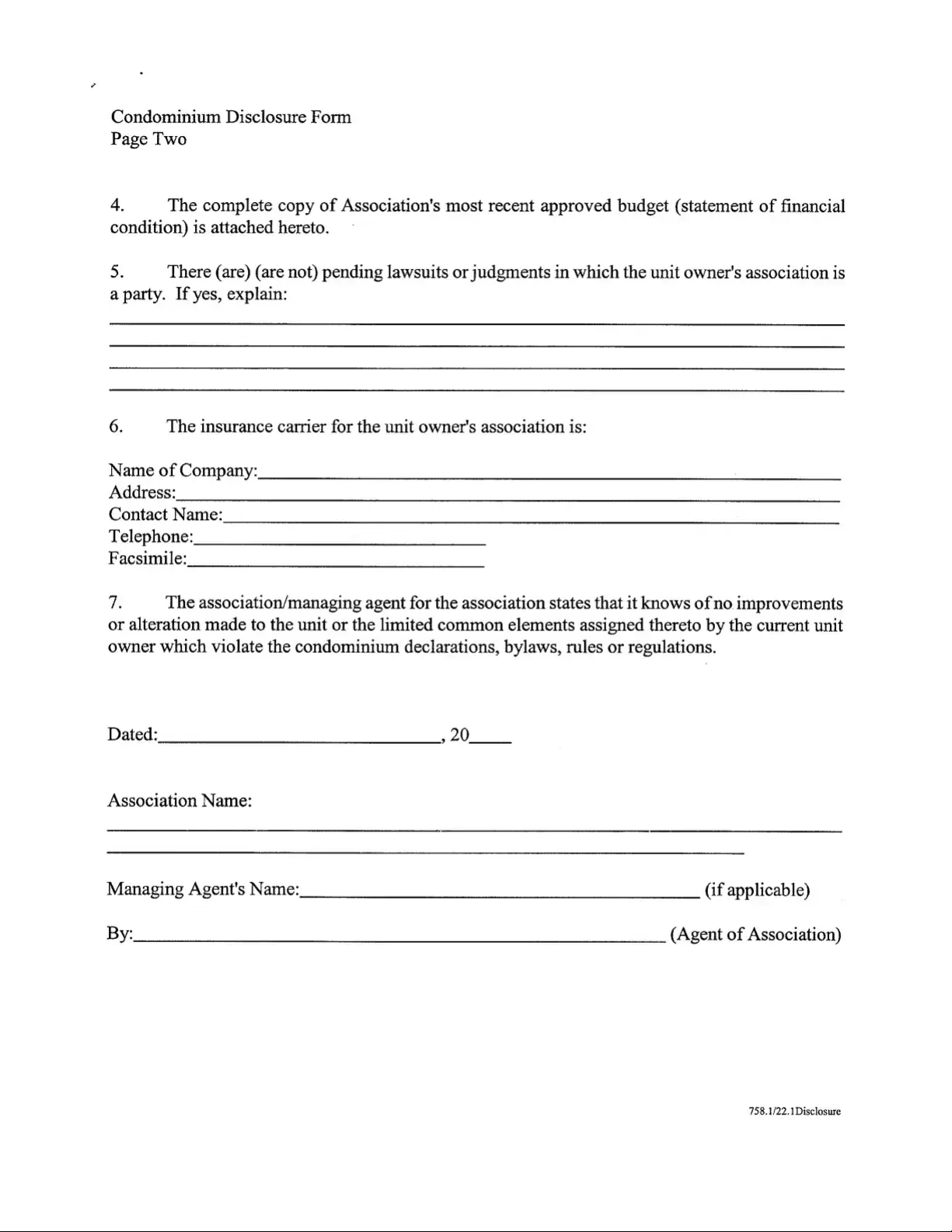
| Pending Lawsuits | The form must state whether there are any pending lawsuits or judgments involving the unit owner's association. |
| Insurance Information | Contact details for the insurance carrier of the unit owner's association must be provided. |
| Compliance Statement | The form includes a statement confirming that no alterations violate the condominium declarations, bylaws, or regulations. |
Completing the Act 221 Disclosure form is an important step in the resale of a condominium or townhome. This form provides essential information regarding the financial and legal status of the association. Follow these steps to ensure accurate completion of the form.
After completing the form, ensure that all information is accurate and all necessary attachments are included. This form will be a crucial part of the resale process, so double-check everything before submission.
What is the Act 221 Disclosure form?
The Act 221 Disclosure form is a document required by Illinois law that provides essential information about a condominium or townhome unit. It must be completed by an officer or managing agent of the association. The form covers various financial aspects, including monthly assessments, special assessments, and pending lawsuits, ensuring potential buyers have a clear understanding of the unit's financial condition and any obligations they may incur.
Who is responsible for completing the Act 221 Disclosure form?
The responsibility for completing the Act 221 Disclosure form lies with the Board of Managers of the condominium association or the designated managing agent. They must provide accurate and comprehensive information regarding the unit's financial status, any assessments due, and other relevant details that may affect a buyer's decision.
What information is included in the Act 221 Disclosure form?
The form includes several key pieces of information. It outlines the status of monthly assessments, any past due sums, special assessments under consideration, anticipated capital expenditures, the amount of reserve funds, and any pending lawsuits. Additionally, it provides details about the insurance carrier for the association. This information helps potential buyers assess the financial health of the association and the unit itself.
Why is the Act 221 Disclosure form important for buyers?
The Act 221 Disclosure form is crucial for buyers because it reveals potential financial obligations and risks associated with the property. By reviewing this form, buyers can make informed decisions about their purchase. It helps them understand the financial responsibilities they may inherit, such as existing debts or upcoming assessments that could impact their investment.
How can I obtain a copy of the Act 221 Disclosure form?
A copy of the Act 221 Disclosure form can typically be obtained from the condominium association or the managing agent. It is advisable to request this document early in the buying process to ensure you have all the necessary information before making a commitment. The association is required to provide this disclosure to prospective buyers, so do not hesitate to ask for it.
Incomplete Information: Failing to provide all necessary details, such as the unit number or the amount of past due sums, can lead to misunderstandings. Each section should be filled out completely to ensure clarity.
Incorrect Selection: Choosing the wrong options when indicating whether there are past due sums or special assessments can create confusion. Double-checking these selections is crucial.
Missing Explanations: When answering questions that require explanations, such as for special assessments or capital expenditures, leaving these sections blank can result in incomplete disclosures.
Outdated Information: Providing financial information or assessments that are not current can mislead potential buyers. Always ensure that the details reflect the most recent status.
Ignoring Attachments: Not attaching the most recent approved budget or financial statements can lead to a lack of transparency. It’s essential to include all supporting documents.
Neglecting Lawsuits: Failing to disclose any pending lawsuits or judgments can have serious legal implications. It’s important to be upfront about any legal matters involving the association.
Omitting Insurance Information: Not providing the name, address, and contact details of the insurance carrier can leave potential buyers uninformed about coverage. This information is critical.
Misrepresenting Knowledge of Violations: Stating that there are no violations without proper verification can lead to liability issues. It’s important to conduct a thorough review before making such claims.
Signature Issues: Not having the form signed by the appropriate parties can invalidate the disclosure. Ensure that all necessary signatures are obtained before submission.
The Act 221 Disclosure form serves as a crucial document in the sale of condominium and townhome units in Illinois. It provides essential information about the financial and legal status of the condominium association, helping prospective buyers make informed decisions. Alongside this form, several other documents often accompany the disclosure process, each serving a specific purpose.
Understanding these documents is vital for potential buyers and current owners alike. Each plays a role in ensuring transparency and accountability within the condominium association, ultimately fostering a well-informed community.
The Act 221 Disclosure form shares similarities with the Seller's Disclosure Statement, commonly used in residential real estate transactions. Like the Act 221 form, the Seller's Disclosure Statement requires sellers to disclose relevant information about the property, including its condition, any known defects, and past assessments. Both documents aim to inform potential buyers about the financial and physical state of the property, ensuring transparency and helping buyers make informed decisions. This proactive approach protects both parties by minimizing the risk of disputes arising from undisclosed issues.
Another document akin to the Act 221 Disclosure form is the Property Condition Disclosure Statement. This statement provides detailed information about the property's condition, including structural issues, plumbing, electrical systems, and more. Similar to the Act 221 form, it requires sellers to disclose any known problems that could affect the value or safety of the home. By providing this information upfront, both documents help create a clearer picture of the property for prospective buyers, fostering trust in the transaction process.
The Homeowners Association (HOA) Disclosure Statement is also comparable to the Act 221 Disclosure form. This document outlines the rules, regulations, and financial obligations associated with living in a community governed by an HOA. Like the Act 221 form, it emphasizes the importance of understanding the financial responsibilities, including monthly dues and any special assessments. By presenting this information, both documents aim to ensure that buyers are fully aware of the obligations they will incur upon purchasing the property.
The Lead-Based Paint Disclosure form is another document that shares a purpose with the Act 221 Disclosure form, particularly in residential transactions involving properties built before 1978. This form requires sellers to disclose any known lead-based paint hazards. Similar to the Act 221 form, it emphasizes the need for transparency regarding potential health risks associated with the property. Both documents serve to protect buyers by ensuring they are aware of any hazards that could affect their living conditions.
The Radon Disclosure form is also similar in nature to the Act 221 Disclosure form. This document informs buyers about the potential presence of radon gas in the home, which can pose serious health risks. Just like the Act 221 form, it aims to provide crucial information that can influence a buyer's decision. Both forms reflect a commitment to transparency and the safety of future occupants.
The Environmental Disclosure Statement shares a common goal with the Act 221 Disclosure form by addressing environmental hazards that may affect a property. This document requires sellers to disclose any known environmental issues, such as contamination or proximity to hazardous waste sites. By providing this information, both documents help ensure that buyers are fully informed about potential risks that could impact their investment and well-being.
The Closing Disclosure is another document that bears similarities to the Act 221 Disclosure form. While the Closing Disclosure is primarily concerned with the financial aspects of a real estate transaction, it provides a detailed breakdown of the costs associated with buying a property. Similar to the Act 221 form, it ensures that buyers are aware of all financial obligations before finalizing the sale. Both documents promote transparency and informed decision-making in the buying process.
Lastly, the Title Insurance Commitment is akin to the Act 221 Disclosure form in that it provides critical information about the property's legal status. This document outlines any liens, encumbrances, or title issues that could affect ownership. Like the Act 221 form, it emphasizes the importance of understanding potential legal complications before proceeding with a purchase. Both documents work together to ensure that buyers have a comprehensive understanding of the property they are acquiring.
When filling out the Act 221 Disclosure form, it is essential to follow specific guidelines to ensure accuracy and compliance. Here are seven things you should and shouldn't do:
Adhering to these guidelines will help ensure that the form is completed correctly and meets all legal requirements.
Understanding the Act 221 Disclosure form is essential for anyone involved in condominium or townhome transactions. However, several misconceptions can lead to confusion. Here are six common misunderstandings:
Being aware of these misconceptions can help potential buyers and sellers navigate the complexities of condominium transactions more effectively.
When filling out and using the Act 221 Disclosure form, it is important to keep several key points in mind. Understanding these aspects can help ensure compliance and clarity for all parties involved.
By carefully considering these points, both sellers and potential buyers can navigate the complexities of condominium and townhome transactions more effectively.