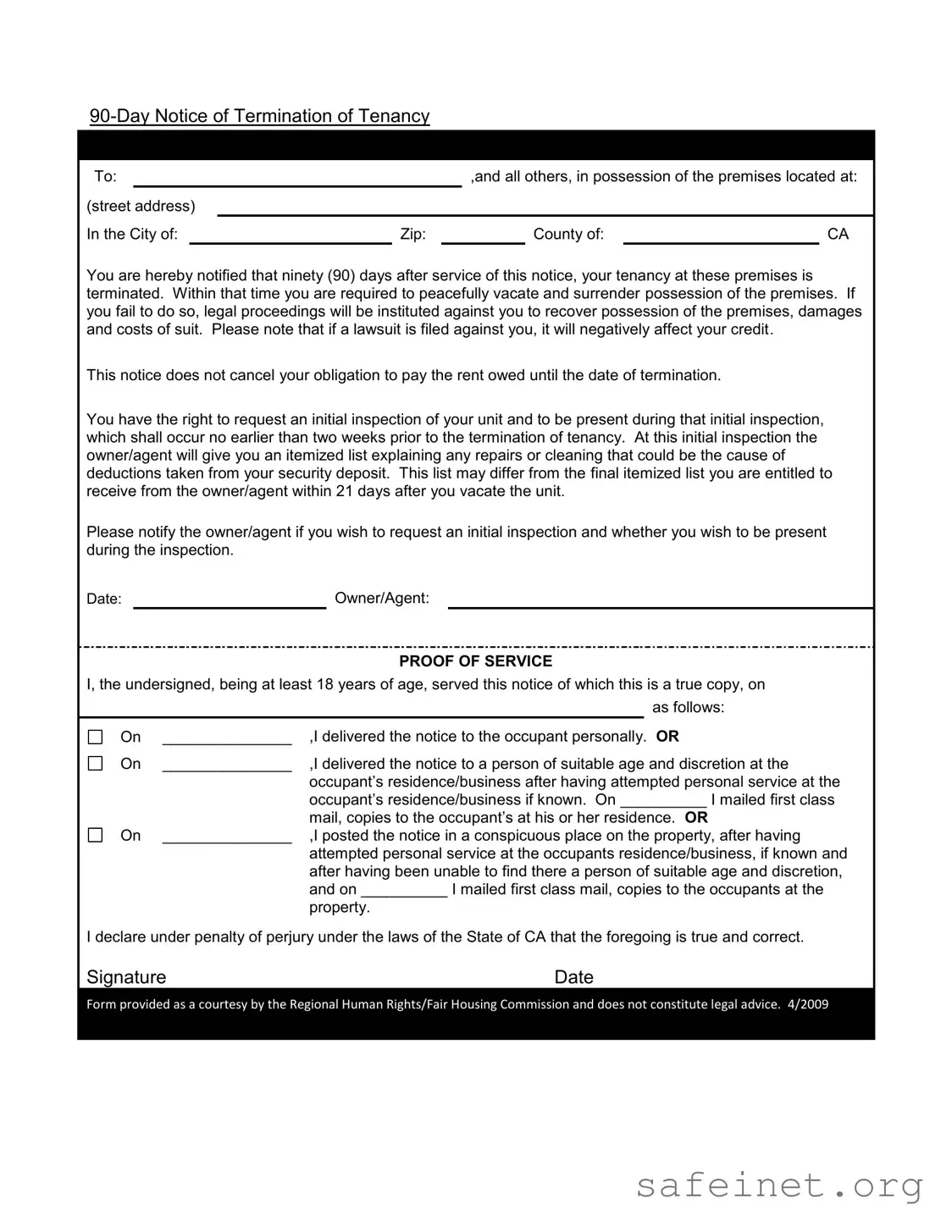
The 90 Day Notice To Move Out form serves as a formal notification to tenants regarding the termination of their tenancy. This document is crucial for landlords in California who wish to end a rental agreement for various reasons, including property sale or personal use. It outlines the timeline for vacating the premises, specifying a 90-day period during which tenants must leave the property. Tenants are informed that failure to comply may result in legal action, which could adversely affect their credit ratings. Additionally, the form emphasizes that the obligation to pay rent remains in effect until the termination date. Tenants have the right to request an initial inspection of their unit, allowing them to address potential deductions from their security deposit. This inspection must occur no earlier than two weeks before the tenancy ends, and landlords are required to provide an itemized list of any necessary repairs or cleaning. The form also includes a section for proof of service, detailing how the notice was delivered to the tenant, whether in person, by mail, or posted on the property. Understanding the implications of this notice is essential for both landlords and tenants, ensuring that the process is handled in accordance with California law.
| Fact Name | Details |
|---|---|
| Notice Period | The 90-Day Notice To Move Out requires tenants to vacate the premises within 90 days of receiving the notice. |
| Governing Law | This form is governed by California Civil Code Section 1946.1. |
| Legal Consequences | If tenants do not vacate, legal proceedings may be initiated to recover possession and damages. |
| Credit Impact | A lawsuit resulting from non-compliance can negatively affect the tenant's credit score. |
| Rent Obligation | Tenants remain responsible for paying rent until the termination date specified in the notice. |
| Initial Inspection | Tenants have the right to request an initial inspection of the unit prior to vacating. |
| Itemized List | During the initial inspection, an itemized list of potential deductions from the security deposit will be provided. |
Filling out the 90 Day Notice To Move Out form is an important step in the process of ending your tenancy. After completing the form, it should be delivered to the appropriate parties, ensuring everyone is informed of the impending move-out date. Here’s a straightforward guide to help you fill out the form accurately.
Once you have completed the form, make sure to deliver it according to the proof of service instructions you filled out. Keep a copy for your records, as it may be needed in future communications or legal matters. Being organized and thorough will help ensure a smooth transition during your move.
What is a 90 Day Notice To Move Out?
A 90 Day Notice To Move Out is a formal notification from a landlord to a tenant, indicating that the tenant must vacate the premises within 90 days. This notice serves as a legal requirement in California, providing tenants with adequate time to find alternative housing. It outlines the timeline for vacating the property and reminds tenants of their responsibilities regarding rent payments and the condition of the unit upon departure.
What happens if I do not move out by the deadline?
If you fail to vacate the premises by the end of the 90-day period, the landlord has the right to initiate legal proceedings to regain possession of the property. This could lead to an eviction lawsuit, which can have serious consequences, including a negative impact on your credit report. It's crucial to take this notice seriously and make arrangements to move out on time.
Can I request an inspection of my unit before moving out?
Yes, you have the right to request an initial inspection of your unit. This inspection can occur no earlier than two weeks before your tenancy ends. During this inspection, the landlord or their agent will provide you with an itemized list of any potential deductions from your security deposit due to repairs or cleaning. If you wish to be present during this inspection, be sure to inform the landlord or agent ahead of time.
What obligations do I still have after receiving the notice?
Even after receiving the 90 Day Notice To Move Out, you are still obligated to pay rent until the termination date specified in the notice. This means that if you remain in the unit, you must continue to fulfill your rental payment responsibilities. It's important to stay informed about your obligations to avoid any legal issues or financial repercussions.
Incomplete Address Information: One common mistake is failing to fill in the complete address of the premises. Ensure that the street address, city, zip code, and county are all accurately filled out. Missing any part can lead to confusion and potential legal complications.
Incorrect Dates: It's crucial to provide the correct date when the notice is served. If the date is incorrect, it may affect the 90-day timeline for vacating the premises. Always double-check the date to avoid misunderstandings.
Neglecting to Notify for Initial Inspection: Tenants have the right to request an initial inspection of their unit. Forgetting to indicate this request on the form can lead to missed opportunities for addressing potential deductions from the security deposit.
Failure to Sign and Date: Lastly, many people overlook the importance of signing and dating the form. Without a signature, the notice may not be considered valid. Always make sure to complete this final step to ensure the notice is legally binding.
The process of terminating a tenancy often involves several important forms and documents. Each of these documents serves a specific purpose in ensuring that both landlords and tenants understand their rights and responsibilities. Below is a list of commonly used forms that accompany the 90-Day Notice To Move Out form.
Utilizing these forms in conjunction with the 90-Day Notice To Move Out can help streamline the process of ending a tenancy. Clear communication and proper documentation are essential to avoid disputes and ensure a smooth transition for both parties involved.
The 30-Day Notice to Quit is a document that landlords use to inform tenants that they must vacate the property within 30 days. This notice is typically used in month-to-month rental agreements. Like the 90-Day Notice to Move Out, it serves as a formal communication regarding the termination of tenancy. The primary difference lies in the time frame, with the 30-Day Notice providing a shorter period for tenants to relocate. Both notices require the tenant to vacate the premises and outline potential legal consequences for failing to comply.
The 60-Day Notice to Quit is similar to the 30-Day version but allows tenants a longer period to move out. This notice is often utilized for tenants who have been renting for a longer duration, particularly in California where certain laws may require a longer notice period. Just like the 90-Day Notice, it clearly states the deadline for vacating the premises and warns of legal action should the tenant fail to leave. Both documents aim to ensure a smooth transition for landlords and tenants alike.
The Eviction Notice, also known as a Summons and Complaint, is a more serious document that landlords can issue when tenants fail to pay rent or violate lease terms. Unlike the 90-Day Notice to Move Out, which provides a grace period for tenants to vacate, the Eviction Notice typically indicates that legal action is imminent. While both documents serve to inform tenants of their need to leave, the Eviction Notice can lead directly to court proceedings, making it a more urgent and severe form of communication.
The Lease Termination Letter is another document that serves a similar purpose. It is often used when a lease is coming to its natural end, and either party wishes to terminate the agreement. This letter outlines the end date of the lease and any necessary steps for moving out. Like the 90-Day Notice, it emphasizes the importance of adhering to the terms of the lease, but it usually does not involve the same level of urgency or legal consequences as an eviction notice.
The Rent Increase Notice is a document that informs tenants of an upcoming increase in their rent. While it does not directly terminate a tenancy, it can lead to a situation where a tenant chooses to move out rather than accept the new terms. Both this notice and the 90-Day Notice to Move Out require clear communication from landlords to tenants, ensuring that everyone is aware of the changes and their rights.
The Notice of Non-Renewal is similar in that it informs tenants that their lease will not be renewed at the end of its term. This document serves as a formal way to communicate the landlord's intention not to continue the rental agreement. Like the 90-Day Notice, it provides tenants with time to find new housing, but it typically does not involve the same legal implications unless the tenant refuses to vacate.
The Notice to Enter is a document that landlords may use to inform tenants of their intention to enter the rental property for inspections or repairs. While this notice does not terminate the tenancy, it shares similarities with the 90-Day Notice in that it establishes communication and outlines expectations. Both documents are essential for maintaining a respectful landlord-tenant relationship, ensuring that both parties are aware of their rights and responsibilities.
The Security Deposit Return Letter is a document that landlords send to tenants upon their move-out, detailing the return of the security deposit. This letter often includes an itemized list of deductions for damages or unpaid rent. While it does not serve as a notice to vacate, it is related to the end of the tenancy and provides important information about financial obligations. Like the 90-Day Notice, it emphasizes the importance of clear communication between landlords and tenants.
The Move-Out Checklist is a practical tool that landlords may provide to tenants preparing to leave the rental property. It outlines the steps tenants should take to ensure a smooth move-out process, such as cleaning and repairs. While not a formal notice, it serves a similar purpose by guiding tenants through the requirements of vacating the premises. Both the checklist and the 90-Day Notice aim to facilitate a positive transition for both parties involved.
When filling out the 90-Day Notice To Move Out form, it's essential to approach the process with care and attention to detail. Here are some important do's and don'ts to keep in mind:
By following these guidelines, you can ensure a smoother transition as you prepare to move out. Taking the time to fill out the notice correctly can help prevent complications and protect your rights during this process.
Understanding the 90-Day Notice to Move Out form can be confusing. Here are some common misconceptions that people often have about this notice:
Being informed about these misconceptions can help tenants navigate their rights and responsibilities more effectively. If you have further questions, consider seeking guidance from a legal professional.
Here are some important points to keep in mind when filling out and using the 90-Day Notice To Move Out form:
Keep these takeaways in mind to ensure a smooth moving process. Being informed helps you take the right steps and protect your rights.