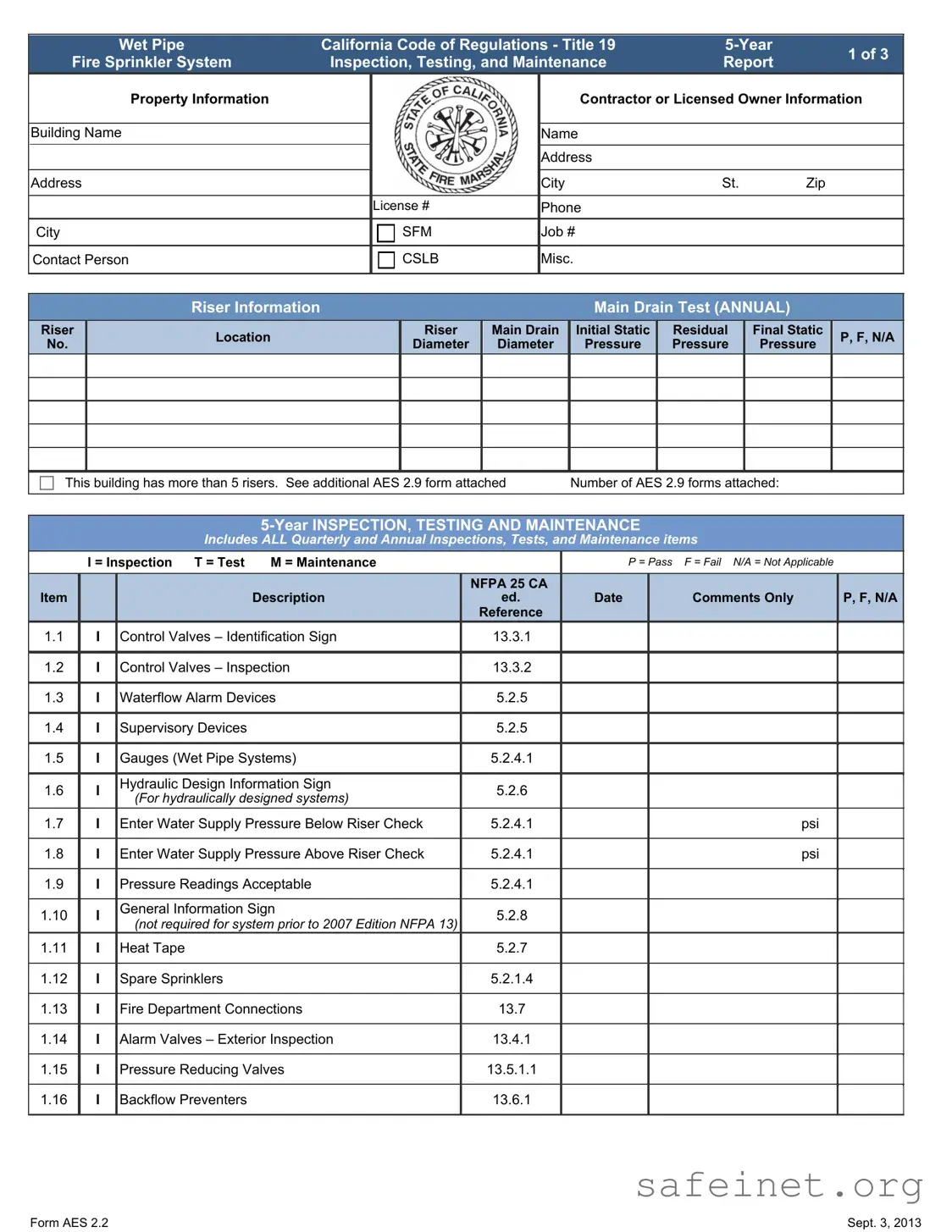
The 5 Year Fire Sprinkler Inspection form is an essential document for ensuring the safety and functionality of fire sprinkler systems in buildings. This form encompasses various aspects of inspection, testing, and maintenance, helping property owners and contractors stay compliant with safety regulations. It includes sections for property and contractor information, detailing the building name, address, and contact details. The form also requires specific data on riser information, such as main drain tests and pressure readings. Each inspection item is categorized as an inspection, test, or maintenance task, with clear pass, fail, or not applicable designations. Additionally, the form references specific codes and standards, ensuring that all inspections align with the National Fire Protection Association (NFPA) guidelines and California regulations. A thorough review of control valves, waterflow alarms, and other critical components is mandatory. The form concludes with a certification section, where the inspecting company confirms that all equipment has been inspected and is operable, except where noted. This systematic approach not only protects lives but also helps maintain the integrity of the fire protection system.
| Fact Name | Description |
|---|---|
| Governing Law | The 5-Year Fire Sprinkler Inspection form is governed by the California Code of Regulations, Title 19, which outlines the necessary regulations for fire safety equipment inspections. |
| Inspection Frequency | This form requires comprehensive inspections, tests, and maintenance every five years, which includes all quarterly and annual inspections as mandated by NFPA 25. |
| Documentation Requirements | Contractors must provide detailed documentation on all inspections, including comments and results for each item inspected, ensuring transparency and compliance. |
| Additional Forms | If a building has more than five risers, additional forms, specifically the AES 2.9 form, must be attached to the 5-Year Fire Sprinkler Inspection form to document those extra risers. |
Filling out the 5 Year Fire Sprinkler Inspection form requires careful attention to detail. This form collects essential information about the inspection, testing, and maintenance of fire sprinkler systems. Accurate completion ensures compliance with safety regulations and helps maintain the integrity of the fire protection system.
What is the purpose of the 5 Year Fire Sprinkler Inspection form?
The 5 Year Fire Sprinkler Inspection form serves as a comprehensive record of the inspection, testing, and maintenance of fire sprinkler systems. It ensures that these systems are functioning correctly and in compliance with California regulations. By documenting the condition and performance of various components, this form helps to identify any deficiencies that may compromise the safety of the building and its occupants. Regular inspections are crucial for maintaining the reliability of fire protection systems, and this form is a vital tool in that process.
Who is responsible for completing the 5 Year Fire Sprinkler Inspection form?
The responsibility for completing the 5 Year Fire Sprinkler Inspection form typically falls on a licensed contractor or a qualified individual who is knowledgeable about fire sprinkler systems. This person must have the appropriate credentials and experience to conduct the necessary inspections, tests, and maintenance. It is essential that the individual understands the specific requirements outlined in California Code of Regulations, Title 19, to ensure that all aspects of the fire sprinkler system are thoroughly evaluated and documented.
What types of inspections and tests are included in the 5 Year Fire Sprinkler Inspection?
The form encompasses a range of inspections, tests, and maintenance activities, including but not limited to the evaluation of control valves, waterflow alarm devices, pressure gauges, and backflow preventers. Each item is categorized as an inspection, test, or maintenance activity, with specific references to applicable standards. The thoroughness of this process ensures that all components of the fire sprinkler system are functioning properly, which is critical for effective fire protection. The form also allows for the documentation of any deficiencies and the steps taken to correct them.
How can deficiencies identified in the inspection be addressed?
If deficiencies are noted during the inspection, it is crucial to address them promptly. The form includes a section for detailing any repairs or replacements made to the fire protection equipment. Additionally, a correction form may be used to outline the specific actions taken to rectify the issues. It is important to ensure that the system is returned to service only after all deficiencies have been corrected. Keeping accurate records of these actions not only helps maintain compliance with regulations but also enhances the overall safety of the building.
Neglecting to Provide Accurate Property Information: Filling out the property details incorrectly can lead to confusion and delays. Ensure the building name, address, and other essential information are correct.
Omitting Contractor or Licensed Owner Information: Failing to include the contractor's name and license number can result in the form being rejected. Always double-check this section.
Incorrectly Marking Inspection Results: Mislabeling inspection results as "Pass," "Fail," or "Not Applicable" can lead to serious compliance issues. Take care to mark these accurately based on the findings.
Forgetting to Attach Additional Forms: If the building has more than five risers, additional forms are necessary. Forgetting to include these can lead to incomplete documentation.
Failing to Record Pressure Readings: Not entering the water supply pressure readings can raise red flags. Ensure all pressure readings are accurately documented.
Ignoring Comments Section: The comments section is crucial for noting any deficiencies or special observations. Skipping this can result in important information being overlooked.
Not Certifying the Inspection: Forgetting to sign and date the form can invalidate the inspection. Always ensure that the certification is completed properly.
Neglecting to Review NFPA References: Each item on the form references specific NFPA standards. Failing to review these can lead to non-compliance. Familiarity with these references is essential.
The 5 Year Fire Sprinkler Inspection form is an essential document for ensuring the safety and compliance of fire sprinkler systems. Along with this form, several other documents may be required to provide a comprehensive overview of the system's condition and maintenance history. Below is a list of commonly used forms and documents that complement the inspection report.
Each of these documents plays a vital role in maintaining the integrity and effectiveness of fire sprinkler systems. Together, they help ensure the safety of occupants and compliance with local and national regulations.
The Fire Alarm Inspection Report is similar to the 5 Year Fire Sprinkler Inspection form in that both documents serve to ensure compliance with safety regulations. Just like the sprinkler inspection form, the fire alarm report outlines specific tests and inspections that need to be conducted periodically. It includes information about the building, the contractor, and detailed sections for documenting findings. Both reports require a signature to certify that the inspections were performed according to relevant codes and standards, reinforcing accountability in maintaining fire safety systems.
The Annual Fire Safety Inspection Checklist shares similarities with the 5 Year Fire Sprinkler Inspection form as it also focuses on the assessment of fire safety systems. This checklist includes various components that need to be inspected annually, similar to how the sprinkler inspection form covers inspections every five years. Both documents detail the necessary steps to evaluate the functionality of fire protection systems, ensuring that they are in working order and meet local safety regulations. Each checklist item can be marked as pass, fail, or not applicable, providing a clear record of compliance.
The Emergency Lighting Inspection Report parallels the 5 Year Fire Sprinkler Inspection form by documenting the condition and functionality of emergency lighting systems. Just as the sprinkler form requires detailed inspections and tests, the emergency lighting report specifies the frequency and type of tests that must be conducted. Both documents aim to enhance safety by ensuring that critical systems are operational in case of an emergency. They also require signatures to validate the completion of inspections, underscoring the importance of accountability in safety measures.
The Fire Extinguisher Inspection Report is another document that resembles the 5 Year Fire Sprinkler Inspection form. Both reports detail the inspection process for essential fire safety equipment. The extinguisher report includes information about the location, condition, and maintenance of fire extinguishers, similar to how the sprinkler form tracks the status of fire sprinkler systems. Each report serves to confirm that necessary inspections are performed regularly, ensuring that all fire safety equipment is ready for use when needed.
Lastly, the Building Fire Safety Compliance Report is akin to the 5 Year Fire Sprinkler Inspection form in that it assesses the overall fire safety measures in a building. This report covers various aspects of fire safety, including fire alarms, sprinklers, and other systems, much like the sprinkler inspection form focuses specifically on fire sprinkler systems. Both documents help ensure that a building meets safety regulations and can be used to identify any deficiencies that need addressing. They serve as essential tools for maintaining a safe environment in commercial and residential properties.
When filling out the 5 Year Fire Sprinkler Inspection form, attention to detail is crucial. The following list outlines essential dos and don'ts to ensure compliance and accuracy.
This form applies to all fire sprinkler systems, regardless of when they were installed. It ensures that both new and existing systems are compliant with safety regulations.
The property owner must also be involved. Both parties share responsibility for ensuring the inspection is completed and documented correctly.
Inspections must occur at specified intervals, including quarterly and annual checks, to maintain compliance and ensure safety.
A failed inspection indicates specific deficiencies that need to be addressed. The system may still operate but requires repairs to meet safety standards.
Completion of the form is mandated by California regulations. It is essential for compliance with fire safety laws.
Multiple inspections, including quarterly and annual evaluations, are necessary to ensure ongoing compliance and system functionality.
Detailed comments are crucial for documenting any issues found during the inspection. This information helps in future evaluations and repairs.
Different systems may have unique requirements. The form must reflect the specific type of system being inspected to ensure all necessary checks are performed.
Understanding the 5-Year Fire Sprinkler Inspection Form is essential for ensuring the safety and compliance of your property. Here are some key takeaways to consider: