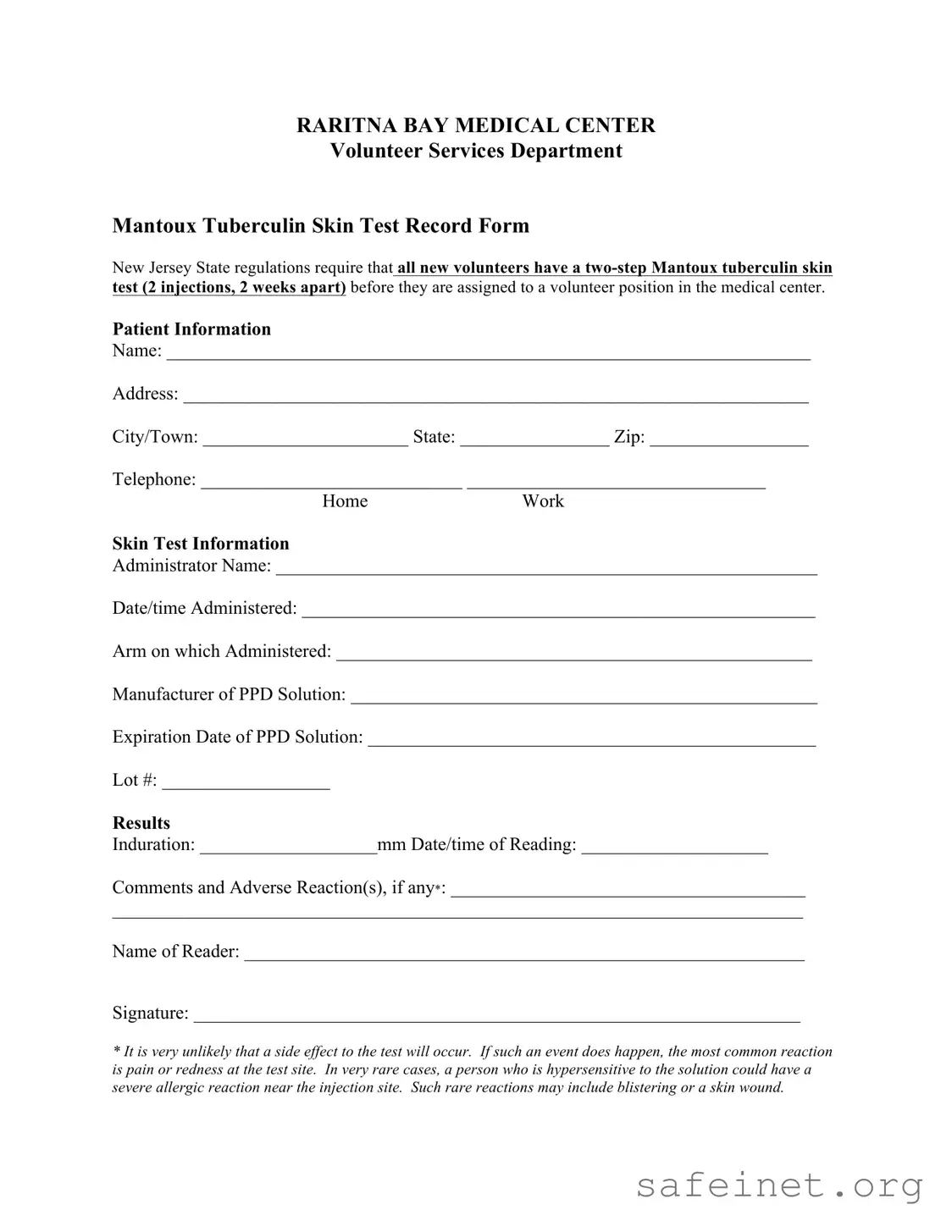
The 2 Step TB Test form is an essential document for anyone wishing to volunteer at Raritan Bay Medical Center. New Jersey state regulations mandate that all new volunteers undergo a two-step Mantoux tuberculin skin test, which consists of two separate injections administered two weeks apart. This requirement aims to ensure the safety and health of both volunteers and patients alike. The form collects crucial patient information, including the volunteer's name, address, and contact details, which are vital for record-keeping and follow-up purposes. Additionally, the form captures important details about the skin test itself, such as the name of the administrator, the date and time the test was administered, and the arm on which the injection was given. It also includes information about the manufacturer of the PPD solution used, its expiration date, and the lot number, ensuring traceability and compliance with health regulations. The results section records the induration measurement, the date and time of reading, and any comments regarding adverse reactions, if they occur. While it is rare for side effects to manifest, the form provides space for documenting any reactions, ensuring that volunteers are monitored for their safety. Ultimately, this form serves as a comprehensive record of the TB testing process, reflecting the medical center's commitment to maintaining a safe environment for all involved.

| Fact Name | Description |
|---|---|
| Purpose of the Test | The two-step Mantoux tuberculin skin test is designed to detect latent tuberculosis infection in individuals, especially those who may have been exposed to TB. |
| New Jersey Requirement | According to New Jersey state regulations, all new volunteers at Raritan Bay Medical Center must complete the two-step TB test before starting their volunteer roles. |
| Test Procedure | The test involves two injections of the PPD solution, administered two weeks apart, to ensure accurate results. |
| Patient Information | The form requires comprehensive patient information, including name, address, and contact details, to maintain accurate records. |
| Administration Details | Details about the test administration, such as the administrator's name, date and time of the test, and the arm used for the injection, must be recorded. |
| PPD Solution Information | Information regarding the manufacturer, expiration date, and lot number of the PPD solution is necessary for quality control and safety. |
| Reading Results | The results of the test, measured in millimeters of induration, must be documented along with the date and time of reading. |
| Adverse Reactions | While adverse reactions are rare, the form includes a section for documenting any comments or reactions, such as pain or redness at the injection site. |
| Signature Requirement | The form must be signed by the reader of the test results, ensuring accountability and verification of the findings. |
Completing the 2 Step TB Test form is an essential part of the volunteer onboarding process at Raritan Bay Medical Center. This form requires specific information about your personal details and the administration of the TB test. Once filled out, the form will be submitted to the Volunteer Services Department, ensuring that all necessary health regulations are met before you begin your volunteer work.
What is the purpose of the 2 Step TB Test?
The 2 Step TB Test is required for all new volunteers at Raritan Bay Medical Center. This test helps to determine if an individual has been exposed to tuberculosis. New Jersey state regulations mandate that volunteers complete this test before they can begin their service. The process involves two injections, administered two weeks apart, to ensure accurate results.
How is the 2 Step TB Test administered?
The test is administered through a Mantoux tuberculin skin test. A healthcare professional will inject a small amount of PPD solution into the skin of your forearm. After the first injection, you will need to return two weeks later for the second injection. This method helps to create a more reliable assessment of your TB status.
What should I expect after getting the test?
What information do I need to provide on the form?
You will need to fill out personal details, including your name, address, and contact information. Additionally, the form requires information about the test administrator, the date and time of administration, the arm used for the injection, and details about the PPD solution, such as the manufacturer, expiration date, and lot number. Finally, the results of the test and any comments or adverse reactions should be documented by the healthcare professional who reads the test.
Failing to provide complete patient information. It's crucial to fill out every section, including name, address, and contact information. Incomplete details can lead to delays in processing.
Neglecting to record the date and time of administration. This information is essential for tracking the timing of the two-step test and ensuring compliance with state regulations.
Omitting the arm on which the test was administered. This detail helps in identifying the test site for any future reference or follow-up.
Not including the manufacturer and expiration date of the PPD solution. These details are important for ensuring that the test is valid and safe.
Forgetting to document the results of the induration. The measurement of induration is a critical part of interpreting the test results, and failure to include it can render the test incomplete.
Leaving out the name and signature of the reader. This step is vital for accountability and verification of the test results.
When preparing for the two-step TB test, several other forms and documents may be necessary. Each of these serves a unique purpose in ensuring compliance with health regulations and maintaining accurate records. Below is a list of documents commonly used alongside the 2 Step TB Test form.
Having these documents ready can streamline the process and ensure a smooth onboarding experience for new volunteers. Each form plays a vital role in promoting safety, compliance, and effective communication within the organization.
The Mantoux tuberculin skin test record form is similar to a vaccination record. Both documents serve to track an individual's immunization history and health status. A vaccination record typically includes information about the type of vaccine administered, the date of administration, and the administering healthcare professional. Just like the TB test form, it requires the patient’s personal information and may include notes on any adverse reactions. These records are crucial for ensuring that individuals are protected against infectious diseases and for compliance with public health regulations.
Another document akin to the TB test form is a medical history questionnaire. This form gathers essential information about a patient’s past medical conditions, medications, and allergies. Similar to the TB test form, it requires detailed personal information and is often used to assess an individual's suitability for certain medical procedures or volunteer roles. Both documents aim to provide healthcare professionals with a comprehensive view of a patient's health, ensuring that any potential risks are identified and managed appropriately.
The informed consent form shares similarities with the TB test record in that it outlines the risks and benefits associated with a medical procedure or test. It requires clear communication between the healthcare provider and the patient, ensuring that the patient understands what to expect. Just like the TB test form, the informed consent form includes space for signatures, indicating that the patient has acknowledged and accepted the information provided. Both documents serve to protect the rights of the patient while ensuring that they are fully informed about their health decisions.
A health screening form is another document that resembles the TB test form. Health screenings often require individuals to provide personal information and undergo specific tests to assess their overall health. Similar to the TB test, these forms may require follow-up actions based on the results. Both documents are essential for identifying potential health issues early on, allowing for timely interventions that can improve health outcomes.
The pre-employment health assessment form is akin to the TB test record as it evaluates an individual’s fitness for a specific job or role. This document typically collects information about medical history, current health status, and any necessary vaccinations. Like the TB test form, it ensures that potential employees are healthy enough to perform their duties safely, thereby protecting both the individual and the workplace.
Similarly, a patient intake form is comparable to the TB test record. This form collects vital information from new patients, including contact details, medical history, and current health concerns. Both documents serve as foundational tools for healthcare providers to understand a patient’s background and tailor their care accordingly. The thoroughness of the information gathered helps in making informed decisions about health management.
A school health form bears resemblance to the TB test form as well. Schools often require documentation of immunizations and health screenings for students. This form includes similar elements, such as personal information, vaccination history, and any adverse reactions. Both documents aim to ensure the safety and health of individuals in communal settings, thereby contributing to public health efforts.
The travel health assessment form is another document that aligns with the TB test form. Travelers may need to provide information about their health status and any vaccinations received before embarking on international trips. This form, like the TB test record, aims to prevent the spread of infectious diseases and ensure that individuals are prepared for potential health risks associated with travel. Both documents emphasize the importance of health awareness in various contexts.
Lastly, a chronic disease management plan can be compared to the TB test form. This document outlines the strategies and interventions necessary for managing a chronic condition, requiring detailed patient information and ongoing monitoring. Just as the TB test form tracks the administration and results of a specific test, a chronic disease management plan tracks the patient’s progress and response to treatment. Both documents play a vital role in promoting effective healthcare management and improving patient outcomes.
When filling out the 2 Step TB Test form, it's important to follow certain guidelines to ensure accuracy and compliance. Here’s a list of what to do and what to avoid:
By following these guidelines, you can help ensure a smooth process for your TB test documentation. Remember, accuracy is key!
In reality, all new volunteers at Raritan Bay Medical Center must undergo the two-step Mantoux tuberculin skin test. This requirement ensures that everyone is screened for tuberculosis before beginning their volunteer service.
Many people assume that a single TB test suffices. However, the two-step test involves two separate injections, spaced two weeks apart. This approach helps to identify individuals who may have a delayed reaction to the TB bacteria.
While some discomfort may occur, the test is generally quick and involves only a small needle prick. Most side effects are mild, such as temporary pain or redness at the injection site. Severe reactions are extremely rare.
This is a common fear, but it is unfounded. The test uses a purified protein derivative (PPD) that does not contain live bacteria. Therefore, it cannot cause tuberculosis.
Even if the first test yields a negative result, the second test is still crucial. It helps to confirm the absence of TB infection, especially in individuals who may have been exposed to the bacteria in the past.
Results are not available right after the injection. The reading of the test must occur 48 to 72 hours after the injection, allowing time for any reaction to develop. This timeframe is essential for accurate interpretation of the results.
Filling out and using the 2 Step TB Test form is an important process for new volunteers at Raritan Bay Medical Center. Here are some key takeaways to keep in mind:
Completing the form accurately helps ensure a smooth volunteer onboarding process and contributes to the health and safety of everyone at the medical center.